
Đề thi vào 10 môn Anh Bắc Ninh
Đề thi vào 10 môn Anh Bắc Ninh năm 2026
Đề bài
You will hear a student talking about a school reading club called “Read with Us”. Mark the letter A, B, C, or D on your answer sheet to indicate the correct answer to each of the following questions. You will listen to the audio TWICE.
Question 1. Who used to run a book club that the girl went to for a year?
A. Her geography teacher
B. Her English teacher
C. Her history teacher
D. Her math teacher
Question 2. When did she decide to start the new school reading group?
A. 4 months ago
B. One year ago
C. A week ago
D. 3 months ago
Question 3. What were they asked to write for the school magazine?
A. An article
B. A book
C. A story
D. A novel
Question 4. How many members does the club have now?
A. 25
B. 50
C. 15
D. 60
You will hear Tessa talking to her classmate, Robert, about a school project. Mark the letter A, B, C, or D on your answer sheet to indicate the correct answer to each of the following questions. You will listen to the audio TWICE.
Question 5. What is the project about?
A. American music
B. African music
C. Australian music
D. European music
Question 6. What does Robert suggest?
A. Getting a CD
B. Reading for information
C. Listening to the radio
D. Making some notes
Question 7. When do they have to give the project to Mr. Lee?
A. At the end of next month
B. After lessons this afternoon
C. On the last day of the week
D. Before the holidays
Question 8. What do they choose to write about?
A. All instruments
B. Piano music
C. Drums
D. The guitar
Mark the letter A, B, C, or D on your answer sheet to indicate the best option to complete the sentence(s) in each of the following questions.
Question 9. A ______ focuses on trends, performance and beauty when creating clothes, accessories and shoes.
A. software engineer
B. home designer
C. fashion designer
D. hotel manager
Question 10. Each of us can lend a hand to ______ the natural environment.
A. destroy
B. damage
C. pollute
D. preserve
Question 11. He had a nightmare while he ______ in the camp by the old castle.
A. is sleeping
B. sleeps
C. has slept
D. was sleeping
Question 12. I’m ______ Steve. Have you seen him?
A. turning on
B. passing down
C. looking for
D. finding out
Question 13. Nowadays, people can travel on their own to new places by using ______.
A. vacuum cleaners
B. 3D printers
C. Google Maps
D. e-readers
Question 14. The road is narrow, so ______ often occur at rush hour.
A. traffic jams
B. traffic safety
C. traffic lights
D. traffic laws
Question 15. I don’t mind ______ music at the park. I think it’s nice.
A. to play
B. play
C. playing
D. to playing
Question 16. This mountain is much ______ than the other nearby mountains and hills.
A. taller
B. tallest
C. tall
D. more tall
Mark the letter A, B, C or D on your answer sheet to indicate the best arrangement of utterances or sentences to make a cohesive and coherent exchange or text in each of the following questions.
Question 17.
Hi Jessica,
a. The exhibition will be held in the school auditorium from 4 p.m. to 7 p.m. next Friday.
b. I’m writing to invite you to our school art exhibition, where students will display their best works of art.
c. Let me know if you can make it. It would be great to see you there!
d. You’ll have a chance to see paintings, sculptures, and digital arts created by students from differen grades.
Hope you can come!
Emma
A. d – a – b – c
B. c – b – d – a
C. b – a – d – c
D. a – d – c – b
Question 18.
a. Mark: How do you usually learn English?
b. Mark: Wow, that sounds interesting! I’ll try games and videos, too.
c. Alex: I learn through games and watch English videos. It’s really fun and helps me remember new words.
A. c – a – b
B. b – c – a
C. b – a – c
D. a – c – b
Question 19.
a. Furthermore, the way people entertain themselves has also changed from playing traditional games to using digital devices.
b. To begin with, the traditional family structure, extended families, has been largely replaced with a new one, nuclear families.
c. In conclusion, although our lifestyle has changed considerably, we should still preserve our traditional values.
d. This means that most families nowadays consist of only parents and children instead of many generations living together.
e. Vietnamese lifestyle has changed dramatically in recent decades.
A. b – e – a – d – c
B. e – b – d – a – c
C. b – d – e – a – c
D. e – d – b – a – c
Read the following passage and mark the letter A, B, C, or D on your answer sheet to indicate the option that best fits each of the numbered blanks.
White Pollution
Plastic pollution, also known as “white pollution”, has serious effects on our environment. This type of pollution harms wildlife. Animals often mistake plastic for food, (20) ________ can hurt or even kill them. (21) ________ plants and animals are affected when their habitats are polluted with plastic waste.
Plastic takes hundreds of years to decompose. During this time, it can release harmful (22) ________ into the soil and water, affecting both animals and humans. Microplastics, tiny pieces of plastic, can enter the food chain and be eaten by both marine life and people, causing health problems.
To (23) ________ its impacts, many countries have taken action, such as recycling household waste in Sweden, banning plastic bags in Rwanda, or returning plastic bottles for money in Germany. By working together, we can protect our environment from the harmful effects of plastic pollution and create a safer world for future generations.
(Adapted from https://www.weforum.org)
Question 20.
A. that
B. whom
C. who
D. which
Question 21.
A. Although
B. However
C. Because
D. Moreover
Question 22.
A. nutrients
B. fertilizers
C. resources
D. chemicals
Question 23.
A. promote
B. measure
C. reduce
D. enhance
Read the following passage and mark the letter A, B, C, or D on your answer sheet to indicate the correct answer to each of the following questions.
Sleep occupies one-third of our lives and is essential for our health. Most adults need at least seven hours of rest nightly to stay strong. Your immune system acts as a ‘natural shield’ for your body. It protects you against common illnesses, such as a cold or the flu. While you are sleeping, your body produces antibodies. These are special proteins that identify and destroy harmful germs and viruses. If you fail to get enough rest, your immune system will become weak and inefficient. As a result, you are more likely to develop infections and it may take longer for your body to recover from illnesses. Adequate sleep is, therefore, required to keep your body’s defense strong.
Skipping sleep for a long time can lead to serious health problems. For instance, your heart has to work much harder to function properly. It is also more difficult to concentrate on your studies or remember important information when you are exhausted. To enhance your sleep quality, it’s necessary to follow some simple habits. You should avoid using digital devices before bedtime. In addition, keeping your bedroom dark and cool can help you sleep better. Going to bed at a regular time each day is also recommended. In conclusion, getting enough sleep is one of the best ways to protect your overall health and well-being.
(Adapted from https://www.uclahealth.org)
Question 24. Which of the following is the best title of the passage?
A. Tips for Better Sleep Quality
B. Solutions to Sleeplessness
C. Causes of Sleep Loss
D. Sleep and Our Health
Question 25. The word develop in paragraph 1 can be replaced by ______.
A. catch
B. cause
C. fight
D. avoid
Question 26. In paragraph 1, the production of antibodies is mentioned as ______.
A. a benefit of sleep
B. a dangerous disease
C. a cause of illness
D. a result of sleep loss
Question 27. According to paragraph 2, which of the following helps improve sleep quality?
A. Studying until you feel exhausted
B. Going to bed at the same time each day
C. Using your phone before going to bed
D. Keeping your bedroom bright and warm
Question 28. Which of the following is TRUE according to the passage?
A. Strong immune system ensures good sleep.
B. Sleep has no impact on academic performance.
C. Harmful germs are produced during sleep.
D. Skipping sleep puts pressure on the heart.
Read the following advertisement and mark the letter A, B, C or D on your answer sheet to indicate the option that best fits each of the numbered blanks.
Why Travel with Us?
There are many good reasons to choose Asia Top Travel.
• Various kinds (29) _________ tours with the support of devoted and passionate experts.
• Professional, reliable staff who respond promptly and (30) _________ in touch with you during the whole tour.
• A flexible, individualized service that meets your (31) _________.
• Competitive price.
Call us today and plan your next unforgettable, perfect holiday!
(Adapted from https://www.asiatoptravel.com)
Question 29.
A. at
B. for
C. of
D. to
Question 30.
A. bring
B. keep
C. lack
D. lose
Question 31.
A. requirements
B. requiring
C. require
D. required
Read the following passage and mark the letter A, B, C or D on your answer sheet to indicate the best answer to each of the following questions.
Google Earth is a program created by Google that shows a 3D view of the Earth. It uses satellite images, aerial photos, and map data to create the globe. People can see cities, mountains, rivers, and other places from different angles. Users can explore by typing addresses or coordinates, or by using a mouse or keyboard. Google Earth can also be used on phones or tablets, where you can touch the screen to move around. People can add their own information using a file called Keyhole Markup Language and share it online.
Google Earth also has many other tools. You can measure distances between places, explore the Moon and Mars, or see the night sky. There is even a flight simulator game. Users can look at photos from different places, see information from Wikipedia, and use Street View to explore streets. The web version has a feature called Voyager, which gives guided tours and stories from scientists and researchers.
Some people are concerned about privacy and security with Google Earth. In some countries, Google Earth isn’t allowed because it shows sensitive areas. Other countries ask Google to hide certain places, like military buildings, in satellite images. Although questions remain about Google Earth, it is a popular and useful tool for learning about the world.
(Adapted from https://en.wikipedia.org/wiki/Google_Earth)
Question 32. Which of the following is the best title for the passage?
A. Google Earth: A Tool to Explore the World
B. Satellite Images: History and Common Uses
C. Google Maps: Exploring Locations on Earth
D. Google Earth: Tips for Staying Safe Online
Question 33. The word It in paragraph 1 refers to ______.
A. Google map
B. Google Earth
C. The Earth
D. 3D view
Question 34. The word concerned in paragraph 3 is closest meaning to ______.
A. worried
B. annoyed
C. excited
D. surprised
Question 35. According to paragraph 1, people can share their information online by using ______.
A. Aerial photos and map data
B. Street View and Wikipedia
C. Satellite images and tablets
D. Keyhole Markup Language
Question 36. Which of the following is NOT TRUE about Google Earth?
A. Google Earth can be used to make travel easier.
B. With Google Earth, users can see places from different angles.
C. Google Earth enables users to set foot on other planets.
D. Privacy and security are a concern when using Google Earth.
Mark the letter A, B, C or D on your answer sheet to indicate the sentence that is closest in meaning to the given sentence in each of the following questions.
Question 37. The florist was so skillful that her flower shop attracted many customers.
A. She was such skillful florist that her flower shop attracted many customers.
B. The florist was such a skillful that her flower shop attracted many customers.
C. She was such a skillful florist that her flower shop attracted many customers.
D. The florist was such skillful that her flower shop attracted many customers.
Question 38. “Will you visit some natural wonders next year?” she asked me.
A. She asked me if would I visit some natural wonders the next year.
B. She asked me whether I would visit some natural wonders next year.
C. She asked me if I would visit some natural wonders the following year.
D. She asked me whether I will visit some natural wonders the following year.
Mark the letter A, B, C or D on your answer sheet to indicate the best clause or phrase to complete the sentence in each of the following questions.
Question 39. They didn’t know ______.
A. how could they go to Bat Trang pottery village
B. how going to Bat Trang pottery village
C. how did they go to Bat Trang pottery village
D. how to go to Bat Trang pottery village
Question 40. Unless you learn how to use AI tools, ______ your career opportunities to robots.
A. you would lose your career opportunities to robots
B. you will lose your career opportunities to robots
C. you lost your career opportunities to robots
D. you could lose your career opportunities to robots
Xem đáp án
HƯỚNG DẪN GIẢI
Thực hiện: Ban chuyên môn trithuchub.com
|
9. C |
10. D |
11. D |
12. C |
13. C |
14. A |
15. C |
16. A |
|
17. C |
18. D |
19. B |
20. D |
21. D |
22. D |
23. C |
24. D |
|
25. A |
26. A |
27. B |
28. D |
29. C |
30. B |
31. A |
32. A |
|
33. B |
34. A |
35. D |
36. A |
37. C |
38. C |
39. D |
40. B |
Đề thi vào 10 môn Anh Bắc Ninh năm 2025
Đề bài
PHẦN TRẮC NGHIỆM (7,0 ĐIỂM)
(gồm có 50 câu)
Listen to the news about plastic pollution and the suggested global treaty and then mark the letter A, B, C or D to indicate the correct answer to each of the following questions.
Question 1. Representatives from 175 nations have been meeting in ______ to talk about the problem of plastic waste.
A. South Korea
B. China
C. Brazil
D. Germany
Question 2. Every year, we produce_______ million tons of plastic, much of which is quickly thrown away.
A. 614
B. 416
C. 460
D. 640
Question 3. According to Antonio Guterres, by 2050, there could be _________ in the ocean.
A. more plastic than fish
B. a smaller fish population
C. no plastic at all
D. more fish than plastic
Question 4. Microplastics in our bloodstreams are creating _________ that we're only just beginning to understand.
A. health problems
B. a global crisis
C. environmental issues
D. serious diseases
Question 5. The president of South Korea asked governments to agree on _________.
A. a ban on using all plastic
B. a path to zero plastic pollution
C. a plan to recycle plastic waste
D. an increase in plastic prices
Listen to a conversation between Tyrone and a receptionist and mark the letter A, B, C or D on your answer sheet to indicate the correct answer to each of the following questions.
Question 6. How old is Tyrone?
A. 14
B. 15
C. 18
D. 16
Question 7. On which days do the under 16s train?
A. Saturday mornings.
B. Mondays and Tuesdays.
C. Tuesdays and Thursdays
D. Mondays and Thursdays.
Question 8. When does the training start?
A. On September 2nd
B. On September 20th
C. On September 12th
D. On September 22nd
Question 9. Which classes are free?
A. Under 16s
B. Under 18s
C. Under 14s
D. Under 15s
Question 10. What does Tyrone have to do to join?
A. Send a form to the receptionist.
B. Ask for his parents' permission.
C. Take a photo at the swimming pool.
D. Complete a form and bring a photo.
Mark the letter A, B, C, or D on your answer sheet to indicate the word or phrase CLOSEST in meaning to the underlined part in the following questions.
Question 11. I took notes in my notebook of the talk on the history of the drums.
A. understood dama
B. learned
C. wrote down
D. liked
Question 12. Our vocational training provides enough hands-on experiences for students to be able to do a job right after they leave school.
A. theoretical
B. abstract
C. practical
D. understandable
Mark the letter A, B, C, or D on your answer sheet to indicate the correct arrangement of the sentences to make a meaningful conversation in each of the following questions.
Question 13.
a. Tom: Not yet. I don't feel like reading it.
b. Mary: Why don't you give it a go? You will like it.
c. Tom: OK, I'll think about that.
d. Mary: Have you read this book about the Solar System?
A. c-a-b-d
B. a-d-b-c
C. b-a-d-c
D. d-a-b-c
Question 14.
a. Mark: I've been practicing a lot lately. I hope I can perform well in the competition.
b. Sarah: Hey, Mark! It's been a while. How's everything going?
c. Sarah: That sounds exciting! Good luck with the competition.
A. c-a-b
B. b-c-a
C. b-a-c
D. a-c-b
Mark the letter A, B, C, or D on your answer sheet to indicate the word whose underlined part differs from the other three in pronunciation in each of the following questions.
Question 15.
A. downtown
B. power
C. towel
D. knowledge
Question 16.
A. habitat
B. household
C. heritage
D. honour
Read the following sign or notice and mark the letter A, B, C, or D on your answer sheet to indicate the correct answer to each of the following questions.
Question 17. What does the sign say?


A. You may pick up some small flowers.
B. Do not damage the flowers.
C. Don't bring flowers along.
D. There are flowers around here.
Question 18. What does the notice say?
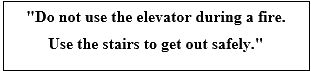
A. Use the elevator during a fire.
B. Use the stairs during a fire.
C. Stay in the building during a fire.
D. Exit through the windows.
Mark the letter A, B, C, or D on your answer sheet to indicate the most suitable response to each of the following exchanges.
Question 19. Diane: Would you mind telling me something about Dong Ba Market?
Huong: ___________
A. Yes, I would. It's a big market in Hue.
B. No, I wouldn't. You can ask another person.
C. Not at all. It's the largest commercial centre in Hue.
D. Yes, I can buy a lot of things there.
Question 20. Mark: Thanks a lot for showing us around. This is a wonderful town.
Tom: ___________
A. That's a good idea.
B. Will you go?
C. You are welcome.
D. Did you go there?
Mark the letter A, B, C, or D on your answer sheet to indicate the word that differs from the other three in the position of the primary stress in each of the following questions.
Question 21.
A. machine
B. nature
C. answer
D. worry
Question 22.
A. optimistic
B. appropriate
C. additional
D. repetitive
Mark the letter A, B, C, or D on your answer sheet to show the underlined part that needs correction in each of the following questions.
Question 23. You mustn't improve your study result if you spend all time playing computer games.
A. mustn't
B. spend
C. playing
D. your
Question 24. Her parents recommend that she studies harder so that she can get into a good university.
A. so that
B. studies
C. into
D. that
Question 25. She did not know where most of the people in the conference was from.
A. was
B. did not
C. where
D. the
Mark the letter A, B, C, or D on your answer sheet to indicate the correct answer to each of the following questions.
Question 26. The longer the talk about the matter is, ________.
A. the worse the situation seems
B. the situation seems the worse
C. the situation seems worse
D. the worse seem the situation
Question 27. Look at the __________. We'll visit Notre-Dame in the morning and take a cruise on the Seine River in the afternoon.
A. leaflet
B. itinerary
C. brochure
D. map
Question 28. I have no idea ________ to get information about the history of the city.
A. who
B. where
C. what
D. why
Question 29. __________ Herry is excellent at maths, everyone thinks he will become a mathematician.
A. Since
B. So
C. Although
D. But
Question 30. For homework, please copy these English sentences __________ your notebook.
A. on
B. into
C. over
D. with
Question 31. No formal qualifications are required for the work. You'll get ________ training.
A. in-the-job
B. out-of-job
C. on-the-job
D. for-the-job
Question 32. The dust and dirt from ________ can have various effects on the well-being of city dwellers.
A. entertainment business
B. noise pollution
C. traffic lights
D. construction sites
Question 33. The government ________ their objective of reducing violent crime.
A. managed
B. got
C. succeeded
D. accomplished
Question 34. After weeks of talk, my parents decided __________me a laptop for my studies.
A. to buy
B. buying
C. to buying
D. buy
Question 35. Humans are cutting down too many trees on Earth, _________ lungs are jungles and forests.
A. that
B. whose
C. which
D. who
Question 36. Tourists who can't visit the museum in person can take a ________ tour on its website.
A. physical
B. virtual
C. direct
D. face-to-face
Question 37. If you want to have good mental health, you should have a __________ life.
A. fast
B. perfect
C. well-balanced
D. slow
Question 38. Artisans are ________ a project to protect local handicrafts from being lost.
A. taking part
B. carrying out
C. passing down
D. getting around
Mark the letter A, B, C, or D on your answer sheet to indicate the word that is OPPOSITE in meaning to the underlined part in the following questions.
Question 39. Everybody should share their part in the preservation of the natural environment.
A. limitation
B. protection
C. destruction
D. conservation
Question 40. It is said that the English explorer Howard Limbert publicly announced the existence of Son Doong Cave in 2009.
A. privately
B. generally
C. narrowly
D. widely
Read the following passage and mark the letter A, B, C, or D on your answer sheet to indicate the correct answer to each of the questions.
Digital technologies have remarkably changed teenagers' life and work both positively and negatively. According to UNICEF, 71% of 15-24-year-olds are online and one third of Internet users are under 18 years old.
Teenagers benefit from the advances in technology. They have various devices like computers, tablets, smartphones, and applications to improve the ways they learn, broaden their relationships, and spend their leisure time. They have more opportunities to learn, get access to information, and use different communication channels inexpensively.
However, they also face many risks. First, there is a concern about children's physical and mental health. Statistics show that teens spend less time doing physical activities, and many more teens suffer from obesity, bone and eye problems. Moreover, teens are also at risk of visiting websites which promote self- harm or suicide. In fact, cyber-bullying on the Internet has become more serious than bullying at school.
Schools and parents should guide children so that they can use devices wisely and not become-victims of those devices and technologies.
Question 41. The passage is mainly about _________.
A. the benefits of digital technologies
B. the pros and cons of digital technologies
C. the future of digital technologies
D. the risks of digital technologies
Question 42. What does the word "They" in paragraph 2 refer to?
A. Activities
B. Devices
C. Advances
D. Teenagers
Question 43. Which of the following is NOT mentioned as one of the benefits of digital technologies?
A. Teens can get access to information.
B. Teens can broaden their relationships.
C. Teens can improve the ways they learn.
D. Teens can manage stress and anxiety.
Question 44. What is the phrase "at risk" in paragraph 3 closest in meaning to?
A. on occasion
B. in danger
C. by chance
D. in fear
Question 45. What does the writer say about cyber-bullying?
A. Cyber-bullying promotes suicide and self-harm.
B. It is more frequent now than in the past.
C. There are more cases of bullying at school than in cyber space.
D. Bullying in cyber space is more serious than that offline.
Read the following passage and mark the letter A, B, C, or D on your answer sheet to indicate the correct answer that best fits each of the numbered blanks.
"Leave nothing but footprints. Take nothing but photographs. Kill nothing but your time. Help protect Cuc Phuong National Park!" The message has become a strong slogan reminding visitors of the importance of their behaviour and its effects on nature ___(46) ___ visiting the park.
Cuc Phuong National Park is located in Ninh Binh Province. Its dense forests form the habitat for some of Asia's rarest plant and animal species. It is ___(47) ___to an amazing diversity of flora and fauna. A number of species in the park are listed in Viet Nam's Red Book of ___(48) ___ species.
Cuc Phuong National Park has launched activities to inspire love for nature and ___(49) ___ awareness of the importance of forest conservation. The park has promoted tourism products with the motto:
___(50) ___ tourist is a messenger spreading love for nature!"
Question 46.
A. when
B. in case
C. before
D. until
Question 47.
A. place
B. room
C. home
D. house
Question 48.
A. endangered
B. hunted
C. preserved
D. protected
Question 49.
A. rise
B. create
C. make
D. raise
Question 50.
A. Each
B. Many
C. All
D. Other
------------------HẾT------------------
Xem đáp án
HƯỚNG DẪN GIẢI
Thực hiện: Ban chuyên môn trithuchub.com

Đề thi vào 10 môn Anh Bắc Ninh năm 2023
Đề bài
Chú ý: Do bài thi nghe được thực hiện ngay trong phòng thi, vì vậy ban chuyên môn đã dựa vào nội dung để biên soạn audio phù hợp, nhằm giúp học sinh có thể luyện tập được đầy đủ các kỹ năng.
SECTION A
Listen to what a tourist says about Ha Long Bay and choose the correct answer A, B, C or D to each of the following questions.
Question 1. Ha Long Bay is situated in the _____ of Viet Nam.
A. South
B. North
C. Northeast region
D. Southeast region
Question 2. With its rich history and picturesque setting, Ha Long Bay is the _____ for any tourist.
A. perfect destination
B. natural wonder
C. perfect attraction
D. beauty spot
Question 3. Viewed from any angel, Ha Long Bay looks like _____.
A. a work of nature
B. a picture
C. a work of art
D. a dragon
Question 4. It has _____ islands concentrated in two main zones: the siutheast (belonging to Bai Tu Long Bay), and the southeast (belonging to Ha Long Bay).
A. 2,000
B. 1,000
C. 1,969
D. 1,996
Question 5. Ha Long was one of the places where _____ first existed.
A. animals
B. elephants
C. monkeys
D. humans
Listen to a student explain why she can’t come to lass and choose the correct answer A, B, C or D to each of the following questions.
Question 6. Diana can’t come to class next Wednesday because _____.
A. she has a mid-term exam
B. she has a doctor’s appoinment
C. she has a meeting
D. she has a different class
Question 7. For homework, she has to read _____.
A. chapters 18 and 20
B. chapters 17, 19 and 20
C. chapters 17 and 20
D. chapters 17, 18, 19 and 20
Question 8. The articles and video are availbale _____.
A. in the library
B. online
C. via email
D. in the bookshop
Question 9. The teacher can send Diana the practice test ___________.
A. by post
B. by email
C. after the mid-term exam
D. on Friday
Question 10. The office needs _____.
A. the mid-term exam paper
B. an email from Diana
C. the doctor’s advice
D. a note from the doctor
SECTION B
Mark the letter A, B, C or D on your answer sheet to show the underlined part that needs correction in each of the following questions.
Question 11. The woman who daughter I saw yesterday is a doctor.
A. is
B. saw
C. The
D. who
Question 12. None of them had any idea about how make a raft with only a few bamboo canes.
A. make
B. a few
C. any
D. of
Question 13. The number of women earning Doctor’s Degrees have risen sharply in recent years.
A. of women
B. have risen
C. Doctor’s
D. recent years
Mark the letter A, B, C or D on your answer sheet to indicate the most suitable response to complete each of the following exchanges.
Question 14. Linda and her teacher are talking about the mid-term exam.
Linda’s teacher: “You did a really good job on your mid-term exam. Keep going!”
Linda: “_____”
A. Yes, sure.
B. Thank you for your compliment.
C. Yes. Why not?
D. You can say that again.
Question 15. Doris has just taken Emily to the station.
Emily: “Thank you for giving me a ride to the station.”
Doris: “_____”
A. You’re welcome.
B. Never mind
C. It doesn’t matter.
D. Yeah, OK.
Mark the letter A, B, C or D on your answer sheet to indicate the sentence that best combines each pair of sentence in the following questions.
Question 16. He lowered his voice. He didn’t want anyone to hear what he was saying.
A. He lowered his voice so as no one could hear what he was saying.
B. He lowered his voice so that no one could hear what he wasy saying.
C. He lowered his voice in order that he didn’t want anyone to hear what he was saying.
D. He lowered his voice in order for everyone to hear what he was saying.
Question 17. I saw many houses. They were destroyed by the storm.
A. I saw many houses were destroyed by the storm.
B. I saw many houses which were destroyed by the storm.
C. I saw many houses which destroyed by the storm.
D. I saw many houses being destroyed by the storm.
Mark the letter A, B, C or D on your answer sheet to indicate the correct answer to each of the following questions.
Question 18. I couldn’t concentrate on my lesson _____ the noise next door.
A. despite
B. although
C. because of
D. because
Question 19. Could you please turn off _____ oven? The potatoes are going to be burned.
A. ∅ (no article)
B. a
C. the
D. an
Question 20. The local government is introducing tougher _____ to preserve historical sites.
A. steps
B. actions
C. measures
D. plan
Question 21. Don’t _____ practising. You’re making good progress.
A. go on
B. deal with
C. give up
D. turn down
Question 22. She had to prepare a lot for the meeting, _____?
A. had she
B. didn’t she
C. hadn’t she
D. did she
Question 23. She has just won the first prize in the singing contest. She is _____ about that.
A. out of this world
B. once in a blue moon
C. the sky’s the limit
D. over the moon
Question 24. The more time he spends with his children, _____ he is.
A. the happier
B. the happiest
C. happy
D. happier
Question 25. Sometimes it is better to tell a _____ lie than to hurt someone’s feelings.
A. blue
B. pink
C. yellow
D. white
Question 26. The tourist _____ in Singapore are quite close to each other, so travelling between them is convenient.
A. attract
B. attractively
C. attractions
D. attractive
Question 27. By the time John arrived, all his friends _____.
A. had left
B. have left
C. were leaving
D. would leave
Question 28. The environmentalists suggested that we _____ more trees to improve the city’s landscape and the environment as well.
A. planting
B. should plant
C. will plant
D. planted
Question 29. More open discussion _____ online to help us reach a good decision.
A. will conduct
B. conducts
C. will be conducted
D. conducted
Mark the letter A, B, C or D on your answer sheet to indicate the world(s) CLOSET in meaning to the underined word(s) in each of the following questions.
Question 30. Is there any place in particular that you’d recommend I visit while I’m in Hanoi?
A. suggest
B. ask
C. persuade
D. expect
Question 31. Mercury is the sun’s swiftest planet. Its orbital period around the sun is only anout 88 Earth days.
A. fastest
B. hottest
C. smallest
D. slowest
Read the following passage and mark the letter A, B, C or D on your answer sheet to indicate the correct answer to each of the following questions.
The price of holidays can fluctuate a great deal through the year, so you can save a lot if you are flexible with your travel dates and avoid peak holiday times. It can be also cheaper if you book well in advance. Before your departure, make sure you get as much information about your destination as you can. Find out if you require any special visas or permits to travel there. Think about spending money as well. Will you able to access your own money easily enough or will you need to take cash with you? Think about eating lunches and smaller evening meals to help your money to further, as lunch us generally cheaper. Make sure that you keep sufficient identification with you at all times. It may also help to email a copy of your passport details to yourself, in case it is lost or stolen. Label your suitcases clearly so that they can be easily identified as yours. It can be useful to store a copy of your itinerary in a prominent place in your suitcase so that airline will know where to find you if your luggage get lost. Be sure to pack any medication or other essential items in your hand luggage. If your flight is delayed, or your luggage is lost, these can be difficult to obtain in an airport or foreign country.
Question 32. Which can be the best title for the passage?
A. Travel Procedures
B. How to Adjust Travel Dates
C. How to Protect Your Luggage
D. Travel Advice
Question 33. Which of the following is NOT advisable according to the passage?
A. Save money by cutting out dinner
B. Research your destination
C. Apply for visas if necessary
D. Always bring identification
Question 34. The word “prominent” in the passage is closet in meaning to _____.
A. flexible
B. hidden
C. noticeable
D. common
Question 35. The underlined word “they” refers to your _____.
A. visas
B. suitcases
C. lunches
D. details
Question 36. It can be inferred from the passage that _____.
A. larger lunches cost more than smaller ones
B. you must always take cash with you
C. travelling may cost more in peak season
D. you can’t get back your lost luggage overseas
Mark the letter A, B, C or D on your answer sheet to indicate the world that differs from the rest in the position of the main stress in each of the following questions.
Question 37.
A. participant
B. information
C. geography
D. activity
Question 38.
A. suggest
B. explore
C. attach
D. listen
Mark the letter A, B, C or D on your answer sheet to indicate the world that differs from the rest in the pronunciation of the underlined part in each of the following questions.
Question 39.
A. church
B. change
C. choose
D. chef
Question 40.
A. ranked
B. proved
C. gained
D. prepared
Mark the letter A, B, C or D on your answer sheet to indicate the world(s) OPPOSITE in meaning to the underlined word(s) in each of the following questions.
Question 41. Fruit and vegetables grew in abundance on the island. The islanders even exported the surplus.
A. a large quantity
B. a large amount
C. a small quantity
D. an excess
Question 42. It was such a complicated task that I couldn’t do it myself.
A. simple
B. problematic
C. complex
D. difficult
Mark the letter A, B, C or D on your answer sheet to indicate the sentence that is closet in meaning to the original sentence in each of the following questions.
Question 43. People expect that the report will suggest some major reforms.
A. It is expected that the report will suggest some major reforms.
B. It is expecting that some major reforms will be suggested by the report.
C. It was expected that the report will suggest some major reforms.
D. It is expected that the report will be suggested by some major reforms.
Question 44. “Where are you going to stay when you are in Hue?” Lan asked me.
A. Lan asked me where am I going to stay when I am in Hue.
B. Lan asked me where I was going to stay when I was in Hue.
C. Lan asked me where was I going to stay when I was in Hue.
D. Lan asked me where I am going to stay when I am in Hue.
Question 45. I don’t know anything about plumbing, so I can’t fix the leak in the pipe myself.
A. If I know something about plumbing, I can’t fix the leak in the pipe myself.
B. If I knew something about plumbing, I could fix the leak in the pipe myself.
C. If I knew something about plumbing, I couldn’t fix the leak in the pipe myself.
D. If I don’t know anything about plumbing, I can’t fix the leak in the pipe myself.
Read the following passage and mark the letter A, B, C or D on your answer sheet to indicate the correct word that best fits to each of the numbered blanks.
A job interview is a chance for you to prove that you can satisfy all the requirement of the job you are __(46)__ for. That is why it is essential to be well-prepared for the job interview. Preparing means knowing about the industry, the employer, and yourself. It also means paying attention to details like personal appearance, __(47)__ and behaviour. Before the interview, you should gather __(48)__ information about the company and the employer as possible. Not only will you appear informed and intelligent but you will also __(49)__ a decision if a job offer is eventually made. You might also want to prepare for answering questions by listing some of your attributes. Remember that appearance is very important. __(50__ we like it or not, it is the first thing people notice about us. You should match your dress to emoloyees in the workplace where you are applying. You should come on time for the interview.
Question 46.
A. requiring
B. applying
C. begging
D. asking
Question 47.
A. punctuality
B. punctuate
C. punctually
D. punctual
Question 48.
A. too many
B. as much
C. as many
D. too much
Question 49.
A. gain
B. do
C. make
D. get
Question 50.
A. Whether
B. What
C. Which
D. However
--- THE END ---
Đáp án
HƯỚNG DẪN GIẢI
THỰC HIỆN: BAN CHUYÊN MÔN trithuchub.com
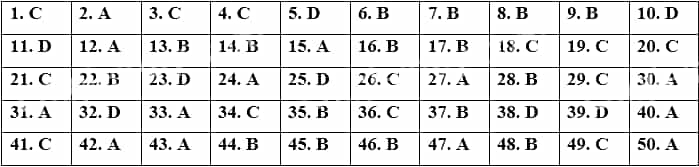
HƯỚNG DẪN GIẢI CHI TIẾT
1. (TH)
Kiến thức: Nghe hiểu
Giải thích: Vịnh Hạ Long nằm ở _____ của Việt Nam.
A. South: Nam
B. North: Bắc
C. Northeast region: Đông Bắc
D. Southeast region: Đông Nam Bộ
Thông tin: It is situated in the northeast region of Viet Nam.
Tạm dịch: Nó nằm ở vùng Đông Bắc của Việt Nam.
Đáp án C.
2. (TH)
Kiến thức: Nghe hiểu
Giải thích: Với lịch sử phong phú và khung cảnh đẹp như tranh vẽ, Vịnh Hạ Long là _____ đối với bất kỳ khách du lịch nào.
A. perfect destination
B. natural wonder
C. perfect attraction
D. beauty spot
Thông tin: With its rich history and picturesque setting, Ha Long Bay is the perfect destination for any tourist.
Tạm dịch: Với lịch sử phong phú và khung cảnh đẹp như tranh vẽ, Vịnh Hạ Long là điểm đến hoàn hảo cho bất kỳ khách du lịch nào.
Đáp án A.
3. (TH)
Kiến thức: Nghe hiểu
Giải thích: Nhìn từ mọi góc độ, Vịnh Hạ Long trông giống như _____.
A. a work of nature: một tác phẩm của thiên nhiên
B. a picture: một bức tranh
C. a work of art: một tác phẩm nghệ thuật
D. a dragon: một con rồng
Thông tin: Viewed from any angle, Ha Long Bay looks like a work of art.
Tạm dịch: Nhìn từ mọi góc độ, Vịnh Hạ Long giống như một tác phẩm nghệ thuật.
Đáp án C.
4. (TH)
Kiến thức: Nghe hiểu
Giải thích: Có _____ đảo tập trung ở hai khu vực chính: phía đông nam (thuộc vịnh Bái Tử Long) và phía đông nam (thuộc vịnh Hạ Long).
A. 2,000
B. 1,000
C. 1,969
D. 1,996
Thông tin: It has 1,969 islands concentrated in two main zones: the southeast (belonging to Bai Tu Long Bay), and the southwest (belonging to Ha Long Bay).
Tạm dịch: Nơi đây có 1.969 hòn đảo tập trung ở hai khu vực chính: phía Đông Nam (thuộc Vịnh Bái Tử Long) và phía Tây Nam (thuộc Vịnh Hạ Long).
Đáp án C.
5. (TH)
Kiến thức: Nghe hiểu
Giải thích: Hạ Long là một trong những nơi có _____ đầu tiên tồn tại.
A. animals (n): động vật
B. elephants (n): voi
C. monkeys (n): khỉ
D. humans (n): con người
Thông tin: It is now known that Ha Long was one of the places where humans first existed.
Tạm dịch: Hiện nay người ta biết rằng Hạ Long là một trong những nơi đầu tiên con người xuất hiện.
Đáp án D.
|
Audio script 1: It is said that Ha Long Bay is a magical place, attracting more tourists than ever since UNESCO's recognition of this beautiful spot. It is situated in the northeast region of Viet Nam. With its rich history and picturesque setting, Ha Long Bay is the perfect destination for any tourist. Ha Long Bay is one of the most extraordinary natural wonders you will ever see. Viewed from any angle, Ha Long Bay looks like a work of art. It has 1,969 islands concentrated in two main zones: the southeast (belonging to Bai Tu Long Bay), and the southwest (belonging to Ha Long Bay). At the centre of the islands, there are wonderful caverns, such as Thien Cung, Dau Go, Sung Sot, and Tam Cung. Forthose interested in history, a visit to Van Don Island, Poem Mountain, and the Bach Dang River is a must. It is now known that Ha Long was one of the places where humans first existed. Don't miss out on a visit to Ha Long Bay. With its long history and astounding natural beauty, it is truly unforgettable. |
Dịch bài nghe 1: Người ta nói Vịnh Hạ Long là nơi kỳ diệu, thu hút nhiều khách du lịch hơn bao giờ hết kể từ khi UNESCO công nhận danh thắng này. Nó nằm ở vùng Đông Bắc của Việt Nam. Với lịch sử phong phú và khung cảnh đẹp như tranh vẽ, Vịnh Hạ Long là điểm đến hoàn hảo cho bất kỳ khách du lịch nào. Vịnh Hạ Long là một trong những kỳ quan thiên nhiên đặc biệt nhất mà bạn từng thấy. Nhìn từ mọi góc độ, Vịnh Hạ Long giống như một tác phẩm nghệ thuật. Nơi đây có 1.969 hòn đảo tập trung ở hai khu vực chính: phía Đông Nam (thuộc Vịnh Bái Tử Long) và phía Tây Nam (thuộc Vịnh Hạ Long). Ở trung tâm các hòn đảo có những hang động tuyệt vời như Thiên Cung, Đầu Gỗ, Sửng Sốt và Tam Cung. Đối với những người quan tâm đến lịch sử, một chuyến viếng thăm đảo Vân Đồn, núi Bài Thơ và sông Bạch Đằng là điều không thể bỏ qua. Hiện nay người ta biết rằng Hạ Long là một trong những nơi đầu tiên con người xuất hiện. Đừng bỏ lỡ chuyến thăm Vịnh Hạ Long. Với lịch sử lâu đời và vẻ đẹp tự nhiên đáng kinh ngạc, nó thực sự khó quên. |
6. (TH)
Kiến thức: Nghe hiểu
Giải thích: Diana không thể đến lớp vào thứ Tư tuần sau vì _____.
A. she has a mid-term exam: cô ấy có bài kiểm tra giữa kỳ
B. she has a doctor’s appoinment: cô ấy có cuộc hẹn với bác sĩ
C. she has a meeting: cô ấy có một cuộc họp
D. she has a different class: cô ấy có một lớp học khác
Thông tin: Student: I'm sorry, but I can't come to class next Wednesday. I have a doctor's appointment.
Tạm dịch: Sinh viên: Xin lỗi, nhưng thứ Tư tới tôi không thể đến lớp được. Tôi có hẹn với bác sĩ.
Đáp án B.
7. (TH)
Kiến thức: Nghe hiểu
Giải thích: Về bài tập về nhà, cô ấy phải đọc _____.
A. chapters 18 and 20: chương 18 và 20
B. chapters 17, 19 and 20: chương 17, 19 và 20
C. chapters 17 and 20: chương 17 và 20
D. chapters 17, 18, 19 and 20: chương 17, 18, 19 và 20
Thông tin: OK, first of all … you need to read chapters 17, 19 and 20 in the book.
Tạm dịch: Giáo viên: Hãy để tôi kiểm tra sổ ghi chép của tôi. OK, trước hết… bạn cần đọc chương 17, 19 và 20 trong sách.
Đáp án B.
8. (TH)
Kiến thức: Nghe hiểu
Giải thích: Các bài viết và video đều có sẵn _____.
A. in the library: trong thư viện
B. online: trực tuyến
C. via email: qua email
D. in the bookshop: trong hiệu sách
Thông tin: There are also some articles and a video to watch – those are online. I'll post the links online in the usual place.
Tạm dịch: Ngoài ra còn có một số bài viết và video để xem – đó là những bài viết trực tuyến. Tôi sẽ đăng các liên kết trực tuyến ở nơi thông thường.
Đáp án B.
9. (TH)
Kiến thức: Nghe hiểu
Giải thích: Giáo viên có thể gửi cho Diana bài kiểm tra thực hành ___________.
A. by post: qua đường bưu điện
B. by email: qua email
C. after the mid-term exam: sau kỳ thi giữa kỳ
D. on Friday: vào thứ sáu
Thông tin: Teacher: Don't worry, I can send you the practice test by email on Wednesday.
Tạm dịch: Giáo viên: Đừng lo lắng, tôi có thể gửi cho bạn bài kiểm tra thực hành qua email vào thứ Tư.
Đáp án B.
10. (TH)
Kiến thức: Nghe hiểu
Giải thích: Văn phòng cần _____.
A. the mid-term exam paper: bài kiểm tra giữa kỳ
B. an email from Diana: email từ Diana
C. the doctor’s advice: lời khuyên của bác sĩ
D. a note from the doctor: một ghi chú của bác sĩ
Thông tin: Teacher: And don't forget to bring a certificate from the doctor to the office.
Tạm dịch: Giáo viên: Và đừng quên mang theo giấy chứng nhận của bác sĩ khi đến phòng khám.
Đáp án D.
|
Audio script 2: Student: Excuse me, Ms Henderson? Teacher: Yes, Diana. How can I help you? Student: I'm sorry, but I can't come to class next Wednesday. I have a doctor's appointment. Teacher: OK. Thanks for letting me know. Student: Is there anything to do at home? Teacher: Let me just check my notebook. OK, first of all … you need to read chapters 17, 19 and 20 in the book. There are also some articles and a video to watch – those are online. I'll post the links online in the usual place. Student: Chapters 17 to 20. Teacher: Yes, except chapter 18. Chapters 17, 19 and 20. Student: Ah, OK. Um ... is there a deadline? Teacher: Yes, this Friday. But there's something else. I was going to give you all a practice test. Student: A practice test? Teacher: Yes, to help people prepare for the mid-term exam. Student: Ah. All right. Teacher: Don't worry, I can send you the practice test by email on Wednesday. Can you send it to me before Friday? Student: Sure, no problem. Teacher: And don't forget to bring a certificate from the doctor to the office. Student: Thanks, Ms Henderson! I'll do that. Teacher: You're welcome, Diana. Take care. |
Dịch bài đọc 2: Sinh viên: Xin lỗi, cô Henderson? Giáo viên: Vâng, Diana. Làm thế nào để tôi giúp bạn? Sinh viên: Xin lỗi, nhưng thứ Tư tới tôi không thể đến lớp được. Tôi có hẹn với bác sĩ. Giáo viên: Được rồi. Cảm ơn vì đã cho tôi biết. Học sinh: Ở nhà có việc gì phải làm không? Giáo viên: Hãy để tôi kiểm tra sổ ghi chép của tôi. OK, trước hết… bạn cần đọc chương 17, 19 và 20 trong sách. Ngoài ra còn có một số bài viết và video để xem – đó là những bài viết trực tuyến. Tôi sẽ đăng các liên kết trực tuyến ở nơi thông thường. Học sinh: Chương 17 đến 20. Thầy: Đúng, ngoại trừ chương 18. Chương 17, 19 và 20. Học sinh: À, được rồi. Ừm... có thời hạn không? Giáo viên: Vâng, thứ Sáu tuần này. Nhưng có một điều khác. Tôi định cho tất cả các bạn một bài kiểm tra thực hành. Học sinh: Một bài kiểm tra thực hành? Thầy: Đúng vậy, để giúp mọi người chuẩn bị cho kỳ thi giữa kỳ. Học sinh: À. Được rồi. Giáo viên: Đừng lo lắng, tôi có thể gửi cho bạn bài kiểm tra thực hành qua email vào thứ Tư. Bạn có thể gửi nó cho tôi trước thứ Sáu được không? Học sinh: Chắc chắn rồi, không vấn đề gì. Giáo viên: Và đừng quên mang theo giấy chứng nhận của bác sĩ khi đến phòng khám. Sinh viên: Cảm ơn cô Henderson! Tôi sẽ làm việc đó. Giáo viên: Không có gì, Diana. Bảo trọng. |
11. (TH)
Kiến thức: Tìm lỗi sai
Giải thích: Từ để hỏi bổ nghĩa cho danh từ “daughter” là “whose”
Tạm dịch: Người phụ nữ có con gái tôi gặp hôm qua là bác sĩ.
Đáp án D.
12. (TH)
Kiến thức: Tìm lỗi sai
Giải thích: cấu trúc “how + to + V-infinitive”: cách để làm việc gì/ làm việc gì như thế nào …
Tạm dịch: Không ai trong số họ biết cách làm một chiếc bè chỉ bằng vài cây tre.
Đáp án A.
13. (TH)
Kiến thức: Tìm lỗi sai
Giải thích: the number of + N số ít
Tạm dịch: Số lượng phụ nữ có bằng Tiến sĩ tăng mạnh trong những năm gần đây.
Đáp án B.
14. (TH)
Kiến thức: Cấu trúc cơ bản
Giải thích:
A. Yes, sure: Vâng, chắc chắn rồi
B. Thank you for your compliment: Cảm ơn lời khen của bạn.
C. Yes. Why not?: Vâng. Tại sao không?
D. You can say that again: Đúng vậy
Tạm dịch: Linda và giáo viên đang nói chuyện về bài kiểm tra giữa kỳ.
Giáo viên của Linda: “Em đã làm rất tốt bài kiểm tra giữa kỳ. Tiếp tục đi!"
Linda: “Cảm ơn lời khen của cô.”
Đáp án B.
15. (TH)
Kiến thức: Cấu trúc cơ bản
Giải thích:
A. You’re welcome: Không có gì
B. Never mind: Không sao đâu
C. It doesn’t matter: Nó không quan trọng
D. Yeah, OK: Ừ, được rồi
Tạm dịch: Doris vừa đưa Emily ra ga.
Emily: “Cảm ơn bạn đã đưa tôi đến nhà ga.”
Doris: “Không có gì”
Đáp án A.
16. (TH)
Kiến thức: Cấu trúc cơ bản
Giải thích: Anh ấy hạ giọng. Anh ấy không muốn bất cứ ai nghe thấy những gì anh đang nói.
A. He lowered his voice so as no one could hear what he was saying: Anh ấy hạ giọng xuống để không ai có thể nghe thấy anh ấy đang nói gì.
B. He lowered his voice so that no one could hear what he wasy saying: Anh ấy hạ giọng xuống để không ai có thể nghe thấy anh ấy đang nói gì.
C. He lowered his voice in order that he didn’t want anyone to hear what he was saying: Anh ấy hạ giọng xuống để không muốn ai nghe thấy mình đang nói gì.
D. He lowered his voice in order for everyone to hear what he was saying: Anh ấy hạ giọng xuống để mọi người có thể nghe được điều anh ấy nói.
Tạm dịch: - Anh ấy hạ giọng. Anh ấy không muốn bất cứ ai nghe thấy những gì anh đang nói.
- Anh ấy hạ giọng xuống để không ai có thể nghe thấy anh ấy đang nói gì.
Đáp án B.
17. (TH)
Kiến thức: Cấu trúc cơ bản
Giải thích: Tôi thấy nhiều ngôi nhà. Chúng đã bị phá hủy bởi cơn bão.
A. I saw many houses were destroyed by the storm: Tôi thấy nhiều ngôi nhà bị bão phá hủy.
B. I saw many houses which were destroyed by the storm: Tôi thấy nhiều ngôi nhà bị bão phá hủy.
C. I saw many houses which destroyed by the storm: Tôi thấy nhiều ngôi nhà bị bão phá hủy.
D. I saw many houses being destroyed by the storm: Tôi thấy nhiều ngôi nhà bị bão phá hủy.
Tạm dịch: - Tôi thấy nhiều ngôi nhà. Chúng đã bị phá hủy bởi cơn bão.
- Tôi thấy nhiều ngôi nhà bị bão phá hủy.
Đáp án B.
18. (TH)
Kiến thức: Cấu trúc cơ bản
Giải thích:
- Cấu trúc: S + V + because of + N/ cụm N: … bởi vì…
Tạm dịch: Tôi không thể tập trung vào bài học vì tiếng ồn ở nhà bên cạnh.
Đáp án C.
19. (TH)
Kiến thức: Cấu trúc cơ bản
Giải thích: Dùng “The” khi nói về một vật riêng hoặc một người mà cả người nghe và người nói đều biết
Tạm dịch: Bạn vui lòng tắt lò nướng được không? Khoai tây sắp bị cháy.
Đáp án C.
20. (TH)
Kiến thức: Từ vựng
Giải thích:
A. steps (n): bước
B. actions( n): hành động
C. measures (n): biện pháp
D. plan (n): kế hoạch
Tạm dịch: Chính quyền địa phương đang đưa ra các biện pháp cứng rắn hơn để bảo tồn các di tích lịch sử.
Đáp án C.
21. (TH)
Kiến thức: Từ vựng
Giải thích:
A. go on: tiếp tục
B. deal with: đối phó với, giải quyết
C. give up: từ bỏ
D. turn down: từ chối
Tạm dịch: Không từ bỏ việc tập luyện. Bạn đang tiến triển tốt.
Đáp án C.
22. (TH)
Kiến thức: Cấu trúc cơ bản
Giải thích: Câu hỏi đuôi thì quá khứ đơn: S + V-ed, didn’t + S?
Tạm dịch: Cô ấy đã phải chuẩn bị rất nhiều cho cuộc họp phải không?
Đáp án B.
23. (TH)
Kiến thức: Từ vựng
Giải thích:
A. out of this world: tuyệt vời, đầy ấn tượng
B. once in a blue moon: hiếm khi
C. the sky’s the limit: chẳng có gì là giới hạn cả
D. over the moon: hạnh phúc
Tạm dịch: Cô vừa đạt giải nhất cuộc thi hát. Cô ấy rất vui mừng về điều đó.
Đáp án D.
24. (TH)
Kiến thức: Cấu trúc cơ bản
Giải thích: the + so sánh hơn, the + so sánh hơn: càng…, càng…
Tạm dịch: Càng dành nhiều thời gian cho con cái, anh ấy càng hạnh phúc.
Đáp án A.
25. (TH)
Kiến thức: Từ vựng
Giải thích: “a white lie”: là một thành ngữ thường được sử dụng để miêu tả một lời nói dối được nói ra để tránh làm tổn thương tình cảm của người khác hoặc tránh gây ra mâu thuẫn hoặc rắc rối không cần thiết
Tạm dịch: Đôi khi nói lời nói dối trắng trợn còn hơn làm tổn thương người khác.
Đáp án D.
26. (TH)
Kiến thức: Từ vựng
Giải thích: tourist attraction: địa điểm du lịch
Tạm dịch: Các địa điểm du lịch ở Singapore khá gần nhau nên việc đi lại giữa các địa điểm đó rất thuận tiện.
Đáp án C.
27. (TH)
Kiến thức: Cấu trúc cơ bản
Giải thích: By the time + S + V-ed, S + had + V-ed/ PII: diễn tả một hành động vừa kết thúc thì một hành động khác xảy ra
Tạm dịch: Khi John đến thì tất cả bạn bè của anh ấy đã rời đi.
Đáp án A.
28. (TH)
Kiến thức: Cấu trúc cơ bản
Giải thích: suggest + that + clause: gợi ý…
Tạm dịch: Các nhà bảo vệ môi trường gợi ý rằng chúng ta nên trồng thêm cây xanh để cải thiện cảnh quan thành phố cũng như môi trường.
Đáp án B.
29. (TH)
Kiến thức: Cấu trúc cơ bản
Giải thích: will be + V-ed/ PII: bị động thì tương lai đơn
Tạm dịch: Cuộc thảo luận cởi mở hơn sẽ được tiến hành trực tuyến để giúp chúng ta đi đến quyết định đúng đắn.
Đáp án C.
30. (TH)
Kiến thức: Từ đồng nghĩa
Giải thích:
- recommend (v): gợi ý
A. suggest (v): đề nghị
B. ask (v): hỏi
C. persuade (v): thuyết phục
D. expect (v): mong đợi
Tạm dịch: Có địa điểm nào đặc biệt mà bạn khuyên tôi nên ghé thăm khi ở Hà Nội không?
Đáp án A.
31. (TH)
Kiến thức: Từ đồng nghĩa
Giải thích:
A. fastest (adj): nhanh nhất
B. hottest (adj): nóng nhất
C. smallest (adj): nhỏ nhất
D. slowest (adj): chậm nhất
Tạm dịch: Sao Thủy là hành tinh có tốc độ nhanh nhất của Mặt Trời. Chu kỳ quỹ đạo của nó quanh mặt trời chỉ bằng 88 ngày trên Trái đất.
Đáp án A.
32. (TH)
Kiến thức: Đọc hiểu
Giải thích: Tiêu đề nào có thể là tiêu đề phù hợp nhất cho đoạn văn?
A. Travel Procedures: Thủ tục đi lại
B. How to Adjust Travel Dates: Cách điều chỉnh ngày đi du lịch
C. How to Protect Your Luggage: Cách bảo vệ hành lý của bạn
D. Travel Advice: Lời khuyên khi đi du lịch
Thông tin: Before your departure, make sure you get as much information about your destination as you can.
Tạm dịch: Trước khi khởi hành, hãy đảm bảo bạn có được càng nhiều thông tin về điểm đến càng tốt. Tìm hiểu xem bạn có cần bất kỳ thị thực hoặc giấy phép đặc biệt nào để đến đó không.
Đáp án D.
33. (TH)
Kiến thức: Đọc hiểu
Giải thích: Điều nào sau đây KHÔNG được khuyến khích theo đoạn văn?
A. Save money by cutting out dinner: Tiết kiệm tiền bằng cách cắt giảm bữa tối
B. Research your destination: Nghiên cứu điểm đến của bạn
C. Apply for visas if necessary: Xin thị thực nếu cần thiết
D. Always bring identification: Luôn mang theo giấy tờ tùy thân
Thông tin: Think about eating lunches and smaller evening meals to help your money to further, as lunch us generally cheaper.
Tạm dịch: Hãy suy nghĩ về việc tiêu tiền nữa. Liệu bạn có thể tiếp cận tiền của mình đủ dễ dàng hay bạn sẽ cần mang theo tiền mặt? Hãy nghĩ đến việc ăn trưa và ăn tối ít bữa hơn để tiết kiệm tiền hơn, vì bữa trưa ở chúng ta thường rẻ hơn.
Đáp án A.
34. (TH)
Kiến thức: Đọc hiểu
Giải thích: Từ “nổi bật” trong đoạn văn có nghĩa gần gũi với _____.
A. flexible (adj): linh hoạt
B. hidden (adj): ẩn
C. noticeable (adj): đáng chú ý
D. common (adj): phổ biến
Tạm dịch: prominent (adj): nổi bật
Đáp án C.
35. (TH)
Kiến thức: Đọc hiểu
Giải thích: Từ được gạch chân “they” ám chỉ _____ của bạn.
A. visas (n): thị thực
B. suitcases (n): vali
C. lunches (n): bữa trưa
D. details (n): chi tiết
Tạm dịch: Dán nhãn vali của bạn một cách rõ ràng để có thể dễ dàng xác định chúng là của bạn.
Đáp án B.
36. (TH)
Kiến thức: Đọc hiểu
Giải thích: Từ đoạn văn có thể suy ra rằng _____.
A. larger lunches cost more than smaller ones: bữa trưa lớn hơn có giá cao hơn bữa trưa nhỏ hơn
B. you must always take cash with you: bạn phải luôn mang theo tiền mặt bên mình
C. travelling may cost more in peak season: Đi du lịch có thể tốn kém hơn vào mùa cao điểm
D. you can’t get back your lost luggage overseas: bạn không thể lấy lại hành lý bị mất ở nước ngoài
Thông tin: The price of holidays can fluctuate a great deal throught the year, so you can save a lot if you are flexibe with your travel dates and avoid peak holiday times.
Tạm dịch: Giá của các ngày lễ có thể dao động rất nhiều trong năm, vì vậy bạn có thể tiết kiệm rất nhiều nếu linh hoạt với ngày đi du lịch của mình và tránh những thời điểm nghỉ lễ cao điểm.
Đáp án C.
Dịch bài đọc:
Giá của các ngày lễ có thể dao động rất nhiều trong năm, vì vậy bạn có thể tiết kiệm rất nhiều nếu linh hoạt với ngày đi du lịch của mình và tránh những thời điểm nghỉ lễ cao điểm. Nó cũng có thể rẻ hơn nếu bạn đặt trước. Trước khi khởi hành, hãy đảm bảo bạn có được càng nhiều thông tin về điểm đến càng tốt. Tìm hiểu xem bạn có cần bất kỳ thị thực hoặc giấy phép đặc biệt nào để đến đó không. Hãy suy nghĩ về việc tiêu tiền nữa. Liệu bạn có thể tiếp cận tiền của mình đủ dễ dàng hay bạn sẽ cần mang theo tiền mặt? Hãy nghĩ đến việc ăn trưa và ăn tối ít bữa hơn để tiết kiệm tiền hơn, vì bữa trưa ở chúng ta thường rẻ hơn. Hãy đảm bảo rằng bạn luôn mang theo đầy đủ giấy tờ tùy thân bên mình. Việc gửi bản sao chi tiết hộ chiếu của bạn qua email cho chính bạn cũng có thể hữu ích trong trường hợp nó bị mất hoặc bị đánh cắp. Dán nhãn vali của bạn một cách rõ ràng để có thể dễ dàng xác định chúng là của bạn. Sẽ rất hữu ích nếu bạn cất giữ bản sao hành trình của mình ở một vị trí nổi bật trong vali để hãng hàng không biết nơi tìm thấy bạn nếu hành lý của bạn bị thất lạc. Hãy nhớ đóng gói thuốc hoặc các vật dụng cần thiết khác trong hành lý xách tay của bạn. Nếu chuyến bay của bạn bị trì hoãn hoặc hành lý của bạn bị thất lạc, những thứ này có thể khó lấy được ở sân bay hoặc nước ngoài.
37. (TH)
Kiến thức: Trọng âm
Giải thích:
A. participant /pɑːˈtɪsɪpənt/
B. information /ˌɪnfəˈmeɪʃn/
C. geography /dʒiˈɒɡrəfi/
D. activity /ækˈtɪvəti/
Phương án B trọng âm rơi vào âm tiết thứ 3, các phương án còn lại trọng âm rơi vào âm tiết thứ 2.
Đáp án B.
38. (TH)
Kiến thức: Trọng âm
Giải thích:
A. suggest /səˈdʒest/
B. explore /ɪkˈsplɔː(r)/
C. attach /əˈtætʃ/
D. listen /ˈlɪsn/
Phương án D trọng âm rơi vào âm tiết thứ 1, các phương án còn lại trọng âm rơi vào âm tiết thứ 2.
Đáp án D.
39. (TH)
Kiến thức: Phát âm
Giải thích:
A. church /tʃɜːtʃ/
B. change /tʃeɪndʒ/
C. choose /tʃuːz/
D. chef /ʃef/
Phương án D phát âm là /ʃ/, các phương án còn lại phát âm là /tʃ/.
Đáp án D.
40. (TH)
Kiến thức: Phát âm
Giải thích:
A. ranked /ræŋkt/
B. proved /pruːvd/
C. gained /ɡeɪnd/
D. prepared /prɪˈpeəd/
Phương án A phát âm là /t/, các phương án còn lại phát âm là /d/.
Đáp án A.
41. (TH)
Kiến thức: Từ trái nghĩa
Giải thích: abundance (n): nhiều
A. a large quantity: số lượng lớn
B. a large amount: số lượng lớn
C. a small quantity: số lượng nhỏ
D. an excess: dư thừa
Tạm dịch: Rau quả mọc nhiều trên đảo. Người dân trên đảo thậm chí còn xuất khẩu phần thặng dư.
Đáp án C.
42. (TH)
Kiến thức: Từ trái nghĩa
Giải thích: complicated (adj): phức tạp
A. simple (adj): đơn giản
B. problematic (adj): có vấn đề
C. complex (adj): phức tạp
D. difficult (adj): khó khăn
Tạm dịch: Đó là một công việc phức tạp đến nỗi tôi không thể tự mình làm được.
Đáp án A.
43. (TH)
Kiến thức: Cấu trúc cơ bản
Giải thích: Người dân mong đợi báo cáo sẽ đề xuất một số cải cách lớn.
A. It is expected that the report will suggest some major reforms: Dự kiến báo cáo sẽ đề xuất một số cải cách lớn.
B. It is expecting that some major reforms will be suggested by the report: Người ta kỳ vọng rằng một số cải cách lớn sẽ được đề xuất trong báo cáo.
C. It was expected that the report will suggest some major reforms: Người ta kỳ vọng rằng báo cáo sẽ đề xuất một số cải cách lớn.
D. It is expected that the report will be suggested by some major reforms: Dự kiến báo cáo sẽ đề xuất một số cải cách lớn.
Tạm dịch: Người dân mong đợi báo cáo sẽ đề xuất một số cải cách lớn.
=> Dự kiến báo cáo sẽ đề xuất một số cải cách lớn.
Đáp án A.
44. (TH)
Kiến thức: Cấu trúc cơ bản
Giải thích: “Khi đến Huế bạn định ở đâu?” Lan hỏi tôi.
A. Lan asked me where am I going to stay when I am in Hue: Lan hỏi tôi sẽ ở đâu khi đến Huế.
B. Lan asked me where I was going to stay when I was in Hue: Lan hỏi tôi sẽ ở đâu khi đến Huế.
C. Lan asked me where was I going to stay when I was in Hue: Lan hỏi tôi sẽ ở đâu khi đến Huế.
D. Lan asked me where I am going to stay when I am in Hue: Lan hỏi tôi khi đến Huế sẽ ở đâu.
Tạm dịch: “Khi đến Huế bạn định ở đâu?” Lan hỏi tôi.
=> Lan hỏi tôi sẽ ở đâu khi đến Huế.
Đáp án B.
45. (TH)
Kiến thức: Cấu trúc cơ bản
Giải thích: Tôi không biết gì về ống nước nên không thể tự mình sửa được chỗ rò rỉ trong đường ống.
A. If I know something about plumbing, I can’t fix the leak in the pipe myself: Nếu tôi biết điều gì đó về hệ thống ống nước, tôi không thể tự mình sửa chữa chỗ rò rỉ trong đường ống.
B. If I knew something about plumbing, I could fix the leak in the pipe myself: Nếu tôi biết điều gì đó về hệ thống ống nước, tôi có thể tự mình sửa chữa chỗ rò rỉ trong đường ống.
C. If I knew something about plumbing, I couldn’t fix the leak in the pipe myself: Nếu tôi biết điều gì đó về hệ thống ống nước, tôi không thể tự mình sửa chữa chỗ rò rỉ trong đường ống.
D. If I don’t know anything about plumbing, I can’t fix the leak in the pipe myself: Nếu tôi không biết gì về hệ thống ống nước, tôi không thể tự mình sửa chữa chỗ rò rỉ trong đường ống.
Tạm dịch: Tôi không biết gì về ống nước nên không thể tự mình sửa được chỗ rò rỉ trong đường ống.
=> Nếu tôi biết điều gì đó về hệ thống ống nước, tôi có thể tự mình sửa chữa chỗ rò rỉ trong đường ống.
Đáp án B.
46. (TH)
Kiến thức: Đọc hiểu
Giải thích:
A. requiring (v): yêu cầu
B. applying (v): xin, đăng ký
C. begging (v): cầu xin
D. asking (v): hỏi
Tạm dịch: Phỏng vấn xin việc là cơ hội để bạn chứng minh mình có thể đáp ứng được mọi yêu cầu của công việc đang ứng tuyển.
Đáp án B.
47. (TH)
Kiến thức: Đọc hiểu
Giải thích:
A. punctuality (n): tính đúng giờ
B. punctuate (v): chấm câu
C. punctually (adv): đúng giờ
D. punctual (adj): đúng giờ
Tạm dịch: Nó cũng có nghĩa là chú ý đến các chi tiết như ngoại hình cá nhân, sự đúng giờ và hành vi.
Đáp án A.
48. (TH)
Kiến thức: Đọc hiểu
Giải thích: so sánh ngang bằng: as much… as
Tạm dịch: Trước cuộc phỏng vấn, bạn nên thu thập càng nhiều thông tin về công ty và nhà tuyển dụng càng tốt.
Đáp án B.
49. (TH)
Kiến thức: Đọc hiểu
Giải thích:
A. gain (v): đạt được
B. do (v): làm
C. make (v): làm
D. get (v): lấy
Tạm dịch: Bạn không chỉ tỏ ra có hiểu biết và thông minh mà còn đưa ra quyết định nếu cuối cùng có lời mời làm việc.
Đáp án C.
50. (TH)
Kiến thức: Đọc hiểu
Giải thích:
A. Whether: Dù/ không biết có... không
B. What: Cái gì
C. Which: Cái nào
D. However: Tuy nhiên
Tạm dịch: Hãy nhớ rằng ngoại hình rất quan trọng. Dù muốn hay không thì đó là điều đầu tiên mọi người chú ý đến chúng tôi.
Đáp án A.
Dịch bài đọc:
Phỏng vấn xin việc là cơ hội để bạn chứng minh mình có thể đáp ứng được mọi yêu cầu của công việc đang ứng tuyển. Đó là lý do vì sao việc chuẩn bị tốt cho buổi phỏng vấn xin việc là điều cần thiết. Chuẩn bị có nghĩa là hiểu biết về ngành, nhà tuyển dụng và bản thân bạn. Nó cũng có nghĩa là chú ý đến các chi tiết như ngoại hình cá nhân, sự đúng giờ và hành vi. Trước cuộc phỏng vấn, bạn nên thu thập càng nhiều thông tin về công ty và nhà tuyển dụng càng tốt. Bạn không chỉ tỏ ra có hiểu biết và thông minh mà còn đưa ra quyết định nếu cuối cùng có lời mời làm việc. Bạn cũng có thể muốn chuẩn bị trả lời các câu hỏi bằng cách liệt kê một số thuộc tính của mình. Hãy nhớ rằng ngoại hình rất quan trọng. Dù muốn hay không thì đó là điều đầu tiên mọi người chú ý đến chúng tôi. Bạn nên kết hợp trang phục của mình với đồng nghiệp tại nơi làm việc nơi bạn ứng tuyển. Bạn nên đến đúng giờ để phỏng vấn.
Đề thi vào 10 môn Anh Bắc Ninh năm 2021
Đề bài
SECTION A
Listen and choose the correct answer to complete each of the following questions.
Question 1. Tourism has certainly become an important ______ in the development of many countries.
A. factor
B. necessity
C. key
D. clement
Question 2. An obvious benefit of tourism is that it plays a key role in economic ______.
A. decrease
B. growth
C. development
D. increase
Question 3. It brings job ______ to all kinds of people.
A. luck
B. chances
C. opportunities
D. prosperity
Question 4. It helps promote international understanding and ______ among nations.
A. relative
B. cooperative
C. relation
D. cooperation
Question 5. Tourism can improve the standard of living of local or ______ communities.
A. isolated
B. rural
C. urban
D. mountainous
Question 6. Tourism brings ______ benefits as travellers learn about the history and culture of a place, and spread them around the world.
A. economic
B. visible
C. uncountable
D. cultural
Listen to four different people talking about speaking and learning languages and choose the correct answer to each of the following questions.
Question 7. What did Speaker 1 do last summer?
A. He learned another language.
B. He spoke Italian.
C. He went to Germany.
D. He went to Rome.
Question 8. Why is Speaker 2 also fluent in English?
A. Because she travels a lot.
B. Because she needs it for her job.
C. Because that’s her foreign language.
D. Because she has many English friends.
Question 9. When did Speaker 3 decide to learn English properly?
A. When he was travelling around the country.
B. When he is 10.
C. When he was at school.
D. When he got home from his holiday.
Question 10. What is Speaker 4 doing at the moment?
A. She is working.
B. She is doing the shopping.
C. She is studying for her first exam.
D. She is teaching English.
SECTION B
Mark the letter A, B, C or D on your answer sheet to indicate the most suitable response to complete each of the following exchanges.
Question 11. Adam and Janet are at the school canteen.
Adam: “_________” - Janet: “Yes, please.”
A. It’s a bit hot in here, isn’t it?
B. Would you like a cup of coffee?
C. Can you pass me the salt, please?
D. She is teaching English.
Question 12. Jimmy: "Congratulations on your winning the first prize at the talent contest!" – Tom: “____”
A. You're welcome.
B. Not at all.
C. Yes certainly.
D. That's very kind of you.
Mark the letter A, B, C, D on your answer sheer to indicate the word that differs from the other three in them the primary stress in each of the following questions.
Question 13.
A. approval
B. applicant
C. influence
D. energy
Question 14.
A. wonder
B. mistake
C. unite
D. behave
Mark the letter A, B, C or D on your answer sheet to indicate the sentence that is closest in meaning to each of the following questions.
Question 15. Although the weather was good, we stayed indoors.
A. Even though the good weather, we stayed indoors.
B. In spite of the weather was good, we stayed indoors.
C. We stayed indoors despite the good weather.
D. We stayed indoors but the weather was good.
Question 16. People believed that Jane failed the test because of her laziness.
A. It is believed that Jane failed the test because of her laziness.
B. Jane was believed to fail the test on account of her laziness.
C. It was believed that Jane fails the test due to laziness.
D. Jane is believed to have failed the test owing to her laziness.
Question 17. The question was so difficult that the students couldn't answer it.
A. The question was too difficult for the students to answer.
B. The question wasn't simple enough for the students to answer it.
C. Such difficult question that the students couldn't answer.
D. It was so difficult question that the students couldn't answer.
Read the following passage and mark the letter A, B, C or D on your answer sheet to indicate the correct word or phrase that best fits each of the numbered blanks.
What is tasty is not always healthy. Doctors say that chips and pizzas are fattening, fizzy soft drinks damage our teeth, and coffee shortens our lives. If we eat too much, we'll become obese, and obesity leads to heart disease, diabetes, and other serious illnesses. Unfortunately, the world today is (18) ______ fatter and fatter.
Lack of exercise is mother serious problem. We spend hours in front of our computers and TV sets. (19) ______ of us do morning exercises. We walk less because we prefer to use cars or public transport. Research shows, however, that young people who don't do enough exercise often suffer from heart attacks later in life.
It's common knowledge that smoking and drinking can shorten our lives (20) _______. Cigarette-smoking, for example, kills millions of people every year. Many of them die (21) _______ lung cancer. Yet many young people still smoke and drink. Why? One answer is that tobacco and drinks companies invest enormous sums of money in advertising their products. For them, cigarettes and alcoholic drinks mean money. For us, they mean disease and even death.
We all know that the healthier we are the better we feel. The better we feel, the longer we live. So why not (22) _______ ourselves?
Question 18.
A. turning
B. getting
C. making
D. being
Question 19.
A. Few
B. Many
C. A few
D. All
Question 20.
A. extremely
B. intensively
C. absolutely
D. dramatically
Question 21.
A. with
B. from
C. about
D. in
Question 22.
A. take care of
B. look for
C. care for
D. pay attention to
Mark the letter A, B, C or D on your answer sheer to indicate the word(s) OPPOSITE in meaning to the underlined word(s) in each of the following questions.
Question 23. In Malaysia, the national language is Bahasa Malaysia (Malay), and English is a compulsory second language.
A. required
B. optional
C. widespread
D. necessary
Question 24. The Town Council decided to pull down the building as it was unsafe.
A. look after
B. make up
C. put up
D. leave behind
Mark the letter A, B, C, or D on your answer sheet to indicate the word that differs from the rest in the pronunciation of the underlined part in each of the following questions.
Question 25.
A. threat
B. beat
C. seat
D. meat
Question 26.
A. picked
B. stopped
C. cleaned
D. watched
Read the following passage and mark the letter A, B, C or D on your answer sheet to indicate the correct answer to each of the questions.
Being overshadowed by Ha Long Bay to the north, Cat Ba Island is often left out of the itineraries of the majority of travellers coming to Viet Nam. Nevertheless, Cat Ba Island is one of the most underrated destinations in Viet Nam.
The massive island of Cat Ba is a fantastic destination for ecotourism and adventure activities in Northern Viet Nam. Cat Ba National Park, which was established on 31 March 1986, is one of the most ecologically diverse national parks in Viet Nam. The park possesses seven different ecosystems, both underwater and inland. It is home to thirty-two types of mammals, along with seventy bird species, and more than a thousand species of plants, hundreds of which can be used as medicines.
There are several different hiking and trekking routes through rugged and forested mountain within Cat Ba National Park. These routes are also divided by different levels of difficulty, so travellers don't have to be worried if their fitness is not very good. In addition, travellers can take a side visit to explore the exquisite Trung Trang cave, or discover the traditional village of Viet Hai.
Question 27. The underlined word 'exquisite' in the passage is closest in meaning to ______.
A. quiet
B. ugly
C. beautiful
D. plain
Question 28. Which of the following is NOT true about Cat Ba National Park according to the passage?
A. It is one of the most diverse national parks in Viet Nam.
B. There are seven different ecosystems in Cat Ba National Park.
C. It was established in 1986.
D. Hiking and trekking in Cat Ba National Park requires a high level of fitness.
Question 29. The underlined word 'It' in paragraph 2 refers to _________.
A. ecosystem
B. Cat Ba National Park
C. Cat Ba Island
D. Northern Viet Nam
Question 30. Cat Ba Island is suitable for ____________.
A. experiencing urban life
B. ecotourism and adventure activities in Northern Viet Nam
C. many indoor activities
D. scientific research and exploration
Question 31. Many travellers choose not to visit Cat Ba Island because ____________.
A. they think Ha Long Bay is much better
B. there is too much rain there
C. it is not a good destination for tourism
D. it is too far from Ha Long Bay
Mark the letter A, B, C, or D on your answer sheet to indicate the correct answer to each of the following questions.
Question 32. If I had a lot of money, I _______ buy a big house in the country.
A. would
B. can
C. will
D. shall
Question 33. When Carol _______ me last night, I _______ my favorite show on television.
A. call - will watch
B. call - am watching
C. was calling - would watch
D. called - was watching
Question 34. This laptop is much more user-friendly, but it costs _______ the other one.
A. as many as
B. so much as
C. twice as many
D. twice as much as
Question 35. The people about _______ the novelist wrote were factory workers and their families.
A. whom
B. who
C. them
D. that
Question 36. Computers offer a much greater degree of _______ in the way work can be organised.
A. flexibly
B. flexible
C. inflexible
D. flexibility
Question 37. It is important to_______ the wonders of the world so that future generations can see them with their own eyes.
A. ignore
B. destroy
C. preserve
D. remain
Question 38.
- "Did you see the new 3D film at Megastars Theater?
- "Yes, it was better than good. It was _______.”
A. the sky's the limit
B. out of this world
C. over the moon
D. once in a blue moon
Question 39. She turned _______ the new job in New York because she didn't want to move.
A. up
B. on
C. off
D. down
Question 40. Urgent measures must _______ by governments to cope with the COVID-19 pandemic.
A. took
B. take
C. be taking
D. be taken
Question 41. Lots of people choose to buy houses in the suburbs ________ they can avoid the noise and pollution in the city.
A. when
B. so as
C. although
D. so that
Question 42. I was in _______ Japanese restaurant. _______ restaurant served good food.
A. the – A
B. a - A
C. a – The
D. x - The
Question 43. She asked me what _______ the day before.
A. I had done
B. had I done
C. I have done
D. I do
Mark the letter A, B, C or Don your answer sheet to indicate the word(s) CLOSEST in meaning to the underlined word(s) in each of the following questions.
Question 44. She was brought up in a well-off family. She can't understand the problems we are facing.
A. kind
B. broke
C. poor
D. wealthy
Question 45. Hue is the ideal place to enjoy life; it's a beautiful and hospitable city with its famous cultural heritage.
A. natural
B. noticeable
C. affectionate
D. friendly
Mark the letter A, B, C or D on your answer sheet to indicate the sentence that best combines each pair of sentences in the following questions.
Question 46. Jane sings very well. Her father is a famous musician.
A. Jane's father is a famous musician, who sings very well.
B. Jane whose father is a famous musician, sings very well.
C. Jane's father, who sings very well, is a famous musician.
D. Jane, whose father is a famous musician, sings very well.
Question 47. He didn't take his father's advice. That's why he is out of work.
A. If he had taken his father's advice, he would not have been out of works.
B. If he had taken his father's advice, he would not be out of work.
C. If he took his father's advice, he would not be out of work.
D. If he takes his father's advice, he will not be out of work.
Mark the letter A, B, C or D on your answer sheet to show the underlined part that needs correction in each of the following questions.
Question 48. I am tired of being told all the time what to do, and when doing it.
A. am tired of
B. being
C. all
D. when doing
Question 49. He never goes to work by car, doesn't he?
A. goes
B. work
C. by car
D. doesn't he
Question 50. I am confident that life in the country has improved significant in the last five years.
A. confident that
B. country
C. significant
D. the last
-------THE END------
Đáp án
HƯỚNG DẪN GIẢI
Thực hiện: Ban chuyên môn Loigiaihay.com

11. B
Kiến thức: Ngôn ngữ giao tiếp
Giải thích:
Adam và Janet ở căng-tin trường.
Adam: “_________” - Janet: “Có, làm ơn.”
A. Ở đây hơi nóng phải không?
B. Cậu muốn một tách cà phê không?
C. Cậu có thể đưa mình lọ muối được không?
D. Cô ấy đang dạy tiếng Anh.
Các phản hồi A, C, D không phù hợp với ngữ cảnh.
Chọn B.
12. D
Kiến thức: Ngôn ngữ giao tiếp
Giải thích:
Jimmy: "Chúc mừng cậu đoạt giải thưởng nhất tại cuộc thi tài năng!" – Tom: “____”
A. Có gì đâu.
B. Không có gì.
C. Tất nhiên.
D. Cậu thật tử tế.
Các phản hồi A, B, C không phù hợp với ngữ cảnh.
Chọn D.
13. A
Kiến thức: Trọng âm từ có 3 âm tiết
Giải thích:
A. approval /əˈpruːvl/
B. applicant /ˈæplɪkənt/
C. influence /ˈɪnfluəns/
D. energy /ˈenədʒi/
Phương án A có trọng âm rơi vào âm tiết 2, còn lại là âm tiết 1.
Chọn A.
14. A
Kiến thức: Trọng âm từ có 2 âm tiết
Giải thích:
A. wonder /ˈwʌndə(r)/
B. mistake /mɪˈsteɪk/
C. unite /juˈnaɪt/
D. behave /bɪˈheɪv/
Phương án A có trọng âm rơi vào âm tiết 1, còn lại là âm tiết 2.
Chọn A.
15. C
Kiến thức: Mệnh đề nhượng bộ
Giải thích:
Although/ Even though + S + V, S + V: Mặc dù
In spite of/ Despite + cụm N/ V_ing, …: mặc dù
… but + S + V: … nhưng … (thể hiện sự đối lập)
Tạm dịch: Mặc dù thời tiết đẹp, chúng tôi đã ở trong nhà.
A. sai ngữ pháp: “Even though” => “In spite of/ Despite”
B. sai ngữ pháp: “In spite of” => “Even though/ Although/ Though”
C. Chúng tôi đã ở trong nhà mặc dù thời tiết đẹp.
D. Chúng tôi đã ở trong nhà nhưng thời tiết đẹp. => sai nghĩa
Chọn C.
16. B
Kiến thức: Câu bị động kép
Giải thích:
Câu chủ động: People/ They/ … + believed + that + S + V_ed
Câu bị động: It + was + believed + that + S + V_ed
Hoặc: S + was/ were + believed + to + V_nguyên thể
on account of = because of : bởi vì …
Tạm dịch: Mọi người tin rằng Jane đã trượt bài kiểm tra vì lười nhác.
A. sai ngữ pháp: is => was
B. Jane được tin là trượt bài kiểm tra vì sự lười nhác của cô ấy.
C. sai ngữ pháp: fails => failed
D. sai ngữ pháp: is => was
Chọn B.
17. A
Kiến thức: Mệnh đề chỉ kết quả
Giải thích:
Cấu trúc “so … that”: S1 + be + so + adj + that + S2 + V: Cái gì quá làm sao đến nỗi
Cấu trúc “too … to”: S + be + too + adj + for sb + to + V_nguyên thể: Cái gì quá làm sao cho ai làm gì
Cấu trúc “enough … to”: S + be + adj + enough + for sb + to V_nguyên thể: Cái gì đủ làm sao cho ai làm gì
Cấu trúc “such … that”: S + be + such + (a/ an) + adj + N + that + S + V: Thật là … đến nỗi …
Đảo ngữ với “such … that”: Such + (a/ an) + adj + N + be + that + S + V
Tạm dịch: Câu hỏi này thật quá khó đến nỗi học sinh không thể trả lời được.
A. Câu hỏi này thật quá khó cho học sinh để trả lời.
B. sai ngữ pháp: bỏ “it”
C. sai ngữ pháp: Such difficult question => Such a difficult question was
D. sai ngữ pháp: so => such a
Chọn A.
18. B
Kiến thức: Từ vựng
Giải thích:
A. turning (v_ing): chuyển thành
B. getting (v_ing): trở nên
C. making (v-ing): tạo ra
D. being (v_ing)
S + be + getting + short-adj_er + and + short-adj_er: Cái gì đó ngày càng làm sao
Unfortunately, the world today is (18) getting fatter and fatter.
Tạm dịch: Tiếc rằng thế giới ngày nay đang ngày một béo.
Chọn B.
19. A
Kiến thức: Từ vựng
Giải thích:
A. Few: quá ít
B. Many: nhiều
C. A few: một ít
D. All of: tất cả, toàn bộ
(19) Few of us do morning exercises.
Tạm dịch: Không nhiều người chúng ta tập thể dục buổi sáng.
Chọn A.
20. D
Kiến thức: Từ vựng
Giải thích:
A. extremely (adv): cực kỳ
B. intensively (adv): một cách mạnh mẽ, sâu sắc
C. absolutely (adv): hoàn toàn
D. dramatically (adv): đáng kể
It's common knowledge that smoking and drinking can shorten our lives (20) dramatically.
Tạm dịch: Nhiều người biết rằng hút thuốc lá và uống rượu có thể làm giảm đáng kể tuổi thọ.
Chọn D.
21. B
Kiến thức: Giới từ
Giải thích: die of/ from sth: chết vì cái gì
Many of them die (21) from lung cancer.
Tạm dịch: Nhiều người trong số họ chết vì ung thư phổi.
Chọn B.
22. A
Kiến thức: Cụm động từ
Giải thích:
A. take care of: chăm sóc
B. look for: tìm kiếm
C. care for: quan tâm
D. pay attention to: chú ý, tập trung
So why not (22) take care of ourselves?
Tạm dịch: Vậy tại sao không chăm sóc bản thân mình?
Chọn A.
Dịch bài đọc:
Không phải cái gì ngon cũng đều tốt cho sức khỏe. Các bác sĩ nói rằng khoai tây chiên và pizza nhiều chất béo, nước ngọt có ga làm hại răng, và cà phê làm giảm tuổi thọ. Nếu ăn quá nhiều chúng ta sẽ trở nên béo phì và béo phì thì dẫn đến bệnh tim, tiểu đường, cùng những bệnh nghiêm trọng khác. Tiếc rằng thế giới ngày nay đang ngày một béo và béo hơn.
Ít vận động là vấn đề nghiêm trọng căn nguyên. Chúng ta dành hàng giờ ngồi trước máy tính và tivi. Không nhiều người chúng ta tập thể dục buổi sáng. Chúng ta ít đi bộ vì chúng ta thích đi xe hay phương tiện công cộng hơn. Tuy nhiên những nghiên cứu chỉ ra người trẻ không vận động đủ thì sau này thường bị đau tim.
Nhiều người biết rằng hút thuốc lá và uống rượu có thể làm giảm đáng kể tuổi thọ. Ví dụ hút thuốc lá giết chết hàng triệu người mỗi năm. Nhiều người trong số họ chết vì ung thư phổi. Thế nhưng nhiều người trẻ vẫn uống rượu và hút thuốc. Vì sao vậy? Một câu trả lời là các hãng đồ uống và thuốc lá đầu tư những khoản tiền khổng lồ để quảng cáo sản phẩm của họ. Đối với họ, thuốc lá điếu và đồ uống có cồn là tiền. Đối với chúng ta, chúng là bệnh tật và thậm chí cái chết.
Chúng ta đều biết rằng chúng ta càng khỏe thì càng cảm thấy tốt. Chúng ta cảm thấy tốt hơn thì chúng ta sống lâu hơn. Vậy tại sao không chăm sóc bản thân mình?
23. B
Kiến thức: Từ vựng
Giải thích:
compulsory (adj): bắt buộc
A. required (adj): được yêu cầu
B. optional (adj): được lựa chọn (không bắt buộc)
C. widespread (adj): lan rộng
D. necessary (adj): cần thiết
=> compulsory >< optional
Tạm dịch: Ở Malaysia, ngôn ngữ quốc gia là Bahasa Malaysia (Malay), và tiếng Anh là ngôn ngữ thứ hai bắt buộc.
Chọn B.
24. C
Kiến thức: Từ vựng
Giải thích:
pull down (v): kéo đổ
A. look after (v): chăm sóc
B. make up (v): trang điểm, bịa (chuyện), …
C. put up (v): dựng lên
D. leave behind (v): để lại, bỏ lại
=> pull down >< put up
Tạm dịch: Hội đồng thị trấn đã quyết định kéo đổ tòa nhà bởi vì nó không an toàn.
Chọn C.
25. A
Kiến thức: Cách phát âm “ea”
Giải thích:
A. threat /θret/
B. beat /biːt/
C. seat /siːt/
D. meat /miːt/
Phần gạch chân phương án A được phát âm là /e/, còn lại phát âm là /iː/.
Chọn A.
26. C
Kiến thức: Cách phát âm đuôi “ed”
Giải thích:
A. picked /pɪkt/
B. stopped /stɒpt/
C. cleaned /kliːnd/
D. watched /wɒtʃt/
Quy tắc:
Cách phát âm –ed dành cho động từ theo quy tắc chia ở thì quá khứ đơn, dạng quá khứ phân từ (phân từ 2) hoặc một vài tính từ. Cách phát âm –ed phụ thuộc vào âm cuối của từ. Có 3 cách phát âm –ed:
1) Đuôi –ed được phát âm là /ɪd/ khi động từ/ tính từ kết thúc bằng:
+ âm /t/ hoặc chữ cái [t], [te]. VD: interested, invited
+ âm /d/ hoặc chữ cái [d], [de]. VD: needed, decided
2) Đuôi –ed được phát âm là /t/ khi động từ/ tính từ kết thúc bằng:
+ âm /s/ hoặc chữ cái [ss], [ce], [x], [se]. VD: kissed, danced, fixed, practiced
+ âm /p/ hoặc chữ cái [p], [pe]. VD: stopped, typed
+ âm /f/ hoặc chữ cái [ff], [ph], [gh]. VD: sniffed, photographed, laughed
+ âm /ʃ/ hoặc chữ cái [sh]. VD: wished, washed
+ âm /tʃ/ hoặc chữ cái [ch]. VD: watched, switched
+ âm /k/ hoặc chữ cái [k], [ke]. VD: looked, liked
3) Đuôi –ed được phát âm là /d/ khi động từ/ tính từ kết thúc bằng các phụ âm còn lại và các nguyên âm. VD: damaged, played, freed
Phần gạch chân phương án C được phát âm là /d/, còn lại phát âm là /t/.
Chọn C.
27. C
Kiến thức: Đọc hiểu – từ vựng
Giải thích:
Từ được gạch chân 'exquisite' (tinh tế) trong đoạn văn có nghĩa gần nhất với ______.
exquisite (adj): tinh tế, thanh tú, tuyệt đẹp
A. quiet (adj): yên tĩnh
B. ugly (adj): xấu xí
C. beautiful (adj): đẹp
D. plain (adj): giản dị
=> exquisite = beautiful
Thông tin: In addition, travellers can take a side visit to explore the exquisite Trung Trang cave, or discover the traditional village of Viet Hai.
Tạm dịch: Ngoài ra, du khách có thể chọn một chuyến tham quan phụ để khám phá động Trung Trang tuyệt đẹp hay ngôi làng truyền thống Việt Hải.
Chọn C.
28. D
Kiến thức: Đọc hiểu – câu hỏi chứa ‘not’
Giải thích:
Điều nào sau đây KHÔNG đúng về vườn quốc gia Cát Bà theo đoạn văn?
A. Đây là một trong những vườn quốc gia đa dạng nhất ở Việt Nam.
B. Có bảy hệ sinh thái khác nhau trong Vườn quốc gia Cát Bà.
C. Nó được thành lập vào năm 1986.
D. Đi bộ và leo núi ở Vườn quốc gia Cát Bà đòi hỏi một sức khỏe tốt.
Thông tin: These routes are also divided by different levels of difficulty, so travellers don't have to be worried if their fitness is not very good.
Tạm dịch: Những tuyến đường này còn được phân loại theo mức độ khó khác nhau nên du khách không phải lo lắng nếu sức khỏe của họ không quá tốt.
Chọn D.
29. B
Kiến thức: Đọc hiểu – từ thay thế
Giải thích:
Từ được gạch chân ‘It’ trong đoạn 2 đề cập đến _________.
A. hệ sinh thái
B. Vườn quốc gia Cát Bà
C. Đảo Cát Bà
D. Miền Bắc Việt Nam
Thông tin: The park possesses seven different ecosystems, both underwater and inland. It is home to thirty-two types of mammals, along with seventy bird species, and more than a thousand species of plants, hundreds of which can be used as medicines.
Tạm dịch: Vườn quốc gia sở hữu bảy hệ sinh thái khác nhau, cả trên cạn lẫn dưới nước. Đó là nhà của 32 loài động vật có vú, 7 loài chim, và hơn một ngàn loài thực vật với hàng trăm loài trong đó có thể được dùng làm thuốc.
Chọn B.
30. B
Kiến thức: Đọc hiểu – chi tiết
Giải thích:
Đảo Cát Bà thích hợp cho ____________.
A. trải nghiệm cuộc sống đô thị
B. du lịch sinh thái và các hoạt động phiêu lưu ở miền Bắc Việt Nam
C. nhiều hoạt động trong nhà
D. thăm dò và nghiên cứu khoa học
Thông tin: The massive island of Cat Ba is a fantastic destination for ecotourism and adventure activities in Northern Viet Nam.
Tạm dịch: Hòn đảo Cát Bà rộng lớn là điểm đến thú vị cho những hoạt động phiêu lưu và du lịch sinh thái ở Việt Nam.
Chọn B.
31. A
Kiến thức: Đọc hiểu – chi tiết
Giải thích:
Nhiều du khách chọn không ghé thăm đảo Cát Bà vì ____________.
A. họ nghĩ rằng Vịnh Hạ Long tốt hơn nhiều
B. ở đó mưa quá nhiều
C. nó không phải là một điểm đến tốt cho du lịch
D. nó quá xa vịnh Hạ Long
Thông tin: Being overshadowed by Ha Long Bay to the north, Cat Ba Island is often left out of the itineraries of the majority of travellers coming to Viet Nam.
Tạm dịch: Vì có Vịnh Hạ Long ở phía bắc làm cho lu mờ, đảo Cát Bà thường bị đa số du khách đến Việt Nam bỏ qua trong kế hoạch hành trình.
Chọn A.
Dịch bài đọc:
Vì có Vịnh Hạ Long ở phía bắc làm cho lu mờ, đảo Cát Bà thường bị đa số du khách đến Việt Nam bỏ qua trong kế hoạch hành trình. Tuy nhiên, đảo Cát Bà là một trong những điểm đến bị đánh giá không đúng tầm nhất ở Việt Nam.
Hòn đảo Cát Bà rộng lớn là điểm đến thú vị cho những hoạt động phiêu lưu và du lịch sinh thái ở Việt Nam. Vườn quốc gia Cát Bà được thành lập vào ngày 31 tháng 3 năm 1986 là một trong những vườn quốc gia đa dạng sinh thái nhất ở Việt Nam. Vườn quốc gia sở hữu bảy hệ sinh thái khác nhau, cả trên cạn lẫn dưới nước. Đó là nhà của 32 loài động vật có vú, 7 loài chim, và hơn một ngàn loài thực vật với hàng trăm loài trong đó có thể được dùng làm thuốc.
Bên trong Vườn quốc gia Cát Bà có một số tuyến đường dài và đi bộ băng qua núi rừng hiểm trở. Những tuyến đường này còn được phân loại theo mức độ khó khác nhau nên du khách không phải lo lắng nếu sức khỏe của họ không quá tốt. Ngoài ra, du khách có thể chọn một chuyến tham quan phụ để khám phá động Trung Trang tuyệt đẹp hay ngôi làng truyền thống Việt Hải.
32. A
Kiến thức: Câu điều kiện loại 2
Giải thích:
Dấu hiệu: mệnh đề chứa “if” động từ chia quá khứ đơn (had).
Cách dùng: Diễn tả một điều kiện trái với hiện tại dẫn đến một kết quả trái với hiện tại.
Cấu trúc: If + S + V_ed, S + would/ could/ might + V_nguyên thể
Tạm dịch: Nếu tôi có nhiều tiền, tôi sẽ mua một ngôi nhà to ở nông thôn.
Chọn A.
33. D
Kiến thức: Sự hòa hợp về thì
Giải thích:
Trong câu, một hành động đang diễn ra trong quá khứ (chia quá khứ tiếp diễn) thì một hành động khác xen vào (chia quá khứ đơn).
Cấu trúc: When + S + V_ed, S + was/ were + V_ing
Tạm dịch: Khi Carol gọi cho tôi tối qua, tôi đang xem chương trình ưa thích trên ti vi.
Chọn D.
34. D
Kiến thức: So sánh bằng
Giải thích:
Giá tiền không đếm được => dùng “much”
Cấu trúc so sánh gấp mấy lần: số lần (twice/ three times/ …) + as much as + …
Tạm dịch: Cái máy tính xách tay này thì thân thiện với người dùng hơn nhiều, nhưng nó đắt gấp 2 lần cái khác.
Chọn D.
35. A
Kiến thức: Đại từ quan hệ
Giải thích:
A. whom + S + V: người mà … => bổ sung thông tin cho từ chỉ người trước nó
B. who + V: người mà … => bổ sung thông tin cho từ chỉ người trước nó
C. them: họ
D. that + S + V: người mà … => bổ sung thông tin cho từ chỉ người trước nó
Sau giới từ “about” chỉ dùng “whom/ which”
Tạm dịch: Người mà tiểu thuyết gia viết về thì là những công nhân nhà máy và gia đình của họ.
Chọn A.
36. D
Kiến thức: Từ loại
Giải thích:
Sau “a degree of” (một mức độ ….) cần điền một danh từ.
A. flexibly (adv): linh hoạt, linh động
B. flexible (adj): linh hoạt
C. inflexible (adj): không linh hoạt
D. flexibility (n): tính linh hoạt, linh động
Tạm dịch: Máy tính cung cấp một mức độ linh hoạt cao hơn nhiều trong cách tổ chức công việc.
Chọn D.
37. C
Kiến thức: Từ vựng
Giải thích:
A. ignore (v): lờ đi
B. destroy (v): phá hủy
C. preserve (v): bảo tồn
D. remain (v): duy trì
Tạm dịch: Quan trọng là phải bảo tồn các kì quan của thế giới để mà thế hệ tương lai có thể nhìn thấy chúng tận mắt.
Chọn C.
38. B
Kiến thức: Thành ngữ
Giải thích:
A. the sky's the limit: chẳng có gì giới hạn
B. out of this world: tuyệt vời, không có từ nào để diễn tả
C. over the moon: rất sung sướng, hạnh phúc
D. once in a blue moon: hiếm khi
Tạm dịch: - “Cậu đã xem phim 3D mới ở rạp Megastars chưa?” - “Rồi, nó hay hơn cả hay. Nó rất tuyệt vời.”
Chọn B.
39. D
Kiến thức: Cụm động từ
Giải thích:
A. up => turn up: xuất hiện, vặn to lên
B. on => turn on: bật lên
C. off => turn off: tắt đi
D. down => turn down: từ chối
Tạm dịch: Cô ấy đã từ chối công việc mới ở New York bởi vì cô ấy không muốn chuyển chỗ.
Chọn D.
40. D
Kiến thức: Câu bị động
Giải thích: Bị động với động từ khuyết thiếu: S + must + be + P2
Tạm dịch: Những biện pháp khẩn cấp phải được thực hiện bởi chính phủ để đối phó với đại dịch COVID-19.
Chọn D.
41. D
Kiến thức: Mệnh đề chỉ mục đích
Giải thích:
Sau chỗ trống là một mệnh đề (S + V).
A. when + S + V: khi
B. so as + to V_nguyên thể: để (chỉ mục đích) => loại
C. although + S + V: mặc dù (chỉ sự nhượng bộ)
D. so that + S + V: để mà (chỉ mục đích)
Tạm dịch: Nhiều người chọn mua nhà ở vùng ngoại ô để mà họ có thể tránh được tiếng ồn và sự ô nhiễm trong thành phố.
Chọn D.
42. C
Kiến thức: Mạo từ
Giải thích:
Mạo từ “a” dùng cho danh từ chưa được xác định, lần đầu tiên được nhắc đến
Mạo từ “the” dùng cho danh từ đã được xác định, được nhắc đến lần thứ hai, thứ ba, …
“Japanese restaurant” ở câu đầu là lần đần tiên được nhắc đến => dùng “a”
“restaurant” ở câu sau được nhắc đến lần thứ 2 => dùng “the”
Tạm dịch: Tôi đã ở một nhà hàng Nhật bản. Nhà hàng đó phục vụ đồ ăn ngon.
Chọn C.
43. A
Kiến thức: Câu tường thuật
Giải thích:
Dấu hiệu: “the day before” => câu trực tiếp là “yesterday” => động từ trong câu trực tiếp chia quá khứ đơn.
Lùi thì Quá khứ đơn => Quá khứ hoàn thành
Tường thuật câu hỏi có từ để hỏi: S + asked + O + wh- + S + had + P2
Tạm dịch: Cô ấy đã hỏi tôi rằng tôi đã làm gì ngày hôm trước.
Chọn A.
44. D
Kiến thức: Từ vựng
Giải thích:
well-off (adj): giàu có
A. kind (adj): tốt bụng
B. broke (adj): phá sản
C. poor (adj): nghèo
D. wealthy (adj): giàu có
=> kind = wealthy
Tạm dịch: Cô ấy được nuôi dưỡng trong một gia đình giàu có. Cô ấy không thể hiểu được những vấn đề chúng ta đang đối mặt.
Chọn D.
45. D
Kiến thức: Từ vựng
Giải thích:
hospitable (adj): hiếu khách
A. natural (adj): tự nhiên, thiên nhiên
B. noticeable (adj): đáng chú ý
C. affectionate (adj): thương mến, thương yêu
D. friendly (adj): thân thiện
=> hospitable = friendly
Tạm dịch: Huế là một địa điểm lý tưởng để tận hưởng cuộc sống; đó là một thành phố xinh đẹp và hiếu khách với di sản văn hóa nổi tiếng.
Chọn D.
46. D
Kiến thức: Mệnh đề quan hệ
Giải thích:
Mệnh đề chính là “Jane sings very well.”
Mệnh đề quan hệ là “Her father is a famous musician.”
“Jane” và “Her father” có tương quan sở hữu => đại từ quan hệ “whose”
Danh từ riêng “Jane” => dùng mệnh đề quan hệ không xác định (có dấu “,”)
Tạm dịch: Jane hát rất hay. Bố cô ấy là một nhạc sỹ nổi tiếng.
A. Bố của Jane là một nhạc sỹ nổi tiếng, người mà hát rất hay. => sai nghĩa
B. sai ngữ pháp: thiếu dấu “,”
C. Bố của Jane, người hát rất hay, là một nhạc sỹ nổi tiếng. => sai nghĩa
D. Jane, bố của cô ấy là một nhạc sỹ nổi tiếng, hát rất hay.
Chọn D.
47. B
Kiến thức: Câu điều kiện hỗn hợp
Giải thích:
Do kết quả là ở hiện tại (tobe chia “is”), và điều kiện ở câu trước chia quá khứ đơn (didn’t) => dùng câu điều kiện hỗn hợp.
Câu điều kiện hỗn hợp loại 3 và 2: If + S + had + P2, S + would/ could/ might + V_nguyên thể.
Dùng để diễn tả một điều kiện trái với quá khứ, dẫn đến một kết quả trái với hiện tại.
Tạm dịch: Anh ấy đã không nghe theo lời khuyên của bố. Đó là lý do tại sao anh ấy bây giờ thất nghiệp.
A. sai ngữ pháp: would not have been => would not be
B. Nếu anh ấy nghe theo lời khuyên của bố, anh ấy bây giờ sẽ không thất nghiệp.
C. sai ngữ pháp: took => had taken
D. sai ngữ pháp: không dùng câu điều kiện loại 1
Chọn B.
48. D
Kiến thức: Cấu trúc song hành
Giải thích:
Liên từ “and” nối những từ cùng loại, cùng dạng, cùng tính chất
Trước “and” là một cụm “wh- + to V_nguyên thể” => sau “and” cũng là cụm “wh- + to V_nguyên thể”
Sửa: when doing => when to do
Tạm dịch: Tôi mệt mỏi vì lúc nào cũng bị bảo phải làm gì và khi nào làm nó lắm rồi.
Chọn D.
49. D
Kiến thức: Câu hỏi đuôi
Giải thích:
Vế trước câu hỏi đuôi dạng phủ định => câu hỏi đuôi dạng khẳng định
Vế trước: He never goes => câu hỏi đuôi: does he?
Sửa: doesn't he => does he
Tạm dịch: Anh ấy không bao giờ đi làm bằng ô tô, phải không?
Chọn D.
50. C
Kiến thức: Từ loại
Giải thích:
Sau động từ “improve” cần điền 1 trạng từ để bổ nghĩa.
significant (adj): quan trọng, đáng chú ý
significantly (adv): một cách đáng chú ý, đáng kể
Sửa: significant => significantly
Tạm dịch: Tôi tự tin rằng cuộc sống ở thôn quê đã được cải thiện đáng kể trong năm năm qua.
Chọn C.
Đề thi vào 10 môn Anh Bắc Ninh năm 2020
Đề bài
SECTION A
Nick is talking to Mrs. Ha about her family in the past. Listen to the conversation and choose the correct answer.
Question 1. When Mrs. Ha was young, she lived in_________.
A. a stilt
B. an apartment
C. an extended family
D. a nuclear family
Question 2. How many people were there in her family at that time?
A. 8
B. 3
C. 9
D. 2
Question 3. Who did the shopping and vooking in her family?
A. Her daughter
B. Her sister
C. Her grandma
D. Mrs. Ha
Question 4. What was her grandma like?
A. She wad hard - working, tired, caring and tolerant.
B. She wad hard - working, kind, careful and violent.
C. She wad hard - working, kind, caring and tolerant.
D. She wad hard - working, kind, careful and tolerant.
Question 5. Who made the final decision in her family?
A. Her mother
B. Her grandma
C. Her father
D. Her grandpa
Listen to the description of some changes in the role of woman in Kenya and choose the correct answer to complete each of the following questions.
Question 6. Back to the mid-twentieth century, Kenya was a more ________ society compared to today.
A. female – dorminated
B. progressive
C. democratic
D. male - dorminated
Question 7. Higher education has witnessed a great _________ in the number of women attending colleges and universities.
A. decrease
B. rise
C. improvement
D. change
Question 8. In 1995, __________ of Kenyan females stayed at home as housewires.
A. 60%
B. 56%
C. 67%
D. 65%
Question 9. Only 22 percent of university students were girls in Kenya in _______
A. 1997
B. 1995
C. 1996
D. 1998
Question 10. Research shows that it will keep rising, and in 2025, about 48 percent of the student population will be made up of________.
A. children
B. males
C. teenagers
D. females
SECTION B
Mark the letter A, B, C, or D on your answer sheet to indicate the word whose underlined part differs from the other three in pronunciation in each of the following questions from 11 to 12.
Question 11.
A. atmosphere
B. alternative
C. advertise
D. attitude
Question 12.
A. arrives
B. beliefs
C. towards
D. females
Mark the letter A, B, C, or D on your answer sheet to indicate the word that differs from the other three in the position of the primary stress in each of the following questions from 13 to 14.
Question 13.
A. traditional
B. economy
C. entertainment
D. illiterate
Question 14.
A. damage
B. behave
C. event
D. surprise
Mark the letter A, B, C, or D on your answer sheet to indicate the correct answer to each of the following questions from 15 to 26.
Question 15. _______ by the sea, the country has the advantage of having a large coastal area.
A. Situating
B. Locating
C. Stood
D. Located
Question 16. Parking is very difficult in ______ city centre, so my father always goes there by ______ bus.
A. a – Ø
B. the – Ø
C. the – the
D. a – a
Question 17. Remember _______ smartly when you attend an interview.
A. dressing
B. to dress
C. dress
D. dressed
Question 18. The traffic system in the country ______ in the last decade.
A. has upgraded
B. upgraded
C. was upgraded
D. has been upgraded
Question 19. Dong Khoi Street is the main shopping street in the _______ of downtown in Ho Chi Minh City.
A. spot
B. head
C. mind
D. heart
Question 20. It's hard for people of different _______ to get along in an extended family.
A. blood
B. genders
C. families
D. generations
Question 21. ________ don't visit this part of the town.
A. The most tourists
B. Most the tourists
C. Most tourists
D. Most of tourists
Question 22. I asked him ________, but he said nothing.
A. what the matter was
B. the matter was that
C. what was the matter
D. what’s the matter was
Question 23. All people should join hands in protecting the environment _______ we can gain better health.
A. in order that
B. when
C. because
D. even though
Question 24. My sister lives in Alaska, so I only see her once in a ______ moon.
A. blue
B. round
C. white
D. full
Question 25. Reading helps you learn vocabulary easily as you will _______ new words without even realizing it when you read.
A. pick up
B. look in
C. look up
D. face up
Question 26. Japan is the _______ developed country in the world.
A. two most
B. second most
C. second in most
D. most second
Mark the letter A, B, C, or D on your answer sheet to indicate the word(s) CLOSEST in meaning to the underlined word(s) in each of the following questions from 27 to 28.
Question 27. I unexpectedly met a very old friend yesterday. In fact, we hadn't seen each other for several years.
A. ran over
B. looked into
C. looked for
D. ran into
Question 28. All teachers should be aware of the real challenges that visually handicapped pupils have to face.
A. images
B. tasks
C. difficulties
D. positions
Mark the letter A, B, C, or D on your answer sheet to indicate the word(s) OPPOSITE in meaning to the underlined word(s) in each of the following questions from 29 to 30.
Question 29. If you are at a loose end this weekend, I will show you round the city.
A. occupied
B. free
C. confident
D. reluctant
Question 30. The band had an outstanding performance at the Grand Theatre last night.
A. gentle
B. excellent
C. good
D. bad
Mark the letter A, B, C, or D on your answer sheet to indicate the most suitable response to complete each of the following exchanges from 31 to 32.
Question 31. John and Tim are talking about future jobs.
John: "What kind of job would you like?"
Tim: "_________."
A. Anything to do with computers
B. That will do
C. Any of them are OK
D. Any time after next week
Question 32. Mary: "Mom, I've got the first rank in class this semester!"
Mary's mother: "__________"
A. Thank you.
B. Never mind.
C. Well done!
D. Let’s go.
Mark the letter A, B, C, or D on your answer sheet to show the underlined part that needs correction in each of the following questions from 33 to 35.
Question 33: George hasn't (A) completed the assignment yet (B), and (C) Maria hasn't too (D).
Question 34: Careful planning (A) is very important to help craft villages growing (B) and flourish to attract more (C) tourists to the country (D).
Question 35: In spite of (A) my father is old (B), he still goes (C) to work (D).
Read the following passage and mark the letter A, B, C, or D on your answer sheet to indicate the correct word or phrase that best fits each of the numbered blanks from 36 to 40.
Since the world has become industrialized, there has been an increase in the number of animal species that have become extinct or nearly extinct. Bengal tigers, (36) ________ were once found in a large number in jungles, now are thought to be only 2,300 in number. By the year 2025, their (37) _______ in the world is estimated to be down to zero. The dangerous thing is that people don’t hunt them for money but mainly (38) ________ they enjoy hunting them. Animals like the Bengal tiger, as well as other endangered species are very important to the world’s ecosystem. International laws (39) _______ these animals must be passed to save them. Countries around the world have begun to solve the problem in various ways. Reserves and national parks have been established. Money provided (40) _______ world organizations has been spent on maintaining the parks. The use of products made from endangered species has been stopped.
Question 36:
A. whose
B. which
C. that
D. who
Question 37:
A. population
B. amount
C. quantity
D. diversity
Question 38:
A. because
B. so
C. therefore
D. for
Question 39:
A. protect
B. to protect
C. protecting
D. protected
Question 40:
A. with
B. by
C. of
D. for
Read the following passage and mark the letter A, B, C, or D on your answer sheet to indicate the correct answer to each of the following questions from 41 to 45.
Chu Van An High School is one of the oldest and most prestigious state schools in Viet Nam. Established in 1908 by the French, the school was located beside the West Lake, and was originally named after the location it was in. It is a very pleasant, spacious school with great views of the lake from the classroom windows. In 1943, the school was moved to Ninh Binh, and was not moved back to Ha Noi until 1945. In that year, the school was renamed Chu Van An after a famous Vietnamese Confucianism teacher of the Tran Dynasty. Professor Nguyen Gia Tuong became the first Vietnamese principal of the school. Many famous people like ex-Prime Minister Pham Van Dong, Doctor Ton That Tung and poet Xuan Dieu used to be the school's students.
Today the school is still located in the same area, and has maintained its prestige, as well as its reputation as one of the top schools in Ha Noi. It is very difficult to be admitted to the school. Every year, there are around three thousand applicants but only about five hundred are admitted. Those applicants have to take an entrance examination conducted by the Department of Education and Training of Ha Noi.
Question 41: The underlined word “prestige” in the passage mostly means ________.
A. status
B. fame
C. position
D. respect
Question 42: It can be understood from the passage that __________.
A. the teachers at the school earn a lot of money
B. the school fees are very high
C. students of the school are very smart
D. only children from prestigious families can enter the school
Question 43: All of the following are true about the school EXCEPT____________.
A. the school is large
B. the school was originally named after the location it is in
C. the school admits three thousand students every year
D. the school has a view of the West Lake
Question 44: The underlined word “it” refers to ________.
A. the status
B. the French
C. the West Lake
D. the school
Question 45: The passage mainly discusses________.
A. Chu Van An School over time
B. Chu Van An, the teacher
C. Chu Van An School in the future
D. the difficulty of being admitted to Chu Van An School
Mark the letter A, B, C, or D on your answer sheet to indicate the sentence that has the same meaning as the given one from 46 to 48.
Question 46: Many people thought that Steve stole the money.
A. Steve was thought to have stolen the money.
B. The money was thought to have stolen by Steve.
C. It was Steve who stole money.
D. Many people thought the money was stealing by Steve.
Question 47: Because he came to class late, the teacher punished him.
A. The teacher punished him if he came to class late.
B. The teacher threatened to punish him if he came to class late.
C. He came to class late, but the teacher punished him.
D. The teacher wouldn't have punished him if he hadn't come to class late.
Question 48: It was such a hard cake that I couldn't eat it.
A. The cake was very hard that I couldn't eat it.
B. The cake was so hard that I couldn't eat it.
C. The cake was too hard that I couldn't eat it.
D. The cake was hard enough that I couldn't eat it.
Mark the letter A, B, C, or D on your answer sheet to indicate the sentence that best combines each pair of sentences in the following questions from 49 to 50.
Question 49: The new restaurant looks good. However, it seems to have few customers.
A. If it had a few more customers, the new restaurant would look better.
B. In spite of its appearance, the new restaurant doesn’t appear to attract much business.
C. In order to get more business, the new restaurant should improve its appearance.
D. The new restaurant would have more customers if it looked better.
Question 50: The children was attracted by the show. It was performed by the animals.
A. The children were attracted by the show performed by the animals.
B. The children were attracted by the show to have been performed by the animals.
C. Performing by the animals, the show attracted the children.
D. The children performed by the animals.
----------HẾT-----------
Đáp án
HƯỚNG DẪN GIẢI
Thực hiện: Ban Chuyên môn Loigiaihay.com

Question 11. B
Kiến thức: Phát âm '-a'
Giải thích:
A. atmosphere /ˈætməsfɪə/
B. alternative /ɔːlˈtɜːnətɪv/
C. advertise /ˈædvətaɪz/
D. attitude /ˈætɪtjuːd/
Phần gạch chân đáp án B phát âm là /ɔː/, còn lại là /æ/
Chọn B
Question 12. B
Kiến thức: Phát âm '-s'
Giải thích:
Cách phát âm đuôi “s/es”:
+ Đuôi “s/es” được phát âm là /s/ khi động từ có phát âm kết thúc là /f/, /t/, /k/, /p/ , /ð/
+ Đuôi “s/es” được phát âm là /iz/ khi động từ có phát âm kết thúc là /s/, /z/, /∫/, /t∫/, /ʒ/, /dʒ/
+ Đuôi “s/es” được phát âm là /z/ với các trường hợp còn lại.
A. arrives /əˈraɪvz/
B. beliefs /bɪˈliːfs/
C. towards /təˈwɔːdz/
D. females /ˈfiːmeɪlz/
Phần gạch chân đáp án B phát âm là /s/, còn lại là /z/
Chọn B
Question 13. C
Kiến thức: Trọng âm từ có 4 âm tiết
Giải thích:
A. traditional /trəˈdɪʃənl/
B. economy /ɪˈkɒnəmi/
C. entertainment /ˌentəˈteɪnmənt/
D. illiterate /ɪˈlɪtərət/
Câu C trọng âm rơi vào âm tiết 3, còn lại rơi vào âm tiết 2.
Chọn C
Question 14. A
Kiến thức: Trọng âm từ có 2 âm tiết
Giải thích:
A. damage /ˈdæmɪdʒ/
B. behave /bɪˈheɪv/
C. event /ɪˈvent/
D. surprise /səˈpraɪz/
Câu A trọng âm rơi vào âm tiết 1, còn lại rơi vào âm tiết 2.
Chọn A
Question 15. D
Kiến thức: Rút gọn 2 mệnh đề đồng ngữ
Giải thích:
Khi hai mệnh đề trong cùng 1 câu có cùng chủ ngữ (the country), ta có thể rút gọn 1 mệnh đề mang nghĩa chủ động về dạng V-ing hoặc rút gọn 1 mệnh đề mang nghĩa bị động về dạng Ved.
Câu đầy đủ: The country is located by the sea, it has the advantage of having a large coastal area.
Tạm dịch: Được đặt cạnh biển, đất nước có lợi thế là có khu vực ven biển rộng lớn.
Chọn D
Question 16. B
Kiến thức: Mạo từ
Giải thích:
- city centre (n): trung tâm thành phố => danh từ đã xác định => dùng “the”
- Khi nói về phương tiện dùng “by + phương tiện”, ta không sử dụng mạo từ trước tên phương tiện.
Tạm dịch: Việc đỗ xe thì rất khó khăn ở trung tâm thành phố, vì vậy bố tôi luôn đến đó bằng xe buýt.
Chọn B
Question 17. B
Kiến thức: to V/ V-ing
Giải thích:
remember + to V: nhớ phải làm gì đó
remember + V-ing: nhớ đã làm gì trong quá khứ
Tạm dịch: Nhớ ăn mặc lịch sự khi bạn tham dự 1 cuộc phỏng vấn.
Chọn B
Question 18. C
Kiến thức: Bị động thì quá khứ đơn
Giải thích:
Dấu hiệu: last decade (thập kỷ trước)
Cấu trúc: S + was/ were + V ed/P2 + (by O)
Tạm dịch: Hệ thống giao thông trong nước được nâng cấp vào thập kỉ trước.
Chọn C
Question 19. D
Kiến thức: Cách kết hợp từ
Giải thích: in the heart of + N: giữa, trung tâm của…
Tạm dịch: Đường Đồng Khởi là phố buôn bán chính của trung tâm thương mại ở thành phố Hồ Chí Minh.
Chọn D
Question 20. D
Kiến thức: Từ vựng
Giải thích:
A. blood (n): máu
B. gender (n): giới tính
C. family (n): gia đình
D. generation (n): thế hệ
Tạm dịch: Thật khó để những người của các thế hệ khác nhau sống hòa thuận trong 1 gia đình mở rộng.
Chọn D
Question 21. C
Kiến thức: Đại từ định lượng
Giải thích: Most + N (không xác định) = Most of + a/an/the/this/that/these/those/my/his... + N: hầu hết
Tạm dịch: Hầu hết khách du lịch không tới thăm phần này của thị trấn.
Chọn C
Question 22. A
Kiến thức: Câu trần thuật
Giải thích:
Trong câu trần thuật với động từ tường thuật chia quá khứ (asked), ta phải lùi thì động từ thành “was” và thay đổi trật tự động từ và “to be” thành “what the matter was”.
Tạm dịch: Tôi hỏi anh ấy có vấn đề gì, nhưng anh ấy chẳng nói gì cả.
Chọn A
Question 23. A
Kiến thức: Liên từ
Giải thích:
A. in order that: để mà
B. when: khi
C. because: bởi vì
D. even though: mặc dù
Tạm dịch: Mọi người nên chung tay bảo vệ môi trường để chúng ta có thể có được sức khỏe tốt hơn.
Chọn A
Question 24. A
Kiến thức: Thành ngữ
Giải thích: once in a blue moon = very rarely: rất hiếm khi
Tạm dịch: Chị tôi sống ở Alaska, vì thế tôi rất ít khi gặp chị ấy.
Chọn A
Question 25. A
Kiến thức: Phrasal verbs
Giải thích:
A. pick up: lấy, đón nhận được
B. look in on sb: ghé qua thăm ai đó
C. look up: tra cứu
D. face up: chấp nhận
Tạm dịch: Việc đọc giúp bạn học từ vựng dễ dàng vì bạn sẽ đón nhận được từ mới mà thậm chí bạn không nhận ra điều đó khi bạn đọc.
Chọn A
Question 26. B
Kiến thức: So sánh hơn nhất
Giải thích: Cấu trúc so sánh nhất: S + be/ V + the + số thứ tự + most + tính từ dài/ tính từ ngắn-est
Tạm dịch: Nhật Bản là nước phát triển đứng thứ 2 trên thế giới.
Chọn B
Question 27. D
Kiến thức: Từ đồng nghĩa
Giải thích:
unexpectedly met: vô tình gặp
A. ran over: xem qua; đâm phải (ô tô)
B. looked into: điều tra
C. looked for: tìm kiếm
D. ran into: tình cờ gặp
=> unexpectedly met = ran into
Tạm dịch: Tôi vô tình gặp một người bạn từ rất lâu vào hôm qua. Thực sự, chúng tôi không gặp nhau vài năm rồi.
Chọn D
Question 28. C
Kiến thức: Từ đồng nghĩa
Giải thích:
challenges: thử thách, khó khăn
A. images: hình ảnh
B. tasks: bài tập
C. difficulties: khó khăn
D. positions: vị trí
=> challenges = difficulties
Tạm dịch: Tất cả giáo viên nên nhận thức được những khó khăn thực sự mà học sinh bị khiếm thị phải đối mặt.
Chọn C
Question 29. A
Kiến thức: Từ trái nghĩa
Giải thích:
at a loose end: không có việc gì làm
A. occupied (a): bận rộn
B. free (a): tự do
C. confident (a): tự tin
D. reluctant (a): miễn cưỡng
=> at a loose end >< occupied
Tạm dịch: Nếu bạn không làm gì vào cuối tuần này, tôi sẽ đưa bạn đi ngắm xung quanh thành phố.
Chọn A
Question 30. D
Kiến thức: Từ trái nghĩa
outstanding (a): xuất sắc, tuyệt vời
A. gentle (a): nhẹ nhàng
B. excellent (a): tuyệt vời
C. good (a): tốt
D. bad (a): tệ
=> outstanding >< bad
Tạm dịch: Ban nhạc đã có một màn trình diễn tuyệt vời ở Grand Theatre tối qua.
Chọn D
Question 31. A
Kiến thức: Ngôn ngữ giao tiếp
Giải thích:
John and Tim đang nói chuyện về công việc trong tương lai.
John: "Cậu thích loại công việc nào?"
Tim: "_________."
A. Việc nào đó làm với máy tính
B. Đủ rồi
C. Việc nào trong số đó cũng được
D. Lúc nào đấy vào tuần sau
Các phản hồi B, C, D không phù hợp với ngữ cảnh.
Chọn A
Question 32. C
Kiến thức: Ngôn ngữ giao tiếp
Giải thích:
Mary: “Mẹ ơi, con vừa xếp vị trí thứ 1 học kì này!”
Mẹ của Mary: "__________"
A. Cảm ơn.
B. Đừng bận tâm.
C. Làm tốt lắm con!
D. Đi thôi.
Các phản hồi A, B, D không phù hợp với ngữ cảnh.
Chọn C
Question 33. D
Kiến thức: Câu đồng tình phủ định
Giải thích:
Cấu trúc câu đồng tình phủ định:
- Sử dụng “either”: S + trợ động từ + not, either
- Sử dụng “neither”: Neither + trợ động từ + S.
Sửa lại: hasn’t too => hasn’t, either
Tạm dịch: George vẫn chưa hoàn thành bài tập, và Maria cũng chưa.
Chọn D
Question 34. B
Kiến thức: to V/ Ving
Giải thích: help sb/sth + V (nguyên thể)/to V: giúp ai đó/cái gì đó…
Sửa lại: growing => to grow/ grow
Tạm dịch: Lên kế hoạch cẩn thận là rất quan trọng để giúp những làng nghề thủ công phát triển và thịnh vượng để thu hút nhiều du khách hơn đến đất nước này.
Chọn B
Question 35. A
Kiến thức: Liên từ
Giải thích:
In spite of + N/ V-ing: mặc dù
Although + mệnh đề: mặc dù
Sửa lại: In spite of => Although
Tạm dịch: Mặc dù bố tôi đã già, ông ấy vẫn đi làm.
Chọn A
Question 36. B
Kiến thức: Mệnh đề quan hệ
Giải thích:
- whose + danh từ: dùng để chỉ sở hữu cho danh từ chỉ người hoặc vật
- which: thay cho danh từ chỉ vật; đóng vai trò chủ ngữ/ tân ngữ trong mệnh đề quan hệ
- that: thay cho “which/ who/ whom” trong mệnh đề quan hệ xác định
- who: thay cho danh từ chỉ người; đóng vai trò chủ ngữ/ tân ngữ trong mệnh đề quan hệ
Bengal tigers: hổ Bengal => danh từ chỉ vật => dùng “which”
Bengal tigers, (36) which were once found in a large number in jungles, now are thought to be only 2,300 in number.
Tạm dịch: Hổ Bengal, loài từng được tìm thấy với số lượng lớn ở trong rừng, hiện giờ được cho là chỉ còn 2,300 con.
Chọn B
Question 37. A
Kiến thức: Từ vựng
Giải thích:
A. population (n): dân cư, quần thể
B. amount (n): lượng
C. quantity (n): số lượng
D. diversity (n): sự đa dạng
By the year 2025, their (37) population in the world is estimated to be down to zero.
Tạm dịch: Trước năm 2025, quần thể của chúng trên thế giới được ước tính là giảm xuống con số 0.
Chọn A
Question 38. A
Kiến thức: Liên từ
Giải thích:
A. because: bởi vì
B. so: vì vậy
C. therefore: do đó
D. for (pre): cho
The dangerous thing is that people don’t hunt them for money but mainly (38) because they enjoy hunting them.
Tạm dịch: Điều nguy hiểm là người ta không săn chúng để kiếm tiền mà chủ yếu là vì họ thích săn bắn chúng.
Chọn A
Question 39. C
Kiến thức: Rút gọn mệnh đề quan hệ
Giải thích:
Cách rút gọn mệnh đề quan hệ:
+ Dùng cụm V-ing nếu mệnh đề ở dạng chủ động
+ Dùng cụm V ed/P2 nếu mệnh đề ở dạng bị động
Câu đầy đủ: International laws which protect these animals must be passed to save them.
International laws (39) protecting these animals must be passed to save them.
Tạm dịch: Luật pháp quốc tế bảo vệ những động vật này phải được thông qua để cứu lấy chúng.
Chọn C
Question 40. B
Kiến thức: Giới từ
Giải thích:
- with: với
- by O: bởi…(câu bị động)
-for: cho
Money provided (40) by world organizations has been spent on maintaining the parks.
Tạm dịch: Tiền được cung cấp bởi các tổ chức thế giới được dùng cho việc duy trì các vườn quốc gia đó.
Chọn B
Dịch bài đọc:
Kể từ khi thế giới trở nên công nghiệp hóa, đã có sự gia tăng số lượng các loài động vật bị tuyệt chủng hoặc gần như tuyệt chủng. Hổ Bengal, loài từng được tìm thấy với số lượng lớn ở trong rừng, hiện giờ được cho là chỉ còn 2,300 con. Trước năm 2025, quần thể của chúng trên thế giới được ước tính là giảm xuống con số 0. Điều nguy hiểm là người ta không săn chúng để kiếm tiền mà chủ yếu là vì họ thích săn bắn chúng. Các loài động vật như hổ Bengal, cũng như các loài có nguy cơ tuyệt chủng khác rất quan trọng đối với hệ sinh thái của Trái Đất. Luật pháp quốc tế bảo vệ những động vật này phải được thông qua để cứu lấy chúng. Các quốc gia trên thế giới đã bắt đầu giải quyết vấn đề theo nhiều cách khác nhau. Khu bảo tồn và vườn quốc gia đã được thành lập. Tiền được cung cấp bởi các tổ chức thế giới được dùng cho việc duy trì các vườn quốc gia đó. Việc sử dụng các sản phẩm làm từ các loài có nguy cơ tuyệt chủng đã được dừng lại.
Question 41. A
Kiến thức: Đọc hiểu
Giải thích:
Từ được gạch chân "prestige" trong bài đọc có nghĩa gần với _________.
A. địa vị, uy tín
B. danh tiếng
C. vị trí
D. sự tôn trọng
Thông tin: Today the school is still located in the same area, and has maintained its prestige, as well as its reputation as one of the top schools in Ha Noi.
Tạm dịch: Ngày nay, trường vẫn nằm ở đó, và đã duy trì được uy tín, cũng như danh tiếng là một trong những trường hàng đầu tại Hà Nội.
Chọn A
Question 42. C
Kiến thức: Đọc hiểu
Giải thích:
Từ bài đoc có thể hiểu là __________.
A. giáo viên ở trường kiếm được nhiều tiền
B. học phí rất cao
C. học sinh của trường rất thông minh
D. chỉ trẻ em từ các gia đình có địa vị mới có thể vào trường
Thông tin: It is very difficult to be admitted to the school. Every year, there are around three thousand applicants but only about five hundred are admitted. Those applicants have to take an entrance examination conducted by the Department of Education and Training of Ha Noi.
Tạm dịch: Rất khó để được nhận vào học tại trường. Mỗi năm, có khoảng 3000 ứng viên nhưng chỉ có khoảng 500 người được nhận. Những ứng viên đó phải tham dự kỳ thi tuyển sinh do Sở Giáo dục và Đào tạo Hà Nội thực hiện.
Chọn C
Question 43. C
Kiến thức: Đọc hiểu
Giải thích:
Tất cả những điều sau đây là đúng về trường học NGOẠI TRỪ _______
A. ngôi trường thì rộng lớn
B. trường ban đầu được đặt tên theo vị trí của nó
C. trường nhận 3000 sinh viên vào học mỗi năm
D. trường có tầm nhìn ra Hồ Tây
Thông tin: Every year, there are around three thousand applicants but only about five hundred are admitted.
Tạm dịch: Mỗi năm, có khoảng 3000 ứng viên nhưng chỉ có khoảng 500 người được nhận.
Chọn C
Question 44. D
Kiến thức: Đọc hiểu
Giải thích:
Từ gạch chân "it" đề cập đến ________.
A. địa vị
B. người Pháp
C. Hồ Tây
D. ngôi trường
Thông tin: Established in 1908 by the French, the school was located beside the West Lake, and was originally named after the location it was in.
Tạm dịch: Được thành lập vào năm 1908 bởi người Pháp, ngôi trường nằm bên cạnh Hồ Tây và ban đầu được đặt theo tên địa điểm mà nó đặt tại.
Chọn D
Question 45. A
Kiến thức: Đọc hiểu
Giải thích:
Bài đọc chủ yếu thảo luận về __________.
A. trường Chu Văn An theo thời gian
B. thầy Chu Văn An
C. trường Chu Văn An trong tương lai
D. khó khăn khi được nhận vào học tại trường Chu Văn An
Chọn A
Dịch bài đọc:
Trường trung học Chu Văn An là một trong những trường công lập lâu đời và uy tín nhất tại Việt Nam. Được thành lập vào năm 1908 bởi người Pháp, ngôi trường nằm bên cạnh Hồ Tây và ban đầu được đặt theo tên địa điểm mà nó đặt tại đấy. Đây là một ngôi trường rộng rãi, dễ chịu với tầm nhìn tuyệt đẹp ra hồ từ cửa sổ lớp học. Năm 1943, trường được chuyển đến Ninh Bình, và mãi đến năm 1945 mới được chuyển lại về Hà Nội. Cũng năm đó, trường được đổi tên thành Chu Văn An - tên một thầy dạy chữ Nho nổi tiếng của triều đại nhà Trần. Giáo sư Nguyễn Gia Tường trở thành hiệu trưởng người Việt đầu tiên của ngôi trường. Nhiều người nổi tiếng như cựu Thủ tướng Phạm Văn Đồng, Bác sĩ Tôn Thất Tùng và nhà thơ Xuân Diệu từng là học sinh của ngôi trường.
Ngày nay, trường vẫn nằm ở đó, và đã duy trì được uy tín, cũng như danh tiếng là một trong những trường hàng đầu tại Hà Nội. Rất khó để được nhận vào học tại trường. Mỗi năm, có khoảng 3000 ứng viên nhưng chỉ có khoảng 500 người được nhận. Những ứng viên đó phải tham dự kỳ thi tuyển sinh do Sở Giáo dục và Đào tạo Hà Nội thực hiện.
Question 46. C
Kiến thức: Câu chẻ
Giải thích:
Cấu trúc: It + is/ was + cụm từ cần nhấn mạnh + that/who + …
Tạm dịch: Nhiều người nghĩ rằng Steve đã ăn cắp tiền.
A. Sai cấu trúc: have stolen => steal
B. Sai cấu trúc: have stolen => be stolen
C. Chính Steve đã ăn cắp tiền.
D. Sai cấu trúc: was stealing => was stolen
Chọn C
Question 47. D
Kiến thức: Câu điều kiện loại 3
Giải thích:
- Câu điều kiện loại 3 diễn tả một điều giả định trái với quá khứ.
- Cấu trúc: If + S + had + Ved/P2, S + would have Ved/P2
Tạm dịch: Bởi vì cậu ta đến lớp mộn, giáo viên đã phạt cậu ta.
= D. Giáo viên sẽ không phạt cậu ta nếu cậu ta không đến lớp muộn.
A. Giáo viên phạt cậu ta nếu cậu ta đến lớp muộn => sai về nghĩa
B. Giáo viên dọa phạt cậu ta nếu cậu ta đến lớp muộn => sai về nghĩa
C. Cậu ta đến lớp muộn, nhưng giáo viên phạt cậu ta => sai về nghĩa
Chọn D
Question 48. B
Kiến thức: Mệnh đề chỉ kết quả
Giải thích:
Cấu trúc: S + be + so + adj + that + mệnh đề
= S + be + such + (a/an) + adj + N+ that + mệnh đề: ...quá...đến nỗi mà
Tạm dịch: Đó quả là một chiếc bánh cứng đến nỗi mà tôi không thể ăn nổi nó.
A. Sai cấu trúc: very => so
B. Cái bánh quá cứng đến nỗi mà tôi không thể ăn nổi nó.
C. Sai cấu trúc: too => so
D. Sai cấu trúc: hard enough => so hard
Chọn B
Question 49. B
Kiến thức: Liên từ
Giải thích: In spite of + N/V-ing: mặc dù
Tạm dịch: Nhà hàng mới trông có vẻ tốt. Tuy nhiên, nó có vẻ có ít khách.
= B. Mặc dù vẻ ngoài của nó, nhà hàng mới dường như không thu hút nhiều khách.
A. Nếu nó có nhiều khách hơn chút, nhà hàng mới trông sẽ tốt hơn. => sai về nghĩa
C. Để có nhiều khách hơn, nhà hàng mới nên cải thiện vẻ ngoài của nó. => sai về nghĩa
D. Nhà hàng mới sẽ có nhiều khách hơn hơn nếu nó trông tốt hơn. => sai về nghĩa
Chọn B
Question 50. A
Kiến thức: Mệnh đề quan hệ - Rút gọn mệnh đề quan hệ
Giải thích:
Hai câu có danh từ lặp lại “the show – It” => dùng đại từ quan hệ “which/that” thay cho danh từ chỉ vật.
Câu đầy đủ: The children were attracted by the show which/that was performed by the animals.
-Cách rút gọn mệnh đề quan hệ:
+ Dùng cụm V-ing nếu mệnh đề ở dạng chủ động
+ Dùng cụm V ed/P2 nếu mệnh đề ở dạng bị động
Tạm dịch: Bọn trẻ bị thu hút bởi màn biểu diễn. Nó được thực hiện bởi động vật.
= A. Bọn trẻ bị thu hút bởi màn biểu diễn được thực hiện bởi động vật
B. Sai cấu trúc: to have been performed => performed
C. Sai cấu trúc: Performing => Performed
D. Bọn trẻ biểu diễn bằng động vật => sai về nghĩa
Chọn A
Đề thi vào 10 môn Anh Bắc Ninh năm 2019
Đề bài
SECTION A
I. Listen to Nguyen's presentation about a natural wonder in Viet Nam and fill in the blank with the correct answer A, B, C or D from 1 to 6.
Question 1. Moc Chau has recently become a popular tourist attraction that draws ______ throughout the year.
A. travelers
B. tourists
C. foreigners
D. people
Question 2. People are attracted to this ______ town to admire its endless hills.
A. small
B. beautiful
C. lovely
D. nice
Question 3. Many places remain ______ by people. Apart from its fabulous scenery, Moc Chau is also famous for its local dishes, which are new to outsiders.
A. undiscovered
B. unspoilt
C. untouched
D. unexplored
Question 4. Another attraction of this small town is its honest and people.
A. cold
B. kind-hearted
C. friendly
D. unfriendly
Question 5. Visiting small villages in Moc Chau, tourists are welcomed into the locals homes and treated with home-made ______
A. corn wine
B. rice wine
C. corn cakes
D. local beer
Question 6. Located only kilometres from Ha Noi, Moc Chau can easily be reached by both private and public transport.
A. 278
B. 187
C. 287
D. 178
II. Listen to the conversation and choose the correct answer to each of the following questions from 7 to 10.
Question 7. When did they have discussion about their future careers?
A. Yesterday
B. Last week
C. Two days ago
D. Last night
Question 8. What job would Phong choose?
A. To become a lecturer
B. A nine-to-five job
C. To become a teacher
D. An easy job
Question 9. What job does Trang want to do?
A. She wants to become a tour guide.
B. She wants to become a nurse
C. She wants to become a social worker.
D. She wants to become a teacher.
Question 10. Why does Nick want to become a mechanic?
A. because he's good at physics
B. because his father is an engineer
C. because it's an easy job
D. because he's fascinated by cars and he's good with his hands
SECTION B
I. Mark the letter A, B, C, or D on your answer sheet to indicate the word or phrase CLOSEST in meaning to the underlined part in the following questions from 11 to 12.
Question 11. Smoking has been banned in public places in some countries.
A. limited
B. restricted
C. given way
D. made illegal
Question 12. My mom is always bad-tempered when I leave my room untidy.
A. easily annoyed or irritated
B. talking too much
C. very happy and satisfied
D. feeling embarrassed
II. Mark the letter A, B, C, or D on your answer sheet to indicate the word whose underlined part differs from the other three in pronunciation in each of the following questions from 13 to 14.
Question 13.
A. grade
B. crack
C. tasty
D. safe
Question 14.
A. needed
B. poured
C. claimed
D. pulled
III. Mark the letter A, B, C, or D on your answer sheer to indicate the sentence that best combines each pair of sentences in the following questions from 15 to 16.
Question 15. Everyone was watching the little dog. They were greatly amused at it.
A. The little dog was greatly amused by the way everyone was watching it.
B. Everyone was greatly amused at the little dog they were watching.
C. Everyone felt great and amused when the little dog was watching them.
D. The little dog was watching everyone with great amusement.
Question 16. I lent him some money. I wanted him to continue his study at college.
A. I lent him some money so as he will continue his study at college.
B. I lent him some money so that to continue his study at college.
C. I lent him some money for him continue his study at college.
D. I lent him some money in order that he could continue his study at college.
IV. Mark the letter A, B, C, or D on your answer sheet to indicate the correct answer to each of the following questions from 17 to 28.
Question 17. Margaret was slow at school, but she went on ______ Prime Minister.
A. being
B. to have been
C. to be
D. having been
Question 18. Jack asked his sister ______.
A. where you will go tomorrow
B. where you have gone tomorrow
C. where would she go the following day
D. where she would go the following day
Question 19. ______ and neither did his desk mate.
A. David did very well in the final test
B. David wasn't very well in the final test
C. David was very well in the final test
D. David didn't do very well in the final test
Question 20. Production methods in the village are normally ______ from ancestors to the younger generations.
A. passed away
B. passed down
C. passed up
D. passed out
Question 21. If I______ harder at school, I would have a better job now.
A. work
B. worked
C. had worked
D. is working
Question 22. This laptop is much more user-friendly, but it costs ______ the other one.
A. as many as
B. twice as many
C. so much as
D. twice as much as
Question 23. All ______ must complete a visa form upon arrival at Singapore airport.
A. viewers
B. passengers
C. tourists
D. customers
Question 24. More open discussions______ online to help us reach a good decision.
A. conducts
B. will conduct
C. conducted
D. will be conducted
Question 25. Don't forget ______ your identity card with you to the interview.
A. taking
B. to take
C. took
D. take
Question 26. The Mona Lisa, ______ is a painting by Leonardo da Vinci, has caused a lot of disputes.
A. it
B. that
C. who
D. which
Question 27. Although everybody says the film is boring, ______ .
A. I will want to see it
B. but I want to see it
C. I want to see it
D. but I will want to see it
Question 28. A ______ is a solid figure or object, made by carving or shaping wood, stone, clay, etc.
A. painting
B. sculpture
C. picture
D. medal
V. Mark the letter A, B, C, or D on your answer sheet to indicate the most suitable response to each of the following exchanges from 29 to 30.
Question 29. Linda: "Thank you for the lovely present." Peter: “ ______ ."
A. Come on
B. I'm pleased you like it
C. Not at all
D. Go ahead
Question 30. Susan shared with her friend about losing her purse.
Susan: "I have lost my purse".
Her friend: "______."
A. That's nothing
B. Oh, be careful
C. It's careless
D. Oh, what a pity
VI. Mark the letter A, B, C, or D on your answer sheer to indicate the word that is OPPOSITE in meaning to the underlined part in the following questions from 31 to 32.
Question 31. My cousin tends to look on the bright side in any circumstances.
A. be smart
B. be pessimistic
C. be confident
D. be optimistic
Question 32. She doesn't like conventional dressing. She prefers something modern and shocking.
A. contemporary
B. traditional
C. old
D. social
VII. Mark the letter A, B, C or D on your answer sheer to indicate the sentence that is closest in meaning to each of the following questions from 33 to 35.
Question 33. People expect that the report will suggest some major reforms.
A. It is expecting that the report will suggest some major reforms.
B. It is expected that some major reforms will be suggested by the report.
C. It is expecting that some major reforms will be suggested by the report.
D. It is expected that the report will be suggested by some major reforms.
Question 34. If you practise harder, you will have better results.
A. The harder you practise, the better results you will have.
B. The hardest you practise, the most results you will have.
C. The harder you practise, the best results you will have.
D. The more hardly you practise, the better results you will have.
Question 35. No matter how hard Fred tried to lose weight, he did not succeed.
A. However hard Fred tried, he could not lose weight.
B. It was hard for Fred to lose weight because he never succeeded.
C. It did not matter whether Fred could lose weight.
D. Fred tried very hard to lose weight and succeeded.
VIII. Read the following text and mark the letter A, B, C or D on your answer sheet to indicate the correct answer to each of the questions from 36 to 40.
Bill Gates is the co-founder of Microsoft, the world's largest PC software company. He is among the richest people in the world. Bill Gates' interest in computers started when he was a teenager. After high school, he was accepted to several top colleges in the USA: Harvard, Yale, and Princeton. He chose to go to Harvard to study law. At Harvard, he focused more on his interest in computers than on coursework. He often relaxed by playing video games in Harvard's computer lab. He left Harvard before graduating because he wanted to open a software company with his friend Paul Allen. However, he later said, 'I don't think dropping out is a good idea. In 2007, he received an honorary degree from Harvard. He began his speech by saying this to his father in the audience. ‘I’ve been waiting more than 30 years to say this: Dad, I always told you I'd come back and get my degree.' Bill Gates is no longer working full time for Microsoft. He is now, with his wife, running The Bill & Melinda Gates Foundation which aims to improve healthcare, reduce poverty, and promote education around the world.
Question 36. What did Bill Gates receive from Harvard in 2007?
A. a company
B. a bonus
C. an honorary degree
D. a job
Question 37. Why did he drop out of Harvard?
A. because he was ill
B. because his father advised him to do so
C. because he wanted to study at another university
D. because he wanted to start a software company
Question 38. What is the purpose of The Bill & Melinda Gates Foundation?
A. to improve healthcare, reduce poverty, and promote education
B. to enact law
C. to produce computer software
D. to do charity
Question 39. What did he often do to relax while at Harvard?
A. playing video games
B. playing sports
C. reading books
D. going to parties
Question 40. When did he first develop his interest in computers?
A. when he was at nursery school
B. when he went to university
C. during his teenage years
D. when he was an electrician
IX. Mark the letter A, B, C, or D on your answer sheer to indicate the word that differs from the other three in the position of the primary stress in each of the following questions from 41 to 42.
Question 41.
A. visit
B. manage
C. suggest
D. listen
Question 42.
A. release
B. shortage
C. complete
D. increase
X. Read the following passage and mark the letter A. B. C. or D on your answer sheet to indicate the correct word or phrase that best fits each of the numbered blanks from 43 to 47.
As a child, Phong always dreamt of going abroad to study. (43)__________ he graduate his parents sent him over to New Zealand to attend college. Phong was very happy that his dream finally came true. When he first arrived in the country, Phong's English was not very good and sometime he did not understand what other people said. He also had difficulties in class because he was not familiar with the new teaching and learning method. He felt (44) __________ in this new place, and missed all his buddies in Viet Nam. The food there was so different to what his mum used to cook for him. And for the first time in his life, Phong had to think about his finances, and to plan his spending (45)_________ . However, Phong was young and enthusiastic. He learnt to (46) ___________ to this new environment. After two years, Phong is how very fluent in English and has achieved the top academic award at his school. He has a lot of friends from different countries. He is even good (47) _______ being able to earn money for his daily needs from his part- time job at a restaurant.
Question 43.
A. During
B. While
C. At
D. After
Question 44.
A. happy
B. desperate
C. lonely
D. interested
Question 45.
A. carefully
B. careful
C. freely
D. carelessly
Question 46.
A. explore
B. discover
C. adapt
D. adjust
Question 47.
A. on
B. at
C. of
D. off
XI. Mark the letter A, B, C, or D on your answer sheet to show the underlined part that needs correction in each of the following questions from 48 to 50.
Question 48. He asked (A) his (B) lawyer for (C) a few (D) advice.
Question 49. He has lived (A) in Da Nang since (B) 1998, but (C) he hasn't lived there longer as (D) we have.
Question 50. You can see (A) that the (B) sun is always rising (C)in the east (C).
.......................THE END.......................
SECTION A
I. Listen to Nguyen's presentation about a natural wonder in Viet Nam and fill in the blank with the correct answer A, B, C or D from 1 to 6.
Question 1.Moc Chau has recently become a popular tourist attraction that draws ______ throughout the year.
A. travelers B. tourists C. foreigners D. people
Question 2. People are attracted to this ______ town to admire its endless hills.
A. small B. beautiful C. lovely D. nice
Question 3. Many places remain ______ by people. Apart from its fabulous scenery, Moc Chau is also famous for its local dishes, which are new to outsiders.
A. undiscovered B. unspoilt C. untouched D. unexplored
Question 4. Another attraction of this small town is its honest and people.
A. cold B. kind-hearted C. friendly D. unfriendly
Question 5. Visiting small villages in Moc Chau, tourists are welcomed into the locals homes and treated with home-made ______
A. corn wine B. rice wine C. corn cakes D. local beer
Question 6. Located only kilometres from Ha Noi, Moc Chau can easily be reached by both private and public transport.
A. 278 B. 187 C. 287 D. 178
II. Listen to the conversation and choose the correct answer to each of the following questions from 7 to 10.
Question 7. When did they have discussion about their future careers?
A. Yesterday B. Last week C. Two days ago D. Last night
Question 8. What job would Phong choose?
A. To become a lecturer
B. A nine-to-five job
C. To become a teacher
D. An easy job
Question 9. What job does Trang want to do?
A. She wants to become a tour guide.
B. She wants to become a nurse
C. She wants to become a social worker.
D. She wants to become a teacher.
Question 10. Why does Nick want to become a mechanic?
A. because he's good at physics
B. because his father is an engineer
C. because it's an easy job
D. because he's fascinated by cars and he's good with his hands
SECTION B
I. Mark the letter A, B, C, or D on your answer sheet to indicate the word or phrase CLOSEST in meaning to the underlined part in the following questions from 11 to 12.
Question 11. Smoking has been banned in public places in some countries.
A. limited B. restricted C. given way D. made illegal
Question 12. My mom is always bad-tempered when I leave my room untidy.
A. easily annoyed or irritated
B. talking too much
C. very happy and satisfied
D. feeling embarrassed
II. Mark the letter A, B, C, or D on your answer sheet to indicate the word whose underline</
Đáp án
HƯỚNG DẪN GIẢI CHI TIẾT
Thực hiện : Ban Chuyên môn Loigiaihay.com

Question 11.
Kiến thức : từ vựng, từ đồng nghĩa
Giải thích:
ban (v) : cấm
A. limited (v): giới hạn
B. restricted (v): thu hẹp
C. given way (v): cho đường đi
D. made illegal (v): làm cho bất hợp pháp
=> ban = made illegal
Tạm dịch: Hút thuốc lá đã bị cấm ở nơi công cộng ở vào quốc gia.
Đáp án D
Question 12.
Kiến thức : từ vựng, từ đồng nghĩa
Giải thích:
bad-tempered (a): nóng tính, dễ nổi nóng
A. easily annoyed or irritated : dễ bị bực bội phát cáu
B. talking too much: nói quá nhiều
C. very happy and satisfied: rất vui và hài lòng
D. feeling embarrassed: cảm thấy xấu hổ
=> Bad-tempered = easily annoyed or irritated
Tạm dịch : Mẹ tôi luôn nổi nóng khi tôi để phòng tôi bừa bộn.
Đáp án A
Question 13.
Kiến thức: cách phát âm –a
Giải thích:
A. grade /ɡreɪd/
B. crack /kræk/
C. tasty /ˈteɪsti/
D. safe /seɪf/
Phần gạch chân ở câu B có phát âm là /æ/ , còn lại là /eɪ/.
Đáp án B
Question 14.
Kiến thức: cách phát âm –ed
Giải thích:
A. needed /niːdid/
B. poured /pɔːrd/
C. claimed /kleɪmd/
D. pulled /pʊld/
Cách phát âm đuôi –ed :
+ Phát âm là /id/ khi sau các từ có tận cùng là /t/, /d/.
+ Phát âm là /t/ khi sau các từ có tận cùng là /k/, /f/, /p/, /s/, /θ/, /ʃ/, /tʃ/.
+ Phát âm là /d/ khi sau các từ có tận cùng là các từ còn lại.
Phần gạch chân ở câu B có phát âm là /d/ , còn lại là /id /.
Đáp án A
Question 15.
Kiến thức: câu đồng nghĩa
Giải thích:
Mọi người đang nhìn chú cún con. Họ thì thực sự rất buồn cười.
A. Chú cún con thì rất buồn cười bởi cách mà mọi người nhìn chú.
B. Mọi người thực sự rất buồn cười vì chú cún con mà họ đang nhìn.
C. Mọi người thấy tuyệt và buồn cười khi chú cún con nhìn họ.
D. Chú cún con nhìn mọi người với sự buồn cười.
Đáp án B
Question 16.
Kiến thức: câu đồng nghĩa
Giải thích:
Tôi cho anh ta mượn một ít tiền. Tôi muốn anh ta tiếp tục học đại học.
A. Tôi cho anh ta mượn tiền để anh ta sẽ tiếp tục học đại học.
B. Tôi cho anh ta mượn tiền để tiếp tục học đại học.
C. Tôi cho anh ta mượn tiền để anh ta tiếp tục học đại học.
D. Tôi cho anh ta mượn tiền để anh ta có thể tiếp tục học đại học.
Cấu trúc : so as to + V-inf = in order that + S + V : để
Đáp án D
Question 17.
Kiến thức: hình thức động từ
Giải thích:
Go on + V-ing : tiếp tục làm gì
Tạm dịch: Margaret thì rất chậm ở trường, nhưng cô ấy tiếp tục để trở thành một Thủ tướng.
Đáp án A
Question 18.
Kiến thức: lời nói gián tiếp
Giải thích:
Cấu trúc lời nói gián tiếp của wh-quetsion :
S + asked + wh-questinon + S + V( lùi thì ) +….
will => would
tomrrow => the following day
Tạm dịch: Jack hỏi chị anh ta rằng cô ấy sẽ đi đâu vào ngày mai.
Đáp án D
Question 19.
Kiến thức: cấu trúc với neither
Giải thích:
Neither được dùng để thể hiện sự đồng tình phủ định.
Neither + trợ động từ + S.
Vì trợ động từ ở đây là did, nên câu trước cũng phải là did.Tạm dịch : David đã không làm tốt bài kiểm tra cuối và bạn cùng bàn của anh ta cũng vậy.
Đáp án D
Question 20.
Kiến thức: phrasal verb
Giải thích:
A. passed away (v): qua đời
B. passed down (v): truyền đạt
C. passed up (v): đi qua
D. passed out (v): bất tỉnh
Tạm dịch: Phương pháp sản xuất trong làng thường được truyền từ tổ tiên đến thế hệ trẻ.
Đáp án B
Question 21.
Kiến thức: mệnh đề if loại hỗn hợp
Giải thích:
Mệnh đề if loại hỗn hợp dùng để diễn tả một hành động không có thật ở quá khứ và kết quả của nó không có thật ở hiện tại.
If + S + V3/ed + S + would + V-inf….
Tạm dịch: Nếu tôi học chăm hơn ở trường, bây giờ tôi đã có một công việc tốt hơn.
Đáp án C
Question 22.
Kiến thức: cấp bậc so sánh của tính từ
Giải thích:
A. as many as: nhiều như
B. twice as many: gấp 2 lần
C. so much as: quá nhiều như
D. twice as much as: gấp 2 lần
Cấu trúc: ... as much as : gấp .. lần
Tạm dịch: Máy tính xách tay này thân thiện với người dùng hơn nhiều, nhưng nó có giá đắt hơn hai lần một máy tính xách tay khác.
Đáp án D
Question 23.
Kiến thức: từ vựng
Giải thích:
A. viewers (n): người xem
B. passengers (n): hành khách
C. tourists (n): du khách
D. customers (n): khách hàng
Tạm dịch: Tất cả hành khách phải hoàn thành mẫu visa trước khi đến sân bay Singapore.
Đáp án B
Question 24.
Kiến thức: bị động
Giải thích:
Bị động của thì tương lai: S + will + be + V3/ed
Tạm dịch: Càng nhiều thảo luận được tiến hành qua mạng giúp chúng ta đi đến một quyết định đúng đắn.
Đáp án D
Question 25.
Kiến thức: hình thức động từ
Giải thích:
Forget to + V-inf: quên làm gì đó trong tương lai
Forget + V-ing: quên làm gì đó ở quá khứ
Tạm dịch: Đừng quên mang theo chứng minh nhân dân của bạn đến cuộc phỏng vấn.
Đáp án B
Question 26.
Kiến thức: mệnh đề quan hệ
Giải thích: Trong mệnh đề quan hệ
- who dùng để thay thế cho danh từ chỉ người làm chủ ngữ trong câu.
- which dùng để thay thế cho danh từ chỉ vật làm chủ ngữ hoặc tân ngữ trong câu.
- whom dùng để thay thế cho danh từ chỉ vật làm chủ ngữ hoặc tân ngữ trong câu.
- that dùng để thay thế cho danh từ chỉ người và vật làm chủ ngữ hoặc tân ngữ trong câu, nhưng không dùng trong mệnh đề quan hệ không xác định.
Tạm dịch: Bức Mona Lisa, mà là một bức vẽ của Leonardo da Vinci, đã gây ra rất nhiều tranh cãi.
Đáp án D
Question 27.
Kiến thức: mệnh đề chỉ sự tương phản
Giải thích:
Although + S + V, S + V : mặc dù ...
Tạm dịch : Mặc dù mọi người nói bộ phim dở, nhưng tôi vẫn muốn xem.
Đáp án C
Question 28.
Kiến thức: từ vựng
Giải thích:
A. painting (n): bức vẽ
B. sculpture (n): điêu khắc
C. picture (n): bức tranh
D. medal (n): huy chương
Tạm dịch: Một công trình điêu khắc là một là một vật rắn hoặc vật thể, được làm bằng cách chạm khắc hoặc tạo hình gỗ, đá, đất sét, vân vân.
Đáp án B
Question 29.
Kiến thức: chức năng giao tiếp
Giải thích:
Linda: "Cảm ơn bạn vì món quà dễ thương." Peter: " ______ ."
A. Come on: Thôi nào
B. I'm pleased you like it: Tôi rất vui vì bạn thích nó
C. Not at all: Không có gì
D. Go ahead: Cứ tự nhiên
Tạm dịch:
Linda: "Cảm ơn bạn vì món quà dễ thương." Peter: "Tôi rất vui vì bạn thích nó."
Đáp án B
Question 30.
Kiến thức: chức năng giao tiếp
Giải thích: Susan tâm sự với bạn rằng cô ấy mất ví tiền.
Susan : “Tôi đã mất ví rồi.”
Bạn : “_______”.
A. That's nothing: Không có gì đâu
B. Oh, be careful: Ồ, hãy cẩn thận
C. It's careless: Thật là bất cẩn
D. Oh, what a pity: Ồ, tội nghiệp bạn
Tạm dịch:
Susan: “Tôi đã mất ví rồi.”
Bạn: Ồ, tội nghiệp bạn”.
Đáp án D
Question 31.
Kiến thức: từ vựng, từ trái nghĩa
Giải thích:
look on the bright side: luôn lạc quan trong tình huống xấu
A. be smart: thông minh
B. be pessimistic: bi quan
C. be confident: tự tin
D. be optimistic: lạc quan
=> look on the bright side >< be pessimistic
Tạm dịch: Em họ tôi luôn lạc quan trong bất cứ tình huống nào.
Đáp án B
Question 32.
Kiến thức: từ vựng, từ trái nghĩa
Giải thích:
conventional (a): theo lối cổ truyền
A. contemporary (a): hiện tại
B. traditional (a): theo truyền thống
C. old (a): cũ
D. social (a): xã hội
=> conventional >< contemporary
Tạm dịch: Cô ta không thích y phục cổ truyền. Cô ta thích thứ gì đó hiện đại và gây sốc.
Đáp án A
Question 33.
Kiến thức: câu đồng nghĩa, bị động đặc biệt
Giải thích:
Người ta mong là báo cáo sẽ đề nghị cải cách chủ yếu.
A. Người ta mong là báo cáo sẽ đề nghị cải cách chủ yếu.
B. Người ta mong là cải cách chủ yếu sẽ được đề nghị bởi báo cáo.
C. Người ta mong là cải cách chủ yếu sẽ được đề nghị bởi báo cáo.
D. Người ta mong là báo cáo sẽ được đề nghị cải cách chủ yếu.
Với các động từ như believe, expect, declare, ... ta dùng cấu trúc sau:
S1 + V + that + S2 + V
It + be + V3/ed + that + S2 + V
Bị động của thì tương lai : S + will + be + V3/ed
Đáp án A và C loại vì động từ là V-ing. Xét theo nghĩa ta chọn B.
Đáp án B
Question 34.
Kiến thức: câu đồng nghĩa, so sánh kép
Giải thích:
Nếu bạn tập luyện chăm chỉ hơn, bạn sẽ có kết quả tốt hơn.
A. Bạn càng tập luyện chăm chỉ, bạn sẽ có kết quả càng tốt hơn.
B. Bạn tập luyện chăm chỉ, bạn sẽ có kết quả càng tốt.
C. Bạn càng tập luyện chăm chỉ, bạn sẽ có kết quả càng tốt nhất.
D. Bạn càng hiếm tập luyện, bạn sẽ có kết quả càng tốt hơn.
The + adj –er + S + V, the + adj-er + S + V : càng .... càng
Đáp án A
Question 35.
Kiến thức: câu đồng nghĩa, mệnh đề chỉ sự tương phản
Giải thích:
Cho dù Fred có cố gắng thế nào để giảm cân, anh ta vẫn không thành công.
A. Dù Fred có cố gắng thế nào, anh ta vẫn không thể giảm cân.
B. Thật là quá khó cho Fred để giảm cân bởi vì anh ta không bao giờ thành công.
C. Không có gì để bạn tâm cho dù Fred có thể giảm cân được hay không.
D. Fred đã cố gắng để giảm cân và thành công.
No matter + what, how,.. + S + V, S + V : dù như thế nào đi nữa
=> However + Adj/ Adv + S + V, S + V : dù ... như thế nào đi nữa
Đáp án A
Question 36.
Kiến thức: đọc hiểu
Giải thích: Năm 2007 Bill Gates nhận được gì từ Havard?
A. a company: một công ty
B. a bonus: tiền thưởng
C. an honorary degree: bằng danh dự
D. a job: một công việc
Thông tin: In 2007, he received an honorary degree from Harvard.
Tạm dịch: Năm 2007, ông nhận bằng danh dự từ Harvard.
Đáp án C
Question 37.
Kiến thức: đọc hiểu
Giải thích: Tại sao ông bỏ học Havard?
A. bởi vì ông bị bệnh
B. bởi vì bố ông khuyên ông làm vậy
C. bởi vì ông muốn học ở trường khác
D. bởi vì ông muốn mở một công ti phần mềm
Thông tin: He left Harvard before graduating because he wanted to open a software company with his friend Paul Allen.
Tạm dịch: Ông rời Harvard trước khi tốt nghiệp vì ông muốn mở một công ti phần mềm với người bạn của mình là Paul Allen.
Đáp án D
Question 38.
Kiến thức: đọc hiểu
Giải thích: Mục đích của quỹ Bill & Melinda Gates là gì?
A. cải thiện chăm sóc sức khỏe, giảm nghèo và thúc đẩy giáo dục
B. thông qua luật
C. sản xuất phần mềm máy tính
D. làm từ thiện
Thông tin: Bill Gates is no longer working full time for Microsoft. He is now, with his wife, running The Bill & Melinda Gates Foundation which aims to improve healthcare reduce poverty, and promote education around the world.
Tạm dịch: Bill Gates không còn làm việc trọn thời gian cho Microsoft nữa, hiện tại, với vợ ông, đang điều hành Quỹ Bill & Melinda Gates nhằm cải thiện chăm sóc sức khỏe, giảm nghèo và thúc đẩy giáo dục trên khắp thế giới.
Đáp án A
Question 39.
Kiến thức: đọc hiểu
Giải thích: Ông thường làm gì để giải trí khi ở Havard?
A. chơi trò chơi điện tử
B. chơi thể thao
C. đọc sách
D. đến bữa tiệc
Thông tin: He often relaxed by playing video games in Harvard's computer lab.
Tạm dịch: Ông thường giải trí bằng cách chơi trò chơi điện tử trong phòng thí nghiệm máy tính của Harvard.
Đáp án A
Question 40.
Kiến thức: đọc hiểu
Giải thích: Ông phát triển hứng thú của mình với máy tính lần đầu là khi nào?
A. khi ông ở nhà trẻ
B. khi ông học đại học
C. suốt những năm tháng thiếu niên
D. khi là một thợ điện
Thông tin: Bill Gates' interest in computers started when he was a teenager.
Tạm dịch: Sự quan tâm của Bill Gates đối với máy tính bắt đầu khi ông còn là một thiếu niên.
Đáp án C
Dịch đoạn văn:
Bill Gates là người đồng sáng lập Microsoft, công ty phần mềm PC lớn nhất thế giới. Ông là một trong những người giàu nhất thế giới. Sự quan tâm của Bill Gates đối với máy tính bắt đầu khi ông còn là một thiếu niên. Sau khi tốt nghiệp trung học, ông được nhận vào một số trường đại học hàng đầu ở Mỹ: Harvard, Yale và Princeton. Ông chọn Harvard để học luật. Tại Harvard, ông tập trung nhiều vào sự quan tâm của ông đối với máy tính hơn là với các môn học. Ông thường giải trí bằng cách chơi trò chơi điện tử trong phòng thí nghiệm máy tính của Harvard. Ông rời Harvard trước khi tốt nghiệp vì ông muốn mở một công ti phần mềm với người bạn của mình là Paul Allen. Tuy nhiên, sau đó anh ta nói, 'Tôi không nghĩ bỏ học là một ý kiến hay. Năm 2007, ông nhận bằng danh dự từ Harvard. Ông bắt đầu bài phát biểu của mình bằng cách nói điều này với cha mình trong khán giả. "Tôi đã chờ hơn 30 năm để nói điều này: Bố, con luôn nói với bố rằng con sẽ quay lại và lấy bằng cấp của con mà." Bill Gates không còn làm việc trọn thời gian cho Microsoft nữa, hiện tại, với vợ ông, đang điều hành Quỹ Bill & Melinda Gates nhằm cải thiện chăm sóc sức khỏe giảm nghèo và thúc đẩy giáo dục trên khắp thế giới.
Question 41.
Kiến thức: trọng âm các từ có 2 âm tiết
Giải thích:
A. visit /ˈvɪzɪt/
B. manage /ˈmænɪdʒ/
C. suggest /səˈdʒest/
D. listen/ˈlɪsn/
Câu C trọng âm rơi vào âm tiết thứ 2, còn lại là thứ nhất.
Đáp án C
Question 42.
Kiến thức: trọng âm các từ có 2 âm tiết
Giải thích:
A. release /rɪˈliːs/
B. shortage/ˈʃɔːrtɪdʒ/
C. complete /kəmˈpliːt/
D. increase /ɪnˈkriːs/Câu B trọng âm rơi vào âm tiết thứ nhất, còn lại là thứ 2.
Đáp án B
Question 43.
Kiến thức: từ nối
Giải thích:
A. During: suốt
B. While: khi
C. At: tại
D. After: sau khi
(43)__________ he graduate his parents sent him over to New Zealand to attend college.
Tạm dịch: Sau khi anh ấy tốt nghiệp, cha mẹ gửi anh đến New Zealand để theo học đại học.
Đáp án D
Question 44.
Kiến thức: từ vựng
Giải thích:
A. happy (a): vui vẻ
B. desperate (a): tuyệt vọng
C. lonely (a): cô đơn
D. interested (a): hứng thú
He felt (44) __________ in this new place, and missed all his buddies in Viet Nam.
Tạm dịch: Anh ấy cảm thấy cô đơn ở nơi ở mới này, và rất nhớ tất cả bạn bè của mình ở Việt Nam.
Đáp án C
Question 45.
Kiến thức: từ vựng, từ loại
Giải thích:
A. carefully (adv): cẩn thận
B. careful (a): cẩn thận
C. freely (adv): tự do
D. carelessly (adv): bất cẩn
Sau động từ (plan) ta dùng trạng từ.
And for the first time in his life, Phong had to think about his finances, and to plan his spending (45) _________ .
Tạm dịch: Và lần đầu tiên trong đời, Phong phải suy nghĩ về tài chính của mình, và lập kế hoạch chi tiêu của mình một cách cẩn thận.
Đáp án A
Question 46.
Kiến thức: từ vựng
Giải thích:
A. explore (v): khám phá
B. discover (v): tìm ra
C. adapt (v): hòa nhập
D. adjust (v): sửa lại cho đúng
He learnt to (46) ___________ to this new environment.
Tạm dịch: Anh ấy đã học cách hòa nhập với môi trường mới này.
Đáp án C
Question 47.
Kiến thức: giới từ
Giải thích:
Good at + V-ing: giỏi về việc gì
He is even good (47)_______ being able to earn money for his daily needs from his part- time job at a restaurant.
Tạm dịch: Anh ấy thậm chí còn rất giỏi có thể kiếm tiền cho nhu cầu hàng ngày của mình từ công việc bán thời gian của mình tại một nhà hàng.
Đáp án B
Dịch đoạn văn:
Khi còn nhỏ, Phong luôn mơ ước được đi du học. Sau khi anh ấy tốt nghiệp, cha mẹ gửi anh đến New Zealand để theo học đại học. Phong rất vui vì giấc mơ của anh cuối cùng đã thành hiện thực. Khi anh ấy lần đầu tiên đến đất nước đó, tiếng Anh của Phong không tốt lắm và đôi khi anh ấy không hiểu người khác nói gì. Anh ấy cũng gặp khó khăn trong lớp vì anh ấy không quen với phương pháp dạy và học mới. Anh ấy cảm thấy cô đơn ở nơi ở mới này, và rất nhớ tất cả bạn bè của mình ở Việt Nam. Thức ăn ở đó rất khác so với những gì mẹ anh ấy thường nấu cho anh ấy. Và lần đầu tiên trong đời, Phong phải suy nghĩ về tài chính của mình, và lập kế hoạch chi tiêu của mình một cách cẩn thận. Tuy nhiên, Phong còn trẻ và nhiệt tình. Anh ấy đã học cách hòa nhập với môi trường mới này. Sau hai năm, Phong là thông thạo tiếng Anh và đã đạt được giải thưởng hàng đầu tại trường của mình. Anh ấy có rất nhiều bạn bè từ các quốc gia khác nhau. Anh ấy thậm chí còn rất giỏi có thể kiếm tiền cho nhu cầu hàng ngày của mình từ công việc bán thời gian của mình tại một nhà hàng.
Question 48.
Kiến thức: a few và a little
Giải thích:
A few + danh từ đếm được: một vài, một ít
A little + danh từ không đếm được: một vài, một ít
Advice là danh từ không đếm được nên ta dùng a little.
Sửa: a few => a litlle
Tạm dịch: Anh ta hỏi luật sư của anh ta vài lời khuyên.
Đáp án D
Question 49.
Kiến thức: cấp bậc so sánh của tính từ
Giải thích:
Trong câu này tính từ là “longer” nên là so sánh hơn, ta phải dùng “than”.
Sửa : as => than
Tạm dịch: Anh ấy đã sống ở Đà Nẵng từ năm 1998, nhưng anh ấy không sống lâu hơn chúng ta.
Đáp án D
Question 50.
Kiến thức: thì hiện tại đơn
Giải thích:
Thì hiện tại đơn dùng để diễn tả một hành động mang tính chân lý.
S + Vs/es + ...
Sửa: is always rising => always rises
Tạm dịch: Bạn có thể thấy rằng mặt trời luôn mọc ở phía đông.
Đáp án C
Luyện trắc nghiệm Toán lớp 1 Lớp LOP9
Học đi đôi với hành! Làm ngay các bộ đề trắc nghiệm chấm điểm tức thì, có đáp án chi tiết giúp ghi nhớ kiến thức sâu và chuẩn bị tốt cho các bài kiểm tra.
Học tập & ôn luyện trên ứng dụng Tri Thức Hub
Tải ứng dụng Tri Thức Hub trên điện thoại hoặc máy tính bảng (hỗ trợ Android & iOS) để làm bài kiểm tra, luyện tập và lưu tiến độ học tập!