
Đề thi vào 10 môn Anh Hà Nội
Đề thi vào 10 môn Anh Hà Nội năm 2026
Đề bài
Mark the letter A, B, C, or D on your answer sheet to indicate the word that differs from the other three in the position of primary stress in each of the following questions.
Question 1. A. suddenly B. regular C. engineer D. character
Question 2. A. emotiona B. recognition C. biology D. community
Mark the letter A, B, C, or D on your answer sheet to indicate the sentence that is closest in meaning to the original sentence in each of the following questions.
Question 3. “Don’t forget to bring your student card to the library,” I said to NanA.
A. I asked Nana not to forget bringing her student card to the library.
B. I remind Nana of bringing her student card to the library.
C. I reminded Nana to bring her student card to the library.
D. I tell Nana not to forget to bring her student card to the library.
Question 4. Students who don’t organise their ideas before writing complete their essays more slowly than those who start with a plan.
A. Students who organise their ideas before writing complete their essays more slower than those who start without a plan.
B. Students who organise their ideas before writing complete their essays more quicker than those who start without a plan.
C. Students who organise their ideas before writing complete their essays more quickly than those who start without a plan.
D. Students who start without a plan complete their essays quicker than those who organise their ideas first.
Read the following announcement and mark the letter A, B, C, or D on your answer sheet to indicate the correct option that best fits each of the numbered blanks.
|
GREEN SCHOOL WEEK To help protect the environment, all students are invited to join Green School Week. Please follow these instructions:
|
Question 5. A. by B. to C. above D. on
Question 6. A. set B. send C. do D. take
Question 7. A. few B. the C. a D. little
Question 8. A. turn B. put C. cut D. give
Read the following passage and mark the letter A, B, C, or D on your answer sheet to indicate the correct answer to each of the following questions.
For young people, planning a career now means more than choosing a job they like. They also need to understand how work is changing. In the past, a person might learn one set of skills and use it for many years. Today, however, technology and new customer needs are changing the way people work.
Automation is one clear example. When a machine can do a task faster, more accurately and at a lower cost, that task may become obsolete. This has happened to some simple jobs in ticket offices, factories and service counters. However, technology does not only take work away. It also creates new opportunities in fields such as online business, video editing, digital services and software development.
Because of these changes, workers need more than technical knowledge. They often have to collaborate with other people, share information, and solve problems together. A doctor may work with nurses and technicians to manage digital records, and a hairdresser may use an online booking app to arrange visits and communicate with customers before they arrive. Even jobs that seem practical or traditional may now require basic digital skills.
There is no single career path that suits every student. University may be the right choice for some, while vocational courses may help others prepare for skilled work sooner. To build a successful future, teenagers should develop useful skills, stay curious, and be prepared for further changes in the job market.
Question 9. The word “obsolete” in paragraph 2 is OPPOSITE in meaning to ______.
A. useful and up-to-date B. cheap and common
C. simple and repeated D. useless and outdated
Question 10. The word “It” in paragraph 2 refers to ______.
A. machine B. technology C. business D. work
Question 11. The word “collaborate” in paragraph 3 is CLOSEST in meaning to ______.
A. work longer B. work alone C. work harder D. work together
Question 12. Which of the following is TRUE according to the passage?
A. Students should believe that one career path is suitable for everyone.
B. Workers in practical jobs never need to use digital tools at work.
C. Automation can change some jobs, but technology can also create new roles.
D. Hairdressers use online booking apps to avoid meeting customers.
Question 13. According to the passage, why might a hairdresser use an online booking app?
A. To make appointments with customers before their arrivals.
B. To work without speaking to any other people.
C. To stop customers from visiting the salon in person.
D. To replace all practical skills needed in hairdressing.
Question 14. What is the main idea of the passage?
A. Students should choose one job and never change their career plans.
B. Teenagers should build skills to adapt to changes in the job market.
C. Technology has made all practical jobs disappear from the future job market.
D. Vocational courses are always better than university courses for teenagers.
Mark the letter A, B, C, or D on your answer sheet to indicate the correct answer to each of the following questions.
Question 15. The students at Sentosa School suggested using leftover food from the school ______ to make biogas.
A. playground B. gym C. library D. cafeteria
Question 16. ______ a healthy lifestyle helps teenagers reduce stress and study more effectively.
A. With maintaining B. Maintain C. Have maintained D. Maintaining
Question 17. If you visit a new place, ______ its culture and customs to behave appropriately.
A. will learn B. be learn C. learn D. learning
Question 18. Ms. Lan has just helped a foreign tourist find the way to the nearest bus stop.
Tourist: “Thank you very much for your help.”
Ms. Lan: “________”
A. No problem! B. Certainly!
C. You can say that again. D. You’re absolutely right!
Question 19. Teaching young children can be a ______ job because it requires energy, creativity, and patience.
A. hard-working B. demanding C. private D. simple
Question 20. Back then, her mother ran a small stall in the village market, and she always ______ fresh vegetables to nearby families.
A. was selling B. sells C. has sold D. sold
Question 21. Her grandson has taken a coding course to ______ his dream of becoming a software developer.
A. make B. carry C. pursue D. win
Question 22. The more time teenagers spend on social media, ______ for outdoor activities.
A. the less time they have B. they have fewer time
C. the less time do they have D. the fewer time they have
Mark the letter A, B, C, or D on your answer sheet to indicate the sentence that is best made from the given cues in each of the following questions.
Question 23. Green Café / wooden tables / create / warm atmosphere / often / attract / young people.
A. The Green Café, which wooden tables create a warm atmosphere, often attract young people.
B. The Green Café, whose wooden tables create a warm atmosphere, often attracts young people.
C. The Green Café in which wooden tables create a warm atmosphere often attract young people.
D. The Green Café where wooden tables create a warm atmosphere often attracts young people.
Question 24. swimming pool / use / heating equipment / people / swim / cold days.
A. The swimming pool uses a heating equipment, so people can swim for cold days.
B. The swimming pool uses a heating equipment that people can swim for cold days.
C. The swimming pool uses heating equipment, so people can swim on cold days.
D. The swimming pool uses heating equipment enough for people to swim in cold days.
Mark the letter A, B, C, or D on your answer sheet to indicate the correct answer to each of the following questions from 25 to 26.
Question 25. Choose the correct sentence to complete the first half of the following text.
To save energy at school, students should practise a few simple habits. To begin with, try to avoid wasting energy during lessons and at break time. ______
A. This means turning off lights, fans, and electronic devices when they are not in use, especially when leaving the classroom.
B. However, students need to keep the schoolyard completely clean by picking up trash and putting plastic bottles into the correct recycling bins.
C. In short, learners must stop using all electronic devices during their lessons and only read printed books to save the school’s electricity.
D. Otherwise, the school can save a lot of money on monthly electricity bills and help the earth become a greener place.
Question 26. Reorder the following sentences to complete the second half of the text in a logical way.
a. By taking these simple actions, students can help reduce energy waste and protect the environment.
b. Finally, they should advise their classmates to save energy and work together to build good habits in the classroom.
c. Next, they should make use of sunlight and fresh air whenever possible by opening windows instead of using electric lights and air conditioners.
A. a - b - c B. c - b - a C. b - c - a D. b - a - c
Mark the letter A, B, C, or D on your answer sheet to indicate the word whose underlined part differs from the other three in pronunciation in each of the following questions.
Question 27. A. exhausted B. honour C. honesty D. holography
Question 28. A. campus B. performance C. anniversary D. distraction
Mark the letter A, B, C, or D on your answer sheet to indicate the correct option that best fits each of the numbered blanks.
MANAGING YOUR TIME BETTER
Many teenagers feel stressed because they have too much schoolwork and too many activities after class. To study more effectively, students should build good time-management habits. One useful way is to make a clear timetable and write down important tasks. This helps students avoid forgetting homework or leaving everything until the last minute.
Students can also divide big tasks into smaller steps. For example, instead of trying to finish a whole project in one evening, they can complete one part each day. This makes the work less difficult and gives students more confidence. (29) ______ can also help them stay calm before exams.
Another useful habit is to keep away from distractions while studying. Students should turn off unnecessary notifications and choose a quiet place to work. This (30) ______ their lessons more carefully and finish their homework faster.
Good time management is not only about studying. Teenagers also need time for rest, exercise and family. If they plan their day well, they can have enough time to relax without feeling guilty. This can improve both their physical and mental health. It may also help them (31) ______ better results at school.
However, students should not make their timetable too strict. A good plan should be realistic and flexible. When something unexpected happens, they can change their schedule instead of feeling stressed. Learning to manage time well is an important skill because it has a strong (32) ______ students’ future success. If (33) ______ students practise these habits regularly, they will become more independent and responsible. They will understand that (34) ______ is not only about working hard, but also about working wisely.
Question 29.
A. These steps are simple B. These simple are steps
C. These steps simple D. These simple steps
Question 30.
A. allows students to review B. allows students reviewing
C. students allows to review D. allows to students review
Question 31. A. achieve B. revise C. ignore D. appear
Question 32. A. access of B. distance from C. link between D. connection to
Question 33. A. Unless B. If C. During D. Although
Question 34. A. successive B. succeed C. successful D. success
Read the following notice or message and mark the letter A, B, C, or D on your answer sheet to indicate the correct answer to each of the following questions.
Question 35. What does the message mean?
A. You should move strange bags away from public areas yourself.
B. You must tell security staff if you see a bag left alone.
C. You should take lost bags to your home and check them later.
D. You can open unattended bags to find the owner’s name.

Question 36. What does the notice say?
A. The playground opens only during certain hours for visitors.
B. Visitors may enter this playground with the permission.
C. Public visitors may play here if they follow rules.
D. Staff are not responsible if people get hurt here.

Four phrases/sentences have been removed from the text below. For each question, mark the letter A, B, C, or D on your answer sheet to indicate the correct option that best fits each of the numbered blanks.
PRESERVING TRADITIONS IN MODERN LIFE
Many young people today live in a fast-changing world. They use smartphones, study online and enjoy modern forms of entertainment. However, (37) ______. Many schools and families are finding creative ways to teach teenagers about cultural heritage. For example, many families still prepare traditional dishes during festivals and special occasions. Grandparents often teach children how to make spring rolls, sticky rice or other local dishes. These activities (38) ______ and understand the value of family traditions more clearly.
Traditional games are also worth preserving. In the past, (39) ______. Today, some schools organize Cultural Days, where students can try these games and learn about their meanings. Digital tools can also be used to introduce traditional music, costumes and festivals to young people through online videos and digital stories.
Preserving traditions does not mean refusing modern life. Instead, it means choosing useful ways to keep cultural values alive. Young people can share photos of family festivals online, interview older family members or learn traditional songs from their grandparents. They can also join local cultural events (40) ______.
In conclusion, traditions help young people understand who they are and where they come from. When traditions and modern life go together, culture can continue to grow in meaningful ways.
A. help them learn practical skills
B. to understand traditions better
C. traditional customs still play an important role in family and community life
D. children often played folk games in the village yard or school playground
Question 37. ______ Question 38. ______ Question 39. ______ Question 40. _______
Xem đáp án
HƯỚNG DẪN GIẢI
Thực hiện: Ban chuyên môn trithuchub.com
|
1.C |
2.B |
3.C |
4.C |
5.D |
6.A |
7.C |
8.C |
9.A |
10.B |
|
11.D |
12.C |
13.A |
14.B |
15.D |
16.D |
17.C |
18.A |
19.B |
20.D |
|
21.C |
22.A |
23.B |
24.C |
25.A |
26.B |
27.D |
28.B |
29.D |
30.A |
|
31.A |
32.D |
33.B |
34.D |
35.B |
36.D |
37.C |
38.A |
39.D |
40.B |
Đề thi vào 10 môn Anh Hà Nội năm 2025
Đề bài
Mark the letter A, B, C, or D on your answer sheet to indicate the word whose underlined part differs from the other three in pronunciation in each of the following questions.
Question 1.
A. beloved
B. developed
C. touched
D. focused
Question 2.
A. fashion
B. ancient
C. angel
D. danger
Mark the letter A, B, C or D on your answer sheet to indicate the correct answer to each of the following questions.
Question 3. Two of ______ festivals in Viet Nam are the Ban Flower Festival and the Spring Festival.
A. as famous as
B. the most famous
C. much famous
D. more famous
Question 4. While living in France, Marie ______ French quite quickly by interacting with locals daily.
A. put up
B. brought up
C. picked up
D. took up
Question 5. The teacher’s kind words of ______ helped me speak confidently in front of the class.
A. encouragement
B. encouraging
C. encouraged
D. encourage
Question 6. Emily shares that she failed the drama club interview, and Phuong responds.
– Emily: “I didn’t perform well at our school’s drama club interview.”
– Phuong: “________”
A. I think I should join something else.
B. That club is too hard for them to try.
C. Don’t give up! You’ll have another chance.
D. Maybe you should try something more challenging.
Question 7. Her daughter didn’t ______ eat chips when she was younger.
A. got used to
B. not use to
C. use to
D. used to
Question 8. Your effort and creativity made one of ______ events of our company a huge success.
A. a
B. Ø (no article)
C. an
D. the
Question 9. Our English test ______ next Monday at nine o’clock, so please arrive ten minutes early!
A. will be start
B. starts
C. has started
D. starting
Question 10. If the cost of public transportation ______ more people ______ it regularly.
A. will decrease – uses
B. decrease – can’t use
C. may decrease – won’t use
D. decreases – will use
Mark the letter A, B, C, or D on your answer sheet to indicate the word that differs from the other three in the position of primary stress in each of the following questions.
Question 11.
A. electrical
B. delivery
C. diversity
D. generation
Question 12.
A. culture
B. event
C. distance
D. value
Read the following announcement and mark the letter A, B, C, or D on your answer sheet to indicate the correct option that best fits each of the numbered blanks from 13 to 16.
|
TAKE PART IN A MOCK INTERVIEW FOR A SUMMER JOB Your friend and you are planning to apply for a summer job in Da Nang. Prepare! - Choose one of the jobs you’d like. The interview will be (13) ______ July 20ᵗʰ - Decide who is going to apply and who is going to hire. - Prepare the interview in pairs. + Interviewee: Get ready to present yourself with personal information, qualities, skills, experience and availability. Prepare (14) ______ questions about what you want to know about the job such as tasks, working hours and colleagues. + Interviewer: Prepare the questions you are going to ask: personal information, qualities, skills, experience and availability. - Give the job interview. - Your classmates will comment on your (15) ______ during the interview. - For (16) ______ information, contact 19007666. |
Question 13.
A. in
B. of
C. at
D. on
Question 14.
A. much of
B. little of
C. a few
D. a lot
Question 15.
A. performance
B. entrance
C. allowance
D. instance
Question 16.
A. wider
B. bigger
C. lesser
D. further
Mark the letter A, B, C, or D on your answer sheet to indicate the correct answer to each of the following questions from 17 to 18.
(17) ______ It helps people understand each other more clearly by using eye contact, body language, and facial expressions. (18) ______ Because of these advantages, face-to-face communication is still very important in our daily lives.
Question 17. Choose the TOPIC SENTENCE that can BEGIN the text most appropriately.
A. Face-to-face communication brings many important benefits.
B. Talking in person helps avoid confusion caused by unclear messages.
C. Eye contact and body language help make a message easier to understand.
D. Nowadays, people often text or call instead of meeting in person.
Question 18. Put the sentences (a–c) in the correct order, then fill in the blank to make a logical text.
a. Talking in person also builds stronger relationships and creates more trust.
b. These non-verbal signals make the message easier to understand and help avoid confusion.
c. Spending time together allows friends and family to feel closer and more connected.
A. a – c – b
B. c – a – b
C. b – a – c
D. a – b – c
Mark the letter A, B, C, or D on your answer sheet to indicate the correct option that best fits each of the numbered blanks from 19 to 24.
A lot of teenagers love music. It helps them express themselves and connect with others. Teens often listen to music through headphones or go to concerts with friends. However, (19) ______ good or bad effects on teen behaviour?
Some people believe that music has a couple of positive effects. It can make teens feel better when they are sad, and it helps them connect (20) ______ like the same music. Also, learning to play an instrument or write songs can make teens more creative and disciplined.
(21) ______ some people worry about the negative effects. Some songs with violent or bad words might influence teens to act in risky ways. Music (22) ______ teens’ hearing if they listen to it too loudly through headphones.
Parents (23) ______ an important role in helping teens make good choices about music. They (24) ______ talk to teens about the meaning of songs and help them avoid harmful music. With the right guidance, music can have a good influence on teenagers.
Question 19.
A. do music has
B. does music have
C. does music has
D. do music have
Question 20.
A. with others whom
B. with others
C. with others who
D. whom with others
Question 21.
A. Therefore
B. Besides
C. However
D. Moreover
Question 22.
A. hurt also can
B. hurt can also
C. can also hurt
D. also hurt can
Question 23.
A. play
B. run
C. send
D. ought
Question 24.
A. ought
B. shouldn’t
C. ought not
D. should
Mark the letter A, B, C or D on your answer sheet to indicate the sentence that is closest in meaning to the original sentence in each of the following questions.
Question 25. These old photos remind us of the fun times we had on our family holiday.
A. The fun times we had on our family holiday brings back the memory of these photos.
B. These old photos make us remember the fun times we had on our family holiday.
C. These photos help me experienced the fun times during our family holiday.
D. We took these photos during the fun times we had on our family holiday.
Question 26. Linh asked me whether she had to wait there any longer.
A. “Do I have to wait here any longer?” Linh asked me.
B. “Does she has to wait here any longer?” Linh asked me.
C. “Do you have to wait here any longer?” Linh asked me.
D. “Did I had to wait there any longer?” Linh asked me.
Mark the letter A, B, C or D on your answer sheet to indicate the sentence that is best made from the given cues in each of the following questions.
Question 27. I / look / forward / present / robotics project / class / winter break.
A. I’m looking forward presenting my robotics project to the class after a winter break.
B. I look forward to present my robotics project to the class after the winter break.
C. I’m looking forward to presenting my robotics project to the class after winter break.
D. I’m looking forward to present my robotics project for the class after winter break.
Question 28. The contestant / who / guess / the secret words / stay / in front of / the board.
A. The contestant who guesses the secret words stay in front of the board.
B. The contestant who guesses the secret words stays in front of the board.
C. The contestant who guess the secret words stays in front of the board.
D. The contestant who guess the secret words stay in front of the board.
Read the following notice or message and mark the letter A, B, C or D on your answer sheet to indicate the correct answer to each of the following questions.
Question 29. What does the notice say?


A. Customers can get plastic bags free of charge.
B. Customers have to pay for plastic bags.
C. The shop sells two different kinds of bag.
D. The shop doesn’t sell bags to customers.
Question 30. What does the message say?
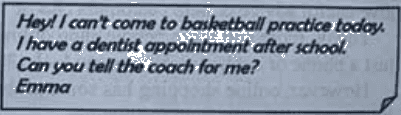
A. Emma is asking you to tell the coach she won’t come.
B. Emma is asking you to reschedule her appointment.
C. Emma wants you to meet her after basketball practice.
D. Emma invites you to go to the dentist with her.
Read the following passage and mark the letter A, B, C or D on your answer sheet to indicate the correct answer to each of the following questions from 31 to 36.
Language is indispensable to humans. It helps us share our thoughts, express our emotions, and understand one another. Without language, we wouldn’t be able to build relationships or learn from others. Over time, languages have gradually developed, changing in sounds, grammar, and vocabulary. That’s why the way people speak today is often very different from how their grandparents spoke.
Around the world, there are thousands of languages. Some are spoken by millions of people, while others are used by only a small group. Sadly, many of these smaller languages are disappearing. When a language dies, we also lose part of a culture and history. That’s why many specialists are working hard to protect endangered languages before they are lost forever.
Not all languages are spoken with voices. Sign languages use hand movements and facial expressions to share meaning. They are used by people who are deaf or hard of hearing and are just as rich and meaningful as spoken ones.
Learning another language can also help you personally. It can boost your self-confidence, strengthen your brain and help you understand different cultures. In today’s global world, speaking more than one language can help you open doors in both life and work.
Question 31. According to the passage, the word “boost” is CLOSEST in meaning to ______.
A. worsen
B. lessen
C. reduce
D. improve
Question 32. What is the main idea of the passage?
A. Sign languages are more useful than spoken languages.
B. Only major languages help people in daily situations.
C. Language connects people and changes across history.
D. Language is used only for speaking with other people.
Question 33. According to the passage, the word “indispensable” is OPPOSITE in meaning to ______.
A. uncommon
B. unimportant
C. unavailable
D. unusual
Question 34. Which of the following is TRUE according to the passage?
A. The way people speak today is often the same as how their grandparents spoke.
B. The way people speak today is often similar to how their grandparents spoke.
C. The way people speak today is often like how their grandparents spoke.
D. The way people speak today often differs from how their grandparents spoke.
Question 35. Why do a lot of experts want to protect small languages according to the passage?
A. Because they help people travel easily to new places.
B. Because their disappearance means losing culture and history.
C. Because their speakers often forget how to use them.
D. Because they are spoken in places with no written signs.
Question 36. What does the passage say about sign languages?
A. They are only used in small schools abroad.
B. They are easier to understand than grammar.
C. They use hands and faces to show meaning.
D. They cannot express feelings in daily life.
Four phrases/sentences have been removed from the text below. For each question, mark the letter A, B, C or D on your answer sheet to indicate the correct option that best fits each of the numbered blanks from 37 to 40.
Shopping is an important part of everyday life. (37) ______ Some enjoy going to small local shops, while others prefer big supermarkets or modern shopping malls. In these places, shoppers can look (38) ______. This is especially helpful when buying things like clothes, shoes, or furniture. Sometimes, shop assistants also give useful advice or help customers choose the right product.
Today, more and more people shop online. It is easy, fast, and can be done at any time from home. With just a phone or computer, buyers can look (39) ______. Items are then delivered to their homes.
However, online shopping has some problems. (40) ______ There may also be delivery delays, or the item might look different from the pictures.
Both online and in-person shopping have advantages, so people can choose what works best for them.
A. People cannot feel or test the product before buying it
B. People visit many kinds of stores to buy food, clothes, and other items
C. at items closely, touch them, and even try them on
D. through hundreds of products and order them with a few clicks
Question 37. ______
Question 38. ______
Question 39. ______
Question 40. _______
------HẾT------
Xem đáp án
HƯỚNG DẪN GIẢI
Thực hiện: Ban chuyên môn trithuchub.com

Đề thi minh hoạ vào 10 môn Anh Hà Nội năm 2025
Đề bài
Mark the letter A, B, C or D on your answer sheet to indicate the word whose underlined part differs from the other three in pronunciation in each of the following questions.
Question 1.
A. show
B. post
C. lock
D. note
Question 2.
A. facility
B. crowd
C. space
D. cycling
Mark the letter A, B, C or D on your answer sheet to indicate the word that differs from the other three in the position of primary stress in each of the following questions.
Question 3.
A. hotel
B. suburb
C. public
D. moment
Question 4.
A. arrival
B. emotion
C. mechanic
D. engineer
Mark the letter A, B, C or D on your answer sheet to indicate correct answers to each of the following sentences.
Question 5. Our tour guide gave us a list of local tourist _______________, including museums, parks, and historical sites.
A. attractions
B. buildings
C. situations
D. schedules
Question 6. She ____________ with her friends at the festival when the fireworks started.
A. was danced
B. danced
C. was dancing
D. dancing
Question 7. Nam thinks going hiking in the mountains is ____________ than swimming in a pool.
A. more tiring
B. so tiring
C. most tiring
D. as tiring
Question 8. If we ___________ renewable energy sources, we ____________ our carbon footprints.
A. used - reducing
B. will use - reduce
C. are using - reducing
D. use – will reduce
Question 9. Phuong is telling Amelia her good news.
Phuong: “I’ve just been recognized to be the best student of the month!”
Amelia: “ ______________”
A. Thanks for your advice.
B. No worries. Everything will be alright.
C. My pleasure.
D. How cool! Congratulations!
Question 10. Da Nang, ___________ is famous for its international fireworks festival, attracts thousands of visitors every year.
A. where
B. that
C. what
D. which
Question 11. Chi was __________ when she saw the beautiful sunset for the first time.
A. kind
B. amazed
C. worthy
D. helpless
Question 12. Drinking __________ of fruit juice is a good way to get vitamins.
A. many
B. few
C. a lot
D. no
Read the following announcement and mark the letter A, B, C or D on your answer sheet to indicate the correct option that best fits each of the numbered blanks from 13 and 16.
|
WHAT TO DO DURING DISASTERS 1. Stay (13) __________ your house and away from windows. 2. Don’t drive or walk into flood water. 3. Move to high ground far from (14) _____________ sea. 4. Get under a desk or table. 5. (15) ____________ to local news reports and leave if they tell you to leave. 6. Call the emergence services if you are in (16) _______________. |
Question 13.
A. over
B. into
C. inside
D. away
Question 14.
A. No article
B. a
C. the
D. an
Question 15.
A. Watch
B. Listen
C. Read
D. Wait
Question 16.
A. dangerous
B. endangered
C. dangerously
D. danger
Mark the letter A, B, C or D on your answer sheet to indicate the correct answer to each of the following questions from 17 to 18.
Question 17. Put the sentences (a-c) in the correct order, then fill in the blank to make a logical text.
We had an unforgettable holiday in Singapore last week. Things didn’t go on as smoothly as we had expected before. ______________.
a. Upon our arrival at the safari park two hours later, we realized that it was closed for maintenance.
b. It all started when my parents decided to visit the safari park.
c. We were so excited about the trip, but the moment that we left the hotel, it started raining.
A. b – c – a
B. a – c – b
C. c – b – a
D. b – a – c
Question 18. Choose the sentence that can end the text (in Question 17) most appropriately.
A. Then we asked a local man who lived nearby how to get to the park.
B. First, this park is really a must-visit for all nature lovers.
C. We finally got back to the hotel with sadness and disappointment.
D. To begin with, we had a lot fun exploring the different animal exhibits here.
Mark the letter A, B, C or D on your answer sheet to indicate the correct opinion that best fits each of the numbered blanks from 19 to 24.
Living in the mountains can be very hard. First, there is (19) ____________ to grow crops or raise livestock. (20) ____________ houses is also difficult because the land is not flat. The air in the mountain is (21) _____________. The higher we get, the thinner the air becomes. This means there is less oxygen, which makes breathing harder.
Despite these challenges, people around the world have lived and worked in mountainous areas for centuries. There are many health benefits of living in the mountains. Being on the mountaintops (22) ___________ you to live far from pollution. The air you breathe is fresher. There are places where you cannot drive a car or a motorbike, (23) __________ you have to walk. Travelling up and down hills and mountains on foot helps keep (24) ___________. Finally, mountain people are quite simple and friendly. They live a peaceful life.
Question 19.
A. enough not land
B. land not enough
C. not enough land
D. land enough not
Question 20.
A. Build
B. Building
C. Builds
D. Buildings
Question 21.
A. another problem
B. many problem
C. others problem
D. any problem
Question 22.
A. lets
B. allow
C. let
D. allows
Question 23.
A. because
B. although
C. so
D. since
Question 24.
A. you are active
B. active you
C. active you are
D. you active
Mark the letter A, B, C or D on your answer sheet to indicate the sentence that is closest on meaning to the original sentence in each of the following questions.
Question 25. “I’m busy with my work all day today”, his dad said.
A. His dad said he was busy with his work all day that day.
B. His had said he is busy with this work all day that day.
C. His had said he were busy with his work all day today.
D. His dad said I was busy with work all day that day.
Question 26. Let’s drink some warm water after eating spicy food.
A. What about we drink some warm water after eating spicy food?
B. How about to drink some warm water after eating spice food?
C. Why don’t we drink some warm water after eating spicy food?
D. Why not drinking some warm water after we eating spicy food?
Mark the letter A, B, C or D on your answer sheet to indicate the sentence that is made from the given cues in each of the following questions.
Question 27. Lucy and I/ different opinions/ but/ we/ still/ get/ each other.
A. Lucy and I have different opinions, but we still get along each other.
B. Lucy and I have different opinions, but we still get with each other.
C. Lucy and I have different opinions, but we still get well with each other.
D. Lucy and I have different opinions, but we still get on with each other.
Question 28. Laura/ suggested/ go skiing/ the Alps/ Christmas.
A. Laura suggested going skiing in the Alps at Christmas.
B. Laura suggested we going skiing in the Alps in the Christmas.
C. Laura suggested we going skiing in the Alps at Christmas.
D. Laura suggested going skiing in the Alps on the Christmas.
Read the following sign or notice and mark the letter A, B, C or D on your answer sheet to indicate the correct answer to each of the following questions.
Question 29. What does the sign say?

A. You don’t need to wear a hard hat in this area.
B. There is a hard hat in this area.
C. This area provides hard hat.
D. You must wear a hard hat in this area.
Question 30. What does the notice say?
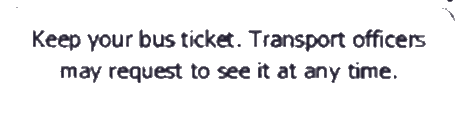
A. There may be ticket checks during your bus journey.
B. Transport officers request you to buy a bus ticket.
C. Transport officers have to keep your bus ticket.
D. You can get your bus ticket from the transport officers.
Read the following passage and mark the letter A, B, C or D on your answer sheet to indicate the correct answer to each of the following questions from 31 and 36.
British English and American English are two variations of the English language that share many similarities, but also some notable differences in pronunciation, vocabulary and grammar.
The pronunciation of American English is one of the biggest differences. One of the most noticeable differences is the pronunciation of R. The British tend to pronounce R in the middle and end of words very softly, but Americans like to stress it. Spelling is another difference. Americans often spell many verbs ending with a -t sound by using -ed as in burnt (BE) and burned (AE). In both of these cases, the -t is pronounced. British prefer to spell -ise with a S but American prefer to spell it as it is pronounced with a Z.
There are even differences in vocabulary. Americans use the word “pants” for “trousers” and “apartment” for the word “flat”.
Grammar is another area of difference. The British are more likely to use formal speech, such as “shall”, while Americans prefer the more informal version, “will”. You may hear the British say “needn’t” but Americans would almost always use “don’t need to”. In spite of these differences, the vast majority of language points is the same in both variations.
Question 31. What is the main idea of the reading passage?
A. British and American English are identical in all aspects.
B. British and American English have key difference but many similarities.
C. There are different ways to pronounce British and American English.
D. There are different variations of the English language around the world.
Question 32. The word notable in paragraph 1 is CLOSEST in meaning to ____________.
A. important
B. easy
C. unimportant
D. difficult
Question 33. What does the writer use to give more explanations to each point?
A. numbers
B. symbols
C. examples
D. quotes (other people’s words)
Question 34. Which example is NOT mentioned in the text?
A. pronunciation of R
B. fluency
C. spelling of -ed
D. apartment vs. flat
Question 35. What final comment does the author make about differences between American and British English?
A. There are no differences in vocabulary and grammar.
B. There is only a slight difference in pronunciation.
C. Most language points are the same.
D. Differences are more important than similarities.
Question 36. The word vast in paragraph 3 is OPPOSITE in meaning to __________.
A. large
B. unlimited
C. huge
D. small
Four phrases/ sentences have been removed from the text below. For each question, mark the letter A, B, C or D on your answer sheet to indicate the correct option that best fits each of the numbered blanks from 37 to 40.
England’s traditions have been around for hundreds, even thousands of years. English cuisine is (37) ______________ that English people are proud to keep alive.
Typical English cuisine has developed over many centuries, and people say that fish and chips is the most English dish of all. It is believed that fish and chips appeared in England in the 19th century. (38) ___________. Since then people have considered fish and chips to be England's national dish, and it is now a common takeaway in the United Kingdom
The basic ingredients of the dish are fried fish served with chips. (39) ________________. Fish and chips is served hot as the main dish in England. Although there is oil and carbohydrates in fish and chips, it is healthier than other takeaway dishes.
Now there are fish and chip shops in many countries, and it is (40) ____________in other countries too. Preserving and promoting fish and chips is the way English people keep themselves associated with the past.
A. becoming more and more popular
B. among the deep-rooted traditions
C. The earliest fish and chip shop opened in London during the 1860s
D. People in different places may add peas, vinegar, lemon, or ketchup
Question 37. ______
Question 38. ______
Question 39. ______
Question 40. ______
--- THE END ---
Xem đáp án
HƯỚNG DẪN GIẢI
Thực hiện: Ban chuyên môn trithuchub.com
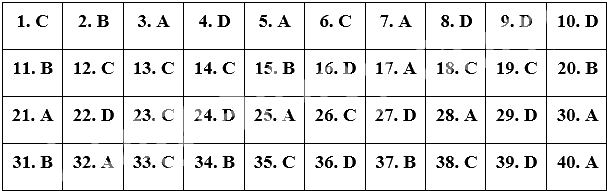
HƯỚNG DẪN GIẢI CHI TIẾT
1. (NB)
Kiến thức: Cách phát âm đuôi “o”
Giải thích:
A. show /ʃəʊ/
B. post /pəʊst/
C. lock /lɒk/
D. note /nəʊt/
Phần gạch chân phương án C được phát âm là /ɒ/, còn lại là /əʊ/
Choose C.
2. (NB)
Kiến thức: Cách phát âm “c”
Giải thích:
A. facility /fəˈsɪləti/
B. crowd /kraʊd/
C. space /speɪs/
D. cycling /ˈsaɪklɪŋ/
Phần gạch chân phương án B được phát âm là /k/, còn lại là /s/
Choose B.
3. (NB)
Kiến thức: Trọng âm từ có 2 âm tiết
Giải thích:
A. hotel /həʊˈtel/
B. suburb /ˈsʌbɜːb/
C. public /ˈpʌblɪk/
D. moment /ˈməʊmənt/
Phương án A có trọng âm rơi vào âm tiết 2, còn lại là âm tiết 1
Choose A.
4. (NB)
Kiến thức: Trọng âm từ có 3 âm tiết
Giải thích:
A. arrival /əˈraɪvl/
B. emotion /ɪˈməʊʃn/
C. mechanic /məˈkænɪk/
D. engineer /ˌendʒɪˈnɪə(r)/
Phương án D có trọng âm rơi vào âm tiết 3, còn lại là âm tiết 2
Choose D.
5. (TH)
Kiến thức: Từ vựng
Giải thích:
A. attractions (n): điểm thu hút du lịch
B. buildings (n): tòa nhà
C. situations (n): tình huống
D. schedules (n): lịch trình
=> Our tour guide gives us a list of local tourist attractions including museums, park historical sites.
Tạm dịch: Hướng dẫn viên của chúng tôi cung cấp danh sách các điểm tham quan du lịch địa phương bao gồm bảo tàng, công viên, di tích lịch sử.
Choose A.
6. (TH)
Kiến thức: Quá khứ tiếp diễn
Giải thích:
Chúng ta dùng thì quá khứ tiếp diễn để diễn tả một hành động đang xảy ra tại một thời điểm khác định trong quá khứ.
Cấu trúc: was/ were + V-ing
=> She was dancing with her friends at the festivals when the fireworks started.
Tạm dịch: Cô ấy đang khiêu vũ với bạn bè tại lễ hội khi pháo hoa bắt đầu bắn.
Choose C.
7. (TH)
Kiến thức: So sánh
Giải thích:
Cấu trúc so sánh hơn của tính từ dài: S1 + tobe + more + adj + than + S2.
=> Nam thinks going hiking in the mountains is more tiring than swimming in a pool.
Tạm dịch: Nam cho rằng đi bộ đường dài trên núi mệt hơn bơi trong hồ bơi.
Choose A.
8. (TH)
Kiến thức: Câu điều kiện
Giải thích:
Cấu trúc câu điều kiện loại 1: If + S + V-hiện tại đơn + O, S + will (not) + V-nguyên thể + O.
=> If we use renewable energy sources, we will reduce our carbon footprints.
Tạm dịch: Nếu chúng ta sử dụng các nguồn năng lượng tái tạo, chúng ta sẽ giảm được lượng khí thải carbon.
Choose D.
9. (TH)
Kiến thức: Ngôn ngữ giao tiếp
Giải thích:
Phương đang kể cho Amelia tin tốt của cô ấy.
Phương: Mình vừa mới được công nhận là học sinh giỏi nhất của tháng!”
Amelia: “_____________________________”
A. Cảm ơn lời khuyên của bạn
B. Đừng lo lắng. Mọi chuyện sẽ ổn thôi.
C. Niềm vui của tôi.
D. Thật ngầu! Xin chúc mừng!
Choose D.
10. (TH)
Kiến thức: Đại từ quan hệ
Giải thích:
A. where => sai ngữ pháp vì sau "where" phải là mệnh đề (S + V)
B. that => sai ngữ pháp vì “that” không được sử dụng trong mệnh đề quan hệ không xác định
C. what => sai ngữ pháp vì không phải là đại từ quan hệ, không thể thay cho "Da Nang"
D. which => thay thế cho danh từ chỉ vật, có thể đóng vai trò làm chủ ngữ/ tân ngữ trong câu. Trong trường hợp này “which” đóng vai trò làm chủ ngữ (vì phía sau là động từ tobe “is”)
=> Da Nang, which is famous for its international fireworks festival, attracts thousands of visitors every year.
Tạm dịch: Đà Nẵng, nơi nổi tiếng với lễ hội pháo hoa quốc tế, thu hút hàng ngàn du khách mỗi năm.
Choose D.
11. (TH)
Kiến thức: Từ vựng
Giải thích:
A. kind (adj): tốt bụng
B. amazed (adj): kinh ngạc
C. worthy (adj): có giá trị
D. helpless (adj): vô dụng
=> Chi was amazed when she saw the beautiful sunset for the first time.
Tạm dịch: Chi đã vô cùng kinh ngạc khi lần đầu tiên được chứng kiến cảnh hoàng hôn tuyệt đẹp.
Choose B.
12. (TH)
Kiến thức: Lượng từ
Giải thích:
Phía sau vị trí cần điền có “of” nên chúng ta dùng “a lot of” (nhiều)
=> Drinking a lot of fruit juice is a good way to get vitamins.
Tạm dịch: Uống nhiều nước ép trái cây là một cách tốt để bổ sung vitamin.
Choose C.
13. (TH)
Kiến thức: Giới từ
Giải thích:
A. stay over: qua đêm
B. into: vào trong
C. inside: bên trong
D. away => cụm stay away from: tránh xa (đã xuất hiện phía sau)
=> Stay inside your home and away from windows.
Tạm dịch: Ở trong nhà và tránh xa cửa sổ.
Choose C.
14. (TH)
Kiến thức: Mạo từ
Giải thích:
Dùng “the” trước các danh từ chỉ địa lý như: town, country, sea, land.
=> Move to high ground far from the sea.
Tạm dịch: Di chuyển đến vùng đất cao, xa biển.
Choose C.
15. (TH)
Kiến thức: Từ vựng
Giải thích:
A. watch (v): xem
B. listen (v): nghe
C. read (v): đọc
D. wait (v): chờ đợi
=> Listen to local news reports and leave if they tell you to leave.
Tạm dịch: Hãy nghe tin tức địa phương và rời đi nếu họ bảo bạn rời đi.
Choose B.
16. (TH)
Kiến thức: Từ loại
Giải thích:
A. dangerous (adj): nguy hiểm
B. endangered (adj): gặp nguy hiểm
C. dangerously (adv): một cách nguy hiểm
D. danger (n): mối nguy
=> Call the emergency services if you are in danger.
Tạm dịch: Gọi dịch vụ khẩn cấp nếu bạn gặp nguy hiểm.
Choose D.
17 (TH)
Kiến thức: Sắp xếp câu
Giải thích:
Thứ tự đúng:
b: It all started when my parents decided to visit the safari park." (Giới thiệu kế hoạch ban đầu cho chuyến đi.)
c: We were so excited about the trip, but the moment that we left the hotel, it started raining. (Câu này diễn giải theo logic là sự kiện tiếp theo xảy ra khi họ bắt đầu chuyến đi.)
a: Upon our arrival at the safari park two hours later, we realized that it was closed for maintenance. (Câu này hoàn thành trình tự bằng cách mô tả những gì đã xảy ra khi họ đến đích.)
Tạm dịch:
b. Mọi chuyện bắt đầu khi bố mẹ tôi quyết định đến thăm công viên safari.
c. Chúng tôi rất háo hức với chuyến đi, nhưng ngay khi chúng tôi rời khỏi khách sạn, trời bắt đầu mưa.
a. Khi đến công viên safari hai giờ sau, chúng tôi nhận ra rằng công viên đã đóng cửa để bảo trì.
Choose A.
18 (TH)
Kiến thức: Sắp xếp câu
Giải thích:
A. Sau đó, chúng tôi hỏi một người đàn ông địa phương sống gần đó cách đến công viên.
B. Đầu tiên, công viên này thực sự là nơi không thể bỏ qua đối với tất cả những người yêu thiên nhiên.
C. Cuối cùng chúng tôi cũng trở về khách sạn với nỗi buồn và thất vọng.
D. Đầu tiên, chúng tôi đã có rất nhiều niềm vui khi khám phá các cuộc triển lãm động vật khác nhau ở đây.
Câu chuyện mô tả những sự việc không may trong chuyến đi, như trời mưa và công viên đóng cửa. Vì vậy, câu kết thúc phù hợp nhất là câu thể hiện sự thất vọng và buồn bã, đúng với nội dung trước đó. => Đáp án C phù hợp về nghĩa nhất
Choose C.
19 (TH)
Kiến thức: enough với danh từ
Giải thích:
Cấu trúc: There is/are (not) + enough + N …
Thông tin:
First, there is (19) __________ to grow crops or raise livestock.
Tạm dịch:
Đầu tiên, không có đủ đất để trồng trọt hoặc chăn nuôi.
Choose C.
20 (TH)
Kiến thức: Danh động từ
Giải thích:
Khi nói về một hành động như một danh từ, chúng ta dùng dạng V-ing.
Building houses: Việc xây dựng nhà
Thông tin:
(20) _________ houses is also difficult because the land is not flat.
Tạm dịch:
Việc xây dựng nhà cũng khó khăn vì đất không bằng phẳng.
Choose B.
21 (TH)
Kiến thức: Danh từ
Giải thích:
A. another problem: 1 vấn đề khác
B. many problem => sai ngữ pháp, many + N số nhiều
C. others problem => sai ngữ pháp
D. any problem => any dùng trong câu phủ định/câu hỏi => không phù hợp
Thông tin:
The air in the mountains is (21) __________.
Tạm dịch:
Không khí trên núi là một vấn đề khác.
Choose A.
22 (TH)
Kiến thức: Sự hòa hợp chủ ngữ và động từ
Giải thích:
S + let + O + V nguyên thể
S + allow + O + to V
Sau chỗ trống là to V => chọn B. allow hoặc D. allows
Chủ ngữ Being on the mountaintops (Việc ở trên đỉnh núi) là danh từ số ít => chọn allows
Thông tin:
Being on the mountaintops (22) ___________ you to live far from pollution.
Tạm dịch:
Ở trên đỉnh núi cho phép bạn sống xa ô nhiễm.
Choose D.
23 (TH)
Kiến thức: Liên từ
Giải thích:
A. bởi vì
B. mặc dù
C. vì vậy
D. bởi vì
Câu diễn tả mối quan hệ nguyên nhân kết quả => dùng “so”.
Thông tin:
Travelling up and down hills and mountains on foot helps keep (24)_______.
Tạm dịch:
Có những nơi bạn không thể lái ô tô hoặc xe máy, vì vậy bạn phải đi bộ.
Choose C.
24 (TH)
Kiến thức: Đọc - điền từ
Giải thích:
Keep sb + adj: giữ cho ai đó thế nào
Thông tin:
Travelling up and down hills and mountains on foot helps keep (24)_______.
Tạm dịch:
Đi bộ lên xuống đồi núi giúp bạn duy trì tính năng động .
Choose D.
Dịch bài đọc:
Sống ở vùng núi có thể rất khó khăn. Đầu tiên, không có đủ đất để trồng trọt hoặc nuôi gia súc. Xây nhà cũng khó khăn vì đất không bằng phẳng. Không khí ở vùng núi là một vấn đề khác. Càng lên cao, không khí càng loãng. Điều này có nghĩa là có ít oxy hơn, khiến việc thở trở nên khó khăn hơn. Bất chấp những thách thức này, mọi người trên khắp thế giới đã sống và làm việc ở các vùng núi trong nhiều thế kỷ. Có nhiều lợi ích cho sức khỏe khi sống ở vùng núi. Ở trên đỉnh núi giúp bạn sống xa ô nhiễm. Không khí bạn hít thở trong lành hơn. Có những nơi bạn không thể lái ô tô hoặc xe máy, vì vậy bạn phải đi bộ. Đi lên và xuống đồi và núi giúp duy trì tính năng động Cuối cùng, người dân vùng núi khá giản dị và thân thiện. Họ sống cuộc sống yên bình.
25 (TH)
Kiến thức: Câu gián tiếp
Giải thích:
S + reported words + S + V (lùi thì)
Tạm dịch:
Bố anh ấy nói bố anh ấy bận cả ngày hôm ấy.
Choose A.
26 (TH)
Kiến thức: Câu mời
Giải thích:
Let’s = Why don't we
Tạm dịch:
Tại sao chúng ta không uống một chút nước ấm sau khi ăn đồ cay.
Choose C.
27 (VD)
Kiến thức: Cụm từ cố định
Giải thích:
get on with: có mối quan hệ tốt với ai
Tạm dịch:
Lucy và tôi có những quan điểm khác nhau, nhưng chúng tôi vẫn có mối quan hệ tốt với nhau.
Choose D.
28 (TH)
Kiến thức: Danh động từ
Giải thích:
Suggest + V-ing: Đề xuất làm gì
Tạm dịch:
Laura đề xuất đi trượt tuyết ở Alps vào dịp Giáng sinh
Choose A.
29 (TH)
Kiến thức: Đọc - suy luận
Giải thích:
Biển báo cảnh báo “Hard hat area".
Tạm dịch:
Bạn phải đội mũ bảo hộ lao động trong khu vực này
Choose D.
30 (TH)
Kiến thức: Đọc - suy luận
Giải thích:
Thông báo chú ý rằng phải giữ vé xe vì người kiểm vé sẽ yêu cầu kiểm tra vé bất cứ lúc nào
Tạm dịch:
Sẽ có lần kiểm tra vé trong suốt quá trình bạn đi xe bus
Choose A.
31 (VD)
Kiến thức: Đọc - ý chính
Giải thích:
A. Tiếng Anh Anh và tiếng Anh Mỹ giống hệt nhau về mọi mặt.
B. Tiếng Anh Anh và tiếng Anh Mỹ có những điểm khác biệt chính nhưng cũng có nhiều điểm tương đồng.
C. Có nhiều cách phát âm tiếng Anh Anh và tiếng Anh Mỹ khác nhau.
D. Có nhiều biến thể khác nhau của tiếng Anh trên khắp thế giới.
=> Bài đọc chủ yếu thảo luận về những sự khác biệt chính giữa Tiếng Anh-Anh và Tiếng Anh-Mỹ. Tuy nhiên, ở cuối bài, tác giả có khẳng định có sự giống nhau lớn ở những điểm khác giữa hai thứ tiếng này.
Choose B.
32 (TH)
Kiến thức: Đọc - từ vựng
Giải thích:
Từ "notable" trong đoạn 1 có nghĩa GẦN NHẤT với
A. quan trọng
B. dễ
C. không quan trọng
D. khó
notable (adj) đáng chú ý, quan trọng = important
Thông tin:
British English and American English are two variations of the English language that share many similarities, but also some notable differences in pronunciation, vocabulary and grammar.
Tạm dịch:
Tiếng Anh Anh và tiếng Anh Mỹ là hai biến thể của tiếng Anh có nhiều điểm tương đồng nhưng cũng có một số điểm khác biệt đáng chú ý về cách phát âm, từ vựng và ngữ pháp.
Choose A.
33 (VD)
Kiến thức: Đọc - chi tiết
Giải thích:
Tác giả sử dụng gì để giải thích thêm cho từng điểm?
A. số
B. ký hiệu
C. ví dụ
D. trích dẫn (lời của người khác)
=> Tác giả dùng các ví dụ để minh hoạ cho mỗi sự khác nhau về phát âm, từ vựng, ngữ pháp
Choose C.
34 (TH)
Kiến thức: Đọc - chi tiết
Giải thích:
Ví dụ nào KHÔNG được đề cập trong văn bản?
A. cách phát âm của R
C. cách viết của ed
B. sự trôi chảy
D. apartment so với flat
=> tác giả có đề cập tới cách phát âm của chữ R, cách viết ed và từ vựng giữa hai thứ tiếng.
Choose B.
35 (TH)
Kiến thức: Đọc - chi tiết
Giải thích:
Tác giả đưa ra bình luận cuối cùng nào về sự khác biệt giữa tiếng Anh Mỹ và Anh?
A. Không có sự khác biệt về từ vựng và ngữ pháp.
B. Chỉ có một sự khác biệt nhỏ về cách phát âm.
C. Hầu hết các điểm ngôn ngữ đều giống nhau.
D. Sự khác biệt quan trọng hơn sự giống nhau.
Thông tin:
In spite of these differences, the vast majority of language points are the same in both variations.
Tạm dịch:
Dù cho có những khác biệt này, phần lớn các điểm ngôn ngữ đều giống nhau ở cả hai biến thể.
Choose C.
36 (TH)
Kiến thức: Đọc - từ vựng
Giải thích:
Từ "vast" trong đoạn 3 có nghĩa ĐỐI LẬP với ______.
A. lớn
B. không giới hạn
C. khổng lồ
D. nhỏ
vast (adj) to lớn >< small
Thông tin:
In spite of these differences, the vast majority of language points are the same in both variations.
Tạm dịch:
Dù cho có những khác biệt này, phần lớn các điểm ngôn ngữ đều giống nhau ở cả hai biến thể.
Choose D.
Dịch bài đọc:
Tiếng Anh Anh và tiếng Anh Mỹ là hai biến thể của tiếng Anh có nhiều điểm tương đồng, nhưng cũng có một số điểm khác biệt đáng chú ý về cách phát âm, từ vựng và ngữ pháp.
Cách phát âm của tiếng Anh Mỹ là một trong những điểm khác biệt lớn nhất. Một trong những điểm khác biệt đáng chú ý nhất là cách phát âm của R. Người Anh có xu hướng phát âm R ở giữa và cuối từ rất nhẹ, nhưng người Mỹ thích nhấn mạnh vào nó. Chính tả là một điểm khác biệt khác. Người Mỹ thường viết nhiều động từ kết thúc bằng âm -t bằng cách sử dụng -ed như trong burns (BE) và burns (AE). Trong cả hai trường hợp này, -t đều được phát âm. Người Anh thích viết -ise bằng chữ S nhưng người Mỹ thích viết theo cách phát âm là chữ Z.
Thậm chí còn có sự khác biệt về từ vựng. Người Mỹ sử dụng từ "pants" cho "trousers" và "apartment" cho "flat".
Ngữ pháp là một điểm khác biệt khác. Người Anh có nhiều khả năng sử dụng cách nói trang trọng hơn, chẳng hạn như "shall", trong khi người Mỹ thích phiên bản không trang trọng hơn, "will". Bạn có thể nghe người Anh nói "needn't" nhưng người Mỹ hầu như luôn sử dụng "don't need to". Bất chấp những khác biệt này, phần lớn các điểm ngôn ngữ đều giống nhau ở cả hai biến thể.
37 (TH)
Kiến thức: Đọc - điền cụm từ
Giải thích:
Truyền thống của nước Anh đã tồn tại hàng trăm, thậm chí hàng nghìn năm. Ẩm thực Anh là (37) _____ mà người Anh tự hào giữ gìn.
Tạm dịch:
Truyền thống của nước Anh đã tồn tại hàng trăm, thậm chí hàng nghìn năm. Ẩm thực Anh là một trong những truyền thống lâu đời mà người Anh tự hào giữ gìn.
Choose B.
38 (TH)
Kiến thức: Đọc - điền câu
Giải thích:
Ẩm thực Anh điển hình đã phát triển qua nhiều thế kỷ, và mọi người nói rằng cá và khoai tây chiên là món ăn Anh nhất trong tất cả. Người ta tin rằng cá và khoai tây chiên xuất hiện ở Anh vào thế kỷ 19. (38) ______. Kể từ đó, mọi người coi cá và khoai tây chiên là món ăn quốc gia của Anh, và nó không có ở Vương quốc Anh.
Tạm dịch: Ẩm thực Anh điển hình đã phát triển qua nhiều thế kỷ, và mọi người nói rằng cá và khoai tây chiên là món ăn Anh nhất trong tất cả. Người ta tin rằng cá và khoai tây chiên xuất hiện ở Anh vào thế kỷ 19. Cửa hàng cá và khoai tây chiên đầu tiên mở tại London vào những năm 1860. Kể từ đó, mọi người coi cá và khoai tây chiên là món ăn quốc gia của Anh, và hiện nay nó là món ăn mang về rất phổ biến ở Anh.
Choose C.
39 (TH)
Kiến thức: Đọc - điền câu
Giải thích:
Thành phần cơ bản của món ăn là cá chiên ăn kèm với khoai tây chiên. (39) ______. Cá và khoai tây chiên được phục vụ nóng như món ăn chính ở Anh. Mặc dù có dầu và carbohydrate trong cá và khoai tây chiên, nhưng nó lành mạnh hơn các món ăn mang về khác.
Tạm dịch: Thành phần cơ bản của món ăn là cá chiên ăn kèm với khoai tây chiên. Người dân ở những nơi khác nhau có thể thêm đậu Hà Lan, giấm, chanh hoặc tương cà. Cá và khoai tây chiên được phục vụ nóng như món chính ở Anh. Mặc dù có dầu và carbohydrate trong cá và khoai tây chiên, nhưng nó lành mạnh hơn các món ăn mang về khác.
Choose D.
40 (TH)
Kiến thức: Đọc - điền cụm từ
Giải thích:
Hiện nay có nhiều cửa hàng bán cá và khoai tây chiên ở nhiều quốc gia, và nó cũng (40) ______ ở nhiều quốc gia khác nữa. Bảo tồn và quảng bá cá và khoai tây chiên là cách người Anh giữ mình gắn bó với quá khứ.
Tạm dịch: Hiện nay có nhiều cửa hàng bán cá và khoai tây chiên ở nhiều quốc gia và ngày càng trở nên phổ biến ở nhiều quốc gia khác. Bảo tồn và quảng bá cá và khoai tây chiên là cách người Anh giữ mình gắn bó với quá khứ.
Choose A.
Dịch bài đọc:
Truyền thống của nước Anh đã tồn tại hàng trăm, thậm chí hàng nghìn năm. Ẩm thực Anh là một trong những truyền thống lâu đời mà người Anh tự hào giữ gìn. Ẩm thực Anh điển hình đã phát triển qua nhiều thế kỷ, và mọi người nói rằng cá và khoai tây chiên là món ăn Anh nhất trong tất cả. Người ta tin rằng cá và khoai tây chiên xuất hiện ở Anh vào thế kỷ 19. Cửa hàng cá và khoai tây chiên đầu tiên mở tại London vào những năm 1860. Kể từ đó, mọi người coi cá và khoai tây chiên là món ăn quốc gia của Anh, và hiện nay nó là món ăn mang về rất phổ biến ở Anh. Thành phần cơ bản của món ăn là cá chiên ăn kèm với khoai tây chiên. Người dân ở những nơi khác nhau có thể thêm đậu Hà Lan, giấm, chanh hoặc tương cà. Cá và khoai tây chiên được phục vụ nóng như món chính ở Anh. Mặc dù có dầu và carbohydrate trong cá và khoai tây chiên, nhưng nó lành mạnh hơn các món ăn mang về khác.
Đề thi vào 10 môn Anh Hà Nội năm 2023
Đề bài
Mark the letter A, B, C or D on your answer sheet to indicate the word whose underlined part is pronounced differently from that of the rest in each of the following questions.
Question 1:
A. cooks
B. sings
C. leaves
D. stays
Question 2:
A. sound
B. count
C. about
D. touch
Mark the letter A, B, C or D on your answer sheet to indicate the word that differs from the other three in the position of the primary stress in each of the following questions.
Question 3:
A. expect
B. complete
C. arrange
D. follow
Question 4:
A. tradition
B. historic
C. tropical
D. embroider
Mark the letter A, B, C or D on your answer sheet to indicate the correct answer to each of the following questions.
Question 5: I would like _____ a birthday cake with roses on top for my mother.
A. buy
B. to buy
C. bought
D. buying
Question 6: He used ______ for the national football team when he was young.
A. to be played
B. to play
C. to be playing
D. to playing
Question 7: The guard asked the children _____ in the 1.8-meter zone.
A. to not swim
B. not to swim
C. did not swim
D. do not swim
Question 8: Learning a new language can be one of the ______ challenging things you should try.
A. much
B. more
C. as
D. most
Question 9: We should take action to prevent the Covid-19 pandemic ______ spreading.
A. with
B. from
C. about
D. by
Question 10: _____ the hand-embroidered picture was very expensive, we decided to buy it.
A. Despite
B. Although
C. So
D. Therefore
Question 11: He laughs ______ whenever he watches the cartoon "Tom and Jerry" on TV.
A. unhappy
B. happy
C. happily
D. happiness
Question 12: The light suddenly went out while I _____ dinner with my family.
A. was having
B. had
C. am having
D. have had
Question 13: If everybody _____ traffic rules, roads will be much safer.
A. to obey
B. had obeyed
C. obeys
D. obeyed
Question 14: I wish I _____ all the natural and man-made wonders of Viet Nam.
A. can visit
B. visit
C. will visit
D. could visit
Mark the letter A, B, C or D on your answer sheet to indicate the word CLOSEST in meaning to the underlined word(s) in each of the following questions.
Question 15: The famous series "Harry Potter" consists of seven books.
A. divides
B. produces
C. has
D. makes
Question 16: Teenagers should learn how to cope with negative emotions such as fear and jealousy.
A. feelings
B. opinions
C. behaviours
D. ideas
Mark the letter A, B, C or D on your answer sheet to indicate the word OPPOSITE in meaning to the underlined word in each of the following questions.
Question 17: We need to find ways of producing energy without destroying the environment.
A. preserving
B. harming
C. changing
D. damaging
Question 18: I'm available this afternoon, so we can meet up then.
A. ready
B. busy
C. tired
D. free
Mark the letter A, B, C or D on your answer sheet to indicate the most suitable response to complete each of the following exchanges.
Question 19: - Nick: "Why don't we try that new Italian restaurant?" - Phuong: “______”
A. You're well done!
C. I'm glad to tell you so.
B. That sounds good.
D. You did a good job!
Question 20: - John: "You won the 100-meter race this morning. Congratulations!" - Lan: “______”
A. I'm afraid I can't.
B. Oh, because I ran slowly.
C. You're welcome.
D. Thank you. It's very encouraging.
Read the passage and mark the letter A, B, C, or D on your answer sheet to indicate the correct answer to each of the following questions.
Being overshadowed by Ha Long Bay to the north, Cat Ba Island is often left out of the itineraries of the majority of travellers coming to Viet Nam. Nevertheless, Cat Ba Island is one of the most attractive destinations in Viet Nam.
The massive island of Cat Ba is a fantastic destination for ecotourism and adventure activities in Northern Viet Nam. Cat Ba National Park, which was established on 31" March 1986, is one of the most ecologically diverse national parks in Viet Nam. The park possesses seven different ecosystems, both underwater and inland. It is home to thirty-two types of mammals, along with seventy bird species, and more than a thousand species of plants, hundreds of which can be used as medicines.
There are several different hiking and trekking routes through rugged and forested mountains within Cat Ba National Park. These routes are also categorized according to different types of trekking, so travellers don't have to be worried if they don't have a high level of physical) fitness. In addition, travellers can take a side visit to explore the exquisite Trung Trang cave or discover the traditional village of Viet Hai.
Question 21: Why isn't Cat Ba Island chosen in the itineraries of the majority of travellers coming to Viet Nam?
A. Because it is overshadowed by Ha Long Bay.
B. Because there is too much rain there.
C. Because it is too far from Ha Long Bay.
D. Because it is not a good destination for tourism.
Question 22: Cat Ba Island is a wonderful place and suitable for ______.
A. experiencing urban life
B. many indoor activities
C. scientific research and exploration
D. ecotourism and adventure activities in the north of Viet Nam
Question 23: Cat Ba National Park is home to thirty-two species of _____.
A. plants
B. medicines
C. mammals
D. birds
Question 24: The word "exquisite" in the passage is closest in meaning to _____.
A. ugly
B. plain
C. quiet
D. beautiful
Question 25: Which of the following statements is NOT true about Cat Ba National Park according to the passage?
A. Hiking and trekking in Cat Ba National Park require a high level of fitness.
B. There are seven different ecosystems in Cat Ba National Park.
C. It is one of the most ecologically diverse national parks in Viet Nam.
D. It was set up in 1986.
Read the passage and mark the letter A, B, C, or D on your answer sheet to indicate the correct answer to each of the following questions.
Hung King Festival is a national holiday in Viet Nam that is celebrated on the 10 day of the third lunar month, which usually falls in April. This festival commemorates the Hung Kings, (26) _____ were the first kings of Viet Nam and are considered the founding fathers of the nation.
The festival is celebrated by Vietnamese people all over the world, (27)____ the biggest celebrations take place in the city of Phu Tho, where the Hung King Temple is located. People visit the temple to pay their (28)_____ and make offerings of incense, flowers, and food.
During the festival, there are also parades and cultural performances like lion dances and folk song singing. People wear colourful clothing and (29) _____ traditional games, such as bamboo pole dancing and tug-of-war.
Hung King Festival is (30) _____ important cultural event in Viet Nam, as it honours the country's history and founding fathers.
Question 26:
A. whose
B. which
C. who
D. whom
Question 27:
A. so
B. but
C. nor
D. or
Question 28:
A. sympathies
B. senses
C. attitudes
D. respects
Question 29:
A. put up
B. bring about
C. come across
D. participate in
Question 30:
A. an
B. the
C. a
D. Ø
Mark the letter A, B, C or D on your answer sheet to indicate the underlined part that needs correction in each of the following questions.
Question 31: Last summer my cousin has stayed on my parents' farm for a month.
A. on
B. has stayed
C. For
D. parents'
Question 32: You are interested in playing computer games in your free time, are you?
A. playing
B. are
C. in
D. games
Mark the letter A, B, C, or D on your answer sheet to indicate the sentence that is closest in meaning to each of the following questions.
Question 33: He started working as a computer programmer 5 years ago.
A. He works as a computer programmer 5 years ago.
B. He was working as a computer programmer 5 years ago.
C. He has started working as a computer programmer for 5 years.
D. He has worked as a computer programmer for 5 years.
Question 34: Children should avoid spending too much time watching television.
A. It is a good idea for children not to spend too much time watching television.
B. It is not a good idea for children spends too much time watching television.
C. It is not a good idea for children spending too much time watching television.
D. It is a good idea for children to spend too much time watching television.
Question 35: More people will use solar energy in the future.
A. Solar energy will been used by more people in the future.
B. Solar energy will be used by more people on the future.
C. Solar energy will be use by more people in the future.
D. Solar energy will be used by more people in the future.
Question 36: My teacher asked me: "Where are you going on your vacation this year?"
A. My teacher asked me where are you going on my vacation this year.
B. My teacher asked me where I was going on my vacation that year.
C. My teacher asked me where am I going on my vacation this year.
D. My teacher asked me where if I was going on my vacation that year.
Mark the letter A, B, C, or D on your answer sheet to indicate the sentence that is best written from the words/phrases given.
Question 37: She / tell me / the trip / village / where / born / grow up.
A. She tells me about the trip to village where she be born and grew up.
B. She told me about the trip to the village where she is born and grew up.
C. She told me about the trip to the village where she was born and grew up.
D. She tells me about the trip the village where she is born and grew up.
Question 38: They / live / Moscow / before / they / move / a new house / London/last year.
A. They lived in Moscow before they had moved into a new house in London last year.
B. They lived in Moscow before they move into a new house in London last year.
C. They had lived in Moscow before they had moved into a new house in London last year.
D. They had lived in Moscow before they moved into a new house in London last year.
Question 39: She / suggest / go / train / today / instead of / take / plane / tomorrow.
A. She suggested to go by train today instead of to take the plane tomorrow.
B. She suggested going by train today instead of taking the plane tomorrow.
C. She suggested going by train today instead of we take the plane tomorrow.
D. She suggested that we should go by train today instead of take the plane tomorrow.
Question 40: If / Lan / be / taller / work / fashion model.
A. If Lan were taller, she would work as a fashion model.
B. If Lan were taller, she will work as a fashion model.
C. If Lan were taller, she would have work as a fashion model.
D. If Lan were taller, she would works like a fashion model.
--- THE END ---
Đáp án
HƯỚNG DẪN GIẢI
THỰC HIỆN: BAN CHUYÊN MÔN trithuchub.com

HƯỚNG DẪN GIẢI CHI TIẾT
1. (TH)
Kiến thức: Phát âm
Giải thích:
A. cooks /kʊks/
B. sings /sɪŋz/
C. leaves /liːvzz/
D. stays /steɪz/
Phương án A phát âm là /s/, các phương án còn lại phát âm là /z/.
Đáp án A.
2. (TH)
Kiến thức: Phát âm
Giải thích:
A. sound /saʊnd/
B. count /kaʊnt/
C. about /əˈbaʊt/
D. touch /tʌtʃ/
Phương án D phát âm là /ʌ/, các phương án còn lại phát âm là /aʊ/.
Đáp án D.
3. (TH)
Kiến thức: Trọng âm
Giải thích:
A. expect /ɪkˈspekt/
B. complete /kəmˈpliːt/
C. arrange /əˈreɪndʒ/
D. follow /ˈfɒləʊ/
Phương án D trọng âm rơi vào âm tiết thứ 1, các đáp án còn lại trọng âm rơi vào âm tiết thứ 2.
Đáp án D.
4. (TH)
Kiến thức: Trọng âm
Giải thích:
A. tradition /trəˈdɪʃn/
B. historic /hɪˈstɒrɪk/
C. tropical /ˈtrɒpɪkl/
D. embroider /ɪmˈbrɔɪdə(r)/
Phương án C trọng âm rơi vào âm tiết thứ 1, các đáp án còn lại trọng âm rơi vào âm tiết thứ 2.
Đáp án C.
5. (TH)
Kiến thức: Cấu trúc cơ bản
Giải thích:
- would like + to + V-infinitive: mong muốn làm gì...
Tạm dịch: Em muốn mua một chiếc bánh sinh nhật có hoa hồng bên trên tặng mẹ em.
Đáp án B.
6. (TH)
Kiến thức: Cấu trúc cơ bản
Giải thích:
- used to + V-infinitive: đã từng thường xuyên làm gì...
Tạm dịch: Khi còn trẻ anh ấy từng chơi cho đội tuyển bóng đá quốc gia.
Đáp án B.
7. (TH)
Kiến thức: Cấu trúc cơ bản
Giải thích:
- Câu tường thuật: S + asked + O + (not) + to + V-infinitive
Tạm dịch: Người bảo vệ yêu cầu trẻ không được bơi trong khu vực 1,8 mét.
Đáp án B.
8. (TH)
Kiến thức: Cấu trúc cơ bản
Giải thích:
- So sánh nhất: the most + adj dài
Tạm dịch: Học một ngôn ngữ mới có thể là một trong những điều khó khăn nhất mà bạn nên thử.
Đáp án D.
9. (TH)
Kiến thức: Cấu trúc cơ bản
Giải thích:
- prevent from + V-ing: ngăn chặn...
Tạm dịch: Chúng ta nên hành động để ngăn chặn đại dịch Covid-19 lây lan.
Đáp án B.
10. (TH)
Kiến thức: Cấu trúc cơ bản
Giải thích:
A. Despite: Mặc dù (Despite + N/ NP, S +V)
B. Although: Mặc dù (Although + S + V, S + V)
C. So: Vì vậy
D. Therefore: Do đó
Tạm dịch: Mặc dù bức tranh thêu tay rất đắt nhưng chúng tôi vẫn quyết định mua nó.
Đáp án B.
11. (TH)
Kiến thức: Cấu trúc cơ bản
Giải thích:
- V + adv
- happily (adv): một cách vui vẻ
Tạm dịch: Anh ấy cười vui vẻ mỗi khi xem phim hoạt hình “Tom và Jerry” trên TV.
Đáp án C.
12. (TH)
Kiến thức: Cấu trúc cơ bản
Giải thích:
- S + V (quá khứ đơn), S + was/ were + V-ing: diễn tả hành động đang diễn ra thì một hành động khác xen vào
Tạm dịch: Đèn đột nhiên tắt khi tôi đang ăn tối cùng gia đình.
Đáp án A.
13. (TH)
Kiến thức: Cấu trúc cơ bản
Giải thích:
- Câu điều kiện loại 1: If + S + V (hiện tại đơn), S + will + V-infinitive
Tạm dịch: Nếu mọi người tuân thủ luật lệ giao thông thì đường sá sẽ an toàn hơn nhiều.
Đáp án C.
14. (TH)
Kiến thức: Cấu trúc cơ bản
Giải thích:
- Câu “wish” loại 2: S + wish + S + could/ would + V-infinitive
Tạm dịch: Tôi ước gì tôi có thể đến thăm tất cả những kỳ quan thiên nhiên và nhân tạo của Việt Nam.
Đáp án D.
15. (TH)
Kiến thức: Đồng nghĩa
Giải thích:
- consist of: bao gồm
A. divides (v): chia
B. produces (v): tạo ra, sản xuất
C. has (v): có
D. makes (v): tạo ra, làm ra
Tạm dịch: Bộ truyện nổi tiếng “Harry Potter” gồm có bảy cuốn.
Đáp án C.
16. (TH)
Kiến thức: Đồng nghĩa
Giải thích:
- emotions (n): cảm xúc
A. feelings (n): cảm giác
B. opinions (n): quan điểm
C. behaviours (n): hành vi, thái độ
D. ideas (n): ý tưởng
Tạm dịch: Thanh thiếu niên nên học cách đối phó với những cảm xúc tiêu cực như sợ hãi, ghen tị.
Đáp án A.
17. (TH)
Kiến thức: Trái nghĩa
Giải thích:
- destroying (v): phá hủy
A. preserving (v): bảo tồn
B. harming (v): làm tổn hại
C. changing (v): thay đổi
D. damaging (v): làm tổn hại
Tạm dịch: Chúng ta cần tìm cách sản xuất năng lượng mà không hủy hoại môi trường.
Đáp án A.
18. (TH)
Kiến thức: Trái nghĩa
Giải thích:
- available (adj): sẵn sàng để dùng, có thể dùng được
A. ready (adj): sẵn sàng
B. busy (adj): bận
C. tired (adj): mệt mỏi
D. free (adj): rảnh rỗi
Tạm dịch: Chiều nay tôi rảnh nên chúng ta gặp nhau nhé.
Đáp án B.
19. (TH)
Kiến thức: Cấu trúc cơ bản
Giải thích:
A. You're well done!: Bạn làm tốt lắm!
C. I'm glad to tell you so.: Tôi rất vui khi nói với bạn như vậy.
B. That sounds good.: Điều đó nghe có vẻ hay
D. You did a good job!: Bạn đã làm rất tốt!
Tạm dịch: - Nick: "Tại sao chúng ta không thử nhà hàng Ý mới đó nhỉ?"
- Phương: “Tôi rất vui khi nói với bạn như vậy.”
Đáp án B.
20. (TH)
Kiến thức: Cấu trúc cơ bản
Giải thích:
A. I'm afraid I can't: Tôi e là tôi không thể.
B. Oh, because I ran slowly: Ồ, vì tôi chạy chậm.
C. You're welcome: Không có gì.
D. Thank you. It's very encouraging: Cảm ơn bạn. Nó rất đáng khích lệ.
Tạm dịch: - John: “Sáng nay bạn đã thắng cuộc đua 100 mét. Xin chúc mừng!”
- Lân: “Cảm ơn bạn. Nó rất đáng khích lệ.”
Đáp án D.
21. (TH)
Kiến thức: Đọc hiểu
Giải thích: Tại sao đảo Cát Bà không được chọn trong hành trình của đa số du khách đến Việt Nam?
A. Because it is overshadowed by Ha Long Bay: Vì bị Vịnh Hạ Long che khuất.
B. Because there is too much rain there: Bởi vì ở đó có quá nhiều mưa.
C. Because it is too far from Ha Long Bay: Vì nó quá xa Vịnh Hạ Long.
D. Because it is not a good destination for tourism: Bởi vì nó không phải là một điểm đến du lịch tốt.
Thông tin: Being overshadowed by Ha Long Bay to the north, Cat Ba Island is often left out of the itineraries of the majority of travellers coming to Viet Nam.
Tạm dịch: Bị che khuất bởi vịnh Hạ Long ở phía Bắc, đảo Cát Bà thường bị bỏ ra khỏi hành trình của đa số du khách khi đến Việt Nam.
Đáp án A.
22. (TH)
Kiến thức: Đọc hiểu
Giải thích: Đảo Cát Bà là một nơi tuyệt vời và thích hợp cho ______.
A. experiencing urban life: trải nghiệm cuộc sống thành thị
B. many indoor activities: nhiều hoạt động trong nhà
C. scientific research and exploration: nghiên cứu và khám phá khoa học
D. ecotourism and adventure activities in the north of Viet Nam: Hoạt động du lịch sinh thái và mạo hiểm ở miền Bắc Việt Nam
Thông tin: The massive island of Cat Ba is a fantastic destination for ecotourism and adventure activities in Northern Viet Nam.
Tạm dịch: Đảo Cát Bà rộng lớn là điểm đến tuyệt vời cho các hoạt động du lịch sinh thái và mạo hiểm ở miền Bắc Việt Nam.
Đáp án D.
23. (TH)
Kiến thức: Đọc hiểu
Giải thích: Vườn quốc gia Cát Bà là nơi sinh sống của 32 loài _____.
A. plants (n): thực vật
B. medicines (n): thuốc
C. mammals (n): động vật có vú
D. birds (n): chim
Thông tin: It is home to thirty-two types of mammals, along with seventy bird species, and more than a thousand species of plants, hundreds of which can be used as medicines.
Tạm dịch: Đây là nơi sinh sống của 32 loài động vật có vú, cùng với bảy mươi loài chim và hơn một nghìn loài thực vật, hàng trăm loài trong số đó có thể dùng làm thuốc.
Đáp án C.
24. (TH)
Kiến thức: Đọc hiểu
Giải thích: Từ “exquisite” trong đoạn văn gần nghĩa nhất với _____.
- exquisite (adj): thanh tú, tao nhã
A. ugly (adj): xấu xí
B. plain (adj): đồng bằng
C. quiet (adj): yên tĩnh
D. beautiful (adj): đẹp
Đáp án D.
25. (TH)
Kiến thức: Đọc hiểu
Giải thích: Phát biểu nào sau đây KHÔNG đúng về Vườn quốc gia Cát Bà theo đoạn văn?
A. Hiking and trekking in Cat Ba National Park require a high level of fitness: Đi bộ đường dài và trekking ở Vườn Quốc gia Cát Bà đòi hỏi phải có thể lực cao.
B. There are seven different ecosystems in Cat Ba National Park: Có bảy hệ sinh thái khác nhau ở Vườn quốc gia Cát Bà.
C. It is one of the most ecologically diverse national parks in Viet Nam: Đây là một trong những vườn quốc gia có hệ sinh thái đa dạng nhất ở Việt Nam.
D. It was set up in 1986: Nó được thành lập vào năm 1986.
Thông tin: These routes are also categorized according to different types of trekking, so travellers don't have to be worried if they don't have a high level of physical) fitness.
Tạm dịch: Các tuyến đường này cũng được phân loại theo các loại hình trekking khác nhau nên du khách không phải lo lắng nếu mình không có thể chất tốt.
Đáp án A.
Dịch bài đọc:
Bị che khuất bởi vịnh Hạ Long ở phía Bắc, đảo Cát Bà thường bị bỏ ra khỏi hành trình của đa số du khách khi đến Việt Nam. Tuy nhiên, đảo Cát Bà là một trong những điểm đến hấp dẫn nhất ở Việt Nam.
Đảo Cát Bà rộng lớn là điểm đến tuyệt vời cho các hoạt động du lịch sinh thái và mạo hiểm ở miền Bắc Việt Nam. Vườn quốc gia Cát Bà được thành lập vào ngày 31 tháng 3 năm 1986, là một trong những vườn quốc gia có hệ sinh thái đa dạng nhất ở Việt Nam. Vườn quốc gia này sở hữu bảy hệ sinh thái khác nhau, cả dưới nước và nội địa. Đây là nơi sinh sống của 32 loài động vật có vú, cùng với bảy mươi loài chim và hơn một nghìn loài thực vật, hàng trăm loài trong số đó có thể dùng làm thuốc.
Có một số tuyến đường đi bộ và leo núi khác nhau xuyên qua những ngọn núi gồ ghề và có rừng trong Vườn Quốc gia Cát Bà. Các tuyến đường này cũng được phân loại theo các loại hình trekking khác nhau nên du khách không phải lo lắng nếu mình không có thể chất tốt. Ngoài ra, du khách có thể tham quan phụ để khám phá động Trung Trang tinh xảo hoặc khám phá làng nghề truyền thống Việt Hải.
26. (TH)
Kiến thức: Đọc hiểu
Giải thích:
- who: thay thế cho người (mệnh đề quan hệ)
Tạm dịch: Lễ hội này nhằm tưởng nhớ các Vua Hùng, những vị vua đầu tiên của Việt Nam và được coi là người cha lập nước của dân tộc.
Đáp án C.
27. (TH)
Kiến thức: Đọc hiểu
Giải thích:
- S + V, but S + V: ..., nhưng...
Tạm dịch: Lễ hội được người Việt trên khắp thế giới tổ chức nhưng lễ kỷ niệm lớn nhất diễn ra tại thành phố Phú Thọ, nơi có Đền Hùng.
Đáp án B.
28. (TH)
Kiến thức: Đọc hiểu
Giải thích:
A. sympathies (n): cảm thông
B. senses (n): giác quan
C. attitudes (n): thái độ
D. respects (n): tôn trọng
Tạm dịch: Mọi người đến chùa để tỏ lòng thành kính và dâng hương, hoa và đồ ăn.
Đáp án D.
29. (TH)
Kiến thức: Đọc hiểu
Giải thích:
- participate in: tham gia...
Tạm dịch: Mọi người mặc quần áo sặc sỡ và tham gia các trò chơi truyền thống như múa cột tre và kéo co.
Đáp án D.
30. (TH)
Kiến thức: Đọc hiểu
Giải thích:
- “an” thường đứng trước các tính từ bắt đầu bằng “u, e, o, a, i”
Tạm dịch: Lễ hội Hùng Vương là một sự kiện văn hóa quan trọng ở Việt Nam, nhằm tôn vinh lịch sử đất nước và những người cha lập nước.
Đáp án A.
Dịch bài đọc:
Lễ hội Hùng Vương là một ngày lễ quốc gia ở Việt Nam được tổ chức vào ngày 10 tháng 3 âm lịch, thường rơi vào tháng 4.
Lễ hội này nhằm tưởng nhớ các Vua Hùng, những vị vua đầu tiên của Việt Nam và được coi là những người cha lập quốc của quôc gia. Lễ hội được người Việt trên khắp thế giới tổ chức nhưng lễ kỷ niệm lớn nhất diễn ra tại thành phố Phú Thọ, nơi có Đền Hùng. Mọi người đến chùa để tỏ lòng thành kính và dâng hương, hoa và đồ ăn.
Trong lễ hội còn có các cuộc diễu hành và biểu diễn văn hóa như múa lân, hát dân ca. Mọi người mặc quần áo sặc sỡ và tham gia các trò chơi truyền thống như múa cột tre và kéo co.
Lễ hội Hùng Vương là một sự kiện văn hóa quan trọng ở Việt Nam, nhằm tôn vinh lịch sử đất nước và những người cha lập nước.
31. (TH)
Kiến thức: Tìm lỗi sai
Giải thích:
- last summer: dấu hiệu của thì quá khứ đơn
=> động từ chia ở quá khứ đơn
Sửa: has stayed => stayed
Tạm dịch: Mùa hè năm ngoái anh họ tôi đã ở lại trang trại của bố mẹ tôi được một tháng.
Đáp án B.
32. (TH)
Kiến thức: Tìm lỗi sai
Giải thích:
- Câu hỏi đuôi với tobe: S + is/ am/ are..., isn’t/ aren’t + O?
Sửa: are => aren’t
Tạm dịch: Bạn thích chơi trò chơi trên máy tính vào thời gian rảnh phải không?
Đáp án B.
33. (TH)
Kiến thức: Cấu trúc cơ bản
Giải thích: Anh ấy bắt đầu làm lập trình viên máy tính cách đây 5 năm.
A. He works as a computer programmer 5 years ago: Anh ấy làm lập trình viên máy tính cách đây 5 năm.
B. He was working as a computer programmer 5 years ago: Anh ấy đang làm lập trình viên máy tính cách đây 5 năm.
C. He has started working as a computer programmer for 5 years: Anh ấy đã bắt đầu làm lập trình viên máy tính được 5 năm.
D. He has worked as a computer programmer for 5 years: Anh ấy đã làm lập trình viên máy tính được 5 năm.
Đáp án D.
34. (TH)
Kiến thức: Cấu trúc cơ bản
Giải thích: Trẻ em không nên dành quá nhiều thời gian xem tivi.
A. It is a good idea for children not to spend too much time watching television: Tốt nhất là trẻ không nên dành quá nhiều thời gian để xem tivi.
B. It is not a good idea for children spends too much time watching television: Sẽ không phải là một ý kiến hay nếu trẻ dành quá nhiều thời gian để xem tivi.
C. It is not a good idea for children spending too much time watching television: Việc trẻ em dành quá nhiều thời gian xem tivi không phải là một ý kiến hay.
D. It is a good idea for children to spend too much time watching television: Trẻ em nên dành quá nhiều thời gian để xem tivi.
Đáp án A.
35. (TH)
Kiến thức: Cấu trúc cơ bản
Giải thích: Trong tương lai sẽ có nhiều người sử dụng năng lượng mặt trời hơn.
A. Solar energy will been used by more people in the future: Năng lượng mặt trời sẽ được nhiều người sử dụng hơn trong tương lai.
B. Solar energy will be used by more people on the future: Năng lượng mặt trời sẽ được nhiều người sử dụng hơn trong tương lai.
C. Solar energy will be use by more people in the future: Năng lượng mặt trời sẽ được nhiều người sử dụng hơn trong tương lai.
D. Solar energy will be used by more people in the future: Năng lượng mặt trời sẽ được nhiều người sử dụng hơn trong tương lai.
Đáp án D.
36. (TH)
Kiến thức: Cấu trúc cơ bản
Giải thích: Cô giáo hỏi tôi: “Kỳ nghỉ năm nay em đi đâu?”
A. My teacher asked me where are you going on my vacation this year: Giáo viên của tôi hỏi bạn sẽ đi đâu trong kỳ nghỉ năm nay.
B. My teacher asked me where I was going on my vacation that year: Giáo viên của tôi hỏi tôi sẽ đi đâu vào kỳ nghỉ năm đó.
C. My teacher asked me where am I going on my vacation this year: Giáo viên hỏi tôi sẽ đi đâu trong kỳ nghỉ năm nay.
D. My teacher asked me where if I was going on my vacation that year: Giáo viên của tôi hỏi tôi sẽ đi đâu trong kỳ nghỉ năm đó.
Đáp án B.
37. (TH)
Kiến thức: Cấu trúc cơ bản
Giải thích:
- Câu tường thuật: S + told + O + S + V (lùi 1 thì so với câu gốc)
Tạm dịch: Cô ấy kể cho tôi nghe về chuyến đi về ngôi làng nơi cô ấy sinh ra và lớn lên.
Đáp án C.
38. (TH)
Kiến thức: Cấu trúc cơ bản
Giải thích:
- S + had + V-ed/ PII: quá khứ hoàn thành
- S + V-ed: quá khứ đơn
Tạm dịch: Họ sống ở Moscow trước khi chuyển đến một ngôi nhà mới ở London vào năm ngoái.
Đáp án D.
39. (TH)
Kiến thức: Cấu trúc cơ bản
Giải thích:
- suggest + V-ing: gợi ý làm gì...
Tạm dịch: Cô ấy đề nghị hôm nay đi tàu hỏa thay vì đi máy bay vào ngày mai.
Đáp án B.
40. (TH)
Kiến thức: Cấu trúc cơ bản
Giải thích:
- Câu điều kiện loại 2: If + S + V (quá khứ đơn), S + would/ could + V-infinitive.
Tạm dịch: Nếu Lan cao hơn thì cô ấy sẽ làm người mẫu thời trang.
Đáp án A.
Đề thi vào 10 môn Anh Hà Nội năm 2022
Đề bài
PHẦN I. 20 câu (mỗi câu 0,3 điểm)
Section 1: Mark the letter A, B, C or D on your answer sheet to indicate the best answer to each of the following questions.
Question 1. It's good _______ a glass of warm water immediately after you wake up in the morning.
A. drinking
B. drink
C. to drink
D. to drinking
Question 2. His mother is very proud of him, _______ she?
A. does
B. isn't
C. doesn't
D. is
Question 3. Peter_______ have lunch in the school canteen when he was in grade 6.
A. used to
B. was used to
C. gets used to
D. is used to
Question 4. Traffic _______ in Vietnam usually occur in such big cities as Hanoi and Ho Chi Minh City.
A. safety
B. system
C. light
D. jams
Question 5. Tuan is a good student. He always answers the teacher's questions very _______.
A. rapid
B. quickly
C. good
D. more quick
Question 6. The first Earth Day was held _______ April 22, 1970.
A. in
B. at
C. on
D. since
Question 7. We _______ each other at my aunt's house three years ago and _______ friends ever since.
A. met/ had been
B. met/ have been
C. met/ are
D. meet/ were
Question 8. This is a difficult problem. I wish I _______ the answer.
A. knew
B. known
C. knowing
D. know
Section 2: Mark the letter A, B, C or D on your answer sheet to indicate the word whose underlined part is pronounced differently from that of the rest in each of the following questions.
Question 9.
A. entertained
B. destroyed
C. decorated
D. appeared
Question 10.
A. honey
B. almost
C. cold
D. gold
Section 3: Mark the letter A, B, C or D on your answer sheet to indicate the word CLOSEST in meaning to the underlined word in each of the following questions.
Question 11. I am very much interested in learning more about ecotourism and its benefits.
A. advantages
B. problems
C. disadvantages
D. dangers
Question 12. I love going to this place as it has the most beautiful scenery in the city.
A. so
B. so that
C. when
D. because
Section 4: Mark the letter A, B, C or D on your answer sheet to indicate the word that differs from the other three in the position of stress in each of the following questions.
Question 13.
A. urban
B. package
C. advise
D. fashion
Question 14.
A. agree
B. open
C. reduce
D. return
Section 5: Mark the letter A, B, C or D on your answer sheet to indicate the most suitable response to complete each of the following exchanges.
Question 15.
- Thanh: "Would you like to have some more ice cream, Binh?"
- Binh: "_________________”
A. Thanks. I'd love to.
B. I do, too.
C. I'm looking forward.
D. Here you are.
Question 16.
- David: “Thank you for spending time showing me around.”
- Jones: “_________________”
A. It's my pleasure.
B. I don't know what time that person comes.
C. Never remind me.
D. I don't want to spend it.
Section 6: Read the following passage and mark the letter A, B, C or D on your answer sheet to indicate the word that best fits each numbered blank.
Ayers Rock, which was found for the first time by European explorers in 1873, is a famous landmark (17) _______ the desert of central Australia. The original inhabitants of this part of Australia, the Aborigines, call it Uluru. It is 348 meters high, 3.6 kilometres long and 1.9 kilometres wide. It is a beautiful red-brown colour, especially when the sun (18) _______ on it early in the morning and in the evening.
When tourists want to visit Uluru, they often start 440 kilometres away in a town called Alice Springs. People on these trips usually sleep outside under the stars, not in tents (19) _______ it's more exciting. A fire keeps away snakes and other animals during the night. And when the sun comes up in the morning, the view of Uluru is amazing. After breakfast, visitors often walk around the base of the rock. There are caves around the base of the rock and inside them you (20) _______ see paintings. Some of them are thousands of years old.
Question 17.
A. next
B. in
C. front
D. for
Question 18.
A. look
B. watch
C. sits
D. shines
Question 19.
A. because
B. moreover
C. such
D. however
Question 20.
A. ought
B. can
C. have
D. are
PHẦN II. 10 câu (mỗi câu 0,4 điểm)
Section 7: Read the following passage and mark the letter A, B, C or D on your answer sheet to indicate the best answer to each of the following questions.
Tet in Viet Nam starts with the first new moon, usually in late January or early February. The celebrations usually last for three days. The Vietnamese celebrate Tet with family gatherings, wonderful foods and lion dances. Let's take a look at some of the traditions linked to Tet, the most popular festival in Viet Nam.
* Red is a bright, happy colour that keeps away bad spirits. That's why people decorate their homes with red and yellow to bring good luck for the next year. Also, parents and grandparents give children special lucky money in red envelopes.
* One thing people avoid during Tet is sweeping the house. Before Tet, the Vietnamese clean their houses to clear out any bad luck from the previous year. People finish cleaning before New Year's Day because they believe you'll brush away your good luck if you sweep the house during Tet. People also buy branches of apricot blossom or peach blossom, which symbolise a long life, to decorate their houses.
Traditionally, people travel back to their hometowns to celebrate Tet with their family. During their stay, they visit relatives and have large meals together. They wear colourful new clothes to bring them good luck for the coming new year. They also visit flower fairs and calligraphy markets where calligraphers can write poems on “giấy dó”, wood or stone for them.
Question 21. What is the best title of the passage?
A. Family gatherings on Tet holidays.
B. Tet in Viet Nam.
C. Traditional celebrations in Viet Nam.
D. Popular activities during Tet holidays.
Question 22. According to the passage, how long does Tet usually last?
A. For a long time.
B. For three days.
C. In early February.
D. In late January.
Question 23. Which of the following is NOT true, according to the passage?
A. Houses are decorated with branches of apricot blossom or peach blossom.
B. Apricot blossom and peach blossom symbolise a long life.
C. People finish cleaning their houses before New Year's Day.
D. The Vietnamese clean their houses during Tet.
Section 8: Mark the letter A, B, C or D on your answer sheet to indicate the most meaningful sentence written from the given words.
Question 24. Although / he / tired / he / have to / finish / homework.
A. Although he was not tired, he has finish his homework.
B. Although he tired, he has to finish the homework.
C. Although he was tired, he had to finish his homework.
D. Although he is tired, he have to finish the homework.
Question 25. My friend/ suggest / I / improve / social skills.
A. My friend suggested I improving my social skills.
B. My friend suggested that I should improve my social skills.
C. My friend suggest I should improve my social skills.
D. My friend suggested I improves my social skills.
Section 9: Mark the letter A, B, C or D on your answer sheet to indicate the underlined part that needs correction in each of the following questions.
Question 26. My sister has so many homework to do that she has no time to go out.
A. many homework
B. has
C. no time
D. that
Question 27. If you don't feel well, we would discuss this problem after having dinner.
A. well
B. this
C. would discuss
D. having
Section 10: Mark the letter A, B, C or D on your answer sheet to indicate the sentence that is closest in meaning to the original one in each of the following questions.
Question 28. We should learn English vocabulary through reading.
A. English vocabulary should be learnt through reading.
B. English vocabulary have to be learn through reading.
C. English vocabulary should be learning through reading.
D. English vocabulary had to learnt through reading.
Question 29. Because of Covid-19 pandemic, we will have to cancel the trip to the mountain.
A. If there is no Covid-19 pandemic, we would not have to cancel the trip to the mountain.
B. If there were no Covid-19 pandemic, we will not have to cancel the trip to the mountain.
C. If there was no Covid-19 pandemic, we will have to cancel the trip to the mountain.
D. If there were no Covid-19 pandemic, we would not have to cancel the trip to the mountain.
Question 30. "What time do you come home every day, Mark?” said Tom.
A. Tom asked Mark what time did he come home every day.
B. Tom asked Mark what time he come home every day.
C. Tom said to Mark what time does he come home every day.
D. Tom asked Mark what time he came home every day.
--------THE END----------
Cán bộ coi thi không giải thích gì thêm.
Đáp án
HƯỚNG DẪN GIẢI CHI TIẾT
Thực hiện Ban chuyên môn trithuchub.com

Question 1.
Kiến thức: To V/ V_ing
Giải thích:
Cấu trúc: It + be + adj + (for somebody) + to V_infinitive: Thật làm sao (cho ai) để làm gì
Tạm dịch: Sẽ rất tốt nếu bạn uống một cốc nước ấm ngay sau khi thức dậy vào buổi sáng.
Đáp án C.
Question 2.
Kiến thức: Câu hỏi đuôi
Giải thích:
Vế trước câu hỏi đuôi dạng khẳng định => câu hỏi đuôi dạng phủ định
Vế trước: His mother is => câu hỏi đuôi: isn’t she?
Tạm dịch: Mẹ anh ta rất tự hào về anh ấy phải không?
Đáp án B.
Question 3.
Kiến thức: Cấu trúc “used to”
Giải thích:
S + used to + V_infinitive: Ai đó đã từng thường xuyên làm gì trong quá khứ, bây giờ không làm nữa
S + be/ get + used to + V_ing: Ai đó quen/ dần quen với việc làm gì ở hiện tại hoặc tương lai
Tạm dịch: Peter đã từng ăn trưa ở căng tin của trường khi cậu ấy học lớp 6.
Đáp án A.
Question 4.
Kiến thức: Từ vựng
Giải thích:
A. safety (n): sự an toàn
B. system (n): hệ thống
C. light (n): đèn, ánh sáng
D. jams (n): sự nhồi nhét, sự đông đúc
=> traffic jams: ùn tắc giao thông
Tạm dịch: Ùn tắc giao thông ở Việt Nam thường xuyên xảy ra ở những thành phố lớn như Hà Nội và thành phố Hồ Chí Minh.
Đáp án D.
Question 5.
Kiến thức: Từ loại
Giải thích:
A. rapid (adj): nhanh
B. quickly (adv): một cách nhanh chóng
C. good (adj): tốt
D. more quick (adj): nhanh hơn
Vị trí trống cần điền trạng từ chỉ thể cách để bổ nghĩa cho động từ “answer”
Tạm dịch: Tuấn là một học sinh giỏi. Cậu ấy luôn trả lời câu hỏi của thầy cô rất nhanh chóng.
Đáp án B.
Question 6.
Kiến thức: Giới từ
Giải thích:
A. in + mùa, tháng, năm, thế kỷ, …: vào
B. at + the moment/ the present, giờ đúng, dịp lễ, …: vào lúc
C. on + thứ trong tuần/ ngày trong tháng, …: vào
D. since + mốc thời gian: kể từ khi …
Tạm dịch: Ngày Trái Đất được tổ chức lần đầu vào ngày 22 tháng 4 năm 1970.
Đáp án C.
Question 7.
Kiến thức: Thì quá khứ đơn/ Thì hiện tại hoàn thành
Giải thích:
Dấu hiệu nhận biết: “three years ago” => chia thì quá khứ đơn
“ever since” => chia thì hiện tại hoàn thành
Thì quá khứ đơn: S + V_ed/ cột 2
Diễn tả một hành động đã xảy ra hoàn tất trong quá khứ, có thời điểm xác định
Thì hiện tại hoàn thành: S + have/ has + VP2/ cột 3
Diễn tả một hành động đã bắt đầu xảy ra trong quá khứ, kéo dài đến hiện tại và có thể tiếp tục trong tương lai
Tạm dịch: Chúng tôi đã gặp nhau ở nhà cô của tôi ba năm trước và đã là bạn kể từ lúc đó.
Đáp án B.
Question 8.
Kiến thức: Câu ước ở hiện tại
Giải thích:
Câu ước ở Hiện tại: S + wish(es) + S + V_ed
Diễn tả một điều ước trái với hiện tại
Tạm dịch: Đây là một vấn đề khó. Tôi ước tôi biết câu trả lời.
Đáp án A.
Question 9.
Kiến thức: Cách phát âm đuôi “ed”
Giải thích:
A. entertained /ˌentəˈteɪnd/
B. destroyed /dɪˈstrɔɪd/
C. decorated /ˈdekəreɪtɪd/
D. appeared /əˈpɪəd/
Cách phát âm đuôi “ed”:
+ Đuôi “ed” được phát âm là /t/ khi động từ có phát âm kết thúc là /tʃ/, /θ/, /ʃ/, /s/, /k/, /p/, /f/
+ Đuôi “ed” được phát âm là /ɪd/ khi động từ có phát âm kết thúc là /t/, /d/
+ Đuôi “ed” được phát âm là /d/ với các trường hợp còn lại
Phần gạch chân phương án C được phát âm là /ɪd/, còn lại phát âm là /d/.
Đáp án C.
Question 10.
Kiến thức: Cách phát âm “o”
Giải thích:
A. honey /ˈhʌni/
B. almost /ˈɔːlməʊst/
C. cold /kəʊld/
D. gold /ɡəʊld/
Phần gạch chân phương án A được phát âm là /ʌ/, còn lại phát âm là /əʊ/.
Đáp án A.
Question 11.
Kiến thức: Từ đồng nghĩa
Giải thích:
benefits (n): những lợi ích
A. advantages (n): những lợi ích, điều có lợi
B. problems (n): những vấn đề
C. disadvantages (n): những bất lợi
D. dangers (n): những nguy hiểm
=> benefits = advantages
Tạm dịch: Tôi rất thích học nhiều hơn về du lịch sinh thái và những lợi ích của nó.
Đáp án A.
Question 12.
Kiến thức: Từ đồng nghĩa
Giải thích: as: bởi vì
A. so: vì vậy
B. so that: để mà
C. when: khi
D. because: bởi vì
=> as = because
Tạm dịch: Tôi thích đi đến địa điểm này bởi vì nó có phong cảnh đẹp nhất trong thành phố.
Đáp án D.
Question 13.
Kiến thức: Trọng âm từ có 2 âm tiết
Giải thích:
A. urban /ˈɜːbən/
B. package /ˈpækɪdʒ/
C. advise /ədˈvaɪz/
D. fashion /ˈfæʃn/
Phương án C có trọng âm rơi vào âm tiết 2, còn lại là âm tiết 1.
Đáp án C.
Question 14.
Kiến thức: Trọng âm từ có 2 âm tiết
Giải thích:
A. agree /əˈɡriː/
B. open /ˈəʊpən/
C. reduce /rɪˈdjuːs/
D. return /rɪˈtɜːn/
Phương án B có trọng âm rơi vào âm tiết 1, còn lại là âm tiết 2.
Đáp án B.
Question 15.
Kiến thức: Ngôn ngữ giao tiếp
Giải thích:
- Thanh: “Cậu có muốn ăn thêm kem không Bình?”
- Bình: “_________________”
A. Cảm ơn. Tôi rất thích.
B. Tôi cũng vậy.
C. Tôi đang mong đợi.
D. Của bạn đây.
Đáp án A.
Question 16.
Kiến thức: Ngôn ngữ giao tiếp
Giải thích:
- David: “Cảm ơn bạn đã dành thời gian dẫn tôi đi thăm quan.”
- Jones: “_________________”
A. Đó là niềm hân hạnh của tôi.
B. Tôi không biết người đó đến lúc mấy giờ.
C. Không bao giờ nhắc nhở tôi.
D. Tôi không muốn tiêu nó.
Đáp án A.
Question 17.
Kiến thức: Giới từ
Giải thích:
A. next + to (prep): bên cạnh, cạnh
B. in (prep): ở trong
C. in + front + of (prep): đằng trước
D. for (prep): cho
=> in + địa điểm rộng lớn
Ayers Rock, which was found for the first time by European explorers in 1873, is a famous landmark (17) in the desert of central Australia.
Tạm dịch: Ayers Rock, được các nhà thám hiểm châu Âu tìm thấy lần đầu tiên vào năm 1873, là một địa danh nổi tiếng ở sa mạc vùng miền trung nước Úc.
Đáp án B.
Question 18.
Kiến thức: Từ vựng
Giải thích:
A. look (v): nhìn
B. watch (v): xem
C. sits (V_s): ngồi
D. shines (V_s): tỏa sáng, tỏa nắng
It is a beautiful red-brown colour, especially when the sun (18) shines on it early in the morning and in the evening.
Tạm dịch: Nó có màu nâu đỏ tuyệt đẹp, đặc biệt là khi có ánh nắng mặt trời chiếu vào lúc sáng sớm và chiều tối.
Đáp án D.
Question 19.
Kiến thức: Liên từ
Giải thích:
A. because + S + V: bởi vì … => chỉ nguyên nhân
B. moreover + S + V: hơn thế nữa … => thêm ý
C. such + (as) + cụm danh từ: như là …
D. however, + S + V: tuy nhiên … => chỉ sự nhượng bộ
People on these trips usually sleep outside under the stars, not in tents (19) because it's more exciting.
Tạm dịch: Những du khách trong những chuyến đi này thường ngủ ngoài trời dưới những vì sao, chứ không phải trong lều bởi vì như vậy thú vị hơn.
Đáp án A.
Question 20.
Kiến thức: Động từ khuyết thiếu
Giải thích:
A. ought + to + V_infinitive: nên
B. can + V_infinitive: có thể
C. have + to + V_infinitive: phải
D. are + cụm danh từ/ adj/ prep: thì/ là/ ở
There are caves around the base of the rock and inside them you (20) can see paintings.
Tạm dịch: Có những hang động xung quanh và bên trong chân tảng đá mà bạn có thể nhìn thấy những bức tranh.
Đáp án B.
Dịch bài đọc:
Ayers Rock, được các nhà thám hiểm châu Âu tìm thấy lần đầu tiên vào năm 1873, là một địa danh nổi tiếng ở sa mạc vùng miền trung nước Úc. Những cư dân gốc của khu vực này ở Úc - những thổ dân, gọi địa danh này là Uluru. Nó cao 348 mét, dài 3,6 km và rộng 1,9 km. Nó có màu nâu đỏ tuyệt đẹp, đặc biệt là khi có ánh nắng mặt trời chiếu vào lúc sáng sớm và chiều tối.
Khi khách du lịch muốn đến thăm Uluru, họ thường xuất phát ở một thị trấn tên là Alice Springs cách đó 440 km. Những du khách trong những chuyến đi này thường ngủ ngoài trời dưới những vì sao, chứ không phải trong lều bởi vì như vậy thú vị hơn. Lửa xua đuổi rắn và các động vật khác vào ban đêm. Và khi mặt trời mọc vào buổi sáng, quang cảnh của Uluru thật tuyệt vời. Sau bữa sáng, du khách thường dạo quanh chân tảng đá. Có những hang động xung quanh và bên trong chân tảng đá mà bạn có thể nhìn thấy những bức tranh. Một vài bức trong số chúng đã hàng nghìn năm tuổi.
Question 21.
Kiến thức: Đọc hiểu
Giải thích:
Tiêu đề hay nhất của đoạn văn là gì?
A. Gia đình sum họp vào những ngày Tết.
B. Tết ở Việt Nam.
C. Các lễ kỷ niệm truyền thống ở Việt Nam.
D. Những hoạt động phổ biến trong những ngày Tết.
Đáp án B.
Question 22.
Kiến thức: Đọc hiểu
Giải thích:
Theo đoạn văn, Tết thường kéo dài bao lâu?
A. Trong một thời gian dài.
B. Trong ba ngày.
C. Vào đầu tháng Hai.
D. Vào cuối tháng Giêng.
Thông tin: The celebrations usually last for three days.
Tạm dịch: Tết thường kéo dài trong ba ngày.
Đáp án B.
Question 23.
Kiến thức: Đọc hiểu
Giải thích:
Theo đoạn văn, điều nào sau đây KHÔNG đúng?
A. Những ngôi nhà được trang trí bằng những cành hoa mai hoặc hoa đào.
B. Hoa mai và hoa đào tượng trưng cho sự trường thọ.
C. Mọi người hoàn thành việc dọn dẹp nhà cửa trước ngày đầu năm mới.
D. Người Việt Nam dọn dẹp nhà cửa trong ngày Tết.
Thông tin: People finish cleaning before New Year's Day because they believe you'll brush away your good luck if you sweep the house during Tet.
(Mọi người hoàn thành việc dọn dẹp trước ngày đầu năm mới vì họ tin rằng bạn sẽ quét sạch vận may nếu quét nhà trong dịp Tết.)
Đáp án D.
Dịch bài đọc:
Tết ở Việt Nam bắt đầu từ lúc bắt đầu chu kỳ mặt trăng đầu tiên, thường vào cuối tháng Giêng hoặc đầu tháng Hai. Tết thường kéo dài trong ba ngày. Người Việt đón Tết bằng những buổi sum họp gia đình, những món ăn tuyệt vời và những điệu múa lân. Hãy cùng điểm qua một số truyền thống gắn liền với Tết, lễ hội phổ biến nhất ở Việt Nam.
Màu đỏ là màu tươi sáng, vui vẻ, có tác dụng xua đuổi những linh hồn xấu. Đó là lý do tại sao mọi người trang trí nhà của họ với màu đỏ và vàng để mang lại may mắn cho năm tới. Ngoài ra, cha mẹ và ông bà trao cho trẻ em tiền lì xì trong những phong bao màu đỏ.
Một điều mọi người tránh làm trong dịp Tết là quét nhà. Trước Tết, người Việt Nam dọn dẹp nhà cửa để dọn sạch những điều xui xẻo của năm trước. Mọi người hoàn thành việc dọn dẹp trước ngày đầu năm mới vì họ tin rằng bạn sẽ quét sạch vận may nếu quét nhà trong dịp Tết. Người ta cũng mua những cành hoa mai hoặc hoa đào tượng trưng cho sự trường thọ để trang trí nhà cửa.
Theo truyền thống, mọi người thường về quê ăn Tết cùng gia đình. Trong thời gian này, họ đi thăm họ hàng và ăn những bữa cơm cùng nhau. Họ mặc những bộ quần áo mới đầy màu sắc để mang lại may mắn cho năm mới sắp đến. Họ cũng đến thăm các chợ hoa và chợ thư pháp, nơi các nhà thư pháp có thể viết thơ trên “giấy dó”, gỗ hoặc đá cho họ.
Question 24.
Kiến thức: Mệnh đề chỉ sự nhượng bộ
Giải thích:
Cấu trúc: Although + S + V, S + V: Mặc dù …
“tired” là tính từ => câu dùng động từ “be” ở thì quá khứ đơn (do kể lại một việc đã xảy ra trong quá khứ)
“have to” => “had to”
Tạm dịch:
A. sai ngữ pháp: “has finish” => “had to finish”
B. sai ngữ pháp: “he tired” => “he was tired”
C. Mặc dù anh ấy rất mệt, anh ấy vẫn phải hoàn thành bài tập.
D. sai ngữ pháp: “have to” => “has to”
Đáp án C.
Question 25.
Kiến thức: Câu trúc với “suggest”
Giải thích:
Cấu trúc: S + suggest + V_ing: Ai đó gợi ý làm gì
S1 + suggest + (that) + S2 + (should) + V_infinitive: Ai đó gợi ý ai nên làm gì
Tạm dịch:
A. sai ngữ pháp: “improving” => “improve”
B. Bạn tôi đề nghị tôi nên cải thiện kĩ năng xã hội của mình.
C. sai ngữ pháp: “suggest” => “suggested”
D. sai ngữ pháp: “improves” => “improve”
Đáp án B.
Question 26.
Kiến thức: Lượng từ
Giải thích:
many + danh từ đếm được dạng số nhiều
much + danh từ không đếm được
Danh từ “homework” không đếm được
Sửa: many homework => much homework
Tạm dịch: Chị gái tôi có nhiều bài tập đến nỗi chị ấy không có thời gian ra ngoài chơi.
Đáp án A.
Question 27.
Kiến thức: Câu điều kiện loại 1
Giải thích:
Câu điều kiện loại 1: If + S + V_(s/ es), S + will/ can/ may + V_infinitive
Diễn tả một điều kiện có thể xảy ra ở hiện tại hoặc tương lai
Sửa: would discuss => will discuss
Tạm dịch: Nếu bạn không cảm thấy khỏe, chúng ta sẽ thảo luận vấn đề này sau bữa tối.
Đáp án C.
Question 28.
Kiến thức: Câu bị động
Giải thích:
Câu bị động với động từ khuyết thiếu: S + modal verb + be + P2/ cột 3
Tạm dịch: Chúng ta nên học từ mới tiếng Anh thông qua việc đọc.
A. Từ mới tiếng Anh nên được học thông qua việc đọc.
B. sai ngữ pháp: “learn” => “learnt/ learned”
C. sai ngữ pháp: “learning” => learnt/ learned”
D. sai ngữ pháp: thiếu “be” trước “learnt”
Đáp án A.
Question 29.
Kiến thức: Câu điều kiện loại 2
Giải thích:
Câu điều kiện loại 2: If + S + V_ed/ cột 2, S + would/ could/ might + V_infinitive
Diễn tả 1 điều kiện trái với hiện tại, dẫn đến 1 kết quả trái với hiện tại
Tạm dịch: Bởi vì đại dịch Covid-19, chúng ta sẽ phải hủy chuyến đi lên núi.
A. sai ngữ pháp: “is” => “were”
B. sai ngữ pháp: “were” => “was”
C. sai ngữ pháp: “was” => “were”, “will” => “wouldn’t”
D. Nếu không có đại dịch Covid-19, chúng ta sẽ không phải hủy chuyến đi lên núi.
Đáp án D.
Question 30.
Kiến thức: Câu tường thuật
Giải thích:
Tường thuật câu hỏi có từ để hỏi: S + asked + O + Wh- + S + V (lùi thì)
Dấu hiệu nhận biết “every day” => câu trực tiếp ở thì hiện tại đơn
Lùi thì: hiện tại đơn => quá khứ đơn
Đổi đại từ nhân xưng “you” => “he”
Tạm dịch: “Mấy giờ bạn về nhà mỗi ngày hả Mark?” Tom hỏi.
A. sai ngữ pháp: bỏ “did”, “come” => “came”
B. sai ngữ pháp: “come” => “came”
C. sai ngữ pháp: “said to” => “asked”, bỏ “does”, “come” => “came”
D. Tom hỏi Mark là mấy giờ anh ấy về nhà mỗi ngày.
Đáp án D.
Đề thi vào 10 môn Anh Hà Nội năm 2020
Đề bài
I. MULTIPLE-CHOICE QUESTIONS (8 points)
Mark the letter A, B, C or D on your answer sheet to indicate the word whose underlined part differs from the other three in pronunciation in each of the following questions.
Question 1:
A. large
B. cat
C. art
D. car
Question 2:
A. invited
B. provided
C. talked
D. polluted
Mark the letter A, B, C or D on your answer sheet to indicate the word whose underlined part differs from the other three in the position of primary stress in each of the following questions.
Question 3:
A. reader
B. crowded
C. decide
D. father
Question 4:
A. agree
B. refuse
C. attract
D. beauty
Mark the letter A, B, C or D on your answer sheet to indicate the underlined part differs that needs correction in each of the following questions.
Question 5: Simon takes part with many different volunteer programs in his town.
A. different
B. in
C. programs
D. takes part with
Question 6: Sally dances very beautiful. She is a great dancer in our ballet class.
A. great
B. dances
C. beautiful
D. in
Question 7: We can find many useful information on the Internet.
A. many
B. can
C. information
D. on
Mark the letter A, B, C or D on your answer sheet to indicate the correct answer to each of the following questions.
Question 8: It’s the ________ difficult exercise that they have ever done so far.
A. more
B. too
C. most
D. much
Question 9: How ________ does it cost you to go to school by bus every month?
A. many
B. often
C. long
D. much
Question 10: Uncle Mike ________ smoke cigarettes when he was young.
A. used to
B. isn’t used to
C. wasn’t used to
D. use to
Question 11: I wish you ________ join the trip to Son Doong Cave with us next Sunday.
A. would
B. will
C. be
D. can
Question 12: My son is quite ________ in biology.
A. interestingly
B. interesting
C. interest
D. interested
Question 13: Some students in my class prefer ________ TV to playing sports.
A. watched
B. to watch
C. watch
D. watching
Question 14: We decided to hold a meeting ________ Monday.
A. in
B. on
C. with
D. at
Question 15: Jack ________ working for the local newspaper two months ago.
A. stops
B. stopped
C. had stopped
D. has stopped
Question 16: He tried hard, ________ he couldn’t win a gold medal at the European Championship.
A. nor
B. because of
C. but
D. in spite of
Mark the letter A, B, C or D on your answer sheet to indicate the most suitable response to complete each of the following exchanges.
Question 17: Jacob is talking to Rosie after the Spanish speaking contest.
Jacob: “Congratulations on winning the first prize!”
Rosie: “________”
A.What a pity!
B. What can I do for you?
C. You’re welcome.
D. Thank you so much.
Question 18: Jason and Kate are at the cafeteria.
Jason: “Let’s have a drink. What would you like?”
Kate: “________”
A. It’s not good.
B. Some coffee, please.
C. No, it isn’t.
D. Certaintly. Here you are.
Mark the letter A, B, C or D on your answer sheet to indicate the word(s) CLOSEST in meaning to the underlined word(s) in each of the following questions.
Question 19: I feel a little sad because our school year has come to an end.
A. begun
B. changed
C. started
D. finished
Question 20: We have to cross a crowded street to get to school every day.
A. small
B. large
C. busy
D. narrow
Mark the letter A, B, C or D on your answer sheet to indicate the word(s) OPPOSITE in meaning to the underlined word(s) in each of the following questions.
Question 21: The traffic here is very dangerous for children.
A. noisy
B. safe
C. quiet
D. easy
Question 22: The new film is quite different from what she has expected.
A. the opposite of
B. attractive to
C. exciting as
D. the same as
Read the following passage and mark the letter A, B, C or D on your answer sheet to indicate the correct word or phrase that best fits each of the numbered blanks.
People often wonder whether they should choose to play a team sport or an individual sport. It really depends (23) ________ what kind of person you are. In reality, the importance is finding what suits you best.
To begin with, team sports, like football and basketball, can be great fun. You have the (24) ________ to be with others as you practise and play together as a team. You learn to work with others, which teaches you to be more patient and understanding. In addition, you can share your successes and (25) ________ with your team.
On the other hand, individual sports, such as tennis and athletics, can help you feel proud of yourself and give you great satisfaction (26) ________ you depend mainly on your own effort and determination. Finally, in individual sports, you set (27) ________ goals, which helps you become more self-confident and independent.
Question 23:
A. in
B. on
C. with
D. from
Question 24:
A. change
B. idea
C. opportunity
D. difficulty
Question 25:
A. failures
B. to fail
C. failed
D. fail
Question 26:
A. so
B. despite
C. because
D. although
Question 27:
A. your
B. one’s
C. yours
D. one
Read the following passage and mark the letter A, B, C or D on your answer sheet to indicate the correct answer to each of the questions.
You can do a few things to make homework less stressful. First, be sure you understand what you have to do in your assignment. Write it down in your notebook if you need to, and don’t be afraid to ask questions about what is expected.
Second, use any extra time you have at school to work on your homework. Many schools have libraries that are specifically designed for students to study or to get their homework done.
Third, pace yourself. You need to plan your time. If it is a heavy homework today, you will need to devote more time to your homework.
Whenever you need some help, the first person you should ask for help is your teacher. Sometimes, it is good to have someone explain something that you are not completely sure of. In addition, you might also be able to get some help from another student. If there is a friend who is a good student, think about asking that person to study with you.
Question 28: In order to make homework less stressful, the first thing to do is ________.
A. to remember the deadline
B. to understand what you have to do in your assignment
C. to go to the school library as soon as possible
D. to know who can do it for you
Question 29: If you have any extra time at school, you should ________.
A. spend time with your friends
B. use it to make your day planner
C. use it to understand the assignment
D. study or get your homework done
Question 30: The word “devote” in the third paragraph can be best replaced by the word “________”.
A. reduce
B. spend
C. develop
D. waste
Question 31: When a student needs some help, the first person to ask for help is ________.
A. the best student at school
B. his teacher
C. a member in his family
D. his friend
Question 32: What is the main idea of the passage?
A. Students can follow some advice to avoid worrying about homework.
B. Students should ask their teachers for help when they need it.
C. Students might get some help from their friends.
D. Students can do their homework in school libraries.
II. WRITING: (2points)
Finish the second sentence so that it has a similar meaning to the first one, beginning with the given words.
Question 33: “Let’s help the homeless in the neighbourhood,” Maria said.
=> Maria suggested …………………………………………………………………………………………
Question 34: I last talked to him five months ago.
=> I haven’t …………………………………………………………………………………………………
Question 35: Michael is not tall, so he cannot become a pilot.
=> Michael is not ……………………………………………………………………………………………
Question 36: The students planted a lot of trees last school year.
=> A lot of trees ………………………………………………………………………………………………
Write new sentences as similar as possible in meaning to the original sentences, using the given words in brackets. Do not change the given words in any ways.
Question 37: Linda is more careful than Elena. (careless)
=> ……………………………………………………………………………………….……………………
Question 38: We are going back to Venice. It is a city in northeastern Italy. (which)
=>………………………………………………………………………………………………………………
Question 39: He doesn’t know how to prepare for a presentation. He doesn’t feel confident. (If)
=> ………………………………………………………………………………………………………….
Question 40: Jim came to the show late. He could see the main part of the show. (Although)
=> ……………………………………………………………………………………………………………
------ THE END------
Đáp án
HƯỚNG DẪN GIẢI CHI TIẾT
Thực hiện: Ban Chuyên môn trithuchub.com

Question 33. Maria suggested helping the homeless in the neighbourhood.
or Maria suggested (that) they (should) help the homeless in the neighbourhood.
Question 34. I haven’t talked to him for five months.
Question 35. Michael is not tall enough to become a pilot.
Question 36. A lot of trees were planted by the students last school year.
Question 37. Elena is more careless than Linda.
or Linda is not as careless as Elena.
Question 38. We are going back to Venice, which is a city in northeastern Italy.
Question 39. If he knew how to prepare for a presentation, he would/ could feel (more) confident.
Question 40. Although Jim came to the show late, he could see the main part of the show.
Question 1. B
Kiến thức: Phát âm “-a”
Giải thích:
A. large /lɑːdʒ/
B. cat /kæt/
C. art /ɑːt/
D. car /kɑː(r)/
Phần gạch chân đáp án B phát âm là /æ/, còn lại là /ɑː/.
Chọn B
Question 2. C
Kiến thức: Phát âm “-ed”
Giải thích:
Cách phát âm đuôi “-ed”:
+ Đuôi “ed” được phát âm là /t/ khi động từ có phát âm kết thúc là /tʃ/, /θ/, /ʃ/, /s/, /k/, /p/, /f/
+ Đuôi “ed” được phát âm là /ɪd/ khi động từ có phát âm kết thúc là /t/, /d/
+ Đuôi “ed” được phát âm là /d/ với các trường hợp còn lại
A. invited /ɪnˈvaɪtɪd /
B. provided /prəˈvaɪdɪd/
C. talked /tɔːkt/
D. polluted /pəˈluːtɪd/
Phần gạch chân đáp án C phát âm là /t/, còn lại là /ɪd/.
Chọn C
Question 3. C
Kiến thức: Trọng âm từ có 2 âm tiết
Giải thích:
A. reader /ˈriːdə(r)/
B. crowded /ˈkraʊdɪd/
C. decide /dɪˈsaɪd/
D. father /ˈfɑːðə(r)/
Trọng âm đáp án C vào âm tiết thứ hai, còn lại vào âm tiết thứ nhất.
Chọn C
Question 4. D
Kiến thức: Trọng âm từ có 2 âm tiết
Giải thích:
A. agree /əˈɡriː/
B. refuse /rɪˈfjuːz/
C. attract /əˈtrækt/
D. beauty /ˈbjuːti/
Trọng âm đáp án D vào âm tiết thứ nhất, còn lại vào âm tiết thứ hai.
Chọn D
Question 5. D
Kiến thức: Giới từ
Giải thích:
take part in something: tham gia vào cái gì
Sửa: takes part with => takes part in
Tạm dịch: Simon tham gia nhiều chương trình tình nguyện khác nhau trong thị trấn anh ấy ở.
Chọn D
Question 6. C
Kiến thức: Trạng từ
Giải thích:
Sau động từ “dance” ta điền một trạng từ để bổ nghĩa
Sửa: beautiful => beautifully
Tạm dịch: Sally nhảy rất đẹp. Cô ấy là một vũ công giỏi trong lớp học múa ba-lê của chúng tôi.
Chọn C
Question 7. A
Kiến thức: Từ chỉ định lượng
Giải thích:
many + danh từ đếm được dạng số nhiều
much + danh từ không đếm được
information (n): thông tin => danh từ không đếm được
Sửa: many => much
Tạm dịch: Chúng ta có thể tìm thấy rất nhiều thông tin hữu ích trên mạng Internet.
Chọn A
Question 8. C
Kiến thức: So sánh nhất
Giải thích: Cấu trúc so sánh nhất với tính từ dài: S + be + the + most + tính từ dài + (n)
Tạm dịch: Đây là bài tập khó nhất mà chúng tôi từng làm từ trước đến nay.
Chọn C
Question 9. D
Kiến thức: Từ để hỏi
Giải thích:
A. How many + danh từ đếm được số nhiều: bao nhiêu (hỏi số lượng)
B. How often: thường xuyên như thế nào (hỏi tần suất)
C. How long: bao lâu hoặc dài bao nhiêu
D. How much: bao nhiêu (hỏi giá tiền)
Tạm dịch: Bạn tốn bao nhiêu tiền đi xe buýt đến trường hàng tháng?
Chọn D
Question 10. A
Kiến thức: Cấu trúc với “used to”
Giải thích:
S + used to + V-inf (nguyên thể): Ai đó đã từng thường xuyên làm gì trong quá khứ, bây giờ không làm nữa
S + be used to + V-ing: Ai đó quen với việc gì
Dấu hiệu: when he was young => quá khứ
Tạm dịch: Chú Mike đã từng hút thuốc khi chú ấy còn trẻ.
Chọn A
Question 11. A
Kiến thức: Câu ước với “wish”
Giải thích: Câu ước trong tương lai: S + wish + S + would/ could + V-inf (nguyên thể)
Tạm dịch: Tôi ước rằng bạn sẽ tham gia vào chuyến đi đến hang Son Doong với chúng tôi vào Chủ nhật tới.
Chọn A
Question 12. D
Kiến thức: Từ loại
Giải thích:
A. interestingly (adv): một cách thú vị, hấp dẫn
B. interesting (adj): thú vị; tính từ chủ động mô tả tính chất/ đặc điểm của người/ vật
C. interest (v): quan tâm
D. interested (adj): quan tâm, hứng thú; tính từ bị động mô tả cảm xúc của người
be + interested in + something: quan tâm, hứng thú với việc gì
Tạm dịch: Con trai tôi khá hứng thú với môn sinh học.
Chọn D
Question 13. D
Kiến thức: to V/ V-ing
Giải thích: prefer + V-ing + to + V-ing: thích cái gì hơn cái gì
Tạm dịch: Một vài học sinh trong lớp tôi thích xem ti vi hơn là chơi thể thao.
Chọn D
Question 14. B
Kiến thức: Giới từ chỉ thời gian
Giải thích:
in + tháng/ năm/ tháng + năm/ mùa/ thế kỳ/ buổi trong ngày (morning/ afternoon/ evening)
on + ngày/ ngày + tháng/ ngày + tháng + năm
with: với
at + giờ/ at night/ at noon/ at Christmas
Monday: thứ 2 => chọn “on”
Tạm dịch: Chúng tôi đã quyết định tổ chức một cuộc họp vào thứ hai.
Chọn B
Question 15. B
Kiến thức: Thì quá khứ đơn
Giải thích:
Thì quá khứ đơn diễn tả một hành động đã xảy ra trong quá khứ tại một thời điểm trong quá khứ.
Dấu hiệu: ago
Công thức: S + V-ed/ V2
Tạm dịch: Jack đã dừng làm việc cho tờ báo địa phương cách đây hai tháng.
Chọn B
Question 16. C
Kiến thức: Liên từ
Giải thích:
A. nor: và không (đi kèm với Neither hoặc Not)
B. because of + cụm danh từ/ V-ing: bởi vì (diễn tả nguyên nhân)
C. but: nhưng (diễn tả ý đối lập)
D. in spite of + cụm danh từ/ V-ing: mặc dù
Tạm dịch: Anh ta đã rất cố gắng, nhưng anh ta không thể giành huy chương vàng tại giải vô địch châu Âu.
Chọn C
Question 17. D
Kiến thức: Ngôn ngữ giao tiếp
Giải thích:
Jacob đang nói chuyện với Rosie sau cuộc thi nói tiếng Tây Ban Nha.
A: “Chúc mừng cậu giành được giải nhất!”
B: “________”
A. Thật là đáng tiếc!
B. Tôi có thể làm gì cho bạn?
C. Không có gì.
D. Cảm ơn bạn rất nhiều.
Các phản hồi A, B, C không phù hợp với ngữ cảnh.
Chọn D
Question 18. B
Kiến thức: Ngôn ngữ giao tiếp
Giải thích:
Jason và Kate đang ở quán ăn.
A: “Uống gì đó đi. Cậu muốn uống gì?”
B: “________”
A. Nó không tốt đâu.
B. Một ít cà phê nhé, làm ơn.
C. Không, không phải.
D. Chắc chắn rồi. Của cậu đây.
Các phản hồi A, C, D không phù hợp với ngữ cảnh.
Chọn B
Question 19. D
Kiến thức: Từ đồng nghĩa
Giải thích:
come to an end: dừng lại, kết thúc
A. begun (v): bắt đầu
B. changed (v): thay đổi
C. started (v): bắt đầu
D. finished (v): kết thúc
=> come to an end = finished
Tạm dịch: Tôi cảm thấy khá buồn bởi vì năm học của chúng tôi đã kết thúc.
Chọn D
Question 20. C
Kiến thức: Từ đồng nghĩa
Giải thích:
crowded (adj): đông đúc
A. small (adj): nhỏ
B. large (adj): to
C. busy (adj): bận rộn, tấp nập
D. narrow (adj): hẹp
=> crowded = busy
Tạm dịch: Chúng tôi phải băng qua một con đường đông đúc để đến trường hàng ngày.
Chọn C
Question 21. B
Kiến thức: Từ trái nghĩa
Giải thích:
dangerous (adj): nguy hiểm
A. noisy (adj): ồn ào
B. safe (adj): an toàn
C. quiet (adj): yên tĩnh
D. easy (adj): dễ dàng
=> dangerous >< safe
Tạm dịch: Giao thông ở đây rất nguy hiểm cho trẻ em.
Chọn B
Question 22. D
Kiến thức: Từ trái nghĩa
Giải thích:
different from: khác biệt với
A. the opposite of: đối lập, đối diện với
B. attractive to: hấp dẫn
C. exciting as: thú vị như
D. the same as: giống như
=> different from >< the same as
Tạm dịch: Bộ phim mới thì honaf toàn khác với những gì cô ấy mong đợi.
Chọn D
Question 23. B
Kiến thức: Giới từ
Giải thích:
depend on (v): phụ thuộc vào
It really depends on what kind of person you are.
Tạm dịch: Việc này thực sự phụ thuộc vào việc bạn là kiểu người như thế nào.
Chọn B
Question 24. C
Kiến thức: Từ vựng
Giải thích:
A. change (n): thay đổi
B. idea (n): ý tưởng
C. opportunity (n): cơ hội
D. difficulty (n): khó khăn
You have the opportunity to be with others as you practise and play together as a team.
Tạm dịch: Bạn có cơ hội ở bên các đồng đội bởi vì các bạn luyện tập và chơi cùng nhau như một đội.
Chọn C
Question 25. A
Kiến thức: Từ loại
Giải thích:
A. failures (n): sự thất bại
B. to fail (to V): thất bại
C. failed (V-ed): thất bại
D. fail (v): thất bại
Trước “and” là danh từ “successes” => sau “and” cũng là danh từ
In addition, you can share your successes and failures with your team.
Tạm dịch: Thêm vào đó, bạn có thể chia sẻ thành công và thất bại với đội của mình.
Chọn A
Question 26. C
Kiến thức: Liên từ
Giải thích:
A. so + mệnh đề: vì vậy (chỉ kết quả)
B. despite + cụm danh từ/ V-ing: mặc dù (chỉ sự nhượng bộ)
C. because + mệnh đề: bởi vì (chỉ nguyên nhân)
D. although + mệnh đề: mặc dù (chỉ sự nhượng bộ)
On the other hand, individual sports, such as tennis and athletics, can help you feel proud of yourself and give you great satisfaction because you depend mainly on your own effort and determination.
(Mặt khác, các môn thể thao cá nhân, như là quần vợt và điền kinh, có thể giúp bạn cảm thấy tự hào về bản thân và đem đến cho bạn sự hài lòng bởi vì bạn phụ thuộc chủ yếu vào nỗ lực và quyết tâm của bản thân.)
Chọn C
Question 27. A
Kiến thức: Tính từ sở hữu
Giải thích:
A. your (tính từ sở hữu): của bạn (+ danh từ)
B. one’s: của ai đó (+ danh từ)
C. yours (đại từ sở hữu) = your + danh từ: ... của bạn
D. one (đại từ): dùng để thay thế cho danh từ đã được đề cập trước đó
Trước danh từ “goals” cần tính từ sở hữu.
Finally, in individual sports, you set your goals, which helps you become more self-confident and independent.
Tạm dịch: Cuối cùng, trong các môn thể thao cá nhân, bạn thường đặt những mục tiêu cho chính bạn, điều này giúp bạn trở nên tự tin và độc lập hơn.
Chọn A
Dịch bài đọc:
Mọi người thường tự hỏi liệu họ nên chọn chơi một môn thể thao đồng đội hay một môn thể thao cá nhân. Việc này thực sự phụ thuộc vào việc bạn là kiểu người như thế nào. Trên thực tế, điều quan trọng là tìm ra cái gì phù hợp với bạn nhất.
Trước hết là, các môn thể thao đồng đội, như bóng đá và bóng rổ, có thể rất thú vị. Bạn có cơ hội ở bên các đồng đội bởi vì các bạn luyện tập và chơi cùng nhau như một đội. Bạn học cách làm việc cùng người khác, điều này dạy bạn tính kiên nhẫn và sự cảm thông với mọi người. Thêm vào đó, bạn có thể chia sẻ thành công và thất bại với đội của mình.
Mặt khác, các môn thể thao cá nhân, như là quần vợt và điền kinh, có thể giúp bạn cảm thấy tự hào về bản thân và đem đến cho bạn sự hài lòng bởi vì bạn phụ thuộc chủ yếu vào nỗ lực và quyết tâm của bản thân. Cuối cùng, trong các môn thể thao cá nhân, bạn thường đặt những mục tiêu cho chính bạn, điều này giúp bạn trở nên tự tin và độc lập hơn.
Question 28. B
Kiến thức: Đọc hiểu
Giải thích:
Để khiến cho bài tập về nhà trở nên ít căng thẳng hơn, điều đầu tiên cần làm là .
A. nhớ hạn nộp bài
B. hiểu những gì bạn cần làm trong bài tập của mình
C. đến thư viện của trường càng sớm càng tốt
D. biết ai có thể làm bài tập cho bạn
Thông tin: First, be sure you understand what you have to do in your assignment.
(Đầu tiên, hãy chắc chắn là bạn hiểu những gì bạn phải làm trong bài tập của mình.)
Chọn B
Question 29. D
Kiến thức: Đọc hiểu
Giải thích:
Nếu bạn có bất kỳ thời gian thêm nào ở trường, bạn nên .
A. dành thời gian với bạn bè của bạn
B. sử dụng nó để lên kế hoạch trong ngày của bạn
C. sử dụng nó để tìm hiểu về bài tập
D. học tập hoặc hoàn thành bài tập về nhà
Thông tin: Second, use any extra time you have at school to work on your homework. Many schools have libraries that are specifically designed for students to study or to get their homework done.
(Thứ hai là, sử dụng bất kỳ thời gian thêm nào bạn có ở trường để làm bài tập về nhà. Nhiều trường học có thư viện được thiết kế dành riêng cho học sinh để học tập hoặc hoàn thành bài tập về nhà.)
Chọn D
Question 30. B
Kiến thức: Đọc hiểu
Giải thích:
Từ “devote” (cống hiến/dành) trong đoạn ba có thể được thay thế bằng từ .
A. giảm sút
B. dành, tiêu tốn
C. phát triển
D. lãng phí
Thông tin: If it is a heavy homework today, you will need to devote more time to your homework.
(Nếu hôm nay bài tập về nhà nhiều và khó, bạn sẽ cần dành thêm thời gian để làm bài.)
Chọn B
Question 31. B
Kiến thức: Đọc hiểu
Giải thích:
Khi một học sinh cần giúp đỡ, thì người đầu tiên có thể hỏi là .
A. học sinh giỏi nhất trong trường
B. giáo viên của học sinh đó
C. một thành viên trong gia đình của học sinh đó
D. bạn của học sinh đó
Thông tin: Whenever you need some help, the first person you should ask for help is your teacher.
(Bất cứ khi nào bạn cần giúp đỡ, người đầu tiên bạn nên hỏi là giáo viên của bạn.)
Chọn B
Question 32. A
Kiến thức: Đọc hiểu
Giải thích:
Ý chính của đoạn văn này là gì?
A. Học sinh có thể làm theo một số lời khuyên để tránh lo lắng về bài tập về nhà.
B. Học sinh nên yêu cầu giáo viên giúp đỡ khi họ cần.
C. Học sinh có thể nhận giúp đỡ từ bạn bè của họ.
D. Học sinh có thể làm bài tập về nhà của mình trong thư viện ở trường.
Chọn A
Dịch bài đọc:
Bạn có thể làm một số điều để làm bài tập về nhà trở nên ít căng thẳng hơn. Đầu tiên, hãy chắc chắn là bạn hiểu những gì bạn phải làm trong bài tập của mình. Viết nó vào vở của bạn nếu bạn cần phải làm vậy, và đừng sợ đặt câu hỏi về những gì được mong đợi.
Thứ hai là, sử dụng bất kỳ thời gian thêm nào bạn có ở trường để làm bài tập về nhà. Nhiều trường học có thư viện được thiết kế dành riêng cho học sinh để học tập hoặc hoàn thành bài tập về nhà.
Thứ ba là, đẩy nhanh tốc độ của bản thân. Bạn cần lên kế hoạch quỹ thời gian của bạn. Nếu hôm nay bài tập về nhà nhiều và khó, bạn sẽ cần dành thêm thời gian để làm bài.
Bất cứ khi nào bạn cần giúp đỡ, người đầu tiên bạn nên hỏi là giáo viên của bạn. Đôi khi, thật là tốt khi có ai đó giải thích cho bạn những điều mà bạn không hoàn toàn chắc chắn. Ngoài ra, bạn có thể nhận được sự giúp đỡ từ học sinh khác. Nếu có một người bạn là một học sinh giỏi, hãy nghĩ đến việc rủ bạn đó học cùng.
Question 33.
Kiến thức: Câu trần thuật
Giải thích:
Câu trần thuật với suggest: S + suggest + V-ing
Hoặc: S1 + suggest + (that) + S2 + (should) + V-inf (nguyên thể)
Tạm dịch: “Hãy giúp đỡ người vô gia cư trong khu phố,” Maria nói.
= Maria gợi ý giúp đỡ người vô gia cư trong khu phố.
Hoặc: Maria gợi ý rằng họ nên giúp đỡ người vô gia cư trong khu phố.
Đáp án: Maria suggested helping the homeless in the neighbourhood.
or: Maria suggested (that) they (should) help the homeless in the neighbourhood.
Question 34.
Kiến thức: Thì hiện tại hoàn thành
Giải thích:
Cấu trúc: S + last + V-ed + … + khoảng thời gian + ago: lần cuối ai đó làm việc gì bao lâu trước đây
=> S + have/ has + (not) + P2 + … + for + khoảng thời gian: ai đó đã không làm việc gì được bao lâu
Tạm dịch: Lần cuối tôi nói chuyện với anh ta là năm tháng trước đây.
= Tôi đã không nói chuyện với anh ta được năm tháng rồi.
Đáp án: I haven’t talked to him for five months.
Question 35.
Kiến thức: Cấu trúc “enough … to”
Giải thích: Cấu trúc: S + be + adj + enough + (for somebody) + to V-inf: ai đó/ cái gì thì không đủ làm sao để làm gì
Tạm dịch: Michael không được cao, vì vậy cậu ấy không thể trở thành một phi công được.
= Michael thì không đủ cao để trở thành một phi công.
Đáp án: Michael is not tall enough to become a pilot.
Question 36.
Kiến thức: Câu bị động
Giải thích:
Thì quá khứ đơn:
- Câu chủ động: S + Ved/ V2
- Câu bị động: S + was/ were + P2
Tạm dịch: Học sinh đã trồng rất nhiều cây vào năm học vừa qua.
= Rất nhiều cây đã được trồng bởi học sinh vào năm học vừa qua.
Đáp án: A lot of trees were planted by the students last school year.
Question 37.
Kiến thức: Câu so sánh hơn
Giải thích:
Cấu trúc so sánh hơn với tính từ dài: S1 + be + more + adj + than + S2
Cấu trúc so sánh bằng: S1 + be + as + adj + as + S2
Tạm dịch: Linda thì cẩn thận hơn Elena.
= Elena thì bất cẩn hơn Linda.
hoặc: Linda thì không bất cẩn như Elena.
Đáp án: Elena is more careless than Linda.
or: Linda is not as careless as Elena.
Question 38.
Kiến thức: Câu mệnh đề quan hệ
Giải thích:
Hai câu cùng đề cập đến Venice, ta dùng mệnh đề quan hệ không xác định.
Dùng đại từ quan hệ “which” thay thế cho danh từ chỉ vật.
Tạm dịch: Chúng tôi đang quay lại Venice. Nó là một thành phố ở phía đông bắc nước Ý.
= Chúng tôi đang quay lại Venice, một thành phố ở phía đông bắc nước Ý.
Đáp án: We are going back to Venice, which is a city in northeastern Italy.
Question 39.
Kiến thức: Câu điều kiện loại 2
Giải thích:
Câu điều kiện loại 2 diễn tả điều giả định trái ngược với hiện tại.
Cấu trúc: If + S + V-ed/ V2 (quá khứ đơn), S + would/ could/ might + V-inf (nguyên thể)
Tạm dịch: Anh ấy không biết cách để chuẩn bị một bài thuyết trình. Anh ấy không cảm thấy tự tin.
= Nếu anh ấy biết cách để chuẩn bị một bào thuyết trình, anh ấy sẽ cảm thấy tự tin.
Đáp án: If he knew how to prepare for a presentation, he would/ could feel (more) confident.
Question 40.
Kiến thức: Câu chỉ sự nhượng bộ
Giải thích: Cấu trúc: Although + S + V: mặc dù
Tạm dịch: Jim đã đến buổi biểu diễn muộn. Anh ta vẫn có thể xem phần chính của buổi biểu diễn.
= Mặc dù Jim đã đến buổi biểu diễn muộn, anh ta vẫn có thể xem phần chính của buổi biểu diễn.
Đáp án: Although Jim came to the show late, he could see the main part of the show.
Đề thi vào 10 môn Anh Hà Nội năm 2021
Đề bài
Mark the letter A, B, C or D on your answer sheet to indicate the word whose underlined part differs from the other three in pronunciation in each of the following questions.
Question 1.
A. better
B. father
C. bigger
D. reuse
Question 2.
A. looked
B. visited
C. stopped
D. watched
Mark the letter A, B, C or D on your answer sheet to indicate the word that differs from the other three in the position of primary stress in each of the following questions.
Question 3.
A. improve
B. culture
C. pollute
D. attend
Question 4.
A. decide
B. reduce
C. invite
D. famous
Mark the letter A, B, C or D on your answer sheet to indicate the correct answer to each of the following questions.
Question 5. _____________his aunt really likes the apartment, she can't afford to buy it.
A. Although
B. Because
C. If
D. So
Question 6. The doctor advised my uncle to stop ____________because it's quite harmful to his health.
A. to smoking
B. smoking
C. to smoke
D. smoke
Question 7. More and more young people are moving to the city as there are ________ of job opportunities here.
A. much
B. a lot
C. a little
D. many
Question 8. The artwork was _______done by the artisan.
A. careless
B. careful
C. carefully
D. care
Question 9. The light went out while he ____________dinner with his family.
A. is having
B. have had
C. had
D. was having
Question 10. Last Sunday we arrived at the waterfall nearby _________7.00 a.m.
A. of
B. at
C. in
D. on
Question 11. The students enjoy ___________badminton every morning.
A. played
B. playing
C. plays
D. to play
Question 12. They decided to learn French ________study in Paris.
A. so that
B. so as to
C. in order that
D. in order
Question 13. Your brother passed the final exam, _________?
A. did he
B. doesn't he
C. does he
D. didn't he
Question 14. I got some____________ advice on how to make a presentation from my English teacher, so I passed my oral test.
A. useless
B. uselessness
C. useful
D. usefulness
Mark the letter A, B, C or D on your answer sheet to indicate the word(s) CLOSEST in meaning to the underlined word(s) in each of the following questions.
Question 15. My brother went on with the project even though his boss said it was impossible to do it.
A. fought
B. began
C. made
D. continued
Question 16. We should go to the mountainous area to enjoy some fresh air at the weekend.
A. unpolluted
B. rainy
C. windy
D. polluted
Mark the letter A, B, C or D on your answer sheet to indicate the word(s) OPPOSITE in meaning to the underlined word(s) in each of the following questions.
Question 17. I find playing sports an exciting way to exercise.
A. normal
B. interesting
C. regular
D. boring
Question 18. Tom felt nervous the moment the plane took off.
A. turned off
B. flew up
C. ran
D. landed
Mark the letter A, B, C or D on your answer sheet to indicate the most suitable response to complete each of the following exchanges.
Question 19. Robert: "Would you like to have dinner with me tonight?" - Mary: “___________.”
A. No, I won't
B. Yes, I will
C. Never mind, thanks
D. Yes, I'd love to
Question 20. Jim: "What a beautiful painting!" - Nam: “_________________.”
A. I don't mind if you say that
B. It's very nice of you to say so
C. I'm glad to tell you so
D. You're welcome
Read the following passage and mark the letter A, B, C, or D on your answer sheet to indicate the correct answer to each of the questions.
Ha Long Bay is a UNESCO World Heritage site in Quang Ninh province, in the northeast of Viet Nam. It has got over 1,600 islands and islets. Among the many ancient fishing villages in Ha Long Bay, only Cua Van floating village remains. All the houses and buildings in the village float on huge wooden rafts.
The villagers spend their days fishing and looking after the sea life. Then they sail to the mainland to trade their fish for things like food, drinking water or clothes. Most children go to floating schools and then spend the rest of their time learning important skills like swimming and fishing. They also help out their parents as much as they can.
Their lifestyle may seem strange to many people, but it's so wonderful to live among such natural beauty and know you are protecting it. The villagers are able to help preserve their beautiful bay because they live directly on the water.
Question 21. The word "they" in paragraph 2 is closest in meaning to ______.
A. the houses
B. the builders
C. the schools
D. the villagers
Question 22. According to the passage, the villagers' lifestyle may seem _____to many people.
A. strange
B. boring
C. tiring
D. dangerous
Question 23. The villagers not only fish but also ________ the sea life.
A. look at
B. look after
C. damage
D. pollute
Question 24. The villagers are able to help preserve their beautiful bay because ___________.
A. they live directly on the water
B. they don't live directly on the water
C. they live far from the sea
D. they live on the land
Read the following passage and mark the letter A, B, C, or D on your answer sheet to indicate the correct answer to each of the questions.
Over the last five years, more and more students from the school have taken part in environmental projects, such as tree planting and improving the school grounds. But, no matter how much we do, there's always more that can be (25)_______ to improve the place where we live.
This year students from the Conservation Club plan to work with local people to make a community garden near the school. As Tim, a student, says: "No one (26)_________ to live in an unattractive area. If we work together, we can turn these areas into spaces that we can enjoy (27) __________ time in." This kind of local action is not just about (28) ___________ environment. It also helps people get to know (29)______ neighbors and it can help build stronger communities.
If you care (30)_______ the state of your town, and you are interested in taking part in the project, please contact the school for further information.
Question 25.
A. do
B. did
C. done
D. does
Question 26.
A. want
B. wants
C. stays
D. stay
Question 27.
A. paying
B. doing
C. giving
D. spending
Question 28.
A. a
B. an
C. the
D. Ø
Question 29.
A. their
B. his
C. her
D. its
Question 30.
A. about
B. on
C. at
D. in
Mark the letter A, B, C or D on your answer sheet to indicate the underlined part that needs correction in each of the following questions.
Question 31. The doctor which we met in France has just sent us a greeting card.
A. a
B. which
C. has
D. met
Question 32. We cancelled our camping trip because of it rained heavily.
A. heavily
B. cancelled
C. because of
D. camping
Question 33. You should to read more books if you want to improve your English vocabulary.
A. to improve
B. to read
C. vocabulary
D. if
Question 34. I wish all the children in the world don't have to live in poverty any more.
A. in
B. all the children
C. don't have to
D. the
Mark the letter A, B, C, or D on your answer sheet to indicate the sentence that is closest in meaning to the original sentence in each of the following questions.
Question 35. "Let's go to Ngoc Son temple on New Year's Eve," Mai said.
A. Mai suggested go Ngoc Son temple on New Year's Eve.
B. Mai suggests going to Ngoc Son temple on New Year's Eve.
C. Mai suggested that we went to Ngoc Son temple on New Year's Eve.
D. Mai suggested going to Ngoc Son temple on New Year's Eve.
Question 36. Ally wants to buy that dress, but she doesn't have enough money.
A. If Ally has enough money, she can buy that dress.
B. If Ally have enough money, she could buy that dress.
C. If Ally had enough money, she will buy that dress.
D. If Ally had enough money, she could buy that dress.
Question 37. Your house is more modern than mine.
A. My house is more modern than yours.
B. My house isn't as modern as yours house.
C. My house isn't as modern as yours.
D. My house is as modern as yours.
Question 38. "If I were you, I would raise money for the poor," I said to Thomas.
A. I advised Thomas to raise money for the poor.
B. I said Thomas to raise money for the poor.
C. I asked Thomas why he doesn't raise money for the poor.
D. I asked Thomas why didn't he raise money for the poor.
Question 39. Her father invited him to the conference.
A. He was invited to the conference by her father.
B. He has been invited to the conference by her father.
C. He were invited to the conference by her father.
D. He is invited to the conference by her father.
Question 40. This is the first time his children have tried Japanese cuisine.
A. His children last tried Japanese cuisine a long time ago.
B. His children tried Japanese cuisine at first.
C. His children have never tried Japanese cuisine before.
D. His children tried Japanese cuisine before.
-----------HẾT-----------
Cán bộ coi thi không giải thích gì thêm.
Đáp án
HƯỚNG DẪN GIẢI
Thực hiện: Ban chuyên môn Loigiaihay.com

Question 1. D
Kiến thức: Phát âm “e”
Giải thích:
A. better /ˈbetə(r)/
B. father /ˈfɑːðə(r)/
C. bigger /bɪɡə(r)/
D. reuse /ˌriːˈjuːz/
Phần gạch chân phương án D được phát âm là /ɪ/, còn lại là /ə/.
Chọn D.
Question 2. B
Kiến thức: Phát âm “-ed”
Giải thích:
A. looked /lʊkt/
B. visited /ˈvɪzɪtɪd/
C. stopped /stɒpt/
D. watched /wɒtʃt/
Quy tắc:
- Đuôi “-ed” được phát âm là /ɪd/ khi động từ có phát âm kết thúc là /t/ hay /d/
- Đuôi “-ed” được phát âm là /t/ khi động từ có phát âm kết thúc là /s/,/f/,/p/,/ʃ/,/tʃ/,/k/
- Đuôi “-ed” được phát âm là /d/ với các trường hợp còn lại
Phần gạch chân phương án B được phát âm là /ɪd/, còn lại là /t/.
Chọn B.
Question 3. B
Kiến thức: Trọng âm từ có 2 âm tiết
Giải thích:
A. improve /ɪmˈpruːv/
B. culture /ˈkʌltʃə(r)/
C. pollute /pəˈluːt/
D. attend /əˈtend/
Phương án B có trọng âm rơi vào âm 1, còn lại âm 2.
Chọn B.
Question 4. D
Kiến thức: Trọng âm từ có 2 âm tiết
Giải thích:
A. decide /dɪˈsaɪd/
B. reduce /rɪˈdjuːs/
C. invite /ɪnˈvaɪt/
D. famous /ˈfeɪməs/
Phương án D có trọng âm rơi vào âm 1, còn lại âm 2.
Chọn D.
Question 5. A
Kiến thức: Mệnh đề nhượng bộ
Giải thích:
Sau chỗ trống là một mệnh đề (S + V).
Although + S + V: mặc dù …
Because + S + V: bởi vì …
If + S + V: nếu …
So + S + V: vì vậy, cho nên => thường không đứng đầu câu
Tạm dịch: Mặc dù dì anh ấy rất thích căn hộ ấy, dì ấy không thể chi trả để mua nó.
Chọn A.
Question 6. B
Kiến thức: to V/ V_ing
Giải thích:
stop to V_nguyên thể: dừng lại để làm gì, sau đó tiếp tục hành động đang làm
stop + V_ing: dừng hẳn việc làm gì (không làm nó nữa)
Tạm dịch: Bác sĩ đã khuyên chú tôi ngừng hút thuốc bởi vì nó khá là có hại cho sức khỏe chú ấy.
Chọn B.
Question 7. B
Kiến thức: Lượng từ
Giải thích:
job opportunities: các cơ hội việc làm => danh từ số nhiều, đếm được
much + N không đếm được: nhiều … => loại
a lot + of + N số nhiều, đếm được: nhiều
a little + N không đếm được: một chút … => loại
many + of + the + N số nhiều đếm được: nhiều => loại
Tạm dịch: Ngày càng nhiều người trẻ chuyển đến thành phố bởi vì ở đây có rất nhiều cơ hội việc làm.
Chọn B.
Question 8. C
Kiến thức: Trạng từ
Giải thích:
Sau tobe “was” và trước động từ “done” cần một trạng từ.
A. careless (adj): bất cẩn
B. careful (adj): cẩn thận
C. carefully (adv): một cách cẩn thận
D. care (v): quan tâm
Tạm dịch: Các tác phẩm nghệ thuật đã được thực hiện cẩn thận bởi các nghệ nhân.
Chọn C.
Question 9. D
Kiến thức: Sự phối hợp thì
Giải thích:
Nếu tại thời điểm quá khứ, một hành động đang xảy ra thì có một hành động khác cắt ngang:
- Hành động đang xảy ra: chia quá khứ tiếp diễn
- Hành động cắt ngang: chia quá khứ đơn
Việc anh ta đang ăn tối (chia QKTD); việc mất điện cắt ngang việc anh ta ăn tối (chia quá khứ đơn).
Cấu trúc: S + V_quá khứ đơn + while + S + was/were + V_ing
Tạm dịch: Điện mất trong khi anh ấy đang ăn tối với gia đình.
Chọn D.
Question 10. B
Kiến thức: Giới từ
Giải thích: at + giờ: vào lúc…
Tạm dịch: Chủ nhật tuần trước chúng tôi đã đến thác nước gần đó vào lúc 7 giờ sáng.
Chọn B.
Question 11. B
Kiến thức: to V / V-ing
Giải thích: enjoy + V_ing: thích làm gì
Tạm dịch: Học sinh thích chơi cầu lông vào mỗi buổi sáng.
Chọn B.
Question 12. B
Kiến thức: Mệnh đề chỉ mục đích
Giải thích:
so that + S + V: để mà …
so as to + V_nguyên thể: để …
in order that + S + V = in order to + V_nguyên thể: để mà …
Sau chỗ trống là V_nguyên thể => dùng “so as to”
Tạm dịch: Họ đã quyết định học tiếng Pháp để học tập nghiên cứu tại Paris.
Chọn B.
Question 13. D
Kiến thức: Câu hỏi đuôi
Giải thích:
Vế trước câu hỏi đuôi dạng khẳng định (passed) => câu hỏi đuôi dạng phủ định
Động từ chia quá khứ đơn “passed” => câu hỏi đuôi mượn trợ động từ “didn’t”
Tạm dịch: Anh trai cậu đã đỗ kì thi cuối kì, đúng không?
Chọn D.
Question 14. C
Kiến thức: Từ loại, từ vựng
Giải thích:
Sau chỗ trống có danh từ “advice” (lời khuyên) => cần điền tính từ để đứng trước danh từ.
useless (adj): vô ích
uselessness (n): sự vô ích
useful (adj): hữu ích
usefulness (n): sự hữu ích
Tạm dịch: Tôi đã nhận được vài lời khuyên hữu ích cho việc làm thế nào để có bài thuyết trình tốt từ giáo viên Tiếng Anh của tôi, vì vậy tôi đã đỗ bài kiểm tra miệng.
Chọn C.
Question 15. D
Kiến thức: Cụm động từ
Giải thích:
go on: tiếp tục
fight => fought (v): đấu tranh
begin => began (v): bắt đầu
make => made (v): làm, tạo ra
continue => continued (v): tiếp tục
=> went on = continued
Tạm dịch: Anh tôi tiếp tục với dự án mặc dù ông chủ của anh ấy nói rằng dự án đó không khả thi.
Chọn D.
Question 16. A
Kiến thức: Từ vựng
Giải thích:
fresh (adj): tươi mát, trong lành
A. unpolluted (adj): không ô nhiễm
B. rainy (adj): có mưa
C. windy (adj): có gió
D. polluted (adj): ô nhiễm
=> fresh = unpolluted
Tạm dịch: Chúng ta nên đến khu vực miền núi để tận hưởng không khí trong lành vào cuối tuần.
Chọn A.
Question 17. D
Kiến thức: Từ vựng
Giải thích:
exciting (adj): thú vị, hấp dẫn
A. normal (adj): bình thường
B. interesting (adj): thú vị
C. regular (adj): thông thường
D. boring (adj): chán, tẻ nhạt
=> exciting >< boring
Tạm dịch: Tôi thấy chơi thể thao là một cách thú vị để tập thể dục.
Chọn D.
Question 18. D
Kiến thức: Cụm động từ
Giải thích:
take off: cất cánh
turn off: tắt
fly off => không tồn tại
run (v): chạy
land (v): hạ cánh
=> took off >< landed
Tạm dịch: Tom cảm thấy lo lắng ngay lúc máy bay cất cánh.
Chọn D.
Question 19. D
Kiến thức: Ngôn ngữ giao tiếp
Giải thích:
Robert: "Cậu có muốn ăn tối với tớ tối nay không?"
Mary: "___________."
A. Không, tớ sẽ không
B. Có, tớ sẽ
C. Đừng bận tâm, cảm ơn
D. Có, mình muốn
Chọn D.
Question 20. B
Kiến thức: Ngôn ngữ giao tiếp
Giải thích:
Jim: "Thật là một bức tranh đẹp!"
Nam: "_____________”
A. Tôi không phiền nếu bạn nói vậy
B. Thật tuyệt khi bạn nói như vậy
C. Tôi rất vui để nói với bạn như vậy
D. Không có gì đâu
Chọn B.
Question 21. D
Kiến thức: Đọc hiểu – từ thay thế
Giải thích: Từ " they" trong đoạn 2 có nghĩa gần nhất với ______.
A. những ngôi nhà
B. người xây dựng
C. các trường học
D. dân làng
Thông tin: The villagers spend their days fishing and looking after the sea life. Then they sail to the mainland to trade their fish…
(Dân làng dành cả ngày để câu cá và chăm chút cuộc sống biển. Sau đó, họ đi thuyền đến đất liền để trao đổi cá của họ…)
Chọn D.
Question 22. A
Kiến thức: Đọc hiểu – chi tiết
Giải thích:
Theo đoạn văn, lối sống của dân làng có vẻ như ______ đối với nhiều người.
A. lạ
B. nhàm chán
C. mệt mỏi
D. nguy hiểm
Thông tin: Their lifestyle may seem strange to many people,…
(Lối sống của họ có vẻ xa lạ với nhiều người…)
Chọn A.
Question 23. B
Kiến thức: Đọc hiểu – chi tiết
Giải thích:
Dân làng không chỉ câu cá mà còn cả _______ cuộc sống biển.
A. look at: nhìn vào …
B. look after: chăm sóc, trông coi
C. damage (v): phá hoại
D. pollute (v): làm ô nhiễm
Thông tin: The villagers spend their days fishing and looking after the sea life.
(Dân làng dành cả ngày để câu cá và chăm chút cho cuộc sống biển.)
Chọn B.
Question 24. A
Kiến thức: Đọc hiểu – chi tiết
Giải thích:
Dân làng có thể giúp bảo tồn vịnh xinh đẹp của họ vì ___________.
A. họ sống trực tiếp trên mặt nước
B. họ không sống trực tiếp trên mặt nước
C. họ sống xa biển
D. họ sống trên đất liền
Thông tin: The villagers are able to help preserve their beautiful bay because they live directly on the water.
(Dân làng có thể giúp bảo tồn vịnh xinh đẹp của họ vì họ sống trực tiếp trên mặt nước.)
Chọn A.
Dịch bài đọc:
Vịnh Hạ Long là di sản thế giới được UNESCO công nhận ở tỉnh Quảng Ninh, phía đông bắc Việt Nam. Nó đã có hơn 1.600 hòn đảo lớn và đảo nhỏ. Trong số nhiều làng chài cổ ở Vịnh Hạ Long, chỉ có làng nổi Cửa Vân là còn tồn tại. Tất cả các ngôi nhà và các tòa nhà trong làng nổi trên những chiếc bè gỗ lớn.
Dân làng dành cả ngày để câu cá và chăm chút cuộc sống biển. Sau đó, họ đi thuyền đến đất liền để trao đổi cá của họ cho những thứ như thức ăn, nước uống hoặc quần áo. Hầu hết trẻ em đến các trường học nổi và sau đó dành thời gian còn lại để học các kỹ năng quan trọng như bơi lội và câu cá. Chúng cũng giúp đỡ cha mẹ hết mức có thể.
Lối sống của họ có vẻ xa lạ với nhiều người, nhưng thật tuyệt vời khi sống giữa vẻ đẹp tự nhiên như vậy và biết rằng bạn đang bảo vệ nó. Dân làng có thể giúp bảo tồn vịnh xinh đẹp của họ vì họ sống trực tiếp trên mặt nước.
Question 25. C
Kiến thức: Câu bị động với động từ khuyết thiếu
Giải thích:
can + be + Vp2: có thể được làm gì
But, no matter how much we do, there's always more that can be (25) done to improve the place where we live.
Tạm dịch: Nhưng, cho dù chúng ta có làm bao nhiêu đi chăng nữa, luôn có nhiều việc như thế có thể làm để cải thiện nơi chúng ta sống.
Chọn C.
Question 26. B
Kiến thức: Hòa hợp chủ vị
Giải thích:
Chủ ngữ trong câu là đại từ bất định “no one” (không ai cả) + động từ chia số ít => loại A, D
Cấu trúc: want to do sth: muốn làm gì
Sau chỗ trống là “to live” => loại C
As Tim, a student, says: "No one (26) wants to live in an unattractive area.
Tạm dịch: Theo Tim, một sinh viên, nói: "Không ai muốn sống trong một khu vực không hấp dẫn.
Chọn B.
Question 27. D
Kiến thức: Sự kết hợp từ
Giải thích:
Cụm: spend time in somewhere: dành thời gian ở đâu
If we work together, we can turn these areas into spaces that we can enjoy (27) spending time in."
Tạm dịch: Nếu chúng ta làm việc cùng nhau, chúng ta có thể biến những khu vực này thành không gian mà chúng ta có thể tận hưởng thời gian ở đó.
Chọn D.
Question 28. C
Kiến thức: Mạo từ
Giải thích:
The + danh từ duy nhất (ví dụ: the sun, the earth, the moon …)
environment (n): môi trường
This kind of local action is not just about (28) the environment.
Tạm dịch: Loại hành động địa phương này không chỉ là về môi trường.
Chọn C.
Question 29. A
Kiến thức: Tính từ sở hữu
Giải thích:
their (của họ) thay thế cho danh từ “people” (mọi người)
It also helps people get to know (29) their neighbors and it can help build stronger communities.
Tạm dịch: Nó cũng giúp mọi người làm quen với hàng xóm của họ và nó có thể giúp xây dựng cộng đồng mạnh hơn.
Chọn A.
Question 30. A
Kiến thức: Giới từ
Giải thích:
care about sth: quan tâm đến cái gì
If you care (30) about the state of your town, and you are interested in taking part in the project, please contact the school for further information.
(Nếu bạn quan tâm đến tình trạng của thị trấn của bạn và bạn muốn tham gia vào dự án, vui lòng liên hệ với trường để biết thêm thông tin.)
Chọn A.
Dịch bài đọc:
Trong năm năm qua, ngày càng nhiều học sinh từ các trường tham gia vào các dự án môi trường, như trồng cây và cải thiện sân trường. Nhưng, cho dù chúng ta có làm bao nhiêu đi chăng nữa, luôn có nhiều việc như thế có thể làm để cải thiện nơi chúng ta sống.
Năm nay học sinh từ Câu lạc bộ bảo tồn có kế hoạch làm việc với người dân địa phương để làm một khu vườn cộng đồng gần trường. Theo Tim, một sinh viên, nói: "Không ai muốn sống trong một khu vực không hấp dẫn. Nếu chúng ta làm việc cùng nhau, chúng ta có thể biến những khu vực này thành không gian mà chúng ta có thể tận hưởng thời gian ở đó." Loại hành động địa phương này không chỉ là về môi trường. Nó cũng giúp mọi người làm quen với hàng xóm của họ và nó có thể giúp xây dựng cộng đồng mạnh hơn.
Nếu bạn quan tâm đến tình trạng của thị trấn của bạn và bạn muốn tham gia vào dự án, vui lòng liên hệ với trường để biết thêm thông tin.
Question 31. B
Kiến thức: Đại từ quan hệ
Giải thích:
which + S +V/ V…: cái mà (thay thế cho danh từ chỉ vật)
who/that + S + V/ V…: người mà (thay thế cho danh từ chỉ người)
whom + S + V…: người mà (thay thế cho danh từ chỉ người)
Trước “which” là “ the doctor” (bác sĩ).
Sửa: which => who/whom/that
Tạm dịch: Bác sĩ mà chúng tôi gặp ở Pháp vừa gửi cho chúng tôi thiệp chúc mừng.
Chọn B.
Question 32. C
Kiến thức: Mệnh đề chỉ nguyên nhân
Giải thích:
Cấu trúc: because of + N/ V_ing = because + S + V: bởi vì
Sau “because of” là “it rained” (S + V).
Sửa; because of => because
Tạm dịch: Chúng tôi đã hủy chuyến đi cắm trại của chúng tôi vì trời mưa to.
Chọn C.
Question 33. B
Kiến thức: Động từ khuyết thiếu
Giải thích:
should + V_nguyên thể: nên làm gì
Sửa: to read => read
Tạm dịch: Bạn nên đọc thêm sách nếu bạn muốn cải thiện vốn từ vựng tiếng Anh của mình.
Chọn B.
Question 34. C
Kiến thức: Câu ước
Giải thích:
Cấu trúc:
wish + S + would (not) + V_nguyên thể: ước trong tương lai
wish + S + V_ qkđ: ước ở hiện tại
wish + S +V_ qkht: ước trong quá khứ
Sửa: don’t have to => wouldn’t have to
Tạm dịch: Tôi ước tất cả trẻ em trên thế giới sẽ không phải sống trong nghèo khổ nữa.
Chọn C.
Question 35. D
Kiến thức: Câu tường thuật
Giải thích:
Cấu trúc: “Let’s V_nguyên thể” = S + suggested + V_ing / that + S +V: đưa ra lời gợi ý
Động từ tường thuật trong câu mẫu chia thì quá khứ đơn “said” => động từ tường thuật lại cần lùi thì.
Tạm dịch: "Chúng ta hãy đến đền Ngọc Sơn vào đêm giao thừa," Mai đã nói.
A. Mai gợi ý đi đền Ngọc Sơn vào đêm giao thừa. => sai cấu trúc
B. Mai gợi ý đi đền Ngọc Sơn vào đêm giao thừa. => động từ “suggests” chia sai
C. Mai gợi ý chúng tôi đến đền Ngọc Sơn vào đêm giao thừa. => sai đại từ “we”
D. Mai gợi ý đi đền Ngọc Sơn vào đêm giao thừa.
Chọn D.
Question 36. D
Kiến thức: Câu điều kiện
Giải thích:
Dấu hiệu: Động từ trong câu gốc chia thì hiện tại đơn => dùng câu điều kiện loại 2
Cách dùng: diễn tả điều kiện không có thật ở hiện tại dẫn đến kết quả trái với hiện tại.
Cấu trúc” If + S + V_qkđ, S + would/ could/ might (not) + V_nguyên thể.
Tạm dịch:
Ally muốn mua chiếc váy đó, nhưng cô không có đủ tiền.
A. Sai cấu trúc (has, can)
B. Sai cấu trúc (have)
C. Sai cấu trúc (will)
D. Nếu Ally có đủ tiền, cô ấy có thể mua chiếc váy đó.
Chọn D.
Question 37. C
Kiến thức: Câu so sánh
Giải thích:
Cấu trúc: S1 + tobe + more + adj dài + than + S2 = S2 + tobe + not as + adj + as + S1
Tạm dịch: Ngôi nhà của bạn hiện đại hơn của tôi.
A. Nhà tôi hiện đại hơn nhà bạn. => sai nghĩa
B. Sai “yours house” => your house
C. Nhà tôi không hiện đại như của bạn.
D. Nhà tôi cũng hiện đại như của bạn. => sai nghĩa
Chọn C.
Question 38. A
Kiến thức: Câu tường thuật
Giải thích:
Dấu hiệu: Trong câu mẫu có “If I were you” (Nếu như tôi là bạn) => dùng để đưa ra lời khuyên
Cấu trúc: advise sb to do sth: khuyên ai đó làm gì = cấu trúc giả định câu điều kiện loại 2.
Tạm dịch: "Nếu tôi là bạn, tôi sẽ quyên góp tiền cho người nghèo", tôi nói với Thomas.
A. Tôi khuyên Thomas nên quyên tiền cho người nghèo.
B. Tôi nói Thomas quyên tiền cho người nghèo => sai nghĩa
C. Tôi hỏi Thomas tại sao anh ta không quyên tiền cho người nghèo. => sai nghĩa
D. Tôi hỏi Thomas tại sao anh ta không quyên tiền cho người nghèo. => sai nghĩa
Chọn A.
Question 39. A
Kiến thức: Câu bị động
Giải thích:
Cấu trúc câu bị động thì quá khứ đơn: S + was/were + V_p2 + by + O
Chủ ngữ “He” => dùng tobe “was”
Tân ngữ “Her father” đã xác định => không bỏ
Tạm dịch: Cha cô ấy mời anh ấy đến hội nghị.
A. Anh ấy được cha cô mời đến hội nghị.
B. Sai thì (has been)
C. Sai tobe (were)
D. Sau thì (is)
Chọn A.
Question 40. C
Kiến thức: Thì hiện tại hoàn thành
Giải thích:
Cấu trúc: This is the first time + S + V_htht: Đây là lần đầu tiên ai đó làm gì
= S + haven’t/ hasn’t never+Vp2 … before: Ai đó chưa bao giờ làm gì trước đó
Tạm dịch: Đây là lần đầu tiên con anh thử ẩm thực Nhật Bản.
A. Con của anh ấy đã thử ẩm thực Nhật Bản từ lâu. => Sai nghĩa
B. Con ông đã thử ẩm thực Nhật Bản lúc đầu. => Sai nghĩa
C. Con ông chưa bao giờ thử ẩm thực Nhật Bản trước đây.
D. Con ông đã thử ẩm thực Nhật Bản trước đây. => sai cấu trúc
Chọn C.
-----HẾT-----
Luyện trắc nghiệm Toán lớp 1 Lớp LOP9
Học đi đôi với hành! Làm ngay các bộ đề trắc nghiệm chấm điểm tức thì, có đáp án chi tiết giúp ghi nhớ kiến thức sâu và chuẩn bị tốt cho các bài kiểm tra.
Học tập & ôn luyện trên ứng dụng Tri Thức Hub
Tải ứng dụng Tri Thức Hub trên điện thoại hoặc máy tính bảng (hỗ trợ Android & iOS) để làm bài kiểm tra, luyện tập và lưu tiến độ học tập!