
Đề thi vào 10 môn Anh Ninh Thuận
Đề thi vào 10 môn Anh Ninh Thuận năm 2025
Đề bài
SECTION 1: USE OF ENGLISH (2,5 points)
Part 1. Read the following advertisement and mark the letter A, B, C or D to indicate the option that best fits each of the numbered blanks. (Đọc quảng cáo sau và chọn phương án A, B, C hoặc D để xác định đáp án phù hợp nhất cho mỗi chỗ trống được đánh số) (1,25 points)
SUMMER SPORTS CAMP
Join our exciting Summer Sports Camp!
● Date: 1st July - 31st July
● Time: 8:00 A.M. - 1:00 P.M.
● Location: City Sports Centre
This camp is perfect for students aged 5 to 16 years old. You can learn (1) _____ new sports such as volleyball and basketball. Our coaches (2) _____ you improve your skills. We will provide all the necessary equipment, and snacks will be (3) _____ during breaks. The camp is a great way to stay (4) _____ and make new friends at the same time.
Price: 100 USD per week
For more information, please call (5) _____ 08408008 or visit our website at www.sportscamp.com.
1.
A. a
B. Ø
C. the
D. an
2.
A. helps
B. helped
C. will help
D. is helping
3.
A. available
B. noisy
C. expensive
D. dangerous
4.
A. action
B. activity
C. actively
D. active
5.
A. for
B. on
C. during
D. at
Part 2. Read the following leaflet and mark the letter A, B, C or D to indicate the option that best fits each of the numbered blanks. (Đọc tờ rơi sau và chọn phương án A, B, C hoặc D để xác định đáp án phù hợp nhất cho mỗi chỗ trống được đánh số) (1,25 points)
TO GET FIT AND RELAX, START JOGGING!
Jogging is a great way to relax and stay fit. If you join a running club, you can (6) _____ a partner and enjoy his or her company while getting fit.
How to start:
● Wear Comfortable Shoes: Put on suitable shoes (7) _____ help you prevent injuries.
● Warm Up: Always start with a 5-minute warm-up.
● Start Slowly: Begin to jog slowly and (8) _____ deep breathing before increasing the pace.
Tips:
● Jog with friends that are at the same fitness level (9) _____ keep yourselves motivated.
● Set small (10) _____ and practice regularly to achieve them.
● Eat healthy food and have enough sleep.
6.
A. sign out
B. look for
C. set up
D. go on
7.
A. who
B. whom
C. whose
D. which
8.
A. pause
B. reduce
C. maintain
D. raise
9.
A. in case of
B. so as to
C. because of
D. instead of
10.
A. goals
B. conditions
C. dreams
D. factors
SECTION II: READING (3,25 points)
Part 1. Read the following sign, notice or announcement and mark the letter A, B, C or D to indicate the correct answer to each of the following questions. (Đọc biển báo, thông báo hoặc thông tin sau và chọn phương án A, B, C hoặc D để xác định đáp án phù hợp nhất cho mỗi câu hỏi sau) (0,75 point)
11. What does the sign say?


A. School ahead
B. Road work ahead
C. Pedestrian crossing ahead
D. Traffic lights ahead
12. What does the notice say?

A. Keep the lights on until someone tells you otherwise.
B. Leave the lights on for safety.
C. Turn off the lights before you go.
D. Only switch off the lights at night.
13. What does the announcement say?

A. The Community Day is on a weekday.
B. The games and fun will go on until night.
C. There is free food for children.
D. All community members can join the games.
Part 2. Read the following passage and mark the letter A, B, C or D to indicate the best answer to each of the following questions. (Đọc đoạn văn sau và chọn phương án A, B, C hoặc D để xác định đáp án phù hợp nhất cho mỗi câu hỏi sau) (1,25 points)
Since the end of the Second World War, technology has advanced rapidly. These advances in agriculture, transportation and industry have improved our way of life. Unfortunately, they have also damaged our environment.
The most obvious example of a useful technological advance is, of course, the car. Cars have changed the way we live and added to our convenience and comfort. They do, however, pollute the atmosphere. Steps are finally being taken to reduce the pollutants produced by cars. Now lead is being eliminated from gasoline and catalytic converters are installed in modern cars to remove pollutants produced by the engine.
Another example of a common product of modern technology that contributes to environmental pollution is plastics. Plastics cause pollution when they are manufactured because a great deal of electricity is needed in their production. They are also difficult to dispose of because they will not break down and cannot be absorbed by the soil.
14. According to the passage, technological advances are not found in _____.
A. industry
B. transportation
C. agriculture
D. environment
15. What is NOT a benefit of modern technology?
A. It has polluted our environment.
B. It has made our life comfortable.
C. It has improved our life.
D. It has brought convenience.
16. How many examples of modern technology are there in the text?
A. 1
B. 2
C. 3
D. 4
17. What does the word They in paragraph 3 refer to?
A. problems
B. cars
C. plastics
D. advances
18. What is the best title for the passage?
A. Types of pollution
B. Benefits of modern technology
C. Technological advances
D. Modern technology and its harmful effects
Part 3. Read the following passage and mark the letter A, B, C or D to indicate the best answer to each of the following questions. (Đọc đoạn văn sau và chọn phương án A, B, C hoặc D để xác định đáp án phù hợp nhất cho mỗi câu hỏi) (1,25 points)
Healthy living is crucial for teenagers as it helps them grow, develop, and build habits that will last a lifetime. A balanced diet is the foundation of healthy living. Teens should eat plenty of fruits, vegetables, whole grains, and lean proteins while avoiding too much junk food and sugary drinks. Regular physical activity is equally important, with at least 60 minutes of exercise recommended daily. This can include anything from sports like basketball or soccer to simple activities like walking or cycling.
In addition to diet and exercise, sleep plays a key role in maintaining health. Teenagers need about 8 to 10 hours of sleep each night to support their physical and mental growth. Lack of sleep can lead to poor concentration, irritability, and an increased risk of illness. Managing stress is another important factor. With the pressure of school, friends, and social media, teens may feel overwhelmed. Practising mindfulness, taking breaks, and talking to someone they trust can help them manage stress more effectively.
By adopting these healthy habits – eating well, staying active, sleeping enough, and managing stress – teens can improve their overall well-being and set the stage for a healthy adult life.
19. What is the main idea of the passage?
A. Teenagers need to exercise for 60 minutes every day.
B. Teens should avoid stress and eat only fruits and vegetables.
C. Physical activity is more important than sleep for teenagers.
D. Healthy living includes balanced nutrition, exercise, sleep, and stress management for teens.
20. The word crucial in paragraph 1 is CLOSEST in meaning to _____.
A. essential
B. dangerous
C. optional
D. exciting
21. The word increased in paragraph 2 is OPPOSITE in meaning to _____.
A. improved
B. reduced
C. worsened
D. removed
22. Which of the following is NOT TRUE according to the passage?
A. Teens should eat a balanced diet that includes fruits and vegetables.
B. Teenagers need around 8 to 10 hours of sleep every night.
C. Teens should avoid junk food and sugary drinks.
D. Stress has no impact on the health of teenagers.
23. From the passage, it can be inferred that _____.
A. Teens don’t need to manage stress.
B. Teenagers need more than 10 hours of sleep every night.
C. Lack of sleep can negatively affect a teenager’s mood and health.
D. Teens can stay healthy by only exercising.
SECTION III: WRITING (4,25 points)
Part 1. Mark the letter A, B, C or D to indicate the best arrangement of utterances or sentences to make a meaningful exchange or text in each of the following questions. (Chọn phương án A, B, C hoặc D để xác định cách sắp xếp hợp thành các lời thoại hoặc các câu sau thành một đoạn hội thoại hoặc văn bản có ý nghĩa cho mỗi câu hỏi sau) (1,25 points)
24.
a. Luke: Hi, Anna! You look different today. Did you just have new glasses?
b. Luke: Wow! They really suit you.
c. Anna: Yes, I did. My mum bought them for my birthday.
A. a - b – c
B. a - c – b
C. b - c – a
D. c - a - b
25.
a. Ben: I’m waiting for my sister as she’s picking me up today.
b. Ben: She’s an engineer. How about your sister?
c. Tom: Hey! What’s up?
d. Tom: Oh, what does she do?
e. Tom: My sister is a computer programmer. She really loves her job.
A. a - d - b - c - e
B. c - a - d - b - e
C. c - b - a - d - e
D. c - a - e - d - b
26.
Dear Students,
a. We are excited to update the latest information about our charity camp to support the homeless.
b. Thank you for your dedication and we look forward to having you all in the camp.
c. The camp will be in the middle of December and details about it will be informed later to teachers, students and staff.
d. Your support will help raise awareness and inspire others so if you are interested in volunteering, register with your homeroom teachers.
e. For volunteers, we are happy to welcome students to help organise activities during the event.
A. a - c - e - d - b
B. a - c - d - b - e
C. a - b - d - e - c
D. a - b - c - d - e
27.
a. Firstly, you should ride bikes instead of using cars to reduce the amount of carbon footprint.
b. There are several things that you can do to solve serious environmental problems.
c. Public transport is also a good option for travelling longer distances at a cheaper price.
d. Finally, you need to turn off lights and electronic devices when you are not using them.
e. Secondly, trees take carbon dioxide and produce oxygen, so you should plant more trees for better air quality.
A. a - c - e - d - b
B. a - c - d - b - e
C. a - b - d - e - c
D. a - b - c - d - e
28.
a. Stress can occur when people have too much work or many problems to handle.
b. To feel better, people should talk to someone they trust to release the hard feelings, exercise or engage in activities they enjoy.
c. As a result, they might feel exhausted and get sick more easily.
d. Because of stress, they may feel worried most of the time and have trouble sleeping at night.
e. Another effective way is to join a mindfulness course to calm the minD.
A. a - c - e - d - b
B. b - c - d - a - e
C. a - b - c - e - d
D. a - e - d - c - b
Part 2. Complete the second sentence so that it has a similar meaning to the first sentence, using the word(s) in brackets. (Hoàn thành câu thứ hai sao cho nó có nghĩa tương tự như câu thứ nhất, sử dụng từ trong ngoặc) (1,0 point)
29. It took me 4 hours to read the first chapter of the book. (SPENT)
→ ..........................................................................................................................
30. We had the barbecue as planned in spite of the cold weather. (ALTHOUGH)
→ ..........................................................................................................................
31. Work hard or you will fail the coming exam. (IF)
→ ..........................................................................................................................
32. It was such an interesting TV series that I watched it all in two days. (SO ... THAT)
→ ..........................................................................................................................
Part 3. Complete the second sentence so that it has a similar meaning to the first sentence, beginning with the given words. (Hoàn thành câu thứ hai sao cho nó có nghĩa tương tự như câu thứ nhất, bắt đầu bằng những từ đã cho sẵn) (1,0 point)
33. Mr. Brown’s team has lost the game and he looks very sad.
→ Mr. Brown, whose ............................................................................................
34. My sister started learning English 5 years ago.
→ My sister has ..................................................................................................
35. “You will be fined if you litter while walking along the coast”, the guard said to us.
→ The guard told ...............................................................................................
36. No other players of the school team can play better than Peter.
→ Peter is the ....................................................................................................
Part 4. (1,0 point)
Your friend Paul has invited you to go to the cinema tomorrow, but you can’t go. Write an email to Paul (about 80 - 100 words). In your email, you should:
- explain why you can’t go
- invite him to do something with you another day
(DO NOT write your name or your personal information.)
– HẾT –
Xem đáp án
HƯỚNG DẪN GIẢI
Thực hiện: Ban chuyên môn trithuchub.com

29. I spent 4 hours reading the first chapter of the book.
30. Although the weather was cold, we had the barbecue as planned.
31. If you don’t work hard, you will fail the coming exam.
32. The TV series was so interesting that I watched it all in two days.
33. team has lost the game, looks very sad
34. learned English for 5 years/ been learning English for 5 years
35. us (that) we would be fined if we littered while walking along the coast
36. best player in the school team
Part 4
Gợi ý viết bài
1. Lời chào và cảm ơn lời mời
Gọi tên bạn, gửi lời chào.
Cảm ơn vì lời mời đi xem phim.
→ “Hi Paul, thanks a lot for inviting me to the cinema tomorrow.”
2. Lý do không thể đi
Xin lỗi vì không thể tham gia.
Nêu lý do cụ thể (bận học, bài kiểm tra, việc gia đình...).
→ “I’m really sorry, but I can’t go because I have to finish my homework.”
3. Đề xuất khác để giữ liên lạc
Gợi ý đi xem phim vào lúc khác.
Hỏi xem Paul có rảnh vào dịp khác.
→ “Can we go next weekend instead?”
4. Kết thúc và lời chúc
Chúc bạn xem phim vui.
→ Hope you have a great time.
5. Ký tên.
Best,
[Your name]
Bài viết tham khảo:
Hi Paul,
Thanks a lot for inviting me to the cinema tomorrow. I’d really love to go, but I’m afraid I can’t make it because I have to study for a big test at school. I’m really sorry about that. I hope you understand. Maybe we can go another day, like next weekend? I’d be happy to hang out then, and maybe we can grab something to eat too. Let me know when you’re free, and we’ll make a plan.
Hope you enjoy the movie and have a great time with your friends!
Best,
[Your name]
Đề thi vào 10 môn Anh Ninh Thuận năm 2023
Đề bài
SECTION 1: USE OF ENGLISH (3.0 points)
Choose the correct answer (A, B, C or D) in each sentence.
(Chọn câu trả lời đúng (A, B, C hoặc D) cho mỗi câu)
1. Choose the word whose underlined part is pronounced differently from that of the others. (Chọn từ có phần gạch dưới được phát âm khác với các từ còn lại)
A. talked
B. agreed
C. played
D. cleaned
2. Choose the word whose main stress pattern is placed differently from the others. (Chọn từ có dấu nhấn chính được đặt khác với các từ còn lại)
A. hello
B. loyal
C. classroom
D. careful
3. Choose the word(s) CLOSEST in meaning to the underlined word(s) in each of the following questions. (Chọn từ có nghĩa gần đúng với từ được gạch dưới trong câu hỏi sau)
The Ao Dai is the traditional dress of Vietnamese women.
A. unfamiliar
B. strange
C. customary
D. occasional
4. Choose the word(s) OPPOSITE in meaning to the underlined word(s) in each of the following questions. (Chọn từ TRÁI NGHĨA với từ được gạch dưới trong câu hỏi sau)
Teens are under a lot of pressure due to the high expectation from their parents and teachers nowadays.
A. relaxation
B. nervousness
C. emotion
D. stress
5. A new hospital will _____ in this town next year.
A. build
B. be built
C. been built
D. building
6. How many _____ took part in the 32nd Sea Games in Cambodia?
A. competitors
B. competitive
C. competes
D. competitions
7. - Viet: “I don't like ice-cream!” - Nam: “_____.”
A. Neither do I
B. I don’t, neither
C. So do I
D. I do, too
8. Tet is a festival which _____ us a chance to have family reunions.
A. makes
B. turns
C. gives
D. causes
9. The paintings _____ Mrs. Brown has in her house are worth around £200,000.
A. which
B. whose
C. what
D. who
10. I _____ an accident outside while I was having dinner in the restaurant.
A. see
B. was seeing
C. have seen
D. saw
11. He asked _____ it was too early to apply for the course.
A. if
B. for
C. when
D. that
12. If Nam had a lot of money, he _____ to the United Kingdom to improve his English.
A. will go
B. had gone
C. should have gone
D. would go
Choose the underlined word or phrase that needs correcting (Chọn từ hoặc cụm từ gạch dưới cần được sửa lại)
13. Lan studied very well although her difficult living conditions.
A. studied
B. well
C. although
D. conditions
14. Our brother suggested to go camping in the forest on the weekends.
A. Our
B. to go
C. in
D. weekends
15. Ann’s brother isn’t enough tall to take part in a basketball team.
A. Ann’s brother
B. enough tall
C. take part in
D. basketball team
SECTION 2: READING (4.0 points)
Part 1. Read the following passage and select the letter A, B, C, or D to indicate the correct word that best fits each of the numbered blanks. (Đọc đoạn văn dưới đây và chọn A, B, C, hoặc D để chỉ ra từ/ cụm từ đúng phù hợp với các chỗ trống được đánh số) (2.0 points)
CAMELS
Camels are one of (16) _____ only large animals that can live happily in the Sahara Desert. The hot weather and strong winds are not a (17) _____ for them. Also, they do not need to eat or drink every day, and this (18) _____ them very useful to the people (19) _____ live there.
Camels begin working (20) _____ the age of about four years old and don’t stop until they are around 25 to 30. They can carry people or things on a very long (21) _____ and because of this, they are sometimes (22) _____ the ‘ships of the desert’.
These days, there are roads across some (23) _____ of the Sahara, so buses and lorries are often (24) _____. (25) _____, in places where there are no roads, camels are still the only type of transport.
(Adapted from Cambridge Key English Test)
16.
A. a
B. the
C. an
D. Ø
17.
A. problem
B. trouble
C. issue
D. mistake
18.
A. gets
B. causes
C. makes
D. has
19.
A. whom
B. which
C. who
D. whose
20.
A. in
B. at
C. on
D. for
21.
A. way
B. path
C. road
D. line
22.
A. described
B. called
C. said
D. known
23.
A. things
B. examples
C. parts
D. items
24.
A. put
B. done
C. used
D. carried
25.
A. Therefore
B. However
C. Moreover
D. Thus
Part 2. Read the following passage and choose the correct answer to each of the following questions. (Đọc đoạn văn sau và chọn câu trả lời đúng cho mỗi câu hỏi bên dưới) (1.0 point)
Ostriches are the largest and heaviest birds on earth. They can grow to be as tall as 9 feet and can weigh as much as 250 pounds. Even though they have wings, they cannot fly. Instead, ostriches have long, powerful legs that help them to run very fast when they feel threatened. Ostriches use their wings to move themselves forward and to help them change direction.
Ostriches are native to Africa, where they still live in desert areas and dry, open grasslands called savannah. Ostriches can also be found in zoos all over the world. Humans have domesticated ostriches, so now ostriches live on farms in over a dozen countries, including the United States, China, India, Japan, Brazil and Costa Rica. They are raised for their meat, skin, and feathers.
Ostriches like to live in small groups called herds. The male ostrich is called a rooster; the female, a hen. Baby ostriches are called chicks. The female ostrich lays the eggs, but both the male and the female take turns sitting on the eggs to keep them warm.
(Adapted from Readtheory.org website)
26. What is the passage mainly about?
A. the male and female ostriches
B. the reproduction habit of ostriches
C. distribution and habitat of ostriches
D. facts about ostriches and their habits
27. The word threatened in paragraph 1 is CLOSEST in meaning to _____.
A. happy
B. bored
C. safe
D. scared
28. The word them in paragraph 3 refers to _____.
A. chicks
B. eggs
C. ostriches
D. herds
29. According to the passage, ostriches use their wings to _____.
A. fly faster than most other birds
B. move forward and change direction
C. keep their eggs warm in the nest
D. scare potential predators away
30. Which of the following is NOT true about ostriches?
A. No birds on the earth are as large as ostriches
B. Ostriches are raised for different purposes
C. They have wings to fly like other birds
D. They live in many different places now
Part 3. For each question, choose the correct answer (A, B or C). Chọn câu trả lời đúng cho mỗi câu hỏi (A, B hoặc C) (1.0 point)
 |
31. When you see this sign, it means: A. There’s wind ahead. B. There’s a corner ahead. C. There’s a roundabout ahead. |
|
Please note: This afternoon’s football class will be tomorrow instead, as Mr. Phong is away today. |
32. A. There is no football class today. B. Mr. Phong can’t come to the football class tomorrow. C. You can choose to go to the football class today or tomorrow. |
|
From: Amanda To: Gran Subject: Help with a school project
Hi Gran, Do you have any old photos showing you in your uniform when you were at school? If you do, can you send me one for school? Thanks, Amanda |
33. Amanda wants her grandmother to _____ A. let her have a picture. B. lend her some clothes. C. describe her old uniform. |
|
NO REFUNDS GIVEN WITHOUT A RECEIPT |
34. A. This place never gives people their money back. B. This place will sometimes give refunds. C. This place only gives receipts for some items. |
|
All lost car park tickets will result in a £20 fee. |
35. A. It always costs £20 to park here. B. You will be fined £20 if you park here. C. You must pay £20 if you lose your tickets. |
SECTION 3: WRITING (3.0 points)
Part 1. Complete the second sentence so that it has a similar meaning to the first sentence, using the word(s) in brackets. (Hoàn thành câu thứ hai sao cho có cùng nghĩa với câu thứ nhất, sử dụng (những) từ cho sẵn trong ngoặc đơn.) (1.0 point)
36. I can’t understand him because he speaks so quickly. (IF)
→ ______________________________________
37. They will catch all the prisoners again tonight. (CAUGHT)
→ ______________________________________
38. Those pictures are beautiful. (HOW)
→ ______________________________________
39. I don’t find it difficult to get up early in the morning. (AM USED TO)
→ ______________________________________
40. The water was so cold that the children couldn’t swim in it. (ENOUGH)
→ ______________________________________
Part 2. Complete the second sentence so that it has a similar meaning to the first one.
(Hoàn thành câu thứ hai sao cho cùng nghĩa với câu thứ nhất) (1.0 point)
41. “Do you go to school on Sunday, Anna?” my friend asked.
→ My friend asked ___________________________
42. Why don’t you plant some trees around your house to get more fresh air?
→ How about _________________________________
43. I don’t have enough money to buy that electric bike.
→ I wish _____________________________________
44. Nga spends two hours a day practicing English with her friends.
→ It takes ____________________________________
45. Nguyen Thi Oanh ran excellently in the 32nd Sea Games.
→ Nguyen Thi Oanh was an ______________________
Part 3. (1.0 point) You want to borrow a bike from your English friend, Mike. Write an email to Mike (about 80 words or more). In your email:
- ask Mike if you can borrow his bike
- explain why you need it
- say when you will give it back.
(DO NOT write your name or your personal information).
Đáp án
HƯỚNG DẪN GIẢI
THỰC HIỆN: BAN CHUYÊN MÔN trithuchub.com
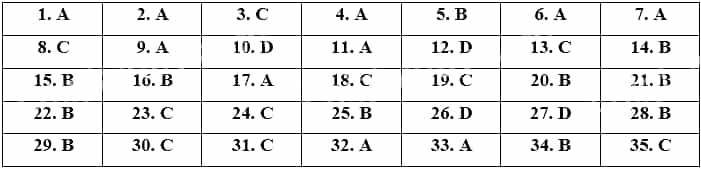
36. If he did not speak so quickly, I could understand him.
37. All the prisoners will be caught again tonight.
38. How beautiful those pictures are!
39. I am used to getting up early in the morning.
40. The water was not warm enough for the children to swim.
41. Anna if/ whether she went to school on Sunday.
42. planting some trees around your house to get more fresh air?
43. I had enough money to buy that electric bike.
44. Nga two hours a day to practice English with her friends.
45. excellent runner in the 32nd Sea Games.
HƯỚNG DẪN GIẢI CHI TIẾT
1. (NB)
Kiến thức: Cách phát âm đuôi “ed”
Giải thích:
A. talked /tɔːkt/
B. agreed /əˈɡriːd/
C. played /pleɪd/
D. cleaned /kliːnd/
Cách phát âm “-ed”
- /t/: Khi từ có tận cùng bằng các âm /tʃ/, /θ/, /ʃ/, /s/, /k/, /p/, /f/.
- /ɪd/: Khi từ có tận cùng là các âm /t/, /d/.
- /d/: Khi các từ có tận cùng là âm còn lại.
Phần gạch chân phương án A được phát âm là /t/, còn lại phát âm là /d/.
Đáp án A.
2. (NB)
Kiến thức: Trọng âm từ có 2 âm tiết
Giải thích:
A. hello /həˈləʊ/
B. loyal /ˈlɔɪəl/
C. classroom /ˈklɑːsruːm/
D. careful /ˈkeəfl/
Phương án A có trọng âm rơi vào âm tiết 2, còn lại là âm tiết 1.
Đáp án A.
3. (TH)
Kiến thức: Từ đồng nghĩa
Giải thích: The Ao Dai is the traditional dress of Vietnamese women.
traditional (adj): thuộc về truyền thống
A. unfamiliar (adj): không quen thuộc
B. strange (adj): lạ, kì lạ
C. customary (adj): theo phong tục, theo tục lệ
D. occasional (adj): thỉnh thoảng
=> traditional = customary: thuộc về truyền thống
Tạm dịch: Áo dài là trang phục truyền thống của phụ nữ Việt Nam.
Đáp án C.
4. (TH)
Kiến thức: Từ trái nghĩa
Giải thích:
Teens are under a lot of pressure due to the high expectation from their parents and teachers nowadays.
pressure (n): áp lực
A. relaxation (n): sự thư giãn
B. nervousness (n): sự lo lắng
C. emotion (n): cảm xúc
D. stress (n): căng thẳng
=> pressure >< relaxation
Tạm dịch: Ngày nay, thanh thiếu niên phải chịu rất nhiều áp lực do sự kỳ vọng quá cao từ cha mẹ và giáo viên.
Đáp án A.
5. (TH)
Kiến thức: Câu bị động
Giải thích: Câu bị động thì tương lai đơn: S + will + be + P2
Tạm dịch: Một bệnh viện mới sẽ được xây dựng ở thị trấn này vào năm tới.
Đáp án B.
6. (TH)
Kiến thức: Từ vựng
Giải thích:
A. competitors (n): đối thủ, người cạnh tranh
B. competitive (adj): mang tính cạnh tranh
C. competes (V_s): cạnh tranh
D. competitions (n): cuộc thi
How many + N đếm được dạng số nhiều: Bao nhiêu … => vị trí trống cần điền danh từ
Tạm dịch: Có bao nhiêu vận động viên tham gia Sea Games 32 tại Campuchia?
Đáp án A.
7. (TH)
Kiến thức: Câu đồng tình ngắn
Giải thích:
Câu đồng tình ngắn với câu khẳng định:
So + trợ động từ/ be/ modal verb + S
S + trợ động từ/ be/ modal verb, too
Câu đồng tình ngắn với câu phủ định:
Neither + trợ động từ/ be/ modal verb + S
S + trợ động từ/ be/ modal verb + not, either
Câu “I don’t like ice-cream!” – Tôi không thích kem. => câu phủ định
Tạm dịch: - Viet: “Tôi không thích kem!” – Nam: Tôi cũng vậy.
Đáp án A.
8. (TH)
Kiến thức: Từ vựng
Giải thích:
A. makes (V_s): khiến, tạo ra
B. turns (V_s): chuyển, quẹo
C. gives (V_s): cho, tặng
D. causes (V_s): gây ra
Tạm dịch: Tết là một lễ hội mang đến cho chúng ta cơ hội để đoàn tụ gia đình.
Đáp án C.
9. (TH)
Kiến thức: Đại từ quan hệ
Giải thích:
A. which + S + V: cái mà (dùng thay thế cho danh từ chỉ vật, đóng vai trò làm tân ngữ)
B. whose + N + S + V: … của … (dùng thay thế cho từ chỉ sự sở hữu)
C. what: cái gì
D. who + V: người mà (dùng thay thế cho danh từ chỉ người, đóng vai trò làm chủ ngữ)
Danh từ “The paintings” – Những bức tranh => danh từ chỉ vật
Tạm dịch: Những bức tranh mà bà Brown có trong nhà trị giá khoảng 200.000 bảng Anh.
Đáp án A.
10. (TH)
Kiến thức: Thì quá khứ đơn
Giải thích:
Cấu trúc: S + V_ed + while + S + was/ were + V_ing
Diễn tả 1 hành động đang diễn ra (chia quá khứ tiếp diễn), thì 1 hành động khác xen vào (chia thì quá khứ đơn)
Tạm dịch: Tôi đã nhìn thấy một tai nạn bên ngoài khi tôi đang ăn tối trong nhà hàng.
Đáp án D.
11. (TH)
Kiến thức: Câu tường thuật
Giải thích:
A. if: nếu
B. for: cho
C. when: khi
D. that: rằng
Câu tường thuật câu hỏi Yes/ No: S + asked + (O) + if/ whether + S + V (lùi thì)
Tạm dịch: Anh ấy hỏi liệu có quá sớm để đăng ký khóa học không.
Đáp án A.
12. (TH)
Kiến thức: Câu điều kiện
Giải thích:
Câu điều kiện loại 2: If + S + V_ed, S + would/ could/ might + V_infinitive
Diễn tả 1 điều kiện trái với hiện tại, dẫn đến 1 kết quả trái với hiện tại
Tạm dịch: Nếu Nam có nhiều tiền, anh ấy sẽ đến Vương quốc Anh để cải thiện tiếng Anh của mình.
Đáp án D.
13. (TH)
Kiến thức: Liên từ
Giải thích:
Cấu trúc: S + V + although + S + V: … mặc dù …
= S + V + in spite of/ despite + cụm danh từ/ V_ing: … mặc dù …
Cụm danh từ “her difficult living conditions” -
Sửa: although => in spite of/ despite
Tạm dịch: Lan học rất giỏi mặc dù điều kiện sống khó khăn của cô ấy.
Đáp án C.
14. (TH)
Kiến thức: To V/ V_ing
Giải thích:
Cấu trúc: S + suggest + V_ing: Ai đó gợi ý/ đề nghị làm gì
Sửa: to go => going
Tạm dịch: Anh trai chúng tôi đề nghị đi cắm trại trong rừng vào cuối tuần.
Đáp án B.
15. (TH)
Kiến thức: Cấu trúc câu cơ bản
Giải thích:
Cấu trúc: S + be + adj + enough + (for O) + to V_infinitive: … đủ làm sao để làm gì
Sửa: enough tall => tall enough
Tạm dịch: Anh trai của Ann không đủ cao để tham gia vào đội bóng rổ.
Đáp án B.
16. (TH)
Kiến thức: Mạo từ
Giải thích:
A. a + N đếm được dạng số ít: một => dùng cho danh từ chưa xác định, lần đầu được nhắc đến (chữ cái đầu của từ ngay sau là phụ âm)
B. the + N đếm được/ N không đếm được => dùng cho danh từ đã xác định
C. an + N đếm được dạng số ít: một => dùng cho danh từ chưa xác định, lần đầu được nhắc đến (chữ cái đầu của từ ngay sau là nguyên âm)
D. Ø + N đếm được số nhiều/ N không đếm được => dùng cho danh từ chưa xác định
Cần dùng mạo từ “the” trước “only”
Camels are one of (16) the only large animals that can live happily in the Sahara Desert.
Tạm dịch: Lạc đà là một trong những loài động vật lớn duy nhất có thể sống tốt ở sa mạc Sahara.
Đáp án B.
17. (TH)
Kiến thức: Từ vựng
Giải thích:
A. problem (n): vấn đề => cụm: problem for somebody: vấn đề với ai
B. trouble (n): trở ngại, rắc rối => cụm: trouble for somebody/ something: vấn đề với ai/ cái gì => thường dùng ở dạng danh từ không đếm được => không đi với mạo từ “a”
C. issue (n): vấn đề => cần dùng mạo từ “an”, do bắt đầu bằng nguyên âm “i”
D. mistake (n): lỗi sai, lỗi
The hot weather and strong winds are not a (17) problem for them.
Tạm dịch: Thời tiết nóng bức và gió mạnh không phải là một trở ngại đối với chúng.
Đáp án A.
18. (TH)
Kiến thức: Từ vựng
Giải thích:
A. gets (V_s): lấy, đạt được
B. causes (V_s): gây ra
C. makes (V_s): khiến => cụm: make + somebody/ something + adj: khiến ai/ cái gì làm sao
D. has (V_s): có
Also, they do not need to eat or drink every day, and this (18) makes them very useful to …
Tạm dịch: Ngoài ra, chúng không cần ăn uống hàng ngày, và điều này khiến chúng rất hữu ích cho …
Đáp án C.
19. (TH)
Kiến thức: Đại từ quan hệ
Giải thích:
A. whom + S + V: người mà (dùng thay thế cho danh từ chỉ người, đóng vai trò làm tân ngữ)
B. which + S + V: cái mà (dùng thay thế cho danh từ chỉ vật, đóng vai trò làm tân ngữ)
C. who + V: người mà (dùng thay thế cho danh từ chỉ người, đóng vai trò làm chủ ngữ)
D. whose + N + S + V: … của … (dùng thay thế cho từ chỉ sự sở hữu)
Danh từ “the people” – người => danh từ chỉ người
… the people (19) who live there.
Tạm dịch: … những người sống ở đó.
Đáp án C.
20. (TH)
Kiến thức: Giới từ
Giải thích:
A. in (prep): trong
B. at (prep): tại => cụm: at the age of …: vào độ tuổi …
C. on (prep): trên
D. for (prep): cho
Camels begin working (20) at the age of about four years old and don’t stop until they are around 25 to 30.
Tạm dịch: Lạc đà bắt đầu làm việc khi được khoảng bốn tuổi và không dừng lại cho đến khi chúng khoảng 25 đến 30 tuổi.
Đáp án B.
21. (TH)
Kiến thức: Từ vựng
Giải thích:
A. way (n): cách, đường đi
B. path (n): lối đi, lối mòn
C. road (n): con đường (đường bê tông, rải nhựa)
D. line (n): đường thẳng, đường
They can carry people or things on a very long (21) path and because of this, …
Tạm dịch: Chúng có thể chở người hoặc đồ vật trên một quãng đường rất dài và vì điều này, …
Đáp án B.
22. (TH)
Kiến thức: Từ vựng
Giải thích:
A. described (P2): mô tả, miêu tả
B. called (P2): gọi
C. said (P2): nói
D. known (P2): biết
… they are sometimes (22) called the ‘ships of the desert’.
Tạm dịch: … đôi khi chúng được gọi là ‘những con tàu của sa mạc’.
Đáp án B.
23. (TH)
Kiến thức: Từ vựng
Giải thích:
A. things: thứ, vật
B. examples: ví dụ
C. parts: phần
D. items: vật phẩm, đồ vật
These days, there are roads across some (23) parts of the Sahara, …
Tạm dịch: Ngày nay, có những con đường băng qua một số vùng của Sahara …
Đáp án C.
24. (TH)
Kiến thức: Từ vựng
Giải thích:
A. put (P2): đặt, để
B. done (P2): làm
C. used (P2): sử dụng
D. carried (P2): mang, vác
… so buses and lorries are often (24) used.
Tạm dịch: … nên xe buýt và xe tải thường được sử dụng.
Đáp án C.
25. (TH)
Kiến thức: Liên từ
Giải thích:
A. Therefore, + S + V: Do đó … (chỉ kết quả)
B. However, + S + V: Tuy nhiên … (chỉ sự nhượng bộ)
C. Moreover, + S + V: Hơn thế nữa … (thêm ý)
D. Thus, + S + V: Do đó … (chỉ kết quả)
(25) However, in places where there are no roads, camels are still the only type of transport.
Tạm dịch: Tuy nhiên, ở những nơi không có đường sá, lạc đà vẫn là loại phương tiện di chuyển duy nhất.
Đáp án B.
Dịch bài đọc:
LẠC ĐÀ
Lạc đà là một trong những loài động vật lớn duy nhất có thể sống tốt ở sa mạc Sahara. Thời tiết nóng bức và gió mạnh không phải là vấn đề đối với chúng. Ngoài ra, chúng không cần ăn uống hàng ngày, và điều này khiến chúng rất hữu ích cho những người sống ở đó.
Lạc đà bắt đầu làm việc khi được khoảng bốn tuổi và không dừng lại cho đến khi chúng khoảng 25 đến 30 tuổi. Chúng có thể chở người hoặc đồ vật trên một quãng đường rất dài và vì điều này, đôi khi chúng được gọi là ‘những con tàu của sa mạc’.
Ngày nay, có những con đường băng qua một số vùng của Sahara nên xe buýt và xe tải thường được sử dụng. Tuy nhiên, ở những nơi không có đường sá, lạc đà vẫn là loại phương tiện di chuyển duy nhất.
(Adapted from Cambridge Key English Test)
26. (VDC)
Kiến thức: Đọc hiểu
Giải thích:
Đoạn văn chủ yếu nói về điều gì?
A. đà điểu đực và cái
B. thói quen sinh sản của đà điểu
C. phân bố và môi trường sống của đà điểu
D. sự thật về đà điểu và thói quen của chúng
Đáp án D.
27. (VD)
Kiến thức: Đọc hiểu
Giải thích: Từ threatened trong đoạn 1 gần nghĩa nhất với _____.
threatened (adj): bị đe doạ
A. happy (adj): vui, hạnh phúc
B. bored (adj): buồn chán
C. safe (adj): an toàn
D. scared (adj): sợ hãi
=> threatened = scared
Đáp án D.
28. (VD)
Kiến thức: Đọc hiểu
Giải thích: Từ them trong đoạn 3 đề cập đến _____.
A. chicks: những con gà con
B. eggs: những quả trứng
C. ostriches: những con đà điểu
D. herds: những đàn
Thông tin: The female ostrich lays the eggs, but both the male and the female take turns sitting on the eggs to keep them warm.
Tạm dịch: Đà điểu cái đẻ trứng, nhưng cả con đực và con cái thay phiên nhau ấp những quả trứng để giữ ấm cho chúng.
Đáp án B.
29. (VD)
Kiến thức: Đọc hiểu
Giải thích: Theo đoạn văn, đà điểu sử dụng đôi cánh của chúng để _____.
A. bay nhanh hơn hầu hết các loài chim khác
B. di chuyển về phía trước và thay đổi hướng
C. giữ ấm cho trứng của chúng trong tổ
D. xua đuổi những kẻ săn mồi tiềm năng
Thông tin: Ostriches use their wings to move themselves forward and to help them change direction.
Tạm dịch: Đà điểu sử dụng đôi cánh của chúng để di chuyển về phía trước và giúp chúng đổi hướng.
Đáp án B.
30. (VD)
Kiến thức: Đọc hiểu
Giải thích: Điều nào sau đây KHÔNG đúng về đà điểu?
A. Không có loài chim nào trên trái đất lớn như đà điểu
B. Đà điểu được nuôi với nhiều mục đích khác nhau
C. Chúng có cánh để bay như những loài chim khác
D. Bây giờ chúng sống ở nhiều nơi khác nhau
Thông tin: Even though they have wings, they cannot fly.
Tạm dịch: Mặc dù chúng có cánh nhưng chúng không thể bay.
Đáp án C.
Dịch bài đọc:
Đà điểu là loài chim lớn nhất và nặng nhất trên trái đất. Chúng có thể cao tới 9 feet và có thể nặng tới 250 pound. Mặc dù chúng có cánh nhưng chúng không thể bay. Thay vào đó, đà điểu có đôi chân dài và khỏe giúp chúng chạy rất nhanh khi cảm thấy bị đe dọa. Đà điểu sử dụng đôi cánh của chúng để di chuyển về phía trước và giúp chúng đổi hướng.
Đà điểu có nguồn gốc từ Châu Phi, nơi chúng vẫn sống ở các vùng sa mạc và đồng cỏ khô rộng lớn được gọi là thảo nguyên. Đà điểu cũng có thể được tìm thấy trong các vườn thú trên khắp thế giới. Con người đã thuần hóa đà điểu, vì vậy hiện nay đà điểu sống trong các trang trại ở hơn chục quốc gia, bao gồm Mỹ, Trung Quốc, Ấn Độ, Nhật Bản, Brazil và Costa Rica. Chúng được nuôi để lấy thịt, da và lông.
Đà điểu thích sống theo nhóm nhỏ gọi là đàn. Đà điểu đực gọi là “rooster”; con cái gọi là “hen”. Đà điểu con được gọi là “chicks”. Đà điểu cái đẻ trứng, nhưng cả con đực và con cái thay phiên nhau ấp trứng để giữ ấm cho chúng.
(Adapted from Readtheory.org website)
31. (VD)
Kiến thức: Đọc hiểu
Giải thích: Khi bạn nhìn thấy biển báo này, nó có nghĩa là:
A. Có gió phía trước.
B. Có một góc đường phía trước.
C. Có một bùng binh/ vòng xuyến phía trước.
Đáp án C.
32. (VD)
Kiến thức: Đọc hiểu
Giải thích:
A. Hôm nay không có lớp bóng đá.
B. Thầy Phong không thể đến lớp học bóng đá vào ngày mai.
C. Bạn có thể chọn tham gia lớp học bóng đá hôm nay hoặc ngày mai.
Thông tin: Lưu ý: Lớp bóng đá chiều nay sẽ học vào ngày mai vì hôm nay thầy Phong đi vắng.
Đáp án A.
33. (VD)
Kiến thức: Đọc hiểu
Giải thích:
Amanda muốn bà của cô ấy _____
A. cho cô ấy một bức ảnh.
B. cho cô ấy mượn ít quần áo.
C. mô tả đồng phục cũ của bà.
Thông tin:
Từ: Amanda
Đến: Bà
Chủ đề: Cháu cần giúp đỡ với một dự án trường học
Chào bà,
Bà có bất kỳ bức ảnh cũ nào mà chụp bà trong bộ đồng phục khi bà còn đi học ở trường không ạ? Nếu bà có, bà có thể gửi cho cháu một bức cho dự án ở trường của cháu không ạ?
Cảm ơn bà,
Amanda
Đáp án A.
34. (VD)
Kiến thức: Đọc hiểu
Giải thích:
A. Nơi này không bao giờ trả lại tiền cho mọi người.
B. Nơi này đôi khi sẽ hoàn lại tiền.
C. Nơi này chỉ cung cấp hóa đơn cho một số mặt hàng.
Thông tin: Không hoàn lại tiền nếu không có hoá đơn
Đáp án B.
35. (VD)
Kiến thức: Đọc hiểu
Giải thích:
A. Đậu xe ở đây luôn tốn £20.
B. Bạn sẽ bị phạt £20 nếu đỗ xe ở đây.
C. Bạn phải trả £20 nếu làm mất vé.
Thông tin: Tất cả các vé đậu xe bị mất sẽ dẫn đến một khoản phí £20.
Đáp án C.
36. (TH)
Kiến thức: Câu điều kiện
Giải thích:
Câu điều kiện loại 2: If + S + V_ed, S + would/ could/ might + V_infinitive
Diễn tả 1 điều kiện trái với hiện tại, dẫn đến 1 kết quả trái với hiện tại
Tạm dịch: Tôi không thể hiểu anh ấy vì anh ấy nói quá nhanh.
= Nếu anh ấy không nói quá nhanh, tôi có thể hiểu anh ấy.
Đáp án: If he did not speak so quickly, I could understand him.
37. (TH)
Kiến thức: Câu bị động
Giải thích: Câu bị động ở thì tương lai đơn: S + will + be + P2
Tạm dịch: Họ sẽ bắt lại tất cả tù nhân trong đêm nay.
= Tất cả tù nhân sẽ bị bắt lại trong đêm nay.
Đáp án: All the prisoners will be caught again tonight.
38. (TH)
Kiến thức: Câu cảm thán
Giải thích: Câu cảm thán: How + adj + S + V!
Tạm dịch: Những bức ảnh đó thật đẹp.
= Những bức ảnh đó mới đẹp làm sao!
Đáp án: How beautiful those pictures are!
39. (TH)
Kiến thức: Cấu trúc câu cơ bản
Giải thích: Cấu trúc với “be used to”: S + be used to + V_ing: Ai đó quen với việc làm gì
Tạm dịch: Tôi không thấy khó khăn khi dậy sớm vào buổi sáng.
= Tôi đã quen với việc dậy sớm vào buổi sáng.
Đáp án: I am used to getting up early in the morning.
40. (TH)
Kiến thức: Cấu trúc câu cơ bản
Giải thích: Cấu trúc với “enough”: S + be + adj + enough + (for O) + to V_infinitive: … đủ làm sao (cho ai) làm gì
Tạm dịch: Nước lạnh đến nỗi lũ trẻ không thể bơi.
= Nước không đủ ấm để lũ trẻ bơi.
Đáp án: The water was not warm enough for the children to swim.
41. (TH)
Kiến thức: Câu tường thuật
Giải thích:
Câu tường thuật câu hỏi Yes/ No: S + asked + (O) + if/ whether + S + V (lùi thì)
Đổi đại từ nhân xưng “you” => “she”, thì hiện tại đơn => quá khứ đơn
Tạm dịch: “Bạn có đi học vào Chủ nhật không Anna?” bạn tôi hỏi.
= Bạn tôi hỏi Anna liệu cô ấy có đi học vào Chủ nhật không.
Đáp án: Anna if/ whether she went to school on Sunday.
42. (TH)
Kiến thức: Cấu trúc câu cơ bản
Giải thích:
Cấu trúc: Why don’t you + V_infinitive + …?: Tại sao bạn không làm gì?
= How about + V_ing + …?: Thế còn việc gì thì sao?
Tạm dịch: Tại sao bạn không trồng một số cây xung quanh nhà để có thêm không khí trong lành?
= Thế còn việc trồng một số cây xung quanh ngôi nhà của bạn để có thêm không khí trong lành thì sao?
Đáp án: planting some trees around your house to get more fresh air?
43. (TH)
Kiến thức: Câu ước
Giải thích:
Câu ước trái với hiện tại: S + wish(es) + S + V_ed
Diễn tả 1 điều ước trái với hiện tại
Tạm dịch: Tôi không có đủ tiền để mua chiếc xe đạp điện đó.
= Tôi ước tôi có đủ tiền để mua chiếc xe đạp điện đó.
Đáp án: I had enough money to buy that electric bike.
44. (TH)
Kiến thức: Cấu trúc câu cơ bản
Giải thích:
Cấu trúc: S + spend + time + V_ing + …: Ai đó dành thời gian làm gì
= It + takes/ took + O + time + to V_infinitive: Ai đó tốn bao nhiêu thời gian để làm gì
Tạm dịch: Nga dành hai giờ mỗi ngày để thực hành tiếng Anh với bạn bè của cô ấy.
= Nga mất hai giờ mỗi ngày để thực hành tiếng Anh với bạn bè của cô ấy.
Đáp án: Nga two hours a day to practice English with her friends.
45. (TH)
Kiến thức: Cấu trúc câu cơ bản
Giải thích: Chuyển từ câu dùng “động từ + trạng từ chỉ thể cách” => dùng cụm danh từ
Chuyển động từ “run” => danh từ “runner”, trạng từ “excellently” => tính từ “excellent”
Tạm dịch: Nguyễn Thị Oanh đã chạy rất xuất sắc tại Sea Games 32.
→ Nguyễn Thị Oanh là vận động viên chạy xuất xắc tại Sea Games 32.
Đáp án: excellent runner in the 32nd Sea Games.
Luyện trắc nghiệm Toán lớp 1 Lớp LOP9
Học đi đôi với hành! Làm ngay các bộ đề trắc nghiệm chấm điểm tức thì, có đáp án chi tiết giúp ghi nhớ kiến thức sâu và chuẩn bị tốt cho các bài kiểm tra.
Học tập & ôn luyện trên ứng dụng Tri Thức Hub
Tải ứng dụng Tri Thức Hub trên điện thoại hoặc máy tính bảng (hỗ trợ Android & iOS) để làm bài kiểm tra, luyện tập và lưu tiến độ học tập!