
Đề thi vào 10 môn Anh Quảng Trị
Đề thi vào 10 môn Anh Quảng Trị năm 2026
Đề thi
Part 1: Read the following dialogue and choose the most appropriate turn from the box to fill in each gap. There is ONE extra turn. (1.0 point).
|
A. Where will we meet? B. That's a good idea. C. What time shall we meet? D. Yes, I'd love to. E. See you soon. |
Dialogue:
|
Anna: Would you like to go shopping with me? Lily: (1) ________________ Anna: Great! Lily: (2) ________________ Anna: At 9 a.m. Lily: (3) ________________ Anna: At the supermarket. Lily: OK. (4) ________________ |
Part 2: Read the following passage and choose the correct answer A, B, or C for each of the blanks. (1.0 point).
Online shopping has become very popular. With a click of a mouse on your computer, you can buy anything you want. It is much easier than going into town, (5) ________ around lots of different shops. You can also see what is (6) ________ in stores all over the world when you shop online.
Another good reason for shopping on the internet is that you don't have to carry heavy bags of shopping home. Online companies just send your order to your house, usually, in a few days.
(7) ________ one big problem with online shopping is that you can't try on any clothes before you buy them. And often, when you get your clothes, they look very different from online pictures. They may be also larger or smaller than the size you wanted. For this reason, many people often have to return clothes (8) ________ they bought on the internet.
5.
A lookingy
B. finding
C. passing
6.
A. favourite
B. available
C. comfortable
7.
A. Because
B. Therefore
C. However
8.
A. who
B. which
C. whom
Part 3. Read the following passage and choose the correct answer A, B, or C for each of the questions. (1.0 point).
Planet Earth is facing many environmental problems today. One of the biggest problems is climate change. The Earth is becoming warmer because people are cutting down too many trees and using too much fossil fuel. As a result, the weather is becoming more extreme. In some places, there are stronger storms and longer droughts. Many animals are also losing their natural habitats. To help protect the planet, people should save energy, recycle waste, and use public transport more often. Students can also help by planting trees and reducing the use of plastic bags. Small actions can make a big difference in protecting our Earth for future generations.
9. What is the passage mainly about?
A. Environmental problems on Earth
B. Different kinds of animals
C. Public transport in cities
10. Why is the Earth becoming warmer?
A. Because people plant more trees.
B. Because people use too much fossil fuel.
C. Because students recycle waste.
11. The word “their” in the passage refers to ________.
A. storms
B. places
C. animals
12. Which of the following is NOT mentioned in the passage as the ways to protect the planet?
A. recycling waste
B. planting trees
C. building more factories
Part 4. Read the signs and notices, choose the correct answer A, B, or C. (1.0 point).
13. What does the sign say?
A. We should stop driving cars.
B. Cars must not be turned left.
C. Cars must be turned right.

14. What does the sign say?
A. You must keep silent in the library.
B. You need to talk loudly in the library.
C. You can use your phone in the library.

15. What does the notice say?
A. You can use as much water as you want.
B. You should save water for future generations.
C. You should turn off the tap to protect children.

16. What does the notice say?
A. Students must leave their phones outside the school building.
B. Students can use their mobile phones in the school building.
C. Students must switch off their mobile phones before entering the school building.
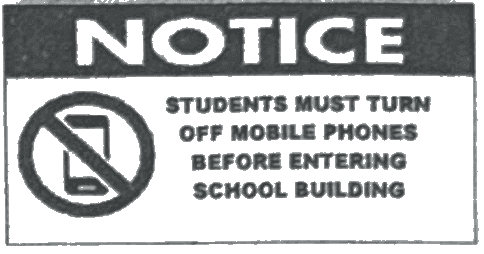
Part 5. Read the passage and answer the following questions. (1.0 point)
Travelling is one of the most popular forms of recreation in the USA. Most American employees receive an annual vacation with pay. Travelling within the country is popular because foreign travel generally takes more time and money. However, Americans who wish to vacation outside the USA are free to go almost anywhere. Every year about 13 million Americans travel abroad. The most popular vacation periods are during the summer and during the two-week school break on the Christmas and New Year's holidays. These periods are also the most crowded and generally the most expensive time to travel so people who can adjust their schedules sometimes choose vacation in the autumn. American vacationers often travel by car. Most families have a car, and those who do not have a car can rent one. Cars are usually an economical way to travel, especially for the families. It is also fairly fast and convenient. If tourists want to travel faster, they can fly to their destination and then rent a car to go around when they get there.
17. Why is travelling within the country in the USA popular?
→ __________________________________________________
18. How many Americans travel abroad every year?
→ __________________________________________________
19. Do American vacationers often travel by car?
→ __________________________________________________
20. What can tourists do if they want to travel faster?
→ __________________________________________________
Part 6. Read the passage and fill in each gap with ONE appropriate word. (1.0 point).
Life in the city is very different (21) _________ life in the countryside. In big cities, people can access better services such as hospitals, schools (22) _________ shopping centers. They also have more chances to get a good job and earn more money. Many young people decide to (23) _________ there after finishing school because of these opportunities. However, city life also has some problems. The streets are often crowded, and people have to deal with noise and pollution every day. Although it can be difficult, many people (24) _________ prefer living in the city.
Part 7. Rewrite the following sentences without changing their meanings, beginning with the words given. (1.0 point).
25. I don't have enough time to finish the project.
→ I wish _______________________________________
26. "I will buy an English dictionary tomorrow." John said.
→ John said that _________________________________
27. If you don't listen to the teacher, you won't understand the lesson.
→ Unless _______________________________________
28. Because of her tiredness, she decided to take a break.
→ Because ______________________________________
Part 8. Rearrange the utterances to form a logical conversation and choose the correct answer A, B, or C for each of the questions. (1.0 point).
29. Conversation 1:
a. Lan: I'm preparing for my English test.
b. Mai: Hi, what are you doing now?
c. Mai: Good luck! I hope you do well in your test.
A. c – b – a
30. Conversation 2:
a. Hoa: I think you should see a dentist.
b. Hoa: You don't look well. What's the matter with you, Nam?
c. Nam: I have a terrible toothache.
d. Nam: Thanks. I will do that.
A. b – d – a – c
B. c – d – a – b
C. b – c – a – d
31. Conversation 3:
a. Ben: That's true, but devices can also be useful for learning.
b. Ben: Do you think students depend too much on electronic devices?
c. Tom: I agree, so we should use them in a smart and balanced way.
d. Tom: Yes, they spend a lot of time playing games or using social media.
A. b – d – a – c
B. c – a – d – b
C. b – a – c – d
32. Conversation 4:
a. David: We walked through the forest and learned how to protect wildlife.
b. David: I just came back from my first eco-tour in a national park.
c. David: Yes, it was simple but meaningful, and I learned a lot.
d. Jane: That sounds interesting! Did you enjoy the experience?
e. Jane: Really? What did you do there?
A. a – e – b – d – c
B. b – d – c – e – a
C. b – e – a – d – c
Part 9. Reorder the following words to make meaningful sentences. (1.0 point).
33. could/ if/ asked/ He/ me/ I/ English/ speak/.
→ _____________________________________________
34. hanging/ I/ enjoy/ out/ at/ my/ weekend/ friends/ with/ the/.
→ _____________________________________________
35. went / visit/ the/ her/ hospial/ She/ to/ grandmother/ yesterday/ to.
→ _____________________________________________
36. regularly/ sports/ healthy / helps/ fit / Playing /us/ and/ stay
→ _____________________________________________
Part 10. Linda wants to improve her English but doesn't know how to study effectively. Imagine you are Anna, write an email (at least 25 words) to give Linda some advice. (1.0 point).
In your email:
- Show your sympathy
- Give her at least two tips to study English well
- Wish her succeed
Xem đáp án
HƯỚNG DẪN GIẢI
Thực hiện: Ban chuyên môn trithuchub.com
Part 1.
1. D 2. C 3. A 4. E
Part 2.
5. A 6. B 7. C 8. B
Part 3.
9. A 10. B 11. C 12. C
Part 4.
13. B 14. A 15. B 16. C
Part 5.
17. Because foreign travel generally takes more time and money.
18. About 13 million (Americans travel abroad every year).
19. Yes, they do.
20. (If tourists want to travel faster) They can fly to their destination and then rent a car to go around when they get there.
Part 6.
21. from
22. and
23. move/ go/ live
24. still
Part 7.
25. I had enough time to finish the project
26. he would buy an English dictionary, the next day the following day
27. you listen to the teacher, you won’t understand the lesson
28. she was tired, she decided to take a break
Part 8.
29. B 30. C 31. A 32. B
Part 9.
33. He asked me if I could speak English.
34. I enjoy hanging out with my friends at the weekend.
35. She went to the hospital to visit her grandmother yesterday.
36. Playing sports regularly helps us stay fit and healthy.
Hoặc: Playing sports regularly helps us stay healthy and fit.
Part 10.
Bài viết gợi ý:
Dear Linda,
I competely understand your problem. To study English well, reading short stories in English and practicing speaking English with your friends daily will help you a lot.
Wish you success.
Love,
Anna
Tạm dịch:
Gửi Linda,
Tớ hoàn toàn hiểu được vấn đề mà cậu gặp phải. Để học tốt tiếng Anh, việc đọc những mẩu truyện tiếng Anh ngắn và luyện nói cùng bạn bè hằng ngày sẽ giúp cậu rất nhều.
Mong rằng cậu sẽ thành công.
Yêu thương,
Anna
Đề thi vào 10 môn Anh Quảng Trị năm 2025
Đề bài
SECTION I: LISTENING (2.5 points)
Part 1: You will hear Jack talking to his friend Martin about music. For questions 1-5, listen and choose the best option A, B or C. You will listen TWICE. Write your answers in the answer sheet given. (1.25 points)
1. What is the name of Martin's music teacher?
A. Harry
B. Peter
C. Steve
2. Martin has music lessons on ___________.
A. Tuesdays
B. Thursdays
C. Fridays
3. How long does Martin practise on Saturdays?
A. 1 hour
B. 2 hours
C. 3 hours
4. Martin likes the music festival because ____________.
A. tickets are free
B. the bands are local
C. there are lots of people
5. Jack will arrive at the music festival
A. at 6:15
B. at 7:00
C. at 7:45
Part 2: You will hear a woman talking about a medical center. For questions 6-10, listen and fill in the gap with NO MORE THAN TWO WORDS AND/ OR A NUMBER for each answer. Write your answers in the answer sheet given. (1.25 points)
|
MEDICAL CENTER Address: Park Street Center is next to: the _________(6) _________ Doctor's name: Dr. _________(7) _________ Doctor speaks: English and _________(8) _________ Closes every Tuesday at: _________(9) _________ p.m. Hospital phone number: _________(6) _________ |
SECTION II: USE OF LANGUAGE (1.5 points)
Choose the correct answer A, B or C for each of the following questions. Write your answers in the answer sheet given.
1. My mother suggested ________ a robotic vacuum cleaner.
A. buy
B.buying
C. to buy
2. I __________ this film several times with my mother.
A. have seen
B. see
C. saw
3. Parents want to help their children make a good __________ about their future jobs.
A. decision
B. decide
C. decisive
4. Rapid changes in society and lifestyle have made the ___________ in many families wider.
A. family reunion
B. generation gap
C. family values
5. After you _________ word in the dictionary, remember to make an example with it.
A. look out
B. look after
C. look up
6. The __________ the house is, the more comfortable she feels.
A. larger
B. largest
C. large
SECTION III: READING COMPREHENSION (3.0 points)
Part 1: Read the following dialogue and choose the most appropriate turn from the box to fill in each gap. There is ONE extra turn. Write your answers in the answer sheet given (1.0 point)
|
A. I'll have to find out the cost of the instrument and lessons first. B. Hi, Nick. C. I'm fine, thanks. D. I think my friend Sue is a really good singer and guitarist. E. Hi, Toby. |
Dialogue:
|
Toby: __________(1) __________ It's Toby here. Nick: __________(2) __________ How are you? Toby: __________(3) __________ Listen, do you know about the new guitar lessons at school? Nick: Yes, are you going to do them? Toby: Well, I might, but __________(4) __________ |
Part 2: Read the following passage and choose the correct answer A, B or C that best fits the blanks. Write your answers in the answer sheet given. (1.0 point)
LONDON'S TOWER BRIDGE
Many tourists have visited Tower Bridge. It is the only bridge over the river Thames _____(5) _____ can open and let ships pass under it. Tower Bridge was built in the 19th century and still uses the same machines to lift up the two halves of the bridge. In earlier times, the river was much busier than now and the bridge _____(6) _____ to open over a thousand times a year. Today, it only opens twice a week.
In 1952, a big red bus was in the middle of the bridge _____(7) _____ it started to open. The driver only just got to the other side in time! Of course, now there are _____(8) _____ each end and the traffic must wait for them to go green.
5.
A. who
B. that
C. whose
6.
A. had
B. must
C. should
7.
A. however
B. because
C. when
8.
A. lights
B. flags
C. symbols
Part 3: Read the following passage and choose the correct answer A, B or C to each of the questions. Write your answers in the answer sheet given. (1.0 point)
You don't have to be Superman to fly in space. Many men and women from many different countries have done it. For example, the European Space Agency (ESA) now has 14 astronauts from 8 different countries.
The first thing is this - you need to be sure it's the job you really want to do. It requires lots of hard work and several years of study at universities before astronaut training even begins. Most people start between 27 and 37 years of age. Many astronauts also train to become pilots first.
Astronauts come from all over Europe and the world, and it's important that they can speak the same languages. They have to speak English, and they're given Russian lessons. Some also learn another language, for example Japanese, as a number of astronauts are Japanese speakers.
If you're still at school and you'd like to be an astronaut when you're older, it's not too early to start developing the skills you'll need. Playing video games is a great thing to do, as it helps you to think quickly and clearly. This is what you'll need to do when you travel in space.
Another good thing to do is sports, especially team sports. They make you fit, of course, but more importantly, they help you learn how to do things together with your colleagues.
9. What is the best title for this article?
A. What is the European Space Agency?
B. Is playing sports good for our health?
C. Would you like to be an astronaut?
10. How many astronauts are there in the European Space Agency?
A. 14
B. 8
C. 27
11. The word "it" in paragraph 4 refers to ___________.
A. being an astronaut
B. playing video games
C. travelling in space
12. Which of the following is NOT true according to the passage?
A. It's important to know that being an astronaut is right for you.
B. ESA astronauts can speak English, Russian and Japanese after training.
C. Team sports can be useful if you want to become an astronaut.
SECTION IV: WRITING (3.0 points)
Part 1: Rearrange the lines to form a logical conversation. Write your answers in the answer sheet given. (1.0 point)
Conversation 1:
a. Peter: Interesting! Why do you like this job?
b. Lili: I want to be a teacher.
c. Peter: What do you want to be in the future, Lili?
d. Lili: Because I'm keen on teaching for children.
Conversation 2:
a. Peter: Where did you go yesterday, Huy?
b. Huy: I went sightseeing and took some pictures.
c. Peter: What did you do there?
d. Huy: I went to Trang Tien Bridge and Thien Mu Pagoda.
Conversation 3:
a. Emma: Hello Dan, it's Emma here.
b. Dan: Hi
c. Emma: Thanks Dan, I'll call her tonight.
d. Dan: Yes, it's 0225 345 353
e. Emma: I'm phoning to ask about your guitar lessons. Have you got teacher's phone number?
Conversation 4:
a. Teacher: You should go to bed early and do some physical exercise.
b. Linh: Thanks for your advice.
c. Teacher: What's the matter with you, Linh?
d. Linh: Yeah, I couldn't sleep until 2 a.m. San
e. Teacher: Did you stay up late?
f. Linh: I'm really tired.
Part 2: Rewrite the following sentences without changing their meaning, beginning with the words given. Write your answers in the answer sheet given. (1.0 point)
1. I broke the computer. I bought it last year. (which)
=> I broke the computer ____________________________.
2. Mr. Tom is friendly so many students love him. (so... that...)
=> Mr. Tom is ____________________________________.
3. Hoa was sick, but she still went to school.
=> Although ______________________________________.
4. "Can I go to the campsite by bike"?
=> Mai wanted to know if ____________________________.
Part 3: Imagine you are Sandy, you are going to have a picnic on Saturday evening. Write an email to Matt from 25 to 40 words. In your email:
- invite Matt to join
- say where the picnic is
- suggest what Matt should bring.
Write your email in the answer sheet given (1.0 point)
-----------------------HẾT-----------------------
Xem đáp án
HƯỚNG DẪN GIẢI
Thực hiện: Ban chuyên môn trithuchub.com
SECTION 2
1. B
2. A
3. A
4. B
5. C
6. A
SECTION 3
PART I
1. B
2. E
3. C
4. A
PART II
5. B
6. A
7. C
8. A
PART III
9. C
10. A
11. B
12. A
SECTION 4
PART 1
Conversation 1: c – b – a – d
Conversation 2: a – d – c – b
Conversation 3: a – b – e – d – c
Conversation 4: c – f – e – d – a – b
PART 2
1. which I bought last year
2. so friendly that many students love him
3. Hoa was sick, she still went to school
4. she could go to the campsite by bike
PART 3
Gợi ý cấu trúc viết bài
1. Greeting
* Start with a friendly opening.
- Hi [Name],
- Dear [Name],
2. Opening sentence – Purpose
* Say why you’re writing.
- I’m writing to invite you to...
- I want to tell you about...
3. Main content (2–3 short sentences)
* Include:
- The event (what it is, when)
- The place (where it happens)
- A suggestion (what to bring, do, prepare...)
4. Closing
* End politely or warmly.
- Hope you can come!
- Let me know if you can join.
- See you then!
5. Sign-off
* Write your name.
- Best wishes, / Love, / Take care, …
- [Your Name]
Bài biết tham khảo:
Hi Matt,
I’m going to have a picnic at Green Lake Park this Saturday evening. Would you like to join? Please bring some snacks and a mat to sit on. Let me know if you can come!
Love,
Sandy
Đề thi vào 10 môn Anh Quảng Trị năm 2023
Đề bài
PHẦN ĐỀ THI CỦA THÍ SINH
SECTION II. USE OF LANGUAGE (2.5 points)
Choose the correct answer A, B, or C for each of the following questions. Write your answers in the answer sheet given.
1. Water plays an important role _______ our life.
A. in
B. with
C. at
2. The paintings _______ Mr. Brown has in his house are worth around £100,000.
A. which
B. whose
C. what
3. If today ________ Sunday, we would go swimming.
A. is
B. were
C. had been
4. I suggest ________ some money for the poor children.
A. raise
B. to raise
C. raising
5. Stress has an effort on both your physical and ________ health.
A. cooperative
B. official
C. mental
6. Practising speaking, listening, reading and writing can help you learn a language _________.
A. effect
B. effective
C. effectively
7. Lan: “Why don’t we go camping this weekend?”
Nga: “ _________________”
A. You’re welcome.
B. That’s a good idea
C. That’s a fine day.
8. The Vietnamese government has _________ an effort to eliminate poverty.
A. made
B. taken
C. create
9. You should pay _______ to what the teacher is saying.
A. attendance
B. convention
C. attention
10. You have played ________ piano since I was 6 years old.
A. the
B. a
C. an
SECTION III. READING (3.0 points)
Part 1. Read the following passage and choose the correct answer A, B or C that best fits the blanks. Write your answers in the answer sheet given. (1.0 point)
ENERGY
Energy is one of the problems (1) ________ many people are interested in. It is close to everyone’s daily life. You (2) _______ the lamp and it is energy that gives you light. You ride a motorcycle and it is energy that gives you movement. You cook your meals and it is energy that gives you heat to boil rice. The problem is that the demand for energy is rising and that the price of energy is getting higher and higher. The supply of energy on earth is limited. It cannot provide (3) ________ all forever. The shortage of energy in the future is inevitable. (4) ________, saving energy is a must if we want to continue to live in a safe and sound world.
1.
A. who
B. whom
C. that
2.
A. turn on
B. turn off
C. turn down
3.
A. ours
B. our
C. us
4.
A. However
B. Therefore
C. Additionally
Part 2. Read the following passage and choose the correct answer A, B or C for each of the questions. Write your answers in the answer sheet given (1.0 point).
There are deserts all over the world. They can be found in Africa, China, South America and North America. In some places, deserts are growing. This is a serious problem because deserts destroy farmland and ruin land where animals live. When people cannot grow food or find animals to eat, they have to leave their homes.
Sometimes, nature can cause deserts to spread. Wind can move sand away from deserts and onto useful land. When there is no rain for a long time, plants die and deserts grow. However, humans can also cause deserts to grow. This is called desertification, which can make an area hotter. Hotter weather can reduce the amount of rain as well. Too many people in one area can also damage the land. In addition, having many animals can harm the land. When large animals like cows walk on soil too much, they turn into dust. The wind too many trees, less water stays in the ground, and the soil is ruined. All of these things can speed up desertification. To stop deserts from growing, people must think of ways treat the land better.
1. What is the main idea of the passage?
A. Where the world’s deserts are
B. Why some deserts are growing
C. How people live in deserts
2. The word “they” in the passage refers to ___________.
A. people
B. animals
C. homes
3. Which is NOT a cause of desert growth?
A. No wind
B. No rain
C. Many animals
4. How can humans stop desert growth?
A. By raising more cows
B. By cutting down trees
C. By having fewer children
Part 3. Read the passage and fill in each gap with ONE appropriate word. Write your answers in the answer sheet given. (1.0 point)
Mount Fuji is called Fujisan in Japan. It is 3776 metres high and is visited (1) _______ people from over the world. It (2) ________ a very beautiful mountain and many artists have used it in their work. It is sometimes possible to see Fuji from Tokyo, but often the weather is (3) ________ cloudy to see it clearly. The best time to see the mountain is during the colder months of the year, and (4) _______ the early morning and late evening.
SECTION IV. WRITING (2.5 points)
Part 1. Rearrange the given words to make meaningful sentences. Write your answers in the answer sheet given. (1.0 point)
1. had/ I wish/ a new/ I/ laptop now./
_______________________________.
2. the/ late for school./ were/ Because of/ we/ heavy rain,/
_______________________________.
3. the man/ move the suitcase. / who/ I thanked/ helped me/
_______________________________.
4. in my class/ more intelligent/ Nam./ No one/ is/ than/
_______________________________.
Part 2. Rewrite the following sentences without changing their meaning, beginning with the words given. Write your answers in the answer sheet given. (1.0 point)
1. It takes Nam two hours to play basketball with his friends everyday.
=> Nam spends _____________________.
2. I started living in this town five years ago.
=> I have __________________________.
3. I bought a new bike last week.
=> A new bike ______________________.
4. “Where will you spend the summer vacation?” he asked his sister.
=> He asked his sister ________________.
--- THE END ---
Đáp án
HƯỚNG DẪN GIẢI
THỰC HIỆN: BAN CHUYÊN MÔN trithuchub.com
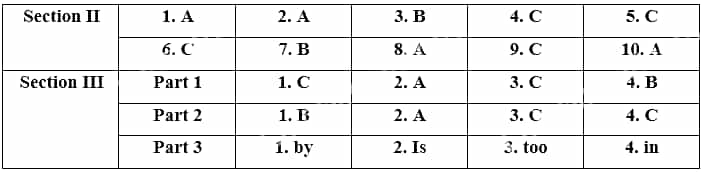

Section IV:
Part 1:
1. I wish I had a new laptop now.
2. Because of the heavy rain, we were late for school.
3. I thanked the man who helped me move the suitcase.
4. No one in my class is more intelligent than Nam.
Part 2:
1. Nam spends two hours playing basketball with his friends everyday.
2. I have lived in this town for five years.
3. A new bike was bought last week.
4. He asked his sister where she would spend the summer vacation.
HƯỚNG DẪN GIẢI CHI TIẾT
Section II
1. (TH)
Kiến thức: Giới từ
Giải thích:
play an important role in …: giữ vai trò quan trọng trong…
=> Water plays an important role in our life.
Tạm dịch: Nước đóng một vai trò quan trọng trong cuộc sống của chúng ta.
Đáp án A
2. (TH)
Kiến thức: Đại từ quan hệ
Giải thích:
“The paintings” là danh từ chỉ vật, vị trí cần điền là đại từ quan hệ đóng vai trò là tân ngữ trong câu (vế sau bắt đầu là chủ ngữ “Mr. Brown”) => dùng “which”
=> The paintings which Mr. Brown has in his house are worth around £100,000.
Tạm dịch: Những bức tranh mà ông Brown có trong nhà trị giá khoảng 100.000 bảng Anh.
Đáp án A
3. (TH)
Kiến thức: Câu điều kiện
Giải thích:
Câu điều kiện loại 2 dùng để diễn tả những giả định không có thực ở hiện tại.
Công thức: If + S1 + V1(quá khứ đơn) + O1, S2 + could/ would (not) + V2-infinitive + O2.
Tobe trong mệnh đề điều kiện luôn là “were” với các ngôi.
=> If today were Sunday, we would go swimming.
Tạm dịch: Nếu hôm nay là Chủ nhật, chúng tôi sẽ đi bơi.
Đáp án B
4. (TH)
Kiến thức: to V/ V-ing
Giải thích:
Sau “suggest” chúng ta dùng động từ V-ing => dùng để đưa ra gợi ý
=> I suggest raising some money for the poor children.
Tạm dịch: Tôi đề nghị quyên góp một số tiền cho trẻ em nghèo.
Đáp án C
5. (TH)
Kiến thức: Từ vựng
Giải thích:
A. cooperative (adj): hợp tác
B. official (adj): chính thức
C. mental (n): thuộc về tinh thần
=> Stress has an effort on both your physical and mental health.
Tạm dịch: Căng thẳng có một nỗ lực trên cả sức khỏe thể chất và tinh thần của bạn.
Đáp án C
6. (TH)
Kiến thức: Từ loại
Giải thích:
Sau động từ “learn” nên chúng ta cần dùng một trạng từ.
effect (n): sự ảnh hưởng => effective (adj): hiệu quả => effectively (adv): một cách hiệu quả
=> Practising speaking, listening, reading and writing can help you learn a language effectively.
Tạm dịch: Thực hành nói, nghe, đọc và viết có thể giúp bạn học một ngôn ngữ hiệu quả.
Đáp án C
7. (TH)
Kiến thức: Ngôn ngữ giao tiếp
Giải thích:
Lan: “Tại sao chúng ta không đi cắm trại vào cuối tuần này?”
Nga: “ _________________”
A. Không có chi.
B. Đó là một ý kiến hay
C. Đó là một ngày đẹp trời.
Đáp án B
8. (TH)
Kiến thức: Từ vựng
Giải thích: Make an effort to do st: nỗ lực làm cái gì đó.
=> The Vietnamese government has made an effort to eliminate poverty.
Tạm dịch: Chính phủ Việt Nam đã nỗ lực xóa đói giảm nghèo.
Đáp án A
9. (TH)
Kiến thức: Từ vựng
Giải thích:
pay attention to: tập chung, chú ý
=> You should pay attention to what the teacher is saying.
Tạm dịch: Bạn nên chú ý đến những gì giáo viên đang nói.
Đáp án C
10. (TH)
Kiến thức: Mạo từ
Giải thích: Dùng “the” trước tên các nhạc cụ khi đề cập đến các nhạc cụ nói chung khi chơi các nhạc cụ đó => play the piano
=> You have played the piano since I was 6 years old.
Tạm dịch: Bạn đã chơi piano từ khi tôi 6 tuổi.
Đáp án A
Section III
Part 1:
1. (TH)
Kiến thức: Đại từ quan hệ
Giải thích:
“The problems” là danh từ chỉ vật, sau vị trí cần điền là chủ ngữ “many people” => cần điền một đjai từ quan hệ thay thế cho danh từ chỉ vật, đóng vai trò làm tân ngữ trong câu => dùng “which/ that”
=> Energy is one of the problems that many people are interested in.
Tạm dịch: Năng lượng là một trong những vấn đề được nhiều người quan tâm.
Đáp án C
2. (TH)
Kiến thức: Phrasal verb
Giải thích:
A. turn on: bật (thiết bị)
B. turn off: tắt (thiết bị)
C. turn down: vặn nhỏ
=> You turn on the lamp and it is energy that gives you light.
Tạm dịch: Bạn bật đèn và chính năng lượng mang đến cho bạn ánh sáng.
Đáp án A
3. (TH)
Kiến thức: Từ loại
Giải thích:
A. ours: cái của chúng tôi (đại từ sở hữu), đứng một mình không cần danh từ kèm theo
B. our: của chúng tôi (tính từ sở hữu), theo sau là một danh từ
C. us: chúng tôi, tân ngữ, thường đứng sau động từ
Vị trí cần điền là một tân ngữ => us
=> It cannot provide us all forever.
Tạm dịch: Nó không thể cung cấp cho tất cả chúng ta mãi mãi.
Đáp án C
4. (TH)
Kiến thức: Liên từ
Giải thích:
A. However: tuy nhiên, chỉ sự tương phản
B. Therefore: vì vậy, chỉ kết quả
C. Additionally: ngoài ra, để bổ sung thêm thông tin
=> Additionally, saving energy is a must if we want to continue to live in a safe and sound world.
Tạm dịch: Ngoài ra, tiết kiệm năng lượng là điều bắt buộc nếu chúng ta muốn tiếp tục sống trong một thế giới an toàn và lành mạnh.
Đáp án B
Dịch bài đọc:
Năng lượng là một trong những vấn đề được nhiều người quan tâm. Nó gần gũi với cuộc sống hàng ngày của mọi người. Bạn bật đèn và chính năng lượng mang đến cho bạn ánh sáng. Bạn đi xe máy và chính năng lượng mang lại cho bạn chuyển động. Bạn nấu các bữa ăn của mình và năng lượng cung cấp cho bạn nhiệt để đun sôi cơm. Vấn đề là nhu cầu năng lượng ngày càng tăng và giá năng lượng ngày càng cao. . Nguồn cung cấp năng lượng trên trái đất là có hạn. Nó không thể cung cấp cho tất cả chúng ta mãi mãi. Sự thiếu hụt năng lượng trong tương lai là không thể tránh khỏi. Ngoài ra, tiết kiệm năng lượng là điều bắt buộc nếu chúng ta muốn tiếp tục sống trong một thế giới an toàn và lành mạnh.
Part 2:
1. (TH)
Kiến thức: Đọc hiểu
Giải thích: Ý chính của đoạn văn là gì?
A. Các sa mạc trên thế giới ở đâu
B. Tại sao một số sa mạc đang phát triển
C. Làm thế nào mọi người sống trong sa mạc
Đáp án C
2. (TH)
Kiến thức: Đọc hiểu
Giải thích: Từ “they” trong đoạn văn đề cập đến ___________.
A. people (n): con người
B. animals (n): động vật
C. homes n): nhà
Thông tin: When people cannot grow food or find animals to eat, they have to leave their homes.
Tạm dịch: Khi con người không thể trồng trọt hoặc tìm động vật để ăn, họ phải rời bỏ nhà cửa.
Đáp án A
3. (TH)
Kiến thức: Đọc hiểu
Giải thích: Đâu KHÔNG phải là nguyên nhân khiến sa mạc phát triển?
A. Không có gió
B. Không có mưa
C. Nhiều động vật
Thông tin: Sometimes, nature can cause deserts to spread. Wind can move sand away from deserts and onto useful land. When there is no rain for a long time, plants die and deserts grow. However, humans can also cause deserts to grow.
Tạm dịch: Đôi khi, thiên nhiên có thể khiến sa mạc lan rộng. Gió có thể di chuyển cát ra khỏi sa mạc và đến vùng đất hữu ích. Khi không có mưa trong một thời gian dài, thực vật chết và sa mạc mọc lên. Tuy nhiên, con người cũng có thể khiến sa mạc phát triển.
Đáp án C
4. (TH)
Kiến thức: Đọc hiểu
Giải thích: Làm thế nào con người có thể ngăn chặn sự phát triển của sa mạc?
A. Bằng cách nuôi thêm bò
B. Bằng cách chặt cây
C. Bằng cách sinh ít con hơn
Thông tin: To stop deserts from growing, people must think of ways treat the land better.
Tạm dịch: Để ngăn sa mạc phát triển, con người phải nghĩ ra cách đối xử tốt hơn với đất đai.
Đáp án C
Dịch bài đọc:
Có những sa mạc trên khắp thế giới. Chúng có thể được tìm thấy ở Châu Phi, Trung Quốc, Nam Mỹ và Bắc Mỹ. Ở một số nơi, sa mạc đang phát triển. Đây là một vấn đề nghiêm trọng vì sa mạc phá hủy đất nông nghiệp và hủy hoại vùng đất nơi động vật sinh sống. Khi con người không thể trồng trọt hoặc tìm động vật để ăn, họ phải rời bỏ nhà cửa.
Đôi khi, thiên nhiên có thể khiến sa mạc lan rộng. Gió có thể di chuyển cát ra khỏi sa mạc và đến vùng đất hữu ích. Khi không có mưa trong một thời gian dài, thực vật chết và sa mạc mọc lên. Tuy nhiên, con người cũng có thể khiến sa mạc phát triển. Điều này được gọi là sa mạc hóa, có thể làm cho một khu vực trở nên nóng hơn. Thời tiết nóng hơn cũng có thể làm giảm lượng mưa. Quá nhiều người trong một khu vực cũng có thể làm hỏng đất. Ngoài ra, có nhiều động vật có thể gây hại cho đất. Khi những động vật lớn như bò đi trên đất quá nhiều, chúng sẽ biến thành cát bụi. Gió quá nhiều cây, ít nước đọng lại trong lòng đất, và đất bị hủy hoại. Tất cả những điều này có thể tăng tốc độ sa mạc hóa. Để ngăn sa mạc phát triển, con người phải nghĩ ra cách đối xử tốt hơn với đất đai.
Part 3:
1. (TH)
Kiến thức: Câu bị động
Giải thích:
Cấu trúc câu bị động:
S + tobe + V-p2 + (by O).
=> It is 3776 metres high and is visited by people from over the world.
Tạm dịch: Nó cao 3776 mét và được mọi người từ khắp nơi trên thế giới ghé thăm.
Đáp án by
2. (TH)
Kiến thức: Từ loại
Giải thích:
Vị trí cần điền sau chủ ngữ “It” => cần điền một động từ
Vế sau là “a very beautiful mountain” là cụm danh từ => dùng động từ tobe “is”
=> It is a very beautiful mountain and many artists have used it in their work.
Tạm dịch: Đó là một ngọn núi rất đẹp và nhiều nghệ sĩ đã sử dụng nó trong tác phẩm của họ.
Đáp án is
3. (TH)
Kiến thức: Cấu trúc với “too”
Giải thích:
S + tobe + too + adj (for sb) to V-infinitive.
too: quá, đứng trước tính từ
=> It is sometimes possible to see Fuji from Tokyo, but often the weather is too cloudy to see it clearly.
Tạm dịch: Đôi khi có thể nhìn thấy Phú Sĩ từ Tokyo, nhưng thường thì thời tiết quá nhiều mây để nhìn rõ.
Đáp án too
4. (TH)
Kiến thức: Giới từ
Giải thích:
Chúng ta dùng “in” trước năm, tháng, mùa, buổi.
Phía sau chỗ cần điền là “the early morning” (buổi sáng sớm) => dùng “in”
=> The best time to see the mountain is during the colder months of the year, and in the early morning and late evening.
Tạm dịch: Thời điểm tốt nhất để ngắm núi là vào những tháng lạnh hơn trong năm, vào sáng sớm và tối muộn.
Đáp án in
Dịch bài đọc:
Núi Phú Sĩ được gọi là Fujisan ở Nhật Bản. Nó cao 3776 mét và được mọi người từ khắp nơi trên thế giới ghé thăm. Đó là một ngọn núi rất đẹp và nhiều nghệ sĩ đã sử dụng nó trong tác phẩm của họ. Đôi khi có thể nhìn thấy Phú Sĩ từ Tokyo, nhưng thường thì thời tiết quá nhiều mây để nhìn rõ. Thời điểm tốt nhất để ngắm núi là vào những tháng lạnh hơn trong năm, vào sáng sớm và tối muộn.
Section IV
Part 1:
1. (VD)
Kiến thức: Cấu trúc câu cơ bản
Giải thích:
Cấu trúc câu ước ở hiện tại:
S + wish(es/ed) + S + V-quá khứ + O.
=> I wish I had a new laptop now.
Tạm dịch: Tôi ước tôi có một máy tính xách tay mới ngay bây giờ.
Đáp án I wish I had a new laptop now.
2. (VD)
Kiến thức: Cấu trúc câu cơ bản
Giải thích:
Because of: bởi vì, theo sau là N/ V-ing => dùng để chỉ nguyên nhân
=> Because of the heavy rain, we were late for school.
Tạm dịch: Vì tỷ lệ nặng nề, chúng tôi đã bị trễ học.
Đáp án Because of the heavy rain, we were late for school.
3. (VD)
Kiến thức: Cấu trúc câu cơ bản
Giải thích: Đại từ quan hệ “who”: thay thế cho danh từ chỉ người, đóng vai trò làm chủ ngữ trong câu (đứng trước động từ)
=> I thanked the man who helped me move the suitcase.
Tạm dịch: Tôi cảm ơn người đàn ông đã giúp tôi di chuyển vali.
Đáp án I thanked the man who helped me move the suitcase.
4. (TH)
Kiến thức: Cấu trúc câu cơ bản
Giải thích: So sánh hơn với tính từ dài: S1 + tobe + more adj + than + S2.
=> No one in my class is more intelligent than Nam.
Tạm dịch: Không ai trong lớp tôi thông minh hơn Nam.
Đáp án No one in my class is more intelligent than Nam.
Part 2:
1. (VD)
Kiến thức: Cấu trúc câu đồng nghĩa
Giải thích:
Cấu trúc dành thời gian để làm gì:
It takes/ took sb + time + to V-infinitive + O.
= S + spend(s)/ spent + time + V-ing + O.
=> Nam spends two hours playing basketball with his friends everyday.
Tạm dịch: V Nam dành hai giờ chơi bóng rổ với bạn bè hàng ngày.
Đáp án Nam spends two hours playing basketball with his friends everyday.
2. (VD)
Kiến thức: Cấu trúc câu đồng nghĩa
Giải thích:
Viết lại câu với thì quá khứ đơn và hiện tại hoàn thành:
- Quá khứ đơn: S + started/ began + V-ing + time ago/ in time. (ai đó bắt đầu làm gì được bao lâu)
- Hiện tại hoàn thành: S + have/ has + V-p2 + for khoảng thời gian/ since mốc thời gian.
=> I have lived in this town for five years.
Tạm dịch: Tôi đã sống ở thị trấn này được 5 năm.
Đáp án I have lived in this town for five years.
3. (VD)
Kiến thức: Cấu trúc câu đồng nghĩa
Giải thích:
Dấu hiệu: last week (tuần trước)
Câu bị dộng thì quá khứ đơn:
S + was/ were + V-p2 + (by sb) + O.
=> A new bike was bought last week.
Tạm dịch: Một chiếc xe đạp mới đã được mua vào tuần trước.
Đáp án A new bike was bought last week.
4. (VD)
Kiến thức: Cấu trúc câu đồng nghĩa
Giải thích:
Câu tường thuật dạng Wh-question:
S + asked sb + Wh- + S + V-lùi thì + O.
- Thì tương lai đơn (will + V-infinitive) lùi sang thì tương lai trong quá khứ (would + V-infinitive)
- Lùi các ngôi: you => she
=> He asked his sister where she would spend the summer vacation.
Tạm dịch: Anh ấy hỏi em gái mình rằng cô ấy sẽ nghỉ hè ở đâu.
Đáp án He asked his sister where she would spend the summer vacation.
Luyện trắc nghiệm Toán lớp 1 Lớp LOP9
Học đi đôi với hành! Làm ngay các bộ đề trắc nghiệm chấm điểm tức thì, có đáp án chi tiết giúp ghi nhớ kiến thức sâu và chuẩn bị tốt cho các bài kiểm tra.
Học tập & ôn luyện trên ứng dụng Tri Thức Hub
Tải ứng dụng Tri Thức Hub trên điện thoại hoặc máy tính bảng (hỗ trợ Android & iOS) để làm bài kiểm tra, luyện tập và lưu tiến độ học tập!