
Đề thi vào 10 môn Anh Thừa Thiên - Huế
Đề thi vào 10 môn Anh Thừa Thiên - Huế năm 2026
Đề thi
Read the following passage and mark the letter A, B, C or D on your answer sheet to indicate the correct word or phrase that best fits each of the numbered blanks from 1 to 7.
Cheaper Holidays
We can save money on all aspects of our holiday, from where and when to go to how to get to and from the airport; here are some (1) _____ on how to get the most for your money when choosing (2) _____ holiday.
For the best deals, book your holiday between the high and (3) _____ seasons; you could save up to 70% on some holiday resorts while still enjoying good weather and other high season advantages and there will be fewer crowds.
You can also save money by going somewhere where living costs are lower. It might cost more to get there but once you are there, you will (4) _____ less on eating out and getting around as food and transport will be significantly cheaper.
And start saving before you even leave the country by choosing the most cost-effective way to the airport. There are many bus services from major cities to airports (5) _____ are cheaper than trains. If you go by train, book well in advance to get cheaper tickets and if you decide to go by car, book your carparking as soon as possible; some airports offer up to 50% (6) _____ for early bookings.
Finally, make sure you research all the available options online. Signing up to email alerts can be a good idea as then you will be the first to know about cheap offers. The earlier you book, the (7) _____ the bargains are likely to be.
Question 1. A. way B. clues C. idea D. tips
Question 2. A. some B. little C. a D. few
Question 3. A. low B. cold C. short D. poor
Question 4. A. pay B. cost C. spend D. waste
Question 5. A. who B. when C. which D. where
Question 6. A. over B. under C. below D. off
Question 7. A. best B. worst C. worse D. better
Mark the letter A, B, C or D on your answer sheet to indicate the word that differs from the other three in the position of the primary stress in each of the following questions from 8 to 9.
Question 8: A. consider B. discover C. generate D. encourage
Question 9: A. physics B. success C. system D. feature
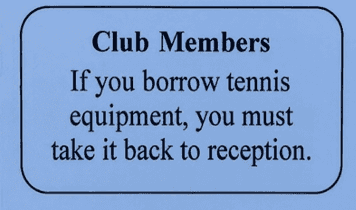
Look at the sign/notice and mark the letter A, B, C or D on your answer sheet to indicate the correct answer to each of the questions from 10 to 11.
Question 10: What does the sign mean?
A. You must lead your dogs out frequently.
B. You must keep your dogs under control.
C. You must let your dogs run about.
D. You must tie your dogs to a post.

Question 11: What does the notice say?
A. Members must let the receptionist know when they have finished playing.
B. You must return the club's tennis equipment after using them.
C. You needn't ask a receptionist for any tennis equipment.
D. If you join the club, you should bring your own equipment.
Mark the letter A, B, C or D on your answer sheet to indicate the word that is CLOSEST in meaning to the underlined part in each of the following questions from 12 to 13.
Question 12. Humans depend on species diversity to provide food, clean air and water, and fertile soil for agriculture.
A. supply B. raise C. produce D. prepare
Question 13. She decided to turn down the job offer because the salary was too low.
A. accept B. discuss C. refuse D. consider
Mark the letter A, B, C or D on your answer sheet to indicate the correct answer to each of the following questions from 14 to 26.
Question 14. I like my current job because of its ______ working hours.
A. flexibility B. flex C. flexible D. inflexible
Question 15. Although Minh was very nervous, he managed to ______ his presentation successfully.
A. carry out B. turn up C. go off D. come across
Question 16. He left home early to avoid ______ stuck in traffic jams during rush hours.
A. to get B. got C. to getting D. getting
Question 17. The more you practise speaking English, ______ confidently you can speak to foreigners.
A. less B. the more C. more D. the less
Question 18. Last weekend, my father bought me ______ interesting book about space at the bookshop near our house.
A. Ø (no article) B. the C. an D. a
Question 19. Tourists who can’t visit the museum in person can take a ______ tour on its website.
A. virtual B. direct C. physical D. foreign
Question 20. Many scientists recommended that the government ______ strict laws to control deforestation.
A. to apply B. applying C. apply D. applies
Question 21. Tim told me that he ______ an email to his friend in America then.
A. was writing B. would write C. writes D. is writing
Question 22. They asked their teacher ______ wear uniform to join the trip to the farm the next weekend.
A. if they have to B. if they had to C. whether they may D. whether they must
Question 23. We’re going camping this weekend, so we need a/an ______ stove that we can easily pack and transport.
A. cheap B. ancient C. huge D. portable
Question 24. According to the timetable, the train to Da Nang ______ at 6:30 tomorrow morning.
A. left B. leave C. leaves D. is leaving
Question 25. If it keeps raining tomorrow, we ______ our eco-tour in the forest.
A. will cancel B. cancelled C. could cancel D. cancel
Question 26. I love going to this park ______ it’s the quietest place in the city.
A. because of B. since C. despite D. due to
Mark the letter A, B, C or D on your answer sheet to indicate the word that is OPPOSITE in meaning to the underlined part in each of the following questions from 27 to 28.
Question 27. The thick walls were built to protect the village from dangerous wild animals.
A. defend B. shelter C. guard D. attack
Question 28. Going snorkelling in the coral reef was an exhilarating experience for me.
A. interesting B. amazing C. boring D. exciting
Mark the letter A, B, C or D on your answer sheet to indicate the sentence that best COMBINES each pair of sentences in the following questions from 29 to 33.
Question 29. We all like talking to Jim. His sense of humour is amazing.
A. We all like talking to Jim, whose sense of humour is amazing.
B. Jim, who likes talking about his sense of humour, is amazing.
C. We are talking about Jim, whose sense of humour is amazing.
D. Jim, who has an amazing sense of humour, always likes talking to us.
Question 30. The mountain is very high. No one can climb up to the top.
A. The mountain is so high that climbing up to the top is easy.
B. It is such a high mountain that no one can climb up to the top.
C. The mountain is very high since no one can climb up to the top.
D. The mountain is high enough for everyone to climb up to the top.
Question 31. She feels more stressful when she works harder.
A. Though she feels more stressful, she works harder.
B. She works harder in spite of her stress.
C. The more stressful she feels, the harder she works.
D. The harder she works, the more stressful she feels.
Question 32. Don’t smoke here. It’s harmful to the children.
A. You mustn’t smoke here since it does harm to the children.
B. The children shouldn’t smoke because of its harmful effects.
C. As smoking is harmful, the children aren’t allowed to smoke.
D. You can smoke here with the children although it’s harmful.
Question 33. You want to stay healthy. You should play sports.
A. Unless you play sports, you will stay healthy.
B. You will stay healthy if you play sports.
C. If you don’t play sports, you may stay healthy.
D. You may play sports if you stay healthy.
Mark the letter A, B, C or D on your answer sheet to indicate the correct reply to the situation in each of the following questions from 34 to 35.
Question 34. Linda: “We’ve just moved to a new house in the countryside”.
Tom: “______”
A. Alright. Why don’t you drop in?
B. Congratulations! I hope you enjoy living there.
C. Exactly. Everyone prefers living in the city.
D. Sure. I moved here three years ago.
Question 35. Tim: “Thank you so much for your birthday present. I really love it!”
Nancy: “______”
A. You’re welcome. I’m glad you like it.
B. What a pity! It’s the most expensive.
C. Never mind. It’s my birthday.
D. Don’t worry. I’ll give you a present.
Mark the letter A, B, C or D on your answer sheet to indicate the sentence that is CLOSEST in meaning to the original sentence in each of the following questions from 36 to 40.
Question 36. She is very sad because she can’t speak English well.
A. She wishes she could speak English well when she was sad.
B. She wishes she weren’t sad to speak English better.
C. She wishes she were happy when she spoke English.
D. She wishes she could speak English better.
Question 37. They were walking in the forest and it started to rain heavily.
A. It started to rain heavily while they were walking in the forest.
B. They were walking in the forest during the heavy rain.
C. It started to rain heavily in the middle of the forest.
D. They walked in the forest after the heavy rain.
Question 38. “Why don’t we buy a new bike tomorrow?” said Jim.
A. Jim promised to buy a new bike the next day.
B. Jim denied buying a new bike the following day.
C. Jim suggested buying a new bike the next day.
D. Jim refused to buy a new bike the following day.
Question 39. “How can I decorate my house for the important party tonight?” said Jenny.
A. Jenny wondered how could she decorate her house for the important party that night.
B. Jenny asked how she can decorate her house for the important party tonight.
C. Jenny wondered how to decorate her house for the important party that night.
D. Jenny asked her friends how to decorate her house for the important party tonight.
Question 40. Public transport is more popular in big cities than in small towns.
A. People in small towns use public transport more often than in big cities.
B. Public transport is less commonly used in big cities than in small towns.
C. People in small towns prefer public transport more than those in big cities.
D. In big cities, people use public transport more often than in small towns.
Mark the letter A, B, C or D on your answer sheet to indicate the correct arrangement of the sentences to make a meaningful conversation in each of the following questions from 41 to 42.
Question 41.
a. We can also use reusable bottles and bags instead of plastic ones.
b. I think we should turn off the lights and fans when we leave the classroom.
c. What should we do to go green at school?
d. I agree. If everyone does these things, our environment will be cleaner.
e. That’s a good idea. What else can we do?
A. c-b-d-a-e B. c-a-e-b-d C. c-a-d-b-e D. c-b-e-a-d
Question 42.
a. Thanks, Nguyen! I practised speaking regularly and watched English videos.
b. Hi, Mai! Your English is getting better. How did you improve it?
c. That sounds great! I will try that to improve my English too.
A. c-a-b B. b-a-c C. b-c-a D. c-b-a
Mark the letter A, B, C or D on your answer sheet to indicate the word whose underlined part differs from the other three in pronunciation in each of the following questions from 43 to 44.
Question 43.
A. intended B. allowed C. covered D. mentioned
Question 44.
A. social B. local C. global D. moral
Read the following passage and mark the letter A, B, C or D on your answer sheet to indicate the correct answer to each of the questions from 45 to 50.
Welcome to life in the future! You get up in the morning and look into the mirror. You’ve recently had a new anti-aging treatment, so you look like a 30-year-old. And many people your age could live to be 120 now, so at 60 you’re not old at all.
Science has also found amazing ways to keep people healthy. Nanotechnology can help cure many illnesses, including cancer. And if any part of your body is unhealthy, you can “grow” a new one in a laboratory.
As you get dressed, you say to your shirt, “Turn red.” It becomes red. In 2045, “smart” clothes contain nanoparticles that carry electricity. So you can program clothes to change colors or patterns.
On the way to the kitchen, you want to call a friend. Your cell phone is by the window because it gets its energy from the sun. But you don’t need to pick up the phone. You can just touch your jacket sleeve to make the call.
It’s breakfast time. You reach for the milk, but a voice says, “Don’t drink that!” Your fridge knows the milk is old, and tells the supermarket to replace it. Ten minutes later, it’s delivered by a drone.
As you leave for work, the lights turn off by themselves. Your home goes into the “sleep” mode to save energy. In 2045, cars drive themselves, so you just tell your driverless car where you want to go.
Will all this come true? Perhaps the future is much closer than we think.
Question 45. What is the main idea of the passage?
A. Future technology may change people’s daily lives.
B. People in 2045 will wear the same clothes every day.
C. People in the future will only work from home.
D. Scientists may stop using nanotechnology in 2045.
Question 46. What does the writer say about aging in the future?
A. Only young people will receive anti-aging treatment.
B. All people who are 60 can expect to live 120 years.
C. People who are 120 will be very healthy.
D. Age 60 will not be thought of as old.
Question 47. According to the passage, what is NOT mentioned as a reason why people are healthier in 2045?
A. New body parts can be grown by scientists.
B. Nanotechnology helps treat dangerous diseases.
C. Robot doctors work in hospitals.
D. Serious illnesses have been cured.
Question 48. The word “one” in paragraph 2 refers to ______.
A. science B. nanotechnology C. cancer D. body part
Question 49. The phrase “pick up” in paragraph 4 can be best replaced by ______.
A. drop B. lift C. hide D. answer
Question 50. Which of the following is TRUE according to the passage?
A. Smart clothes can change colors.
B. Nanotechnology cannot cure cancer.
C. People must drive their own cars.
D. The fridge throws old milk away.
Xem đáp án
HƯỚNG DẪN GIẢI
THỰC HIỆN: BAN CHUYÊN MÔN trithuchub.com
|
1. D |
2. C |
3. A |
4. C |
5. C |
6. D |
7. D |
8. C |
9. B |
10. B |
|
11. B |
12. A |
13. C |
14. C |
15. A |
16. D |
17. B |
18. C |
19. A |
20. C |
|
21. A |
22. B |
23. D |
24. C |
25. A |
26. B |
27. D |
28. C |
29. A |
30. B |
|
31. D |
32. A |
33. B |
34. B |
35. A |
36. D |
37. A |
38. C |
39. C |
40. D |
|
41. D |
42. B |
43. A |
44. D |
45. A |
46. D |
47. C |
48. D |
49. B |
50. A |
Đề thi vào 10 môn Anh Thừa Thiên - Huế năm 2023
Đề bài
Mark the letter A, B, C or D on your answer sheet to indicate the sentence that best COMBINES each pair of sentences in the following questions from 1 to 4.
Question 1: His English isn’t good. He doesn't understand the essay.
A. If his English were good, he would understand the essay.
B. If his English is good, he can't understand the essay.
C. If his English is good, he can understand the essay.
D. If his English were good, he couldn't understand the essay.
Question 2: The exercise was very long. I couldn’t do it in thirty minutes.
A. The exercise was so long that I couldn’t do it in thirty minutes.
B. The exercise was long enough for me to do is thiry minnes
C. The exercise was very long, so I had to do it in thirty minutes.
D. The exercise was long so that I couldn't do it in thirty minutes
Question 3: Peter dislikes jazz music. Tom does, too.
A. Either Peter or Tom likes jazz music.
B. Not only Peter but also Tom likes jazz music.
C. Neither Peter nor Tom likes jazz music.
D. Both Peter and Tom like jazz music.
Question 4: Albert decided to buy a motorbike. Hir car was solen last week.
A. Albert decided to buy a motorbike instead of a car last week.
B. Albert, whose car was stolen last week, decided to buy a motorbike.
C. Albert decided to buy a motorbike like his stolen car last week.
D. Alben decided to buy a motorbike before his car was stolen last week.
Mark the letter A, B, C, or D on your answer sheet to indicate the most suitable response to compete each of the following exchanges from 5 to 6.
Question 5: Lan and Ann are in their class.
Lan: “May I borrow your ruler, Ann?”
Ann: “Certainly, _______”
A. Hold on, please!
B. Hurry up!
C. Not at all.
D. Here you are.
Question 6: Daisy and Mike are going to leave lower secondary school.
Daisy: “I think school days are the best time of our lives.”
Mike: “______. We had sweet memories together then.”
A. No ideas
B. Nonsense
C. It's terrible
D. I agree
Mark the letter A, B, C or D on your answer sheet to indicate the word or phrase that best completes each of the following sentences from 7 to 8.
Question 7: A ______ is a vehicle, with or without people inside, used for travel in space.
A. telescope
B. meteorite
C. rocket
D. space craft
Question 8: Last winter, mymum ______ a woll sweater for me by using two bamboo needles.
A. carved
B. moulded
C. knitted
D. cast
Read the following passage and mark the A, B, C, or D on your answer sheet to indicate the correct answer to each of the questions from 9 to 13.
Do you find it difficult to get out of bed in the morning? Have you ever fallen asleep in class? If the answer is yes, then you're not the only one. Across the world, bedtimes are getting later and teenagers are sleeping less.
What are the reasons for this? Well, stress is an important factor. Like many young people, I find it hard to go to sleep before a big event such as an exam. Our increasing use of technology may also be to blame. New research at Kings College London, involving 125,000 children and teenagers on four continents, shows that using a phone or tablet before going to bed makes it twice as likely you'll sleep badly that night. And the following day, this lack of sleep can make it difficult to concentrate on studying.
But while many schools are attempting to solve this problem by starting the school day later, some schools in New Mexico in the United States are trying something a bit different - they have installed sleeping areas, where students can sleep for 20 minutes in specially designed chairs. I recently tried one of these chairs and my first thought was that it looked like something from a science-fiction film. When I lay down on it, the top part slowly covered my head and upper body so that it became dark inside. Some people might find that scary, but I didn't mind, and the gentle music was quite nice. I started to feel sleepy, and that was all I could remember until the lights went on and I woke up. Then, when I got up, I noticed I was a bit calmer than I'd been before. I'm sure someone who had slept badly before they went to school would feel a lot better.
Question 9: What's the writer's main purpose in writing this text?
A. To discuss the problem of teenagers sleeping too little.
B. To describe how she learnt how to sleep better at night.
C. To explain how using technology can help us sleep better.
D. To show that nowadays we need less sleep than we used to.
Question 10: What is the word “concentrate on” in paragraph 2 closest in meaning to?
A. ignore
B. pay attention to
C. finish
D. have intention of
Question 11: According to the paragraph 2, children and teenagers have trouble getting to sleep because they______.
A. use a phone or tablet before going to bed
B. had focused on their lesson at school
C. had taken an important exam before
D. have to get up early the next morning
Question 12: What does the word "where" in paragraph 3 refer to?
A. some schools
B. designed chairs
C. New Mexico
D. sleeping areas
Question 13: Which of the following is NOT TRUE in the whole passage?
A. Stress is one of the main reasons that makes many people sleep badly.
B. Across the world, bedtimes are getting later and the young are sleeping less.
C. The writer didn't feel scary when she lay down on specially designed chairs.
D. The chairs were designed for a science-fiction film in the United States.
Read the following passage and mark the letter A, B, C or D on your answer sheet to indicate the correct word or phrase that best fits each of the numbered blanks from 14 to 21.
Planting trees
By Mark Rotherm, aged 13
This spring, our teacher suggested we should get involved in a green project and plant some trees (14)____ the school Everyone thought it was a great idea, but we found that choosing trees was quite (15)_____. If we wanted them to grow properly, they had to be the right type. Our teacher suggested that we should (16) _____ trees that grew naturally in our part of the word. That way, they would be used to local conditions.
Then we had to think about the best place for planting the trees. We learnt that trees are happiest where they have room to grow, with (17)_____ space for their branches. We tried to avoid areas (18)_____ students were very active. Finally, we found a quiet corner close to the school garden – perfect!
Once we'd planted the trees, we knew we had to look after them cefully. We all (19)____ to check the leaves regularly. In case they turned yellow too soon, that could mean the tree was (20)____.
We all knew that we wouldn't be at the school any more by the time the trees grew tall, and that was a bit sad.(21) ____, we'd planted them to benefit not only the environment, but also future students. We knew they'd get an each pleasure from them as we had. And that thought sally cheered us up!
Question 14:
A. on
B. to
C. about
D. around
Question 15:
A. complicated
B. easy
C. lucky
D. interested
Question 16:
A. look for
B. turn down
C. apply for
D. pass down
Question 17:
A. few
B. number of
C. many
D. plenty of
Question 18:
A. who
B. whom
C. where
D. why
Question 19:
A. set
B. made
C. took
D. gave
Question 20:
A. healthy
B. strong
C. sick
D. lazy
Question 21:
A. Because
B. Although
C. However
D. Therefore
Mark the letter A, B, C, or D on your answer sheet to indicate the word that differs from the other three in the position of the primary stress in each of the following questions from 22 to 23.
Question 22:
A. tonight
B. wedding
C. flower
D. candle
Question 23:
A. important
B. popular
C. romantic
D. attractive
Mark the letter A, B, C, or D on your answer sheet to indicate the word whose underlined part differs from the other three in pronunciation in each of the following questions from 24 to 27.
Question 24:
A. gift
B. gold
C. guest
D. gym
Question 25:
A. display
B. smile
C. lighten
D. decide
Question 26:
A. widened
B. annoyed
C. wounded
D. played
Question 27:
A. misses
B. goes
C. watches
D. changes
Mark the A, B, C, or D on your answer sheet to indicate the underlined part that needs correction in each of the following questions from 28 to 31.
Question 28: Like other forms of energy, natural gas may be used to heat homes, cooking food and even run automobiles.
A. Like
B. may be
C. cooking
D. heat
Question 29: I can't go out tonight because I have many housework to do.
A. to do
B. many
C. go out
D. because
Question 30: The well from which the villagers used to get water are now empty.
A. from which
B. are
C. empty
D. used to
Question 31: He suggested that we must make an important decision of our life at the age of eighteen.
A. that
B. must
C. decision
D. at
Mark the letter A, B, C, or D on your answer sheet to indicate the sentence that is CLOSEST in
meaning to each of the following questions from 32 to 35.
Question 32: Mr. Minh used to smoke a lot.
A. Mr. Minh still smokes a lot now.
B. Mr. Minh doesn't smoke a lot any more.
C. Mr. Minh didn't use to smoke a lot.
D. Mr. Minh rarely smoked a lot.
Question 33: This is the first time I have attended such an enjoyable birthday party.
A. The first birthday party that I attended was enjoyable.
B. The first birthday party with my attendance was enjoyable.
C. My attendance at the first birthday party was enjoyable.
D. I have never attended such an enjoyable birthday party before.
Question 34: "Please don't tell anyone my new address, Tom," said Jane.
A. Jane asked Tom not to tell anyone her new address.
B. Jane told Tom to tell everyone her new address.
C. Jane reminded Tom to tell everyone her new address.
D. Jane didn't want Tom to know her new address.
Question 35: Although she is very busy at work, she takes good care of her children.
A. Despite being busy at work, she takes good care of her children.
B. Because of being busy at work, she takes good care of her children.
C. As she is very busy at work, she takes good care of her children.
D. When she is very busy at work, she takes good care of her children.
Mark the letter A, B, C, or D on your answer sheet to indicate the correct answer to each of the following questions from 36 to 46.
Question 36: The farmers were aware _____ the impact of weeds on their crops.
A. to
B. at
C. for
D. of
Question 37: No one told lies to the police, _____?
A. didn't they
B. did they
C. weren't they
D. were they
Question 38: He believes that many families in Phuoc Tich village can ______ making pottery because more and more tourists buy their products.
A. find out
B. get up
C. turn off
D. live on
Question 39: They ____ here last month when their daughter was born.
A. have moved
B. moved
C. had moved
D. move
Question 40: I wish I _____ much time to read books every day.
A. have
B. will have
C. had
D. had had
Question 41: Ms. Young gets up early every morning _____ she has enough time to practise yoga before going to work.
A. because
B. although
C. but
D. so
Question 42: In the year of 2025, over 1,000 new houses ______ for the poor in this area.
A. built
B. will build
C. will be built
D. build
Question 43: Last night, Linda performed _____ like a professional dancer at my school's music show.
A. gracefully
B. grace
C. gracefulness
D. graceful
Question 44: The management board decided ______ him from the list of potential interviewees.
A. choosing
B. choose
C. to choose
D. chose
Question 45: Of all the shoes that I have tried on, these ones are _____.
A. comfortable
B. less comfortable
C. more comfortable
D. the most comfortable
Question 46: The people who live in _____ Scotland are called the Scots.
A. Ø (no article)
B. an
C. a
D. the
Mark the letter A, B, C, or D on your answer sheet to indicate the word or phrase OPPOSITE in meaning to the underlined and bold part in each of the following questions from 47 to 48.
Question 47: There are some differences in vocabulary between British English and American English.
A. simplicities
B. similarities
C. difficulties
D. disadvantages
Question 48: If you want to pay a more reasonable price, remember to book the tour two weeks in advance.
A. formerly
B. afterwards
C. quickly
D. forwards
Mark the letter A, B, C, or D on your answer sheet to indicate the word or phrase CLOSEST in
meaning to the underlined and bold part in each of the following questions from 49 to 50.
Question 49: Young children do not fully know that many household objects are dangerous.
A. unsure
B. impossible
C. unsafe
D. inexpensive
Question 50: We should join hands to protect our environment.
A. work together
B. make friends
C. take time
D. raise money
-----THE END-----
Đáp án
HƯỚNG DẪN GIẢI
THỰC HIỆN: BAN CHUYÊN MÔN trithuchub.com
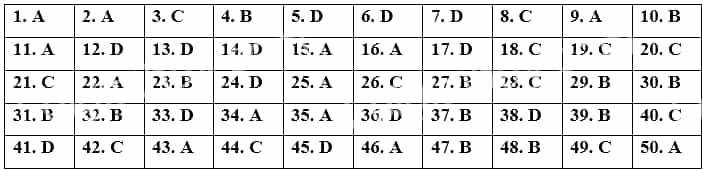

HƯỚNG DẪN GIẢI CHI TIẾT
Giải Question 1 (VD) - 0
Kiến thức: Cấu trúc cơ bản
Giải thích: Tiếng Anh của anh ấy không tốt. Anh ấy không hiểu bài luận.
- Câu điều kiện loại 2: If + S + V (quá khứ đơn), S + would/ could + V-infinitive
Tạm dịch: Nếu tiếng Anh của anh ấy tốt thì anh ấy sẽ hiểu được bài luận.
Choose A.
Giải Question 2 (VD) - 0
Kiến thức: Cấu trúc cơ bản
Giải thích: Bài tập rất dài. Tôi không thể làm điều đó trong ba mươi phút.
- Cấu trúc “so that”: S + V(thường) + so + adv + that + S + V.
Tạm dịch: Bài tập dài đến mức tôi không thể làm được trong ba mươi phút.
Choose A.
Giải Question 3 (NB) - 0
Kiến thức: Cấu trúc cơ bản
Giải thích: Peter không thích nhạc jazz. Tom cũng vậy.
Neither + Noun 1 + nor + Noun 2 + V: Với cấu trúc “neither…nor” đứng ở đầu câu, động từ phải được chia theo danh từ thứ 2
Tạm dịch: Cả Peter và Tom đều không thích nhạc jazz.
Choose C.
Giải Question 4 (VD) - 0
Kiến thức: Cấu trúc cơ bản
Giải thích: Albert quyết định mua một chiếc xe máy. Hir xe đã được solen vào tuần trước.
- Whose: Dùng để chỉ sự sở hữu của người và vật.
Cấu trúc: …. N (person, thing) + Whose + N + V
Tạm dịch: Albert, người bị mất xe tuần trước, đã quyết định mua một chiếc xe máy.
Choose B.
Giải Question 5 (TH) - 0
Kiến thức: Giao tiếp thông dụng
Giải thích:
A. Hold on, please!: Làm ơn chờ đã!
B. Hurry up!: Nhanh lên!
C. Not at all: Không hề
D. Here you are: đây cái anh đang cần đây; đây đúng là điều anh muốn biết đây
Tạm dịch: Lan và Ann đang học trong lớp của họ.
Lan: “Tôi có thể mượn thước kẻ của bạn được không, Ann?”
Ann: “Chắc chắn rồi, nó đây.”
Choose D.
Giải Question 6 (TH) - 0
Kiến thức: Giao tiếp thông dụng
Giải thích:
A. No ideas: Không có ý tưởng
B. Nonsense: Vô nghĩa
C. It's terrible: Thật tệ
D. I agree: Tôi đồng ý
Tạm dịch: Daisy và Mike sắp rời trường trung học cơ sở.
Daisy: “Tôi nghĩ những ngày đi học là khoảng thời gian đẹp nhất trong cuộc đời chúng ta.”
Mike: “Tôi đồng ý. Khi đó chúng tôi đã có những kỷ niệm ngọt ngào bên nhau”.
Choose D.
Giải Question 7 (TH) - 0
Kiến thức: Từ vựng
Giải thích:
A. telescope (n): kính thiên văn
B. meteorite (n): thiên thạch
C. rocket (n): tên lửa
D. space craft (n): tàu vũ trụ
Tạm dịch: Tàu vũ trụ là phương tiện có hoặc không có người ở bên trong, được sử dụng để di chuyển trong không gian.
Choose D.
Giải Question 8 (TH) - 0
Kiến thức: Từ vựng
Giải thích:
A. carved (v): chạm khắc
B. moulded (v): đúc
C. knitted (v): dệt kim
D. cast (v): đúc
Tạm dịch: Mùa đông năm ngoái mẹ tôi đã đan cho tôi một chiếc áo len len bằng hai chiếc kim tre.
Choose C.
Giải Question 9 (TH) - 0
Kiến thức: Đọc hiểu
Giải thích: Mục đích chính của người viết khi viết văn bản này là gì?
A. To discuss the problem of teenagers sleeping too little: Thảo luận về vấn đề thanh thiếu niên ngủ quá ít.
B. To describe how she learnt how to sleep better at night: Để mô tả cách cô ấy học được cách ngủ ngon hơn vào ban đêm.
C. To explain how using technology can help us sleep better: Giải thích việc sử dụng công nghệ có thể giúp chúng ta ngủ ngon hơn như thế nào.
D. To show that nowadays we need less sleep than we used to: Để chứng tỏ rằng ngày nay chúng ta cần ngủ ít hơn trước đây.
Thông tin: Do you find it difficult to get out of bed in the morning? Have you ever fallen asleep in class? If the answer is yes, then you're not the only one. Across the world, bedtimes are getting later and teenagers are sleeping less.
Tạm dịch: Bạn có thấy khó khăn khi ra khỏi giường vào buổi sáng không? Bạn đã bao giờ ngủ gật trong lớp chưa? Nếu câu trả lời là có thì bạn không phải là người duy nhất. Trên khắp thế giới, giờ đi ngủ ngày càng muộn hơn và thanh thiếu niên ngủ ít hơn.
Choose A.
Giải Question 10 (TH) - 0
Kiến thức: Đọc hiểu
Giải thích: Từ “concentrate on” ở đoạn 2 gần nghĩa nhất với từ nào?
- concentrate on: tập trung vào
A. ignore (v): bỏ qua
B. pay attention to: chú ý đến
C. finish (v): kết thúc
D. have intention of: có ý định
Tạm dịch: Và ngày hôm sau, việc thiếu ngủ này có thể khiến bạn khó tập trung vào việc học.
Choose B.
Giải Question 11 (TH) - 0
Kiến thức: Đọc hiểu
Giải thích: Theo đoạn 2, trẻ em và thanh thiếu niên khó ngủ vì ______.
A. use a phone or tablet before going to bed: sử dụng điện thoại hoặc máy tính bảng trước khi đi ngủ
B. had focused on their lesson at school: đã tập trung vào bài học ở trường
C. had taken an important exam before: đã thực hiện một kỳ thi quan trọng trước đây
D. have to get up early the next morning: phải dậy sớm vào sáng hôm sau
Thông tin: Our increasing use of technology may also be to blame.
Tạm dịch: Việc chúng ta ngày càng sử dụng công nghệ cũng có thể là nguyên nhân.
Choose A.
Giải Question 12 (TH) - 0
Kiến thức: Đọc hiểu
Giải thích: Từ “where” ở đoạn 3 dùng để chỉ điều gì?
A. some schools: một số trường học
B. designed chairs: ghế được thiết kế
C. New Mexico: New Mexico
D. sleeping areas: khu vực ngủ
Tạm dịch: Nhưng trong khi nhiều trường học đang cố gắng giải quyết vấn đề này bằng cách bắt đầu ngày học muộn hơn thì một số trường học ở New Mexico ở Hoa Kỳ đang thử một điều gì đó khác biệt một chút - họ đã lắp đặt khu vực ngủ, nơi học sinh có thể ngủ trong 20 phút trên những chiếc ghế được thiết kế đặc biệt. .
Choose D.
Giải Question 13 (TH) - 0
Kiến thức: Đọc hiểu
Giải thích: Điều nào sau đây KHÔNG ĐÚNG trong toàn bộ đoạn văn?
A. Stress is one of the main reasons that makes many people sleep badly: Căng thẳng là một trong những nguyên nhân chính khiến nhiều người mất ngủ.
B. Across the world, bedtimes are getting later and the young are sleeping less: Trên khắp thế giới, giờ đi ngủ ngày càng muộn hơn và giới trẻ ngủ ít hơn.
C. The writer didn't feel scary when she lay down on specially designed chairs: Người viết không cảm thấy sợ hãi khi nằm trên những chiếc ghế được thiết kế đặc biệt.
D. The chairs were designed for a science-fiction film in the United States: Những chiếc ghế được thiết kế cho một bộ phim khoa học viễn tưởng ở Hoa Kỳ.
Thông tin: I recently tried one of these chairs and my first thought was that it looked like something from a science-fiction film.
Tạm dịch: Gần đây tôi đã thử một trong những chiếc ghế này và suy nghĩ đầu tiên của tôi là nó trông giống thứ gì đó trong phim khoa học viễn tưởng.
Choose D.
Dịch bài đọc.
Nội dung dịch.
Bạn có thấy khó khăn khi ra khỏi giường vào buổi sáng không? Bạn đã bao giờ ngủ gật trong lớp chưa? Nếu câu trả lời là có thì bạn không phải là người duy nhất. Trên khắp thế giới, giờ đi ngủ ngày càng muộn hơn và thanh thiếu niên ngủ ít hơn.
Những lý do cho việc này là gì? Vâng, căng thẳng là một yếu tố quan trọng. Giống như nhiều bạn trẻ, tôi thấy khó ngủ trước một sự kiện lớn như kỳ thi. Việc chúng ta ngày càng sử dụng công nghệ cũng có thể là nguyên nhân. Nghiên cứu mới tại Kings College London, với sự tham gia của 125.000 trẻ em và thanh thiếu niên trên bốn châu lục, cho thấy rằng việc sử dụng điện thoại hoặc máy tính bảng trước khi đi ngủ khiến khả năng bạn khó ngủ đêm đó tăng gấp đôi. Và ngày hôm sau, việc thiếu ngủ này có thể khiến bạn khó tập trung vào việc học.
Nhưng trong khi nhiều trường học đang cố gắng giải quyết vấn đề này bằng cách bắt đầu ngày học muộn hơn thì một số trường học ở New Mexico ở Hoa Kỳ đang thử một điều gì đó khác biệt một chút - họ đã lắp đặt khu vực ngủ, nơi học sinh có thể ngủ trong 20 phút trên những chiếc ghế được thiết kế đặc biệt. Gần đây tôi đã thử một trong những chiếc ghế này và suy nghĩ đầu tiên của tôi là nó trông giống thứ gì đó trong phim khoa học viễn tưởng. Khi tôi nằm xuống, phần trên từ từ che phủ đầu và phần trên cơ thể tôi khiến bên trong trở nên tối tăm. Một số người có thể thấy điều đó đáng sợ, nhưng tôi không bận tâm, và âm nhạc nhẹ nhàng khá hay. Tôi bắt đầu cảm thấy buồn ngủ, và đó là tất cả những gì tôi có thể nhớ được cho đến khi đèn bật sáng và tôi thức dậy. Sau đó, khi đứng dậy, tôi nhận thấy mình đã bình tĩnh hơn trước một chút. Tôi chắc chắn rằng ai đó đã ngủ không ngon giấc trước khi đến trường sẽ cảm thấy dễ chịu hơn rất nhiều.
Giải Question 14 (TH) - 0
Kiến thức: Đọc hiểu
Giải thích:
- around: xung quanh, vòng quanh
Tạm dịch: Mùa xuân này, giáo viên gợi ý chúng tôi nên tham gia vào một dự án xanh và trồng một số cây xanh xung quanh trường.
Choose D.
Giải Question 15 (TH) - 0
Kiến thức: Đọc hiểu
Giải thích:
A. complicated: phức tạp
B. easy: dễ
C. lucky: may mắn
D. interested: thích thú
Tạm dịch: Mọi người đều cho rằng đó là một ý tưởng hay nhưng chúng tôi nhận thấy việc chọn cây khá phức tạp.
Choose A.
Giải Question 16 (TH) - 0
Kiến thức: Đọc hiểu
Giải thích:
A. look for: tìm kiếm
B. turn down: Từ chối một lời mời.
C. apply for: ứng tuyển
D. pass down: Khi một người qua đời và để lại hay truyền lại thứ gì đó cho những thành viên khác trong gia đình/ truyền đạt cho thế hệ sau
Tạm dịch: Giáo viên gợi ý rằng chúng tôi nên tìm những cây mọc tự nhiên trong phần chữ của chúng tôi.
Choose A.
Giải Question 17 (TH) - 0
Kiến thức: Đọc hiểu
Giải thích: Plenty of: dùng để diễn tả cái gì đó quá đủ và nhiều
Tạm dịch: Chúng tôi biết được rằng cây cối hạnh phúc nhất khi chúng có chỗ để phát triển, có nhiều không gian cho cành cây.
Choose D.
Giải Question 18 (TH) - 0
Kiến thức: Đọc hiểu
Giải thích: where: ở đâu/ nơi mà...
Tạm dịch: Chúng tôi đã cố gắng tránh những khu vực mà học sinh rất năng động.
Choose C.
Giải Question 19 (TH) - 0
Kiến thức: Đọc hiểu
Giải thích:
A. set (v): bố trí, để, đặt lại cho đúng
B. made (v): làm
C. took (v): lấy
D. gave (v): cho, đưa
Tạm dịch: Tất cả chúng tôi đều đem đi kiểm tra lá thường xuyên. Trong trường hợp chúng chuyển sang màu vàng quá sớm,...
Choose C.
Giải Question 20 (TH) - 0
Kiến thức: Đọc hiểu
Giải thích:
A. healthy (adj): Khoẻ mạnh. Có lợi cho sức khoẻ
B. strong (adj): khỏe
C. sick (adj): ốm
D. lazy (adj): lười biếng
Tạm dịch: Tất cả chúng tôi đều đem đi kiểm tra lá thường xuyên. Nếu chúng chuyển sang màu vàng quá sớm thì có thể cây đã bị bệnh.
Choose C.
Giải Question 21 (TH) - 0
Kiến thức: Đọc hiểu
Giải thích:
A. Because: Vì
B. Although: Mặc dù
C. However: Tuy nhiên
D. Therefore: Do đó
Tạm dịch: Tuy nhiên, chúng tôi trồng chúng để mang lại lợi ích không chỉ cho môi trường mà còn cho cả những học sinh tương lai.
Choose C.
Giải Question 22 (NB) - 0
Kiến thức: Trọng âm
Giải thích:
A. tonight /təˈnaɪt/
B. wedding /ˈwedɪŋ/
C. flower /ˈflaʊə(r)/
D. candle /ˈkændl/
Phương án A trọng âm rơi vào âm tiết thứ 2, các đáp án còn lại trọng âm rơi vào âm tiết thứ 1.
Choose A.
Giải Question 23 (NB) - 0
Kiến thức: Trọng âm
Giải thích:
A. important /ɪmˈpɔːtnt/
B. popular /ˈpɒpjələ(r)/
C. romantic /rəʊˈmæntɪk/
D. attractive /əˈtræktɪv/
Phương án B trọng âm rơi vào âm tiết thứ 1, các đáp án còn lại trọng âm rơi vào âm tiết thứ 2.
Choose B.
Giải Question 24 (NB) - 0
Kiến thức: Phát âm
Giải thích:
A. gift /ɡɪft/
B. gold /ɡəʊld/
C. guest /ɡest/
D. gym /dʒɪm/
Phương án D phát âm là /dʒ/, các phương án còn lại phát âm là /d/.
Choose D.
Giải Question 25 (NB) - 0
Kiến thức: Phát âm
Giải thích:
A. display /dɪˈspleɪ/
B. smile /smaɪl/
C. lighten /ˈlaɪtn/
D. decide /dɪˈsaɪd/
Phương án A phát âm là /ɪ/, các phương án còn lại phát âm là /aɪ/.
Choose A.
Giải Question 26 (NB) - 0
Kiến thức: Phát âm
Giải thích:
A. widened /ˈwaɪdnd/
B. annoyed /əˈnɔɪd/
C. wounded /ˈwuːndɪd/
D. played /pleɪd/
Phương án C phát âm là /ɪd/, các phương án còn lại phát âm là /d/.
Choose C.
Giải Question 27 (NB) - 0
Kiến thức: Phát âm
Giải thích:
A. misses /mɪsɪz/
B. goes /ɡəʊz/
C. watches /wɒtʃɪz/
D. changes /tʃeɪndʒɪz/
Phương án B phát âm là /z/, các phương án còn lại phát âm là /ɪz/.
Choose B.
Giải Question 28 (TH) - 0
Kiến thức: Tìm lỗi sai
Giải thích:
- used to + V-infinitive: đã từng thường xuyên làm gì...
Sửa: cooking => cook
Tạm dịch: Giống như các dạng năng lượng khác, khí thiên nhiên có thể được sử dụng để sưởi ấm nhà cửa, nấu ăn và thậm chí chạy ô tô.
Choose C.
Giải Question 29 (TH) - 0
Kiến thức: Tìm lỗi sai
Giải thích:
- “housework” là danh từ không đếm được => “many” dùng với danh từ số nhiều
Sửa: many => much
Tạm dịch: Tối nay tôi không thể ra ngoài vì tôi có nhiều việc nhà phải làm.
Choose B.
Giải Question 30 (TH) - 0
Kiến thức:
Giải thích:
- “The well” là chủ ngữ số ít => “are” dùng cho chủ ngữ số nhiều
Sửa: are => is
Tạm dịch: Cái giếng mà dân làng xưa lấy nước nay đã trống rỗng.
Choose B.
Giải Question 31 (TH) - 0
Kiến thức: Tìm lỗi sai
Giải thích:
- Câu tường thuật của “must” là “had to”
Sửa: must => had to
Tạm dịch: Anh ấy gợi ý rằng chúng ta phải đưa ra một quyết định quan trọng của cuộc đời mình ở tuổi mười tám.
Choose B.
Giải Question 32 (VD) - 0
Kiến thức: Câu đồng nghĩa
Giải thích:
A. Mr. Minh still smokes a lot now: Hiện nay ông Minh vẫn hút thuốc nhiều
B. Mr. Minh doesn't smoke a lot any more: Ông Minh không còn hút thuốc nhiều nữa.
C. Mr. Minh didn't use to smoke a lot: Ông Minh không hút thuốc nhiều.
D. Mr. Minh rarely smoked a lot: Ông Minh hiếm khi hút thuốc nhiều.
Tạm dịch: Ông Minh từng hút thuốc lá rất nhiều.
Choose B.
Giải Question 33 (VD) - 0
Kiến thức: Câu đồng nghĩa
Giải thích:
A. The first birthday party that I attended was enjoyable: Bữa tiệc sinh nhật đầu tiên tôi tham dự thật thú vị.
B. The first birthday party with my attendance was enjoyable: Bữa tiệc sinh nhật đầu tiên có sự tham dự của tôi thật thú vị.
C. My attendance at the first birthday party was enjoyable: Việc tôi tham dự bữa tiệc sinh nhật đầu tiên thật thú vị.
D. I have never attended such an enjoyable birthday party before: Tôi chưa bao giờ tham dự một bữa tiệc sinh nhật thú vị như vậy trước đây.
Tạm dịch: Đây là lần đầu tiên tôi được tham dự một bữa tiệc sinh nhật vui vẻ như vậy.
Choose D.
Giải Question 34 (VD) - 0
Kiến thức: Câu đồng nghĩa
Giải thích:
A. Jane asked Tom not to tell anyone her new address: Jane yêu cầu Tom không nói cho ai biết địa chỉ mới của cô ấy.
B. Jane told Tom to tell everyone her new address: Jane bảo Tom nói cho mọi người biết địa chỉ mới của cô ấy.
C. Jane reminded Tom to tell everyone her new address: Jane nhắc Tom nói cho mọi người biết địa chỉ mới của cô ấy.
D. Jane didn't want Tom to know her new address: Jane không muốn Tom biết địa chỉ mới của cô ấy.
Tạm dịch: “Tom, xin đừng nói cho ai biết địa chỉ mới của tôi,” Jane nói.
Choose A.
Giải Question 35 (VD) - 0
Kiến thức: Câu đồng nghĩa
Giải thích:
A. Despite being busy at work, she takes good care of her children: Mặc dù bận rộn trong công việc nhưng cô ấy vẫn chăm sóc con rất tốt.
B. Because of being busy at work, she takes good care of her children: Vì bận đi làm nên cô ấy chăm sóc con rất tốt.
C. As she is very busy at work, she takes good care of her children: Vì cô ấy rất bận rộn với công việc nên cô ấy chăm sóc con cái rất tốt.
D. When she is very busy at work, she takes good care of her children: Khi cô ấy rất bận rộn trong công việc, cô ấy chăm sóc con cái rất tốt.
Tạm dịch: Dù rất bận rộn trong công việc nhưng cô vẫn chăm sóc con rất tốt.
Choose A.
Giải Question 36 (VD) - 0
Kiến thức: Cụm từ cố định
Giải thích:
- "Aware of + N/V-ing" là một cụm từ cố định và thường được sử dụng kết hợp với nhau để diễn tả việc có nhận thức, hiểu biết hoặc ý thức về một vấn đề cụ thể.
Tạm dịch: Người nông dân nhận thức được tác hại của cỏ dại đối với cây trồng.
Choose D.
Giải Question 37 (TH) - 0
Kiến thức: Câu hỏi đuôi
Giải thích:
- Câu hỏi đuôi: Subject + verb + (object) + (…) + , + trợ động từ + subject/ đại từ tương ứng với subject + ?
Tạm dịch: Không ai nói dối công an phải không?
Choose B.
Giải Question 38 (TH) - 0
Kiến thức: Cụm động từ
Giải thích:
A. find out: tìm ra
B. get up: đứng dậy
C. turn off: tắt
D. live on: tiếp tục sống
Tạm dịch: Ông tin rằng nhiều gia đình ở làng Phước Tích có thể sống bằng nghề gốm vì ngày càng có nhiều du khách mua sản phẩm của họ.
Choose D.
Giải Question 39 (TH) - 0
Kiến thức: Cấu trúc cơ bản
Giải thích:
- “last month” là dấu hiệu nhận biết của thì quá khứ đơn
Tạm dịch: Họ chuyển đến đây vào tháng trước khi con gái họ chào đời.
Choose B.
Giải Question 40 (TH) - 0
Kiến thức: Cấu trúc cơ bản
Giải thích:
- Câu wish loại 2 được sử dụng để thể hiện một điều ước, mong muốn của người nói nhưng trái ngược với sự thật hay những gì đang diễn ra ở hiện tại (tương tự với câu điều kiện loại 2).
Công thức: S + wish (that)+ S + V2/ed.
Tạm dịch: Ước gì mỗi ngày tôi có nhiều thời gian để đọc sách.
Choose C.
Giải Question 41 (TH) - 0
Kiến thức: Cấu trúc cơ bản
Giải thích:
A. because: bởi vì
B. although: mặc dù
C. but: nhưng
D. so: vậy
Tạm dịch: Mỗi sáng cô Young dậy sớm nên có đủ thời gian để tập yoga trước khi đi làm.
Choose D.
Giải Question 42 (TH) - 0
Kiến thức: Cấu trúc cơ bản
Giải thích:
- In the year of 2025: trong năm 2025 => dâu hiệu chủa thì tương lai đơn
Tạm dịch: Năm 2025 sẽ xây dựng mới trên 1.000 căn nhà cho người nghèo ở khu vực này.
Choose C.
Giải Question 43 (TH) - 0
Kiến thức: Cấu trúc cơ bản
Giải thích:
- grace (adj): duyên dáng
Tạm dịch: Tối qua Linda biểu diễn duyên dáng như một vũ công chuyên nghiệp tại buổi biểu diễn ca nhạc của trường tôi.
Choose A.
Giải Question 44 (TH) - 0
Kiến thức: Cấu trúc cơ bản
Giải thích:
- decide to + V-infinitive: quyết định làm gì...
Tạm dịch: Ban quản lý quyết định chọn anh từ danh sách những người có tiềm năng được phỏng vấn.
Choose C.
Giải Question 45 (TH) - 0
Kiến thức: Cấu trúc cơ bản
Giải thích:
- Dựa vào nghĩa của câu, sử dụng so sánh nhất: the most + adj dài
Tạm dịch: Trong số những đôi giày tôi đã thử, đôi giày này là đôi giày thoải mái nhất.
Choose D.
Giải Question 46 (TH) - 0
Kiến thức: Cấu trúc cơ bản
Giải thích:
- in + Tên đất nước: ở...
Tạm dịch: Những người sống ở Scotland được gọi là người Scotland.
Choose A.
Giải Question 47 (TH) - 0
Kiến thức: Từ trái nghĩa
Giải thích:
- differences (n): khác biệt
A. simplicities (n): sự đơn giản
B. similarities (n): sự tương đồng
C. difficulties (n): khó khăn
D. disadvantages (n): nhược điểm
Tạm dịch: Có một số khác biệt về từ vựng giữa tiếng Anh Anh và tiếng Anh Mỹ.
Choose B.
Giải Question 48 (TH) - 0
Kiến thức: Từ trái nghĩa
Giải thích:
- in advance: trước
A. formerly (adv): trước
B. afterwards (adv): sau đó
C. quickly (adv): nhanh chóng
D. forwards (adv): chuyển tiếp
Tạm dịch: Nếu muốn trả giá hợp lý hơn, bạn nhớ đặt tour trước hai tuần.
Choose B.
Giải Question 49 (TH) - 0
Kiến thức: Từ đồng nghĩa
Giải thích:
- dangerous (adj): nguy hiểm
A. unsure (adj): không chắc chắn
B. impossible (adj): không thể
C. unsafe (adj): không an toàn
D. inexpensive (adj): không tốn kém
Tạm dịch: Trẻ nhỏ chưa nhận thức đầy đủ rằng nhiều đồ vật trong nhà rất nguy hiểm.
Choose C.
Giải Question 50 (TH) - 0
Kiến thức: Từ đồng nghĩa
Giải thích:
- join hand: chung tay
A. work together: làm việc cùng nhau
B. make friends: kết bạn
C. take time: dành thời gian
D. raise money: quyên tiền
Tạm dịch: Chúng ta nên chung tay bảo vệ môi trường.
Choose A.
Luyện trắc nghiệm Toán lớp 1 Lớp LOP9
Học đi đôi với hành! Làm ngay các bộ đề trắc nghiệm chấm điểm tức thì, có đáp án chi tiết giúp ghi nhớ kiến thức sâu và chuẩn bị tốt cho các bài kiểm tra.
Học tập & ôn luyện trên ứng dụng Tri Thức Hub
Tải ứng dụng Tri Thức Hub trên điện thoại hoặc máy tính bảng (hỗ trợ Android & iOS) để làm bài kiểm tra, luyện tập và lưu tiến độ học tập!