
Đề thi vào 10 môn Anh TP Hồ Chí Minh
Đề thi vào 10 môn Anh Thành phố Hồ Chí Minh năm 2026
Đề bài
(Đề tham khảo)
Choose correct answers.
1. Which word has the underlined part pronounced differently from that of the others.
A. avoided B. frightened C. attended D. suggested
2. Which word has the underlined part pronounced differently from that of the others.
A. chemist B. sensor C. pencil D. device
3. Which word has a different stress pattern from that of the others.
A. listen B. control C. begin D. decide
4. Which word has a different stress pattern from that of the others.
A. brilliant B. beautiful C. natural D. important
5. Where should I put the vegetables you bought at the supermarket? You’d better put them _______ the fridge.
A. in B. with C. at D. to
6. “I haven’t had any revision for the English exam.”
“I think you should start now, _______ it will be too late.”
A. and B. nor C. so D. or
7. “Have you ever visited the Museum of Fine Arts?”
“Yes, I _______ there with my classmates last summer.”
A. go B. am going C. went D. have been
8. “The new metro system in Ho Chi Minh City is useful.”
“It is. It reduces _______.”
A. traffic jams B. power cuts C. building sites D. road signs
9. “What’s your cousin like?”
“He’s _______. He always tells the truth.”
A. careful B. noisy C. honest D. busy
10. This smart watch has features _______ can track your sleep patterns and heart rate.
A. who B. whom C. that D. whose
11. You should watch English movies without _______ to improve your listening skills.
A. themes B. subtitles C. lyrics D. details
12. A cleaning robot is really _______ for family life.
A. convenient B. stressful C. dangerous D. talkative
13. Linda: ___________
Jimmy: I’ve got a terrible stomachache.
A. What are you doing? B. What’s the matter with you?
C. What’s your plan for the weekend? D. What are you up to?
14. “Would you like a cup of tea?”
“_______. I have had enough already.”
A. No problem B. Sure C. Yes, please D. No, thanks
15. What does the sign say?

A. You should not use batteries here
B. You must not use electricity for charging devices
C. E-cigarettes are not allowed here
D. All electronic devices are banned.
16. What does the notice tell us?
Sales Tomorrow
Half price for two weeks only
A. Some items in this store will soon be free of charge
B. It’s possible to get cheap items in this shop now
C. The special sale will last for 14 days
D. You can buy only two items at half price tomorrow
Deepfake technology has challenged the relationship between seeing and believing. A deepfake is a digitally changed image, video or audio recording that makes a person (17) _______ to say or do something they never actually said or did. Although image controlling is not new, recent advantages in artificial intelligence have made the deepfake more realistic, cheaper to produce, and (18) _______ to spread. As a result, deepfakes have come into entertainment, business and personal life. (19) _______ a deepfake is released, it continues to influence public opinion. A convincing fake video at a sensitive moment could damage a person’s (20) _______, affect opinions, or create panic before the truth is proved. Misinformation has a bad effect (21) _______ the public even after it is corrected. (22) _______, deepfakes even make the public disbelieve and doubt all real information. Therefore, everyone should treat information with caution.
17. A. appearing B. appear C. to appear D. appeared
18. A. bigger B. deeper C. harder D. easier
19. A. When B. That C. While D. Though
20. A. way B. style C. fame D. form
21. A. in B. for C. on D. with
22. A. Luckily B. Dangerously C. Hopefully D. Traditionally
Reading
I do a lot of mountain hiking, not climbing, so you know I’m talking about using feet, not ropes or pitons, to get me wherever I want, but my first law of relaxation is never to do a sport where a mistake can mean death. I recently dis-covered the hike of a lifetime: Cliff Trail on Vermont’s highest peak, the 4,393-foot (1,338-meter) Mount Mansfield. There are many ways to climb the Mansfield, but Cliff Trail starts near the top, so I took a van there. I was hiking with a local guide.
When we reached our destination, we hiked down a short path to Cliff Trail. For the rest of the morning, instead of going ever upwards, we climbed down wooden ladders, passed up rock faces, and crossed the side of the mountain. Besides mostly using feet, we used hands to hold onto roots, arms to pull us over steep rocks, and shoulders to get through narrow passages. Occasionally, my guide pushed and pulled me through the difficult spots. I was both scared and excited.
We started at 10 a.m., reached the summit around 3 p.m., and stopped there for a long slow look at Vermont. The view was marvelous.
True/False
23. Pitons are equipment which hikers use.
24. The writer started his Cliff Trail hike from the bottom of the Mansfield.
25. The writer and the guide went down, up, and straight across the side of the mountain.
26. The writer and the guide reached the summit in the afternoon.
Choose correct answers.
27. What is the best title of the passage?
A. Mount Mansfield – the Highest Peak of Vermont
B. Great Help from Local Guides
C. Mountain Climbing – A risky sport
D. Cliff Trail – The Hike of A Lifetime
28. What were the writer’s feelings during the hike?
A. fear and excitement
B. worry and regret
C. annoyance and boredom
D. fun and tiredness
Word form
29. The world is becoming a (globe) _______ village thanks to communication technology.
30. We are looking forward to (entertain) _______ the audience with our impressive variety show.
31. The old lady was (patience) _______ enough to wait for her turn at the busy bank.
32. The virtual (exhibit) _______ has taken place since May 19th, 2026.
33. Some music-streaming platforms have (legal) _______ published songs without permission.
34. In the 19th century, many (explore) _______ made great discoveries which changed the world knowledge.
Fill in the blank
eating habits have habits develop the habit
let it become a habit break the habit
35. I’m trying to __________________ of staying up late.
36. Your __________________ play an important role in body weight control.
Rewrite sentence
37. Brenda doesn’t have her own locker at school, and she really wants to have one.
→ Brenda wishes she ______________________________________________.
38. It doesn’t matter to Lucie to help her friends with exercises after class.
→ Lucie doesn’t mind ______________________________________________.
39. There are no roses left in the shop.
→ The shop has run ________________________________________________.
40. Despite the practicality of the project, nobody wanted to carry it out.
→ Although the project ______________________________________________.
Xem đáp án
HƯỚNG DẪN GIẢI
Thực hiện: Ban chuyên môn trithuchub.com
|
1. B |
7. C |
13. B |
19. A |
25. True |
31. patient |
|
2. D |
8. A |
14. D |
20. C |
26. True |
32. exhibition |
|
3. A |
9. C |
15. C |
21. C |
27. D |
33. illegally |
|
4. D |
10. C |
16. C |
22. B |
28. A |
34. explorers |
|
5. A |
11. B |
17. B |
23. False |
29. global |
36. brak the habit |
|
6. D |
12. A |
18. D |
24. False |
30. entertaining |
37. eating habits |
37. had her own locker at school
38. helping her friends with exercises after class
39. out of roses
40. was practical, no one wanted to carry it out
Đề thi minh hoạ vào 10 môn Anh Thành phố Hồ Chí Minh năm 2026
Đề bài
I. Choose the word / phrase / sentence (A, B, C or D) that best fits the space or best answers the question given in each sentence. (3.5 pts).
1. Which word has the underlined part pronounced differently from that of the others?
A. stays
B. knows
C. resets
D. burns
2. Which word has the underlined part pronounced differently from that of the others?
A. sell
B. fence
C. trend
D. me
3. Which word has a different stress pattern from that of the others?
A. future
B. equip
C. modern
D. happy
4. Which word has a different stress pattern from that of the others?
A. discover
B. beautiful
C. digital
D. educate
5. Helen: You seem to be busy with something. What's that, Sam?
Sam: I _________ article about our school festival.
A. wrote
B. am writing
C. write
D. have written
6. Harry: Where's the cat? I can't find it anywhere.
Luke: It might be ________ the table, sleeping again.
A. in
B. over
C. under
D. between
7. Thomas: Are you keen _________ joining the art club this term?
Belinda: Yes, I've always loved painting landscapes.
A. at
B. with
C. in
D. on
8. David: The teacher says we must ________ a survey on local recycling.
Nancy: Great! Let's plan our questions this weekend.
A. break down
B. come across
C. carry out
D. go over
9. Mike: Do you know the girl _______ won the school's singing contest?
Sarah: Yes! Interestingly enough, she's my cousin from Hanoi.
A. who
B. whom
C. which
D. whose
10. Mark: How do describe your new teacher of English?
Helen: He's amazing. He's a/an _______ teacher; that's why we respect him.
A. dull
B. old-fashioned
C. dedicated
D. timid
11. Ben: ________ it's raining, shall we still go for a walk?
Mia: Yes, let's. Just bring along our umbrellas.
A. Because
B. But
C. Although
D. So
12. Minh: How often do you go out for a movie or concert?
Long: Not quite often! I don't have much time for _________.
A. entertainment
B. knowledge
C. training
D. sports
13. Christ: - Have a wonderful holiday, Minh!
Minh: - __________________________
A. I've no idea.
B. What's happening?
C. OK, we do, too.
D. Thanks! The same to you!
14. Caroline: - __________________________
Lisa: - Sorry, the bus broke down on the way here.
A. How do you go to school every day? By bus, right?
B. Where have you been? I've been waiting for ages!
C. Can you see the bus stop down the street?
D. Buses are punctual, and it's cheap to travel on them
II. Look at the sign or the notice. Choose the best answer (A, B, C or D) for questions 15 and 16.
(0.5 pt)
15. What does the sign tell you to do?
|
|
A. Give the pupils a lift to their homes. B. Slow down; school pupils ahead. C. Take good care of the kids on this road. D. Pay no attention to the kids crossing the road |
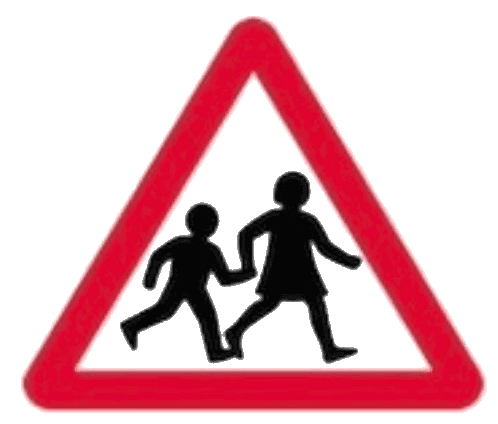
16. What does the sign say?
 |
A. You can dance on the slippery floor when it's wet. B. You must dry the floor and then you can walk on it. C. You might fall because the floor is always slippery. D. You should be careful walking on the floor if it's wet. |
III. Choose the word (4, B, C or D) that best fits each space in the following passage. (1.5 pts)
Dear Danny,
I hope you're doing well! I'd like to tell you about a (17) _________ I really enjoy - badminton. It's super fun and easy to play, and I think you might like it too.
You don't need much to start - just a racket, a shuttlecock, and a bit of (18) _________ space. You can play it inside or outside. It's great for all ages, and it helps you to stay fit and active.
When I play badminton, I feel happy and full of (19) _________ It helps me to move better, think faster, and stay focused. It's also a good way to (20) _________ and spend time with friends or family.
The game also teaches teamwork, patience, and (21) _________ decision-making. Every game is exciting because it's fast and full of action. Badminton is not only a game but also a fun and healthy lifestyle choice (22) _________ everyone - I think you'll surely enjoy it!
Take care, my friend!
17.
A. movie
B. job
C. sport
D. work
18.
A. open
B. empty
C. tall
D. narrow
19.
A. time
B. stress
C. hope
D. energy
20.
A. think
B. relax
C. train
D. perform
21.
A. quick
B. slow
C. hard
D. heavy
22.
A. of
B. for
C. with
D. in
IV. Read the following leaflet promoting the preservation of Đờn ca tài tử. Decide whether the statements from 23 to 26 are True or False and choose the correct answer (A, B, C or D) to complete the statements in the questions 27 and 28. (1.5 pts)
Let's Keep Đờn Ca Tài Tứ Alive!
Đờn ca tài tử is a special kind of music, a living heritage that connects us to the soul of southern Vietnam. It has soft sounds, heartfelt lyrics, and beautiful singing. People play it at family gatherings, festivals, and community events. It shows the feelings and stories of Vietnamese people.
But today, this music is slowly disappearing. Many people forget about it because of new things and busy lives. We need to help keep it alive!
Here's what we can do:
• Go to concerts and listen to Đờn ca tài tử.
• Learn about its history and meaning.
• Support local musicians.
• Ask schools to teach this music.
• Record songs and share them online.
By doing these things, we honor our cultural identity and ensure that future generations can enjoy and learn from this unique musical tradition. Saving this music is not just about preserving the past - it's about celebrating who we are and keeping our cultural roots strong for the future!
23. Đờn ca tài tử originated from the South of Vietnam.
24. Đờn ca tài tử is very popular with young people nowadays.
25. To keep Đờn ca tài tử alive, we should teach it in schools.
26. Online platforms have nothing to do with the preservation of Đờn ca tài tử.
27. According to the passage, Đờn ca tài tử is slowly disappearing because _______.
A. it doesn't have much value to the society
B. no good musicians can play it now
C. people are more interested in new things
D. it is no longer played at community events
28. All of the following statements are mentioned in the leaflet EXCEPT _______.
A. Đờn ca tài tử has heartfelt lyrics.
B. Supporting local musicians can help preserve Đờn ca tài tử.
C. There should be scientific seminars on Đờn ca tài tử.
D. Saving Đờn ca tài tử means much more than preserving the past.
V. Use the correct form of the word given in each sentence. (1.5 pts)
29. The kids are looking at the _______ balloons at the school gate. (color)
30. John Brown won the special prize for “_______ Performance” in the last festival. (impress)
31. _______, quite a few students scored very high in the mid-term test. (surprise)
32. Most families in Sweden have their homes _______ by solar energy. (heat)
33. The student asked his teacher for _______ to leave the classroom for a while. (permit)
34. There was an informative _______ about wildlife protection on HTV9 last night. (document)
VI. Look at the entry of the word 'information' in a dictionary. Use what you can get from the entry to complete the sentences with no more than three words. (0.5 pt)
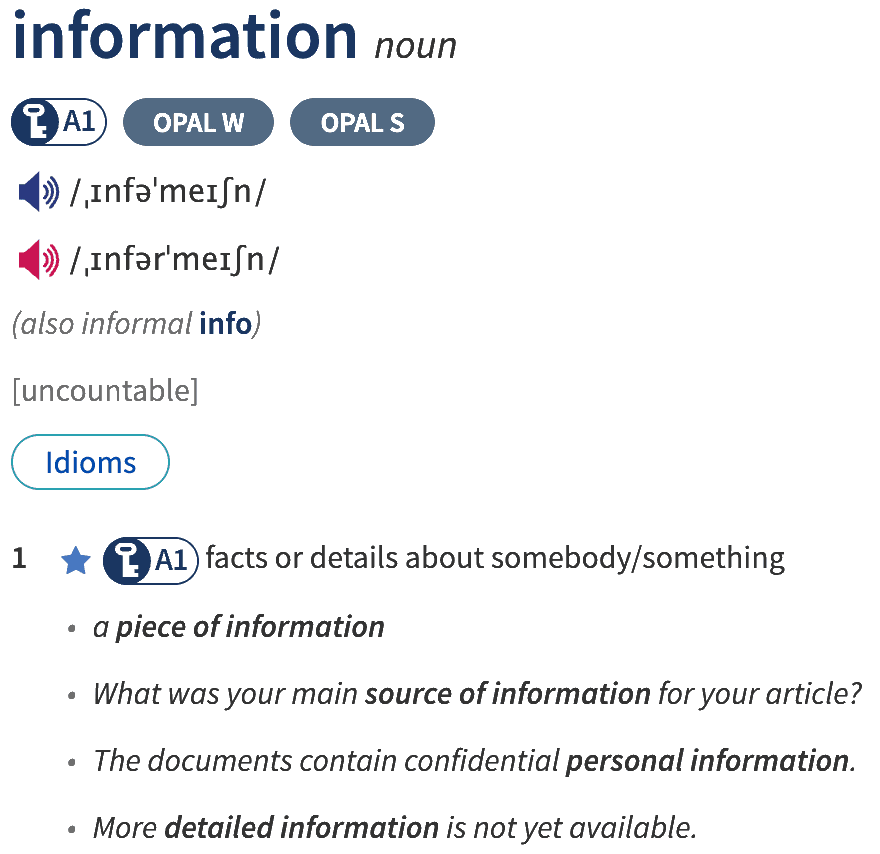
35. I'll give you this ________ and you can use it in your essay.
36. For ________ please contact us without hesitation.
VII. Rewrite each of the following sentences in another way so that it means almost the same as the sentence printed before it. (1.0 pt)
37. Kate finds it difficult to cook a decent meal.
→ Kate has __________________________________
38. They haven't met each other for quite some time.
→ It has been ________________________________
39. This language school is better than any other one in the area.
→ No other ____________________________________
40. The team finally produced a good solution to the problem.
→ The team finally came _________________________
THE END OF THE TEST
Đáp án
ĐÁP ÁN
Thực hiện: Ban chuyên môn trithuchub.com
|
1.C |
2. D |
3. B |
4.A |
|
5.B |
6.C |
7.D |
8.C |
|
9. A |
10.C |
11. C |
12. A |
|
13. D |
14. B |
15. B |
16. D |
|
17. C |
18. A |
19. D |
20. B |
|
21. A |
22. B |
23. T |
24. F |
|
25. T |
26. F |
27. C |
28. C |
|
29. colorful |
30. Impressive |
31. Surprisingly |
32. heated |
|
33. permission |
34. documentary |
35. source of information |
36. detailed information |
37. difficulty (in) cooking a decent meal.
38. quite some time since they met each other.
39. language school in the area is as good as this one.
hoặc: language school in the area is better than this one.
40. up with a good solution to the problem.
Đề thi vào 10 môn Anh Thành phố Hồ Chí Minh năm 2025
Đề bài
I. Choose the word / phrase / sentence (A, B, C or D) that best fits the space or best answers the question given in each sentence. (3.5 pts) (Từ câu 1 đến câu 14, thí sinh chỉ viết mẫu tự A, B, C hoặc D đại diện cho câu trả lời đúng vào Phần ANSWERS.)
1. Which word has the underlined part pronounced differently from that of the others?
A. delayed
B. frightened
C. remembered
D. attacked
2. Which word has the underlined part pronounced differently from that of the others?
A. plane
B. training
C. lack
D. table
3. Which word has a different stress pattern from that of the others?
A. answer
B. repeat
C. surprise
D. decide
4. Which word has a different stress pattern from that of the others?
A. brilliant
B. tradition
C. dangerous
D. serious
5. Henry: I have found some difficult words in this reading passage!
Sophie: You should ______ in the dictionary for their meanings.
A. look them for
B. look them up
C. look them at
D. look them on
6. Taylor: When do people celebrate Father’s Day in America?
Jane: It is annually celebrated ______ the third Sunday of June.
A. on
B. in
C. at
D. from
7. Minh: Have you ever been to Hanoi?
Hoang: Yes, I ______ there last year with my family.
A. go
B. am going
C. went
D. have gone
8. Duy: Which place is usually favored for photo shooting, the mountain or the sea?
Khang: I ______ the mountain. The views there are often amazing!
A. like more
B. prefer
C. love more
D. dislike
9. Jack: Did everything go well with your presentation yesterday?
Lucy: I had prepared everything carefully, _____ the projector didn’t work, unfortunately.
A. so
B. because
C. but
D. although
10. Ms Lan: What’s your favorite holiday destination?
Ms Mai: I love a town or city _____ has quiet streets and a lot of museums.
A. who
B. whom
C. that
D. whose
11. Mark: Hey, Alice! You look really happy today. What’s going on?
Alice: Hi, Mark! I’m so ______ about our school trip this Saturday.
A. amazed
B. confused
C. worried
D. excited
12. John: What’s the weather like today?
Sam: It’s sunny and warm – a perfect day ______ a walk!
A. for
B. on
C. in
D. through
13. Danny: Are you free after work? Shall we do some shopping together?
Emma: ______
A. Oh, I need to buy something. Let’s do it!
B. I’m not sure. Don’t worry about the time.
C. Perfect! I can’t make it for this evening.
D. OK, have a good time there.
14. Anna: _______
Ben: It starts at 7:15 pm. Don’t be late!
A. How long does the film last?
B. We’re arriving there at 7:15, aren’t we?
C. What time does the movie start?
D. When did you reach the theatre yesterday?
II. Look at the sign or the notice. Choose the best answer (A, B, C or D) for questions 15 and 16.
(Từ câu 15 đến câu 16, thí sinh chỉ viết mẫu tự A, B, C hoặc D đại diện cho câu trả lời đúng vào Phần ANSWERS.) (0.5 pt)
15. What does the sign say?


A. You are not allowed to jump into the water.
B. You must be careful when jumping up and down.
C. Jumping into the water alone is great fun.
D. Before you jump into the water, ask for help.
16. What does the notice tell us?

A. You buy milk tea and get a free cookie every day.
B. Milk tea and cookies are always free on Tuesday.
C. You will get a free cookie when you buy milk tea on Tuesday.
D. You get milk tea and a cookie for 35,000 VND every day.
III. Choose the word (A, B, C or D) that best fits each space in the following passage. (1.5 pts)
(Từ câu 17 đến câu 22, thí sinh chỉ viết mẫu tự A, B, C hoặc D đại diện cho câu trả lời đúng vào Phần ANSWERS.)
Dear Mai,
I hope this letter finds you well. Thanks to your lovely letter, which advised me to do something (17) ______ a hobby but still beneficial for the community, I’m delighted to let you know that I have (18) ______ the school cooking club. Now I cook meals for old people in our neighborhood every Friday. We usually make simple dishes such as rice, soup, fish and vegetables. We also come to the homes of those who have find it difficult to go out and about and give them the fresh food. (19) _____ the elderly who live alone feel very happy to see us.
I love their smile weh they receive the meats. They often share their favorite (20) _____, which help us enrich our offered menu. Sometimes, we even sing songs together to create a joyful atmosphere.
I enjoy talking with them and (21) _____ to their stories. Interestingly, they are willing to tell us about their families and how optimistic they are about their grandchildren’s future. It’s always great to help others and learn kindness. I know you are doing the same thing at your school too. Let’s both try to make community (22) ______!
Love,
Lan
17.
A. on
B. as
C. with
D. like
18.
A. got
B. listed
C. joined
D. taken
19.
A. Some of
B. Some
C. A lot
D. Few
20.
A. cookers
B. travels
C. pastimes
D. recipes
21.
A. learning
B. hearing
C. listening
D. finding
22.
A. harder
B. better
C. worse
D. weaker
IV. Read the following passage. Decide whether the statements from 23 to 26 are True or False and choose the correct answer (A, B, C or D) for questions 27 and 28. (1.5 pts)
(Từ câu 23 đến câu 26, thí sinh viết đầy đủ từ True hoặc False vào ô trả lời. Mọi cách viết khác đều không được chấm điểm. Đối với câu 27 và 28, thí sinh chỉ viết mẫu tự A, B, C hoặc D vào ô trả lời đúng trong phần ANSWERS.)
Today, many teenagers are attracted to screen-based activities such as online games, social media or web surfing. But if they haven’t tried playing a sport yet, now is the perfect time to give it a try!
Playing sports offers numerous benefits for teenagers, both physically and mentally. It helps them stay healthy by keeping their bodies active. Physical activities make teens’ hearts stronger and give them more energy. Sports help the brain work better, so teens can focus more easily in class. Through sports, teens also learn values and sportsmanship. Team sports teach them that the team’s success depends on how well the players work together. They learn to prioritise the team’s interests over individual performance. These ways of thinking aren’t just they can become more organized and responsible. On top of that, playing sports is a great way to reduce stress. Spending time with friends through games also makes teens more relaxed and socially connected.
To conclude, playing sports helps teenagers be physically fitter, think more positively, and build better relationships. Therefore, teenagers should take up a sport they enjoy!
23. A lot of young boys and girls are now fond of online activities.
24. Sports have some bad effects on teens’ concentration in class.
25. Playing sports is stressful because of its competition.
26. Building relationships is one of the benefits of playing sports.
27. What is the main idea of the passage?
A. The negive side of screen-based activities
B. The benefits of playing sports for teens
C. The effectiveness of time management in sports
D. Teenagers' resposibilities in society
28. Which of the following is NOT mentioned in the text?
A. Having a balanced diet makes teenagers much healthier.
B. Playing sports improve teens' focus on their schoowork.
C. Sports help teens develop both physically and mentally.
D. Playing with friends through games is quite relaxing.
V. Use the correct form of the word given in each sentence. (1.5 pts)
(Từ câu 29 đến câu 34, thí sinh viết câu trả lời vào Phần ANSWERS.)
29. The amusement park is a popular ______________ for children in summer. (attract)
30. They are glad to move into a new house with ______________ surroundings. (please)
31. To have a successful gala, we spent weeks ______________ for the music performances. (prepare)
32. ____________, the new employee finished the project ahead of schedule. (amaze)
33. The students had a beneficial meeting with leading ______________ on conservation. (science)
34. Climate change has caused ______________ storms around the world. (damage)
VI. Look at the entry of the word “provide” in a dictionary. Use what you can get from the entry to complete the sentences with two or three words. (0.5 pt)
|
provide /prəˈvaɪd/ verb to give something to somebody or make it available for them to use SYNONYM supply
|
(Từ câu 35 đến câu 36, thí sinh phải viết cụm từ cần điền để hoàn chỉnh mỗi câu bên dưới)
35. Volunteers are ready to ______________________________ about how to get to the museum.
36. The summer program ______________________________ for learners to better their English skills.
VII. Rewrite each of the following sentences in another way so that it means almost the same as the sentence printed before it. (1.0 pt)
(Từ câu 37 đến câu 40, thí sinh viết câu trả lời vào Phần ANSWER.)
37. Something went wrong with our car on the way to the beach.
→ Our car broke _____________________________________________________.
38. If he doesn’t catch the first metro, he will be late for the conference.
→ Unless he ________________________________________________________.
39. The last time she wrote to her grandparents was last April.
→ She hasn’t ________________________________________________________.
40. The weather was so awful that we couldn’t go picnicking as planned.
→ It was such ________________________________________________________.
THE END OF THE TEST
Xem đáp án
HƯỚNG DẪN GIẢI
Thực hiện: Ban chuyên môn trithuchub.com
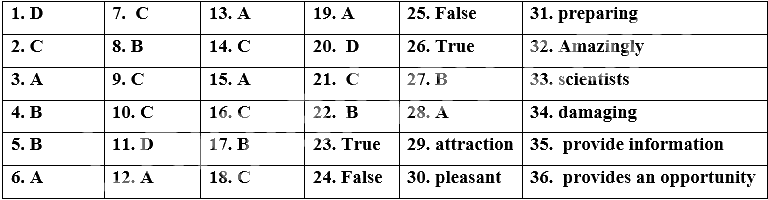
37. down on the way to the beach
38. catches the first metro, he will be late for the conference
39. written to her grandparents since last April
40. awful weather that we couldn’t go picnicking as planned
Đề thi minh hoạ vào 10 môn Anh Thành phố Hồ Chí Minh năm 2025
Đề bài
I. Choose the word / phrase / sentence (A, B, C or D) that best fits the space or best answers the question given in each sentence. (3.5 pts)
1. Which word has the underlined part pronounced differently from that of the others?
A. horned
B. listed
C. needed
D. visited
2. Which word has the underlined part pronounced differently from that of the others?
A. hill
B. tonight
C. filling
D. river
3. Which word has a different stress pattern from that of the others?
A. suitable
B. chemical
C. comfort
D. musician
4. Which word has a different stress pattern from that of the others?
A. open
B. observe
C. repeat
D. provide
5. Teacher: Hard work is key to academic success.
Student: Yes. I understand. I work hard, __________ I almost always get good marks.
A. though
B. and
C. but
D. or
6. Harry: When did you start learning English? Yours is impressive.
Lan: I just started exactly __________ September last year.
A. in
B. at
C. on
D. about
7. Thomas: What's Mike doing, Ben?
Ben: He is looking for his watch __________ the sofa.
A. at
B. from
C. in
D. on
8. David: What's your __________? What do you often do in your free time?
Nancy: I do a lot of reading in the evening.
A. plan
B. subject
C. hobby
D. exercise
9. Mike: We're trying to find someone to start the music program next month.
Sarah: My friend Anna, __________ sings very well, may be the best choice.
A. who
B. whom
C. which
D. whose
10. Mark: What is your Physics teacher like?
Helen: He's great. He's a __________ teacher; that's why we respect him.
A. boring
B. new
C. devoted
D. shy
11. Dad: How's Kevin at his new school?
Mom: He's __________ on pretty well.
A. coming
B. putting
C. getting
D. taking
12. Long: How do you get fresh again after an exam?
Khoa: I often go out with my friends for some __________ such as watching a film.
A. health
B. attitude
C. duty
D. entertainment
13. Christ: - “Shall we start now?”
Luca: - “__________”
A. Yes, we are.
B. Yes, let's.
C. OK, we do.
D. No, don't let's not.
14. Caroline: - “__________”
Lisa: - "How can you stand jogging in this humidity?"
A. A little exercise like running will do me good.
B. It's hot and I'm going for a swim now.
C. I'm standing up and down for a little exercise.
D. It's about time we did something about this humidity.
II. Look at the sign or the notice. Choose the best answer (A, B, C or D) for questions 15 and 16. (0.5 pt)
 |
15. You see this sign on a toy. What does the sign say? A. Two-year-old babies can play with this toy. B. Kids should play with this toy for about three hours. C. Kids over three years old can play with this toy. D. This toy is for toddlers under three years old. |
 |
16. What does the sign say? A. You can use as much water as you wish. B. You should save water for future generations. C. You should turn off the tap to protect children. D. You shouldn't use water for any purposes. |
III. Choose the word (A, B, C or D) that best fits each space in the following passage. (1.5 pts)
Dear Daddy,
I am writing to express my heartfelt (17) __________ for your unwavering kindness and care during my exam preparations. Your constant support, late-night study sessions, and (18) __________ words have meant (19) __________ to me. You believed in me even when I doubted myself, and your patience helped me stay (20) __________ and determined. Your sacrifices and understanding made this challenging time manageable, and I couldn't have done it (21) __________ you. Thank you for being my rock and guiding light through this journey. Your love and support have (22) __________ all the difference.
With all my love and thanks,
17.
A. happiness
B. regret
C. interest
D. gratitude
18.
A. empty
B. encouraging
C. funny
D. thankful
19.
A. little
B. lots
C. a lot
D. nothing
20.
A. focused
B. disappointed
C. fit
D. mysterious
21.
A. without
B. for
C. like
D. beside
22.
A. done
B. made
C. taken
D. run
IV. Read the following brochure of a run for the environment. Decide whether the statements from 23 to 26 are True or False and choose the correct answer (A, B, C or D) to complete the statements in the questions 27 and 28. (1.5 pts)
Join Us for a Cleaner Tomorrow! Let's Run for the Community Without Pollution!
We run to promote our health and wellness. Running boosts physical health and mental well-being.
We run to raise people's environmental awareness of the importance of reducing pollution.
We run to support local initiatives. Funds raised will support community environmental projects.
And, we run to foster our community spirit. We really can enjoy a day of fun and unity with lots of our fellow community members.
Requirements for Runners
All participants must register online by July 20th, 2025.
The run is open to runners of all ages. Children need parental consent.
Ensure you are in good health and capable of running a five-kilometer race.
Runners should wear comfortable, eco-friendly running gear, and bring your own reusable water bottle.
Respect the environment. No littering is allowed.
Event Details:
- Date: July 27th, 2025
- Time: 8:00 AM - 11:00 AM
- Location: Central Park
- Check-in: 7:00 AM at the main entrance
How to Register:
- Visit our website: https://www.cleanertomorrow.org
- Registration Fee: $50 per person (This includes a complimentary eco-friendly T-shirt.)
Contact Us:
- Email: helpenvironment@gmail.com
- Phone: -------04
23. Running helps make people strong, physically and mentally.
24. All the funds raised will be used to open new schools.
25. Participants mustn't leave trash on the running track.
26. Young kids should ask for their parents' permission to take part.
27. According to this brochure, people who want to run should __________.
A. donate $100 per person
B. take part for the first time
C. be strong enough to run a long distance
D. be at the venue on July 20th, 2025
28. All of the following statements are mentioned in the brochure EXCEPT __________
A. Running betters our sense of community.
B. Runners have to submit their health certificates.
C. Participants should use eco-friendly gear.
D. People can register by visiting a website.
V. Use the correct form of the word given in each sentence. (1.5 pts)
29. ChatGPT is a __________ tool for us all in modern life. (use)
30. Gigi won the special prize for “__________ Voice” in the last singing contest. (promise)
31. Life is getting __________ convenient for people in the countryside. (increase)
32. Almost all buildings in Sweden have been heated by __________ energy. (sun)
33. Though a good student, Tom's recent __________ has been inconsistent. (perform)
34. Many students seem to be determined to become software __________. (develop)
VI. Look at the entry of the word 'information' in a dictionary. Use what you can get from the entry to complete the sentences with two or three words. (0.5pt)
35. To write my essay, I had to search for facts from a reliable __________.
36. We need __________ about the contest to decide whether or not to participate.
VII. Rewrite each of the following sentences in another way so that it means almost the same as the sentence printed before it. (1.0 pt)
37. Mary sings better than her elder sister does.
→ Mary is _____________________________________________________________________________.
38. They find it easy to understand native speakers.
→ They have no _________________________________________________________________________.
39. My father used to smoke cigarettes.
→ My father doesn't ______________________________________________________________________.
40. She is interested in learning English.
→ She takes ____________________________________________________________________________.
---THE END ---
Xem đáp án
HƯỚNG DẪN GIẢI
Thực hiện: Ban chuyên môn trithuchub.com

37. a better singer than her elder sister
38. difficulty (in) understanding native speakers
39. smoke cigarettes anymore
40. an interest in learning English
HƯỚNG DẪN GIẢI CHI TIẾT
1. (NB)
Kiến thức: Phát âm “ed”
Giải thích:
A. horned: /hɔːrnd/
B. listed: /ˈlɪstɪd/
C. needed: /ˈniːdɪd/
D. visited: /ˈvɪzɪtɪd/
Phương án A đuôi “ed” phát âm là /d/, còn lại là /ɪd/
Đáp án A
2. (NB)
Kiến thức: Phát âm “i”
Giải thích:
A. hill: /hɪl/
B. tonight: /təˈnaɪt/
C. filling: /ˈfɪlɪŋ/
D. river: /ˈrɪvə(r)/
Phương án B “i” phát âm là /aɪ/, còn lại là /ɪ/
Đáp án B
3. (NB)
Kiến thức: Trọng âm
Giải thích:
A. suitable: /ˈsuːtəbl/
B. chemical: /ˈkemɪkl/
C. comfort: /ˈkʌmfət/
D. musician: /mjuˈzɪʃn/
Phương án D trọng âm rơi vào âm tiết thứ 2, còn lại âm 1
Đáp án D
4. (NB)
Kiến thức: Trọng âm từ 2 âm tiết
Giải thích:
A. open: /ˈəʊpən/
B. observe: /əbˈzɜːrv/
C. repeat: /rɪˈpiːt/
D. provide: /prəˈvaɪd/
Phương án A trọng âm rơi vào âm tiết thứ 1, còn lại âm 2
Đáp án A
5. (NB)
Kiến thức: Liên từ
Giải thích:
Giáo viên: Làm việc chăm chỉ là chìa khóa thành công trong học tập.
Học sinh: Vâng. Em hiểu. em làm việc chăm chỉ, ______ em hầu như luôn đạt điểm cao.
A. though: mặc dù
B. and: và
C. but: hưng
D. or: hoặc
Ta thấy 2 vế có quan hệ song song với nhau, vì vậy chọn đáp án B. and
Đáp án B
6. (NB)
Kiến thức: Giới từ
Giải thích:
Ta có in + tháng => in September
Tạm dịch:
Harry: Khi nào bạn bắt đầu học tiếng Anh? Tiếng Anh của bạn rất ấn tượng.
Lan: Mình vừa bắt đầu chính xác vào tháng 9 năm ngoái.
Đáp án A
7. (TH)
Kiến thức: Giới từ
Giải thích:
Ta có ở trên sofa là 1 bề mặt => dùng “on”: trên (1 bề mặt)
Tạm dịch:
Thomas: Mike đang làm gì vậy, Ben?
Ben: Cậu ấy đang tìm đồng hồ trên sô pha.
Đáp án D
8. (TH)
Kiến thức: Từ vựng
Giải thích:
David: ________ của bạn là gì? Bạn thường làm gì vào thời gian rảnh rỗi?
Nancy: Tôi đọc rất nhiều vào buổi tối.
A. plan (n): kế hoạch
B. subject (n): môn học
C. hobby (n): sở thích
D. exercise (n): bài tập
=> Chọn C. hobby
Đáp án C
9. (TH)
Kiến thức: Đại từ quan hệ
Giải thích:
A. who: người mà - dùng cho cho chủ ngữ
B. whom: người mà - dùng cho tân ngữ
C. which: cái mà - dùng cho vật
D. whose: chủ nhân của - dùng trước danh từ
Ta thấy My friend Anna là người và là chủ ngữ => Chọn A. who
Tạm dịch:
Mike: Chúng tôi đang cố gắng tìm ai đó để bắt đầu chương trình âm nhạc vào tháng tới.
Sarah: Bạn tôi Anna, người hát rất hay, có thể là lựa chọn tốt nhất.
Đáp án A
10. (TH)
Kiến thức: Từ vựng
Giải thích:
A. boring (adj): nhàm chán
B. new (adj): mới
C. devoted (adj): cống hiến
D. shy (adj): rụt rè
=> Chọn C. devoted
Tạm dịch:
Mark: Thầy giáo Vật lý của bạn thế nào?
Helen: Thầy ấy tuyệt lắm. Thầy ấy là một giáo viên tận tụy; đó là lý do tại sao chúng tôi tôn trọng thầy ấy.
Đáp án C
11. (TH)
Kiến thức: Từ vựng
Giải thích:
Ta có cấu trúc: get on well: hòa hợp, thích nghi tốt
Tạm dịch:
Bố: Kevin ở trường mới thế nào rồi?
Mẹ: Thằng bé học khá tốt.
Đáp án C
12. (TH)
Kiến thức: Từ vựng
Giải thích:
Long: Làm sao để bạn lấy lại tinh thần sau kỳ thi?
Khoa: Tôi thường đi chơi với bạn bè cho ___________ như xem phim chẳng hạn.
A. health (n): sức khỏe
B. attitude (n): thái độ
C. duty (n): trách nhiệm
D. entertainment (n): sự giải trí
Đáp án D
13. (TH)
Kiến thức: Chức năng giao tiếp
Giải thích:
Christ: - Chúng ta bắt đầu bây giờ nhé?
Luca: - "_______"
A. Yes, we are. => Loại vì trả lời cho hỏi Do you….?
B. Yes, let’s. => Hợp lý, phù hợp trả cho lời rủ
C. OK, we do. => Không tự nhiên
D. No, don’t let’s not. => Sai ngữ pháp
Đáp án B
14. (TH)
Kiến thức: Chức năng giao tiếp
Giải thích:
Caroline: - " ________"
Lisa: - "Làm sao bạn có thể chịu được việc chạy bộ trong độ ẩm này?"
A. Một chút vận động như chạy bộ sẽ tốt cho tôi. => Phù hợp ngữ cảnh
B. Trời nóng và tôi sẽ đi bơi ngay bây giờ. => Câu đáp không có thông tin về đi bơi => Loại
C. Tôi đang đứng lên và ngồi xuống để vận động một chút. => Không liên quan đến câu đáp
D. Đã đến lúc chúng ta phải làm gì đó với độ ẩm này. => Câu đáp tập trung cho việc chạy bộ hơn là thời tiết => Loại
Đáp án A
15. (Th)
Kiến thức: Đọc hiểu biển báo
Giải thích:
Bạn thấy biển báo này trên một món đồ chơi. Biển báo ghi gì?
A. Trẻ sơ sinh hai tuổi có thể chơi với món đồ chơi này.
B. Trẻ em nên chơi với món đồ chơi này trong khoảng ba giờ.
C. Trẻ em trên ba tuổi có thể chơi với món đồ chơi này.
D. Món đồ chơi này dành cho trẻ mới biết đi dưới ba tuổi.
Ta thấy hình ảnh là biển báo cấm trẻ em từ 0-3 tuổi => Trẻ em trên 3 tuổi có thể chơi món đồ chơi
Đáp án C
16. (TH)
Kiến thức: Đọc hiểu biển báo
Giải thích:
LÀM ƠN ĐỪNG LÃNG PHÍ NƯỚC
HÃY BẢO VỆ MÔI TRƯỜNG CHO TRẺ EM CHÚNG TA
A. Bạn có thể sử dụng bao nhiêu nước tùy thích. => Loại
B. Bạn nên tiết kiệm nước cho các thế hệ tương lai. => Phù hợp
C. Bạn nên khóa vòi nước để bảo vệ trẻ em. => Bảo vệ mội trường, không phải bảo vệ trẻ em => Loại
D. Bạn không nên sử dụng nước cho bất kỳ mục đích nào. => Loại
Đáp án B
17 (TH)
Kiến thức: Đọc - từ vựng
Giải thích:
A. happiness: hạnh phúc
B. regret: hối tiếc
C. interest: quan tâm
D. gratitude: biết ơn
Thông tin: I am writing to express my heartfelt (17) _______for your unwavering kindness and care during my exam preparations.
=> I am writing to express my heartfelt gratitude for your unwavering kindness and care during my exam preparations.
Tạm dịch: Con viết thư này để bày tỏ lòng biết ơn chân thành của con đối với lòng tốt và sự chăm sóc không ngừng nghỉ của Bố trong suốt quá trình chuẩn bị cho kỳ thi của con.
Đáp án D
18 (TH)
Kiến thức: Đọc - từ vựng
Giải thích:
A. empty: trống rỗng
B. encouraging: khuyến khích
C. funny: buồn cười
D. thankful: biết ơn
Thông tin: Your constant support, late-night study sessions, and (18) ______words
=> Your constant support, late-night study sessions, and encouraging words
Tạm dịch: Sự ủng hộ liên tục, những buổi học khuya và những lời động viên của Bố
Đáp án B
19 (TH)
Kiến thức: Đọc - lượng từ
Giải thích:
A. little: ít gần như không có
B. lots: nhiều => Không đừng 1 mình mà cần đi với of
C. a lot: nhiều, to lớn
D. nothing: không có gì
Thông tin: Your constant support, late-night study sessions, and (18) ______words have meant (19) ______ to me.
=> Your constant support, late-night study sessions, and encouraging words have meant a lot to me.
Tạm dịch: Sự ủng hộ liên tục, những buổi học khuya và những lời động viên của Bố có ý nghĩa rất lớn đối với con.
Đáp án C
20 (TH)
Kiến thức: Đọc - từ vựng
Giải thích:
A. focused: tập trung
B. disappointed: thất vọng
C. fit: phù hợp
D. mysterious: bí ẩn
Thông tin: You believed in me even when I doubted myself, and your patience helped me stay (20) ______ and determined.
=> You believed in me even when I doubted myself, and your patience helped me stay focused and determined.
Tạm dịch: Bố đã tin tưởng con ngay cả khi con nghi ngờ bản thân mình, và sự kiên nhẫn của Bố đã giúp con luôn tập trung và quyết tâm.
Đáp án A
21 (TH)
Kiến thức: Đọc - từ vựng
Giải thích:
A. without: không có
B. for: vì
C. like: như
D. beside: bên cạnh
Thông tin: Your sacrifices and understanding made this challenging time manageable, and I couldn't have done it (21) ______ you.
=> Your sacrifices and understanding made this challenging time manageable, and I couldn't have done it without you.
Tạm dịch: Sự hy sinh và thấu hiểu của Bố đã giúp con vượt qua được khoảng thời gian đầy thử thách này, và con không thể làm được nếu không có Bố.
Đáp án A
22 (TH)
Kiến thức: Đọc - cụm từ cố định
Giải thích:
Ta có cụm từ: make difference: tạo nên sự khác biệt
Thông tin: Your love and support have (22) ______ all the difference.
=> Your love and support have made all the difference.
Tạm dịch: Tình yêu và sự ủng hộ của Bố đã tạo nên tất cả sự khác biệt.
Đáp án B
Dịch bài đọc:
Kính gửi Bố,
Con viết thư này để bày tỏ lòng biết ơn chân thành của con đối với lòng tốt và sự chăm sóc không ngừng nghỉ của Bố trong suốt quá trình chuẩn bị cho kỳ thi của con. Sự ủng hộ liên tục, những buổi học khuya và những lời động viên của Bố có ý nghĩa rất lớn đối với con. Bố đã tin tưởng con ngay cả khi con nghi ngờ bản thân mình, và sự kiên nhẫn của Bố đã giúp con luôn tập trung và quyết tâm. Sự hy sinh và thấu hiểu của Bố đã giúp con vượt qua được khoảng thời gian đầy thử thách này, và con không thể làm được nếu không có Bố. Cảm ơn Bố đã là chỗ dựa và ánh sáng dẫn đường cho con trong suốt hành trình này. Tình yêu thương và sự ủng hộ của Bố đã tạo nên tất cả sự khác biệt.
Với tất cả tình yêu thương và lời cảm ơn của con,
23 (TH)
Kiến thức: Đọc - đúng/sai
Giải thích: Chạy bộ giúp con người khỏe mạnh hơn về thể chất và tinh thần.
Thông tin: Running boosts physical health and mental well-being.
Tạm dịch: Chạy bộ tốt cho sức khỏe thể chất và tinh thần.
Đáp án True
24 (TH)
Kiến thức: Đọc - đúng/sai
Giải thích: Toàn bộ số tiền quyên góp được sẽ được dùng để mở trường học mới.
Thông tin: Funds raised will support community environmental projects.
Tạm dịch: Số tiền quyên góp được sẽ hỗ trợ các dự án môi trường cộng đồng.
Đáp án False
25 (TH)
Kiến thức: Đọc - đúng/sai
Giải thích: Người tham gia không được vứt rác trên đường chạy.
Thông tin: Respect the environment. No littering is allowed.
Tạm dịch: Tôn trọng môi trường. Không được phép xả rác.
Đáp án True
26 (TH)
Kiến thức: Đọc - đúng/sai
Giải thích: Trẻ nhỏ nên xin phép cha mẹ để tham gia.
Thông tin: The run is open to runners of all ages. Children need parental consent.
Tạm dịch: Đường chạy dành cho người chạy ở mọi lứa tuổi. Trẻ em cần có sự đồng ý của cha mẹ.
Đáp án True
27 (TH)
Kiến thức: Đọc - chi tiết
Giải thích: Theo tờ rơi này, những người muốn chạy nên_____
A. quyên góp 100$ cho mỗi người
B. tham gia lần đầu tiên
C. đủ khỏe để chạy đường dài
D. có mặt tại địa điểm vào ngày 20 tháng 7 năm 2025
Thông tin: Ensure you are in good health and capable of running a five-kilometer race.
Tạm dịch: Đảm bảo bạn có sức khỏe tốt và có khả năng chạy đường đua năm km.
Đáp án C
28 (TH)
Kiến thức: Đọc - chi tiết
Giải thích: Tất cả các câu sau đây đều được đề cập trong tờ rơi TRỪ _______.
A. Chạy bộ giúp chúng ta nâng cao ý thức cộng đồng.
B. Người chạy phải nộp giấy chứng nhận sức khỏe.
C. Người tham gia phải sử dụng đồ dùng thân thiện với môi trường.
D. Mọi người có thể đăng ký bằng cách truy cập trang web.
=> Thông tin trong bài đưa ra không đề cập tới việc người tham gia chạy phải nộp giấy khám sức khỏe mà chỉ đề cập tới việc phải đảm bảo sức khỏe đủ tốt để chạy bộ đường dài “Ensure you are in good health and capable of running a five-kilometer race.” Suy ra, đáp án B sai.
Đáp án B
Dịch bài đọc:
Hãy tham gia cùng chúng tôi vì một ngày mai sạch hơn! Hãy chạy vì cộng đồng không ô nhiễm!
Chúng tôi chạy để thúc đẩy sức khỏe và tinh thần của mình. Chạy vì sức khỏe thể chất và tinh thần.
Chúng tôi chạy để nâng cao nhận thức của mọi người về tầm quan trọng của việc giảm ô nhiễm đối với môi trường.
Chúng tôi chạy để hỗ trợ các sáng kiến địa phương. Các khoản tiền gây quỹ sẽ hỗ trợ các dự án môi trường của cộng đồng.
Và chúng tôi chạy để nuôi dưỡng tinh thần cộng đồng. Chúng tôi thực sự có thể tận hưởng một ngày vui vẻ và đoàn kết với nhiều thành viên cộng đồng khác.
Yêu cầu đối với người chạy
Tất cả người tham gia phải đăng ký trực tuyến trước ngày 20 tháng 7 năm 2025.
Cuộc chạy dành cho người chạy ở mọi lứa tuổi. Trẻ em cần có sự đồng ý của cha mẹ.
Đảm bảo bạn có sức khỏe tốt và có khả năng chạy một cuộc đua dài năm km.
Người chạy nên mặc đồ chạy thoải mái, thân thiện với môi trường và mang theo chai nước tái sử dụng của riêng bạn.
Tôn trọng môi trường. Không được xả rác.
Chi tiết sự kiện:
- Ngày: 27 tháng 7 năm 2025
- Thời gian: 8:00 sáng - 11:00 sáng
- Địa điểm: Công viên Trung tâm
- Nhận phòng: 7:00 sáng tại lối vào chính
Cách đăng ký:
- Truy cập trang web của chúng tôi: https://www.cleanertomorrow.org
- Phí đăng ký: 50 đô la một người (Bao gồm một áo phông thân thiện với môi trường miễn phí.)
Liên hệ với chúng tôi:
- Email: helpenvironment@gmail.com
- Điện thoại: -------04
29 (TH)
Kiến thức: Từ loại
Giải thích: Tool là danh từ => ta cần một tính từ để bổ nghĩa và miêu tả cho danh từ tool.
useful (adj): hữu ích
Tạm dịch: Chat GPT là một công cụ hữu ích cho tất cả chúng ta trong cuộc sống hiện đại.
Đáp án: useful
30 (TH)
Kiến thức: Từ loại
Giải thích: Voice là danh từ => ta cần một tính từ để bổ nghĩa và miêu tả cho danh từ Voice. Suy ra, ta có promising là tính từ của từ “promise".
Tạm dịch: Gigi dành giải đặc biệt “giọng hát triển vọng" cho cuộc thi ca hát lần trước.
Đáp án: Promising
31 (TH)
Kiến thức: Từ loại
Giải thích: convenient là tính từ => ta cần một trạng từ đứng trước tính từ để bổ nghĩa cho tính từ ấy.
increasingly (adv): ngày càng
Tạm dịch: Cuộc sống đang ngày càng trở nên thuận tiện hơn với người dân ở vùng quê.
Đáp án: increasingly
32 (VD)
Kiến thức: Từ loại
Giải thích: energy là danh từ => ta cần một tính từ đứng trước tính từ để bổ nghĩa cho danh từ ấy. Tuy nhiên, tính từ của từ “sun" có sunny (trời có nắng) & solar (thuộc về mặt trời). Suy ra, dựa vào ngữ cảnh ta có solar là tính từ mang nghĩa phù hợp.
Tạm dịch: Hầu hết hết những tòa nhà ở Thuỵ Điển đều được sưởi ấm bằng năng lượng mặt trời.
Đáp án: solar
33 (VD)
Kiến thức: Từ loại
Giải thích: Ta có trong câu có ‘s là sở hữu cách, do vậy cần một danh từ đứng sau sở hữu cách. Suy ra, ta có performance là danh từ của “perform".
Tạm dịch: Mặc dù là một học sinh giỏi nhưng biểu hiện của Tom hiện tại không được đồng nhất.
Đáp án: performance
34 (VD)
Kiến thức: Từ loại
Giải thích:
software developer: kỹ sư/nhà phát triển phần mềm
Tạm dịch: Có rất nhiều học sinh dường như rất quyết tâm trở thành kỹ sư phần mềm.
Đáp án: developers
35 (TH)
Kiến thức: Đọc - điền từ còn thiếu
Giải thích: Để viết bài luận của mình, tôi đã phải tìm kiếm thông tin từ một ______ đáng tin cậy.
=> dựa vào thông tin trong ảnh ta chọn được cụm từ source of information.
Tạm dịch: Để viết bài luận của mình, tôi đã phải tìm kiếm thông tin từ một nguồn thông tin đáng tin cậy.
Đáp án: source of information
36 (TH)
Kiến thức: Đọc - điền từ còn thiếu
Giải thích: Chúng ta cần ______ về cuộc thi để quyết định có nên tham gia hay không.
=> dựa vào thông tin trong ảnh ta chọn được cụm từ detailed information.
Tạm dịch: Chúng ta cần thông tin chi tiết về cuộc thi để quyết định có nên tham gia hay không.
Đáp án: detailed information
37 (TH)
Kiến thức: Viết - câu so sánh
Giải thích: Cấu trúc câu so sánh với tính từ ngắn: S1 + to be + better + than + S2
Trong câu này chúng ta cần danh từ đứng sau tính từ nên từ sing => singer.
Tạm dịch: Mary là ca sĩ tốt hơn chị gái của cô ấy.
Đáp án: a better singer than her elder sister.
38 (TH)
Kiến thức: Viết - cấu trúc câu với difficulty
Giải thích: Cấu trúc câu với difficulty: S + has/have (no) difficulty (in) + V-ing
Tạm dịch: Họ không gặp khó khăn nào trong việc hiểu người bản xứ.
Đáp án: difficulty (in) understanding native speakers.
39 (TH)
Kiến thức: Viết - cấu trúc câu đặc biệt
Giải thích: Cấu trúc câu: S + don't/doesn't + V + anymore.
Tạm dịch: Bố tôi không còn hút thuốc nữa.
Đáp án: smoke cigarettes anymore.
40 (TH)
Kiến thức: Viết - cấu trúc câu đặc biệt
Giải thích: Cấu trúc câu: S + take(s) interest in + V-ing: Hứng thú trong việc làm gì.
Tạm dịch: Cô ấy có hứng thú trong việc học Tiếng Anh.
Đáp án: an interest in learning English.
Đề thi vào 10 môn Anh Thành phố Hồ Chí Minh năm 2023
Đề bài
I. Choose the word/phrase/sentence (A, B, C or D) that best fits the space or best answers the question given in each sentence. (3.5 pts).
1. Which word has the underlined part pronounced differently from that odd the others?
A. mentioned
B. consisted
C. described
D. studied
2. Which word has the underlined part pronounced differently from that of the others?
A. village
B. lighting
C. litter
D. river
3. Which word has a different stress pattern form that of the others?
A. refresh
B. intend
C. excite
D. eager
4. Which word has a different stress pattern form that of the others?
A. happening
B. responses
C. benefit
D. prisoner
5. Student: Innovations in technology are very important
Teacher: Sure. They can both save money _________ conserve the Earth’s resources.
A. as
B. and
C. but
D. or
6. Harry: When do the Vietnamese celebrate their Independence Day?
Lan: They celebrate it ________ September 2nd.
A. in
B. at
C. on
D. of
7. David: Which natural __________usually occurs in the United States?
Nancy: Tornados quite often strike the nation.
A. pollution
B. disaster
C. extinction
D. hurricane
8. Thomas: What is the weather like in Ho Chi Minh city in summer?
Tai Nguyen: It’s often hot. The temperatures are normally ___________29℃ and 38℃.
A. from
B. at
C. between
D. into
9. Mike: We’re looking for a talented artist for the music program next month.
Sarah: My friend Anna, _________ sings folk songs very well, may be suitable.
A. who
B. whom
C. which
D. whose
10. Mark: What do you think about your Chemistry teacher?
Helen: He’s great. He always __________ his students to do their best.
A. encourages
B. sends
C. lets
D. makes
11. Dad: How’s Kevin at his new school?
Mom: He has no difficulty making friends and __________ on pretty well.
A. get
B. got
C. was getting
D. is getting
12. Long: How do artist get ideas for their works?
Khoa: Dreams might be their source of_____________.
A. convenience
B. advantage
C. inspiration
D. entertainment
13. David: _____________________
Daisy: Still a little worried about it now, to be honest
A. Good luck in the exam!
B. Have a nice weekend!
C. Until then, bye bye!
D. I’ll be there!
14. Emma: I’m sorry, I was stuck in a traffic jam.
Mark: __________
A. That’s a good idea.
B. Yes, you’re right.
C. I can’t agree with you more.
D. That’s OK. We’ve just started.
II. Look at the sign or the notice. Choose the best answer (A, B, C or D) for questions 15 and 16. (0.5 pt)
 |
15. What does the sign say? A. You can’t use water for free here. B. You can’t touch the faucet in use. C. Don’t turn off the water tap. D. Don’t leave the water tap on after use. |
 |
16. What does the notice tell us about? A. Candidates will design their future in 300 words. B. Candidates will talk about their city in the future un 5 hours. C. Candidates will create their future city within 300 minutes. D. Candidates will write about their future city within 300 words. |
III. Choose the word (A, B, C or D) that best fits each space in the following passage. (1.5 pts)
Good evening. Welcome to our Fun Science Program. This week we have received a lot of questions about life on the moon. We have talked to some experts and these are what we have (17) ___________ out. There is no water or air on the moon. It is all silent (18) ___________ there is no air. Of course there will be no music, no sounds. There are no rivers and no lakes. At night it is very cold. The (19) _____________ goes down to 151°C below zero. But during the day it rises to 100°C above zero.
There are great round holes on the moon. They are called craters. There are more than 30,000 of them. There are also high mountains. The (20) ___________ mountains on the moon are about 26,000 feet or 8,000 meters.
And here is something very interesting for you (21) ____________: on the moon you weigh one sixth of what you weigh on the earth. If you weigh 50 kilos, on the moon you will weigh only a little more than 8 kilos. You will be able to jump very high, (22) ___________ higher than any high jump Olympic champions. You can take very long steps as well. And ... Maybe you won't sleep very well because one day on the moon lasts two weeks. So, is there life on the moon? I'll leave the question for you to answer yourselves in the group discussion.
17.
A. found
B. known
C. brought
D. learned
18.
A. but
B. because
C. though
D. while
19.
A. temperature
B. climate
C. weather
D. heat
20.
A. strongest
B. deepest
C. highest
D. tallest
21.
A. knowing
B. known
C. know
D. to know
22.
A. more
B. only
C. even
D. very
IV. Read the following passage. Decide whether the statements from 23 to 26 are True or False and choose the correct answer (A, B, C or D) to complete the statements in the questions 27 and 28. (1.5 pts)
Of all the holidays, I think the best is Mother's Day. It is very special to a rather big family like mine. I realize how much Mother has done for years, and all the wonderful things she has done for her children. So this year Father, my two sisters and I, the only boy in the family, decided to make Mother's Day a special occasion for our Mother. Father took a holiday from his office; my sisters and I came home from school after lunch. We planned to make it a day just like Christmas. We decorated the house with colorful flowers, candles and a small greeting over the fireplace. Mother usually did so at Christmas by herself. My sisters dressed themselves in their best. Father wore the new tie that Mother had bought for him on his birthday. I was so excited with the idea that I was the person who bought Mother a new silk hat from the money Father had secretly given to me before. We wanted to give Mother a big surprise. We hired a motor car which would take us all for a beautiful drive into the country nearby. Mother rarely had a treat like that. She is busy cooking and cleaning almost all the time. And of course, the country would be so lovely, the driving over miles of greenery in the country would be specially exciting to Mother. Mother deserved them all.
23. This is a family with five members.
24. The children stayed at home from school all day to celebrate Mother's Day.
25. The children always helped their Mother to decorate the house for Christmas.
26. The boy in the family was responsible for buying Mother a silk hat as a gift.
27. The passage is about __________________.
A. how the family prepared a Mother's Day
B. what holiday is the best for the family
C. how exciting a drive to the country was
D. when people celebrate Mother's Day
28. The Mother in the story ______________.
A. took a holiday from the office
B. was dressed in her best on Mother's Day
C. is very often busy with housework
D. enjoys driving her children to the country
V. Use the correct form of the word given in each sentence. (1.5pts)
29. AI like Chat GPT is believed to be __________ in the search of information. (benefit)
30. Minh Thu, the youngest ____________, won the special prize for “Promising Voice”. (contest)
31. The earthquake in Turkey destroyed several villages and many people became ____________. (home)
32. __________ all buildings in Sweden have been heated by solar energy. (near)
33. In ____________, we really need to do something about our neighborhood. (conclude)
34. I spent some time _____________ because I just didn’t know which website was useful for me. (surf)
VI. Rearrange the groups of words in a correct order to make complete sentences.
35. Nuclear power / to our environment / but also dangerous / is not only expensive / . //
36. The host band / a mashup of their hit songs / started off the concert / by presenting/ . //
VII. Rewrite each of the following sentences in another way so that it means almost the same as the sentence printed before it/ (1.0 pt)
37. Change the way you learn vocabulary, and you can improve your English.
=> If you ____________________________________________________
38. “Why don’t we collect those empty bottles for recycling?” said Robert.
=> Robert suggested that those ___________________________________
39. Because Tom is very lazy, he can’t get good marks at school.
=> Tom is very lazy, ___________________________________________
40. Michael loves to play football after school.
=> Michael is fond _____________________________________________
Đáp án
HƯỚNG DẪN GIẢI
THỰC HIỆN: BAN CHUYÊN MÔN trithuchub.com
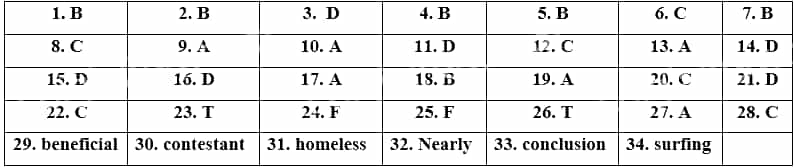
35. is not only expensive but also dangerous to our environment.
36. started off the concert by presenting a mashup of their hit songs.
37. change the way you learn vocabulary, you can improve your English.
38. empty bottles (should) be collected for recycling.
39. so he can not get good marks at school.
40. of playing football after school.
HƯỚNG DẪN GIẢI CHI TIẾT
1. (NB)
Kiến thức: Phát âm “ed”
Giải thích:
A. mentioned /ˈmenʃnd/
B. consisted /kənˈsɪstid/
C. described /dɪˈskraɪbd/
D. studied /ˈstʌdid/
Phương án B phát âm là /id/, còn lại là /d/
Đáp án B.
2. (NB)
Kiến thức: Phát âm “i”
Giải thích:
A. village /ˈvɪlɪdʒ/
B. lighting /ˈlaɪtɪŋ/
C. litter /ˈlɪtə(r)/
D. river /ˈrɪvə(r)/
Phương án B phát âm là /aɪ/, còn lại là /ɪ/
Đáp án B.
3. (NB)
Kiến thức: Trọng âm
Giải thích:
A. refresh /rɪˈfreʃ/
B. intend /ɪnˈtend/
C. excite /ɪkˈsaɪt/
D. eager /ˈiːɡə(r)/
Phương án D có trọng âm rơi vào âm tiết thứ 1, còn lại là 2.
Đáp án D.
4. (TH)
Kiến thức: Trọng âm
Giải thích:
A. happening /ˈhæpənɪŋ/
B. responses /rɪˈspɒns/
C. benefit /ˈbenɪfɪt/
D. prisoner /ˈprɪznə(r)/
Phương án B có trọng âm rơi vào âm tiết thứ 2, còn lại là 1.
Đáp án B.
5. (TH)
Kiến thức: Từ loại
Giải thích:
A. as: do, bởi vì
B. and: và
C. but: nhưng
D. or: hoặc
Tạm dịch: Sinh viên: Những đổi mới trong công nghệ là rất quan trọng
Giáo viên: Chắc chắn rồi. Họ vừa có thể tiết kiệm tiền vừa bảo tồn tài nguyên của Trái đất.
Đáp án B.
6. (TH)
Kiến thức: Giới từ
Giải thích: on + ngày, tháng, năm
Tạm dịch: Người Việt Nam kỷ niệm Ngày Độc lập khi nào?
Lan: Họ ăn mừng vào ngày 2 tháng 9.
Đáp án C.
7. (TH)
Kiến thức: Từ vựng
Giải thích:
A. pollution (n): ô nhiễm
B. disaster (n): thiên tai
C. extinction (n): tuyệt chủng
D. hurricane (n): bão
Tạm dịch: David: Thiên tai nào thường xảy ra ở Hoa Kỳ?
Nancy: Lốc xoáy khá thường xuyên tấn công quốc gia.
Đáp án B.
8. (TH)
Kiến thức: Giới từ
Giải thích:
- between…and
Tạm dịch: Thomas: Thời tiết ở thành phố Hồ Chí Minh vào mùa hè như thế nào?
Tai Nguyen: Nó thường nóng. Nhiệt độ thường nằm trong khoảng từ 29℃ đến 38℃.
Đáp án C.
9. (TH)
Kiến thức: Cấu trúc cơ bản
Giải thích:
- Who: Thường sử dụng làm chủ ngữ, tân ngữ hoặc có thể thay thế cho các danh từ chỉ người.
Tạm dịch: Mike: Chúng tôi đang tìm kiếm một nghệ sĩ tài năng cho chương trình âm nhạc vào tháng tới.
Sarah: Bạn Anna của tôi, người hát dân ca rất hay, có thể phù hợp.
Đáp án A.
10. (TH)
Kiến thức: Cấu trúc cơ bản
Giải thích:
A. encourages (v): khuyến khích
B. sends (v): gửi
C. lets (v): cho phép
D. makes (v): làm
Tạm dịch: Mark: Bạn nghĩ gì về giáo viên Hóa học của mình?
Helen: Anh ấy rất tuyệt. Ông luôn khuyến khích các học trò của mình cố gắng hết sức.
Đáp án A.
11. (TH)
Kiến thức: Cấu trúc cơ bản
Giải thích:
- Liên từ "and" nối 2 từ/mệnh đề song song => chỗ trống cần điền 1 động từ chia theo thì hiện tại
- Phương án A: cần phải chia động từ get vì chủ ngữ là "He" => loại A
- Phương án B, C => thì quá khứ đơn => loại B, C
- get on well with sb: có mối quan hệ tốt với ai
Tạm dịch:
Bố: Kevin ở trường mới thế nào?
Mẹ: Anh ấy không gặp khó khăn gì trong việc kết bạn và đang có mối quan hệ khá tốt.
Đáp án D.
12. (TH)
Kiến thức: Từ vựng
Giải thích:
A. convenience (n): thuận tiện
B. advantage (n): lợi thế
C. inspiration (n): cảm hứng
D. entertainment (n): giải trí
Tạm dịch:
Long: Họa sĩ lấy ý tưởng cho tác phẩm của mình như thế nào?
Khoa: Ước mơ có thể là nguồn cảm hứng của họ.
Đáp án C.
13. (TH)
Kiến thức: Câu giao tiếp
Giải thích:
A. Good luck in the exam!: Chúc may mắn trong kỳ thi!
B. Have a nice weekend!: Chúc cuối tuần vui vẻ!
C. Until then, bye bye!: Cho đến lúc đó, tạm biệt!
D. I’ll be there!: Tôi sẽ ở đó!
Tạm dịch: David: Chúc may mắn trong kỳ thi!
Daisy: Bây giờ vẫn hơi lo lắng về điều đó, thành thật mà nói.
Đáp án A.
14. (TH)
Kiến thức: Câu giao tiếp
Giải thích:
A. That’s a good idea: Đó là một ý kiến hay
B. Yes, you’re right: Vâng, bạn nói đúng
C. I can’t agree with you more: Tôi không thể đồng ý với bạn hơn nữa
D. That’s OK. We’re just started: Không sao đâu. Chúng tôi cũng chỉ mới bắt đầu.
Tạm dịch: Emma: Tôi xin lỗi, tôi bị kẹt xe.
Mark: Không sao đâu. Chúng tôi cũng chỉ mới bắt đầu.
Đáp án D.
15. (TH)
Kiến thức: Cấu trúc cơ bản
Giải thích: Chiếc biển hiệu chỉ dẫn điều gì?
A. You can’t use water for free here: Bạn không thể sử dụng nước miễn phí ở đây.
B. You can’t touch the faucet in use: Bạn không thể chạm vào vòi đang sử dụng.
C. Don’t turn off the water tap: Đừng tắt vòi nước.
D. Don’t leave the water tap on after use: Không để vòi nước mở sau khi sử dụng.
Đáp án D.
16. (TH)
Kiến thức: Cấu trúc cơ bản
Giải thích: Thông báo cho chúng tôi biết về điều gì?
A. Candidates will design their future in 300 words: Thí sinh sẽ thiết kế tương lai của mình trong 300 từ.
B. Candidates will talk about their city in the future un 5 hours: Thí sinh sẽ nói về thành phố của họ trong tương lai trong 5 giờ
C. Candidates will create their future city within 300 minutes: Thí sinh sẽ tạo thành phố tương lai của mình trong vòng 300 phút.
D. Candidates will write about their future city within 300 words: Thí sinh sẽ viết về thành phố tương lai của họ trong vòng 300 từ.
Đáp án D.
17. (TH)
Kiến thức: Đọc hiểu
Giải thích:
A. found (v): tìm
B. known (v): biết
C. brought (v): mua
D. learned (v): học
Tạm dịch: Chúng tôi đã nói chuyện với một số chuyên gia và đây là những gì chúng tôi đã tìm ra.
Đáp án A.
18. (TH)
Kiến thức: Đọc hiểu
Giải thích:
A. but: nhưng
B. because: bởi vi
C. though: mặc dù
D. while: trong khi
Tạm dịch: Tất cả đều im lặng vì không có không khí.
Đáp án B.
19. (TH)
Kiến thức: Đọc hiểu
Giải thích:
A. temperature (n): nhiệt độ
B. climate (n): khí hậu
C. weather (n): thời tiết
D. heat (n): hơi nóng
Tạm dịch: Nhiệt độ giảm xuống 151°C dưới 0 độ.
Đáp án A.
20. (TH)
Kiến thức: Đọc hiểu
Giải thích:
A. strongest (adj): khoẻ nhất
B. deepest (adj): sâu nhất
C. highest (adj): cao nhất
D. tallest (adj): cao nhất
Tạm dịch: Những ngọn núi cao nhất trên mặt trăng là khoảng 26.000 feet hoặc 8.000 mét.
Đáp án C.
21. (TH)
Kiến thức: Đọc hiểu
Giải thích: It is + adj + for + O + to + V-infinitive
Tạm dịch: And here is something very interesting for you to know on the moon you weigh one sixth of what you weigh on the earth.
Đáp án D.
22. (TH)
Kiến thức: Đọc hiểu
Giải thích:
A. more: nhiều hơn
B. only: chỉ
C. even: thậm chí
D. very: rất, vô cùng
Tạm dịch: Bạn sẽ có thể nhảy rất cao, thậm chí cao hơn bất kỳ nhà vô địch nhảy cao Olympic nào.
Đáp án C.
Dịch bài đọc:
Buổi tối vui vẻ. Chào mừng đến với Chương trình Khoa học Vui nhộn của chúng tôi. Tuần này chúng tôi đã nhận được rất nhiều câu hỏi về cuộc sống trên mặt trăng. Chúng tôi đã nói chuyện với một số chuyên gia và đây là những gì chúng tôi đã tìm ra. Không có nước hay không khí trên mặt trăng. Tất cả đều im lặng vì không có không khí. Tất nhiên sẽ không có âm nhạc, không có âm thanh. Không có sông và không có hồ. Ban đêm trời rất lạnh. Nhiệt độ giảm xuống 151°C dưới 0 độ. Nhưng vào ban ngày, nó tăng lên 100°C trên không.
Có những lỗ tròn lớn trên mặt trăng. Chúng được gọi là miệng núi lửa. Có hơn 30.000 người trong số họ. Ngoài ra còn có những ngọn núi cao. Những ngọn núi cao nhất trên mặt trăng là khoảng 26.000 feet hoặc 8.000 mét.
Và đây là một điều rất thú vị mà bạn cần biết: trên mặt trăng, bạn nặng bằng một phần sáu trọng lượng của bạn trên trái đất. Nếu bạn nặng 50kg thì trên mặt trăng bạn chỉ nặng hơn 8kg một chút. Bạn sẽ có thể nhảy rất cao, thậm chí cao hơn bất kỳ nhà vô địch nhảy cao Olympic nào. Bạn cũng có thể đi những bước rất dài. Và... Có thể bạn sẽ ngủ không ngon lắm vì một ngày trên mặt trăng kéo dài hai tuần. Vậy, có sự sống trên mặt trăng? Tôi sẽ để câu hỏi cho các bạn tự trả lời trong phần thảo luận nhóm.
23. (TH)
Kiến thức: Đọc hiểu
Giải thích: Đây là một gia đình có năm thành viên.
Thông tin: So this year Father, my two sisters and I, the only boy in the family, decided to make Mother's Day a special occasion for our Mother.
Tạm dịch: Vì vậy, năm nay Bố, hai chị gái của tôi và tôi, đứa con trai duy nhất trong gia đình, quyết định biến Ngày của Mẹ thành một dịp đặc biệt dành cho Mẹ của chúng tôi.
Đáp án T.
24. (TH)
Kiến thức: Đọc hiểu
Giải thích: Những đứa trẻ nghỉ học ở nhà cả ngày để chào mừng Ngày của Mẹ.
Thông tin: Father took a holiday from his office; my sisters and I came home from school after lunch.
Tạm dịch: Bố đã đi nghỉ ở văn phòng của mình; chị em tôi và tôi đi học về sau bữa trưa.
Đáp án F.
25. (TH)
Kiến thức: Đọc hiểu
Giải thích: Những đứa trẻ luôn giúp mẹ trang trí nhà cửa đón Giáng sinh.
Thông tin: We planned to make it a day just like Christmas. We decorated the house with colorful flowers, candles and a small greeting over the fireplace. Mother usually did so at Christmas by herself.
Tạm dịch: Chúng tôi đã lên kế hoạch để biến nó thành một ngày giống như Giáng sinh. Chúng tôi trang trí ngôi nhà với hoa đầy màu sắc, nến và một lời chào nhỏ trên lò sưởi. Mẹ thường làm như vậy vào Giáng sinh một mình.
Đáp án F.
26. (TH)
Kiến thức: Đọc hiểu
Giải thích: Chàng trai trong gia đình có trách nhiệm mua cho mẹ một chiếc mũ lụa để làm quà.
Thông tin: I was so excited with the idea that I was the person who bought Mother a new silk hat from the money Father had secretly given to me before.
Tạm dịch: Tôi vô cùng phấn khích với ý nghĩ rằng chính tôi là người đã mua cho mẹ chiếc mũ lụa mới từ số tiền mà bố đã bí mật cho tôi trước đây.
Đáp án T.
27. (TH)
Kiến thức: Đọc hiểu
Giải thích: Đoạn văn nói về __________________.
A. how the family prepared a Mother's Day: gia đình đã chuẩn bị Ngày của Mẹ như thế nào
B. what holiday is the best for the family: kỳ nghỉ nào là tốt nhất cho gia đình
C. how exciting a drive to the country was: chuyến đi đến đất nước thú vị như thế nào
D. when people celebrate Mother's Day: khi mọi người kỷ niệm Ngày của Mẹ
Đáp án A.
28. (TH)
Kiến thức: Người mẹ trong câu chuyện ______________.
Giải thích:
A. took a holiday from the office: đã đi nghỉ ở văn phòng
B. was dressed in her best on Mother's Day: mặc đẹp nhất trong Ngày của Mẹ
C. is very often busy with housework: thường xuyên bận rộn với công việc nhà
D. enjoys driving her children to the country: thích thú chở con về quê
Thông tin: She is busy cooking and cleaning almost all the time.
Tạm dịch: Bà ấy bận nấu nướng và dọn dẹp hầu như mọi lúc.
Đáp án C.
Dịch bài đọc:
Trong tất cả các ngày lễ, tôi nghĩ tuyệt nhất là Ngày của Mẹ. Nó rất đặc biệt đối với một gia đình khá lớn như tôi. Tôi nhận ra rằng mẹ đã làm bao nhiêu điều trong nhiều năm và tất cả những điều tuyệt vời mà mẹ đã làm cho các con của mình. Vì vậy, năm nay Bố, hai chị gái của tôi và tôi, đứa con trai duy nhất trong gia đình, quyết định biến Ngày của Mẹ thành một dịp đặc biệt dành cho Mẹ của chúng tôi. Bố đã đi nghỉ ở văn phòng của mình; chị em tôi và tôi đi học về sau bữa trưa. Chúng tôi đã lên kế hoạch để biến nó thành một ngày giống như Giáng sinh. Chúng tôi trang trí ngôi nhà với hoa đầy màu sắc, nến và một lời chào nhỏ trên lò sưởi. Mẹ thường làm như vậy vào Giáng sinh một mình. Chị em tôi ăn mặc đẹp nhất. Bố đeo chiếc cà vạt mới mà mẹ đã mua cho ông vào ngày sinh nhật của ông. Tôi vô cùng phấn khích với ý nghĩ rằng chính tôi là người đã mua cho mẹ chiếc mũ lụa mới từ số tiền mà bố đã bí mật cho tôi trước đây. Chúng tôi muốn dành cho mẹ một bất ngờ lớn. Chúng tôi đã thuê một chiếc ô tô có động cơ để đưa tất cả chúng tôi đi một vòng tuyệt đẹp đến vùng quê gần đó. Mẹ hiếm khi được đối xử như vậy. Bà ấy bận nấu nướng và dọn dẹp hầu như mọi lúc. Và tất nhiên, miền quê sẽ rất thú vị, việc lái xe qua hàng dặm cây xanh trong miền quê sẽ đặc biệt thú vị đối với Mẹ. Mẹ xứng đáng với tất cả.
29. (TH)
Kiến thức: Từ vựng
Giải thích: beneficial (adj): có lợi ích
Tạm dịch: AI như Chat GPT được cho là có ích trong việc tìm kiếm thông tin.
Đáp án beneficial.
30. (TH)
Kiến thức: Từ vựng
Giải thích: contestant (n): thí sinh
Tạm dịch: Minh Thư, thí sinh nhỏ tuổi nhất giải Đặc biệt Giọng ca triển vọng.
Đáp án contestant.
31. (TH)
Kiến thức: Từ vựng
Giải thích:
- homeless (adj): vô gia cư
Tạm dịch: Trận động đất ở Thổ Nhĩ Kỳ đã phá hủy một số ngôi làng và nhiều người trở thành vô gia cư.
Đáp án homeless.
32. (TH)
Kiến thức: Từ vựng
Giải thích:
- Nearly (adv): gần như, sắp
Tạm dịch: Gần như tất cả các tòa nhà ở Thụy Điển đều được sưởi ấm bằng năng lượng mặt trời.
Đáp án Nearly.
33. (TH)
Kiến thức: Từ vựng
Giải thích:
- conclusion (n): kết luận, cuối cùng, tóm lại
Tạm dịch: Tóm lại, chúng ta thực sự cần phải làm gì đó với khu phố của chúng ta.
Đáp án conclusion.
34. (TH)
Kiến thức: Từ vựng
Giải thích:
- surfing (v): lướt
Tạm dịch: Tôi đã dành thời gian lướt web vì tôi không biết trang web nào hữu ích cho mình.
Đáp án surfing.
35. (TH)
Kiến thức: Cấu trúc cơ bản
Giải thích:
- Cấu trúc “not only…but also” với tính từ: S + V + not only + adj + but also + adj
Tạm dịch: Năng lượng hạt nhân không chỉ tốn kém mà còn nguy hiểm cho môi trường của chúng ta.
Đáp án: is not only expensive but also dangerous to our environment.
36. (TH)
Kiến thức: Cấu trúc cơ bản
Tạm dịch: Ban nhạc chủ nhà bắt đầu buổi hòa nhạc bằng cách trình bày một bản mashup các bài hát nổi tiếng của họ.
Đáp án: started off the concert by presenting a mashup of their hit songs.
37. (TH)
Kiến thức: Cấu trúc cơ bản
Giải thích:
- Câu điều kiện loại 1: If + S + V(hiện tại đơn), S + can/ will + V-infinitive
Tạm dịch: Nếu bạn thay đổi cách học từ vựng, bạn có thể cải thiện tiếng Anh của mình.
Đáp án: change the way you learn vocabulary, you can improve your English.
38. (TH)
Kiến thức: Cấu trúc cơ bản
Giải thích:
- Cấu trúc “suggest”: S + suggest + that + S + V + O
Tạm dịch: Robert gợi ý rằng (nên) thu gom những chai rỗng đó để tái chế.
Đáp án: empty bottles should be collected for recycling.
39. (TH)
Kiến thức: Cấu trúc cơ bản
Giải thích:
- S + V + O, so + S + V + O
Tạm dịch: Tom rất lười biếng, vì vậy anh ấy không thể đạt điểm cao ở trường.
Đáp án: so he can’t get good marks at school.
40. (TH)
Kiến thức: Cấu trúc cơ bản
Giải thích:
- fond of + V-ing: thích làm gì…
Tạm dịch: Michael thích chơi bóng đá sau giờ học.
Đáp án: of playing football after school.
Đề thi vào 10 môn Anh Thành phố Hồ Chí Minh năm 2021
Đề bài
I. Choose the word / phrase (A, B, C or D) that best fits the space in each sentence. (2.5 pts)
1/ The government is trying to _______ people to use public buses instead of motorbikes.
A. complain
B. provide
C. reduce
D. persuade
2/ Watching TV all day is a bad habit _______we get no physical exercise.
A. but
B. even though
C. because
D. so
3/ Valentine's Day is celebrated _______February 14th
A. for
B. in
C. on
D. at
4/ We are looking forward to our ________in the competition.
A. participation
B. likeness
C. failure
D. variety
5/ Mr. Tan, who teaches physics here, speaks very ________ English.
A. best
B. good
C. well
D. better
6/ The mosque, which Lan walks _________ on her way to school, looks beautiful.
A. past
B. into
C. through
D. across
7/ Are you _______learning on Saturday mornings this term?
A. interested
B. likely
C. busy
D. expected
8/ That's Maryam, the girl _________visited Lan and Nga last week.
A. who
B. whom
C. whose
D. which
9/ - Student A: "Give my best regards to your parents."
- Student B: “________________________”
A. It's nice of you to say so.
B. You're welcome!
C. I'm glad to hear that.
D. Thanks. I will
10/ - Student A: "Would you please wait a while?"
- Student B: “________________________”
A. Never mind
B. Certainly! I'll be right here.
C. Of course, I wouldn't.
D. Not at all.
Thí sinh chi viết mẫu tự (A, B, C, hoặc D) đại diện cho câu trả lời đúng vào Phần trả lời.
II. Look at the signs. Choose the best answer (A, B, C or D) for questions 11 and 12. (0.5 pt)
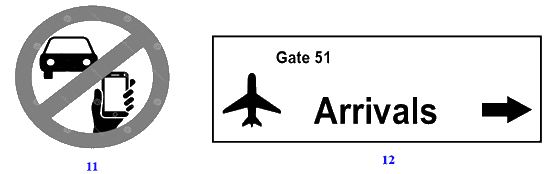
11/ What does the sign say?
A. not to start the engine with a cellphone
B. not to stop and buy a cellphone on the way
C. not to use cellphones when driving
D. not to talk with friends when driving
12/ What does the sign say?
A. The area where the passengers check in to board
B. The area where the passengers wait for the flight
C. The place where the passengers will leave
D. The area where the passengers from landing flights come out
Thí sinh chỉ viết mẫu tự (A, B, C, hoặc D) đại diện cho câu trả lời đúng vào Phần trả lời.
Phần trả lời: 11.________________ 12. ________________
III. Read the following passage. Decide if the statements from 13 to 16 are True or False, and choose the correct answers (A, B, C or D for questions 17 and 18. (1.5 pts)
In Britain there is a holiday now which people call Mother's Day. In the old days many girls from working-class families in towns and cities and from farmers' families in the country worked in rich houses.
Once a year, it was usually on Sunday in March, they were allowed to visit their mothers. They went home and brought presents for their mothers and for other members of their families. People called that day Mothering Day or Mothering Sunday. Mothering Day later became Mother's Day. It is the last Sunday in March.
In 1914, President Woodrow Wilson and Congress agreed that the second Sunday in May should be observed as Mother's Day in America. On that day, children give their mothers flowers, presents and cards to show their love to their mothers. Americans spend millions of dollars to buy Mother's Day gifts. Clothes, perfume, jewelry and books or tickets to the theater are given to mothers. People who cannot be with their mothers on that day usually send them presents and call them on the phone.
13/ Mother's Day is a day on which children show their love to their male parents.
14/ In the United States, Mother's Day has been celebrated on the second Sunday in May since the early 19th century.
15/ Americans usually offer gifts to their mothers on Mother's Day.
16/ People who cannot visit their mothers on Mother's Day often phone to talk to them.
17/ According to the passage, Mother's Day is ____________in Britain.
A. the last Sunday in May
B. the second Sunday in May
C. the last Sunday in March
D. the first Sunday in March
18/ What does the passage mainly discuss?
A. A day children give someone they respect flowers, presents and cards.
B. A day when servants could return home to visit their mothers.
C. A day children show their love to their mothers and fathers.
D. A day to honor mothers and motherhood.
Từ câu 13 đến câu 16, thí sinh phải viết đầy đủ từ True hoặc False vào ô trả lời. Mọi cách viết khác đều không được chấm điểm. Đối với câu 17 và 18, thí sinh chỉ viết mẫu tự (A, B, C hoặc D) đại diện cho câu trả lời đúng vào phần trả lời.
Phần trả lời: 13._________ 14. _________ 15._________ 16._________ // 17._________18._________
IV. Choose the word / phrase (A, B, C or D) that best fits the blank space in the following passage.
(1.5 pts)
The changes that took place in schools have changed the roles of teachers. In the past, teachers (19)_______ the major source of knowledge, the leader and educator of their students' school life. Nowadays, teachers provide information and show their students (20) _______ to handle it. Although they are still considered to be a kind of facilitator in the class, they can be thought of as a facilitator in the learning process.
Another difference between the past and present tasks of teachers is represented by the (21) _______ background they need in order to be able to use computers and some other machines effectively. Instead of teaching with chalk, they need to be information technology experts.
One of the biggest challenges (22) _______ teachers is that their role in the school management has also changed. The school needs them as individuals who can make (23) _______ and cope with the stress of the world of schools. At the same time teachers need to be able to work in teams, and cooperate with colleagues and parents. A teacher has not only to instruct but also to (24) _______ the students with confidence and determination.
19/
A. used to be
B. were used to be
C. got used to being
D. were being used
20/
A. who
B. how
C. what
D. which
21/
A. media
B. cultural
C. technical
D. social
22/
A. in
B. by
C. on
D. for
23/
A. decisions
B. experiences
C. difficulties
D. mistakes
24/
A. design
B. prevent
C. inspire
D. inform
Thí sinh chỉ viết mẫu tự (A, B, C, hoặc D) đại diện cho câu trả lời đúng vào Phần trả lời.
Phần trả lời: 19. _______ 20. _______ 21. _______ 22. _______ 23. _______ 24. _______
V. Use the correct form of the word given in each sentence (1.5 pts)
25/ ______________, my childhood friends get together for entertainment. (occasion)
26/ Her performance was so ___________that we all stood up to clap our hands. (impress)
27/ The ____________for the Best Actress cried when her name was announced. (nominate)
28/ Most accidents can be avoided if people pay more ____________. (attend)
29/ The aim is to raise people's awareness of the ___________of rhinos. (conserve)
30/ My creative sister spends all her free time ____________her own room. (decorate)
Thí sinh phải viết từ cần điền vào Phần trả lời dưới đây.
Phân trả lời: 25. ____________ 26. ____________ 27. ____________
28. ____________ 29. ____________ 30. ____________
VI. Rearrange the groups of words in a correct order to make complete sentences. (0.5 pt)
31/ have been added / fashionable / Modern patterns / to make it more/ to the Ao dai/./
32/ language is / Nowadays,/ compulsory for students/ of all ages / learning a foreign /./
Thí sinh viết tiếp các nhóm từ và dấu câu theo đúng trình tự vào Phần trả lời để hình thành câu hoàn chỉnh.
Phần trả lời:
31. Modern patterns _________________________________________________________________
32. Nowadays, _____________________________________________________________________
VII. Rewrite each of the following sentences in another way so that it means almost the same as the sentence printed before it. (2.0 pts)
33/ Why don't you clear up the garbage before leaving, Linh?" said Mai.
=> Mai suggested that _____________________________________________________________
34/ We haven't used these machines for a long time.
=> It's been _____________________________________________________________________
35/ Thu is the best tennis player in the club.
=> No-one else in the club can ______________________________________________________
36/ It's a pity they are travelling on uncomfortable buses.
=> They wish they _______________________________________________________________
Thí sinh viết tiếp những câu trên theo đúng yêu cầu của đề dẫn vào Phần trả lời dưới đây.
Phần trả lời:
33. Mai suggested that ____________________________________________________________
34. It's been _____________________________________________________________________
35. No-one else in the club can _____________________________________________________
36. They wish they _______________________________________________________________
THE END OF THE TEST
Đáp án
HƯỚNG DẪN GIẢI
Thực hiện: Ban chuyên môn trithuchub.com
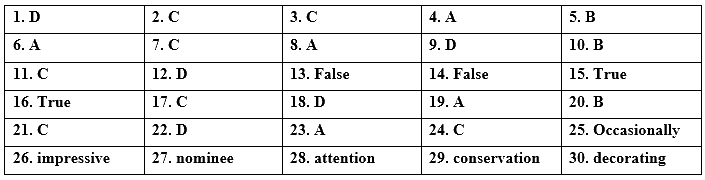
31. Modern patterns have been added to the Ao dai to make it more fashionable
32. learning a foreign language is compulsory for students of all ages
33. Linh should clear up the garbage before leaving
34. a long time since we last used these machines
35. play tennis better than Thu
36. were not travelling on uncomfortable buses
Question 1. D
Kiến thức: Từ vựng
Giải thích:
A. complain (v): phàn nàn
B. provide (v): cung cấp
C. reduce (v): giảm
D. persuade (v): thuyết phục
government (n): chính phủ
Loại A, B, C vì không hợp nghĩa
Tạm dịch: Chính phủ đang cố gắng thuyết phục mọi người sử dụng xe buýt công cộng thay vì xe máy.
Chọn D.
Question 2. C
Kiến thức: Liên từ
Giải thích:
A. but: nhưng
B. even though: mặc dù
C. because: bởi vì
D. so: vậy nên
Loại A, B, D vì không hợp nghĩa
Tạm dịch: Việc xem ti vi cả ngày là một thói quen xấu vì chúng ta luyện thể dục.
Chọn C.
Question 3. C
Kiến thức: Giới từ
Giải thích:
A. for + N/V_ing: cho việc gì => loại vì sau chỗ trống là thời gian
B. in (trong, vào): dùng cho tháng năm mùa thế kỷ và các buổi trong ngày (ngoại trừ at night) ...
C. on (vào): dùng cho ngày, ngày tháng, ngày tháng năm và các ngày cụ thể ...
D. at (lúc, vào lúc): dùng cho thời gian trong ngày và vào những ngày lễ ...
Sau chỗ trống là ngày “February 14th” (ngày 14 tháng 2) => dùng giới từ “on”
Tạm dịch: Ngày lễ tình nhân được tổ chức vào ngày 14 tháng 2.
Chọn C.
Question 4. A
Kiến thức: Từ vựng
Giải thích:
A. participation (n): sự tham gia
B. likeness (n): sự giống nhau
C. failure (n): thất bại
D. variety (n): sự đa dạng
Tobe looking forward to sth: mong đợi điều gì
Loại B, C, D vì không phù hợp nghĩa
Tạm dịch: Chúng tôi rất mong được tham gia cuộc thi.
Chọn A.
Question 5. B
Kiến thức: Loại từ
Giải thích:
A. best: dạng so sánh nhất của tính từ “good” hoặc trạng từ “well”
B. good (adj): tốt
C. well (adv): tốt
D. better: dạng so sánh hơn của tính từ “good” hoặc trạng từ “well”
Loại A và D vì trong câu không dùng cấu trúc so sánh
Sau chỗ trống là danh từ “English” (tiếng Anh) => cần tính từ bổ nghĩa phía trước => loại C
Tạm dịch: Ông Tân, người dạy vật lý ở đây, nói tiếng Anh rất tốt.
Chọn B.
Question 6. A
Kiến thức: Cụm động từ
Giải thích:
A. walk past: đi qua
B. walk into: đi vào
C. walk through: giải thích cẩn thận
D. walk across (không có cụm từ này) =>loại
Loại B và C vì không hợp nghĩa
Tạm dịch: Nhà thờ Hồi giáo, cái mà Lan đi qua trên đường đến trường, trông thật đẹp.
Chọn A.
Question 7. C
Kiến thức: Từ vựng
Giải thích:
A. interested in N/V_ing: hứng thú với việc gì => loại vì thiếu giới từ “in”
B. likely to V_nguyên thể: có khả năng xảy ra việc gì
C. busy (adj): bận rộn
D. expected to + V_nguyên thể: mong đợi làm gì
=> Sau chỗ trống là “learning” – V_ing => loại B, D
Tạm dịch: Bạn có bận học vào các buổi sáng Thứ Bảy trong kỳ học này không?
Chọn C.
Question 8. A
Kiến thức: Đại từ quan hệ
Giải thích:
A. who + V/ S + V: người mà (thay thế cho danh từ chỉ người)
B. whom + S + V: người mà (thay thế cho danh từ chỉ người)
C. whose + N: của ..(thay thế cho danh từ sở hữu)
D. which + V/ S + V: cái mà/ việc mà (thay thế cho danh từ chỉ vật)
Trước chỗ trống là “the girl” (cô gái) => Loại D
Sau chỗ trống là động từ “visited” (đến thăm) => Loại B, C
Tạm dịch: Đó là Maryam, cô gái mà đã đến thăm Lan và Nga vào tuần trước
Chọn A.
Question 9. D
Kiến thức: Ngôn ngữ giao tiếp
Giải thích:
- Học sinh A: “Gửi lời chào trân trọng nhất đến bố mẹ của bạn.”
- Học sinh B: “________________________”
A. Bạn thật tốt khi nói vậy. (đáp lại lời khen)
B. Không có gì đâu (đáp lại lời cảm ơn)
C. Tôi rất vui khi nghe tin đó (đáp lại khi nghe tin vui từ ai đó)
D. Cảm ơn, tôi sẽ làm vậy
Chọn D.
Question 10. B
Kiến thức: Ngôn ngữ giao tiếp
Giải thích:
- Học sinh A: “Bạn làm ơn đợi một lát được không?”
- Học sinh B:” _____________”
A. Đừng bận tâm (đáp lại lời xin lỗi)
B. Chắc chắn rồi, tôi sẽ ở ngay đây
C. Tất nhiên rồi, tôi sẽ không làm vậy
D. Không có gì đâu (đáp lại lời cảm ơn)
Chọn B.
Question 11. C
Kiến thức: Đọc hiểu
Giải thích:
Biển náo này nói về cái gì?
A. không khởi động máy với dùng điện thoại di động
B. không dừng lại và mua điện thoại di động trên đường
C. không dùng điện thoại di động khi lái xe
D. không nói chuyện với bạn khi lái xe
Chọn C.
Question 12. D
Kiến thức: Đọc hiểu
Giải thích:
Biển náo này nói về cái gì?
A. Khu vực nơi hành khách làm thủ tục lên tàu
B. Khu vực nơi hành khách chờ chuyến bay
C. Nơi hành khách sẽ rời đi
D. Khu vực nơi hành khách từ các chuyến bay hạ cánh đi ra
Trong hình có: Arrivals (n): đến nơi, Gate (n): cổng => D là đáp án phù hợp nhất
Chọn D.
Question 13. False
Kiến thức: Đọc hiểu
Giải thích:
13/ Ngày của mẹ là ngày mà trẻ thể hiện tình yêu của mình với những người bố. => SAI
Thông tin:
- They went home and brought presents for their mothers and for other members of their families.
(Họ về nhà và mang quà cho mẹ và cho các thành viên khác trong gia đình họ.)
- On that day, children give their mothers flowers, presents and cards to show their love to their mothers.
(Vào ngày đó, trẻ em tặng mẹ hoa, quà và thiệp để thể hiện tình yêu của mình với mẹ.)
Đáp án: False.
Question 14. False
Kiến thức: Đọc hiểu
Giải thích:
14/ Tại Hoa Kỳ, Ngày của Mẹ đã được tổ chức vào Chủ nhật thứ hai của tháng Năm kể từ đầu thế kỷ thứ 19
Thông tin: In 1914, President Woodrow Wilson and Congress agreed that the second Sunday in May should be observed as Mother's Day in America.
(Năm 1914, Tổng thống Woodrow Wilson và Quốc hội đã đồng ý rằng Chủ nhật thứ hai của tháng Năm nên được coi là Ngày của Mẹ ở Mỹ.)
Đáp án: False.
Question 15. True
Kiến thức: Đọc hiểu
Giải thích:
15/ Người Mỹ thường tặng quà cho mẹ của họ vào Ngày của Mẹ.
Thông tin: Americans spend millions of dollars to buy Mother's Day gifts. Clothes, perfume, jewelry and books or tickets to the theater are given to mothers
(Người Mỹ chi hàng triệu đô la để mua quà tặng Ngày của Mẹ. Quần áo, nước hoa, trang sức và sách hoặc vé vào rạp được tặng cho các bà mẹ.)
Đáp án: True.
Question 16. True
Kiến thức: Đọc hiểu
Giải thích:
16/ Những người không thể đến thăm mẹ của họ vào Ngày của Mẹ thường gọi điện thoại để nói chuyện với họ.
Thông tin: People who cannot be with their mothers on that day usually send them presents and call them on the phone.
(Những người không thể ở bên mẹ trong ngày hôm đó thường gửi quà cho họ và gọi cho họ qua điện thoại.)
Đáp án: True.
Question 17. C
Kiến thức: Đọc hiểu
Giải thích:
Theo đoạn văn, Ngày của Mẹ là ____________ở Anh.
A. Chủ nhật cuối cùng của tháng 5
B. Chủ nhật thứ hai của tháng 5
C. Chủ nhật cuối cùng của tháng 3
D. Chủ nhật đầu tiên của tháng 3
Thông tin: They went home and brought presents for their mothers and for other members of their families. People called that day Mothering Day or Mothering Sunday. Mothering Day later became Mother's Day. It is the last Sunday in March.
(Họ về nhà và mang quà cho mẹ và cho các thành viên khác trong gia đình họ. Người ta gọi ngày đó là Ngày làm mẹ hay Chủ nhật làm mẹ. Ngày làm mẹ sau này trở thành Ngày của Mẹ. Đó là chủ nhật cuối cùng của tháng ba.)
Chọn C.
Question 18. D
Kiến thức: Đọc hiểu
Giải thích:
Đoạn văn chủ yếu thảo luận là gì?
A. Một ngày trẻ em tặng ai đó chúng tôn trọng hoa, quà và thiệp. => không nhắc đến trong bài
B. Một ngày mà người hầu có thể trở về nhà để thăm mẹ của họ. => chi tiết đoạn 1, chưa đủ bao quát
C. Một ngày trẻ em thể hiện tình yêu của mình với mẹ và cha của chúng. => thiếu thông tin
D. Một ngày để tôn vinh các bà mẹ và làm mẹ.
Chọn D.
Dịch đoạn văn:
Ở Anh có một ngày lễ mà mọi người gọi là Ngày của Mẹ. Ngày xưa, nhiều cô gái từ các gia đình thuộc tầng lớp lao động ở các thị trấn và thành phố và từ các gia đình nông dân ở nước này làm việc trong những ngôi nhà giàu có. Mỗi năm một lần, thường là vào Chủ nhật tháng 3, họ được phép đến thăm mẹ. Họ về nhà và mang quà cho mẹ và cho các thành viên khác trong gia đình họ. Người ta gọi ngày đó là Ngày làm mẹ hay Chủ nhật làm mẹ. Ngày làm mẹ sau này trở thành Ngày của Mẹ. Đó là chủ nhật cuối cùng của tháng ba. Năm 1914, Tổng thống Woodrow Wilson và Quốc hội đã đồng ý rằng Chủ nhật thứ hai của tháng Năm nên được coi là Ngày của Mẹ ở Mỹ. Vào ngày đó, trẻ em tặng mẹ hoa, quà và thiệp để thể hiện tình yêu của mình với mẹ. Người Mỹ chi hàng triệu đô la để mua quà tặng Ngày của Mẹ. Quần áo, nước hoa, trang sức và sách hoặc vé vào rạp được tặng cho các bà mẹ. Những người không thể ở bên mẹ trong ngày hôm đó thường gửi quà cho họ và gọi cho họ qua điện thoại.
Question 19. A
Kiến thức: Cấu trúc với “used to”
Giải thích:
used to dùng để diễn tả hành động, sự việc, thói quen trong quá khứ & không còn liên quan đến hiện tại.
Cấu trúc: S + used to + V_nguyên thể
Khi có be: S + used to + be … : Ai đó từng là ….
In the past, teachers (19) used to be the major source of knowledge,…
Tạm dịch: Trước đây, giáo viên từng là nguồn kiến thức chính,…
Chọn A.
Question 20. B
Kiến thức: Từ vựng
Giải thích:
how to do sth: cách làm gì đó
Nowadays, teachers provide information and show their students (20) how to handle it.
Tạm dịch: Ngày nay, giáo viên cung cấp thông tin và chỉ cho học sinh cách xử lý.
Chọn B.
Question 21. C
Kiến thức: Từ vựng
Giải thích:
A. media (adj): trung bình, vừa
B. cultural (adj): thuộc về văn hóa
C. technical (adj): liên quan đến kĩ thuật
D. social (adj): thuộc về xã hội
Another difference between the past and present tasks of teachers is represented by the (21) technical background they need in order to be able to use computers and some other machines effectively.
(Một sự khác biệt khác giữa nhiệm vụ của giáo viên trước đây và hiện tại được thể hiện qua nền tảng kỹ thuật họ cần để có thể sử dụng máy tính và một số máy móc khác một cách hiệu quả.)
Chọn C.
Question 22. D
Kiến thức: Giới từ
Giải thích:
challenge for / to sb: thử thách cho ai đó
One of the biggest challenges (22) for teachers is that their role in the school management has also changed.
(Một trong những thách thức lớn nhất đối với giáo viên là vai trò của họ trong quản lý nhà trường cũng đã thay đổi.)
Chọn D.
Question 23. A
Kiến thức: Sự kết hợp từ
Giải thích:
make decisions: đưa ra những quyết định
make mistakes: mắc các lỗi sai
The school needs them as individuals who can make (23) decisions and cope with the stress of the world of schools.
(Nhà trường cần họ như những cá nhân có thể đưa ra quyết định và đối phó với sự căng thẳng của thế giới học đường.)
Chọn A.
Question 24. C
Kiến thức: Từ vựng
Giải thích:
A. design (v): thiết kế
B. prevent (v): ngăn cản
C. inspire (v): truyền cảm hứng
D. inform (v): báo tin, thông báo
A teacher has not only to instruct but also to (24) inspire the students with confidence and determination.
(Một giáo viên không chỉ hướng dẫn mà còn truyền cảm hứng cho học sinh với sự tự tin và quyết tâm.)
Chọn C.
Dịch bài đọc:
Những thay đổi diễn ra trong trường học đã thay đổi vai trò của giáo viên. Trước đây, giáo viên từng là nguồn kiến thức chính, người lãnh đạo và giáo dục về đời sống học đường của học sinh.
Ngày nay, giáo viên cung cấp thông tin và chỉ cho học sinh cách xử lý. Mặc dù họ vẫn được coi là một loại người hỗ trợ trong lớp, nhưng họ có thể được coi là người hướng dẫn trong quá trình học tập.
Một sự khác biệt khác giữa nhiệm vụ của giáo viên trước đây và hiện tại được thể hiện qua nền tảng kỹ thuật họ cần để có thể sử dụng máy tính và một số máy móc khác một cách hiệu quả. Thay vì dạy bằng phấn, họ cần phải là chuyên gia công nghệ thông tin.
Một trong những thách thức lớn nhất đối với giáo viên là vai trò của họ trong quản lý nhà trường cũng đã thay đổi. Nhà trường cần họ như những cá nhân có thể đưa ra quyết định và đối phó với sự căng thẳng của thế giới học đường. Đồng thời giáo viên cần có khả năng làm việc theo nhóm, và hợp tác với đồng nghiệp và phụ huynh. Một giáo viên không chỉ hướng dẫn mà còn truyền cảm hứng cho học sinh với sự tự tin và quyết tâm.
Question 25.
Kiến thức: Trạng từ
Giải thích:
Trạng từ có thể đứng ở đầu câu, sau nó là dấu phẩy.
occasion (n): sự kiện, dịp
occasionally (adv): thỉnh thoảng
Tạm dịch: Thỉnh thoảng, những người bạn thời thơ ấu của tôi gặp nhau để giải trí.
Đáp án: Occasionally
Question 26.
Kiến thức: Tính từ
Giải thích:
Sau tobe “was” cần một tính từ.
Ngoài ra, cấu trúc: S + be + so + adj + that … : Cái gì/Ai đó thì quá … đến nỗi mà …
impress (v): làm cho ấn tượng
impressive (adj): đầy ấn tượng
Tạm dịch: Màn trình diễn của cô ấy ấn tượng đến mức tất cả chúng tôi đều đứng lên vỗ tay.
Đáp án: impressive
Question 27.
Kiến thức: Danh từ
Giải thích:
Sau mạo từ “The” cần điền một danh từ.
nominate (v): đề cử
nominee (n): người được đề cử
Tạm dịch: Người được đề cử Nữ diễn viên chính xuất sắc nhất đã khóc khi tên của cô được công bố.
Đáp án: nominee
Question 28.
Kiến thức: Danh từ
Giải thích: Cụm từ: pay attention: chú ý, tập trung
Tạm dịch: Hầu hết các tai nạn có thể tránh được nếu mọi người chú ý hơn.
Đáp án: attention
Question 29.
Kiến thức: Danh từ
Giải thích:
Sau mạo từ “The” cần điền một danh từ.
conserve (v): bảo tồn
conservation (n): sự bảo tồn
Tạm dịch: Mục đích là để nâng cao nhận thức của mọi người về sự bảo tồn tê giác.
Đáp án: conservation
Question 30.
Kiến thức: to V / V_ing
Giải thích:
spend + lượng thời gian + (on) + V_ing: dành bao nhiêu thời gian làm gì
decorate (v): trang trí => dạng V_ing: decorating
Tạm dịch: Người chị gái đầy sáng tạo của tôi dành toàn bộ thời gian rảnh rỗi để trang trí phòng riêng của chị.
Đáp án: decorating
Question 31.
Kiến thức: Câu bị động, mệnh đề chỉ mục đích
Giải thích:
Cấu trúc câu bị động thì hiện tại hoàn thành: S + have/has + been + V_P2
to + V_nguyên thể: để làm gì => chỉ mục đích
Tạm dịch: Các kiểu mẫu hiện đại đã được thêm vào Áo dài để làm cho nó hợp thời trang hơn.
Đáp án: Modern patterns have been added to the Ao dai to make it more fashionable
Question 32.
Kiến thức: Từ vựng
Giải thích:
V_ing có thể đứng đầu câu để làm chủ ngữ => động từ đứng sau chia số ít.
be compulsory for sb: bắt buộc với ai
of all ages: ở mọi lứa tuổi
Tạm dịch: Ngày nay, học ngoại ngữ là bắt buộc đối với học sinh ở mọi lứa tuổi.
Đáp án: learning a foreign language is compulsory for students of all ages
Question 33.
Kiến thức: Câu tường thuật
Giải thích: Cấu trúc câu tường thuật với “suggest”: S1 + suggested + that + S2 + should + V_nguyên thể
Tạm dịch: Mai gợi ý rằng Linh nên dọn rác trước khi rời đi.
Đáp án: Linh should clear up the garbage before leaving
Question 34.
Kiến thức: Thì quá khứ đơn
Giải thích:
It’s been + thời gian: bao lâu rồi
since + S + V_quá khứ đơn: kể từ khi ai đó làm gì (trong quá khứ)
Tạm dịch: Đã một thời gian dài rồi kể từ lần cuối chúng tôi sử dụng những cỗ máy này.
Đáp án: a long time since we last used these machines
Question 35.
Kiến thức: Câu so sánh
Giải thích:
Cấu trúc so sánh nhất: S + be + tính từ so sánh nhất + N
Cấu trúc so sánh hơn: S + V + trạng từ so sánh hơn + than …
good (adj) => better => the best
well (adv) => better => the best
Tạm dịch: Không có ai khác trong câu lạc bộ có thể chơi quần vợt tốt hơn Thu.
Đáp án: play tennis better than Thu
Question 36.
Kiến thức: Câu ước
Giải thích:
Cấu trúc câu ước ở hiện tại: S + wish + S + V_quá khứ => đưa ra điều ước trái với sự thật ở hiện tại
Tạm dịch: Họ ước rằng họ không đang đi trên những chiếc xe buýt không thoải mái.
Đáp án: were not travelling on uncomfortable buses
------HẾT------
Đề thi vào 10 môn Anh Thành phố Hồ Chí Minh năm 2020
Đề bài
I. Choose the word/phrase (A, B, C or D) that best fits the space in each sentence. (2.5 pts)
Question 1. My uncle, ________ is a computer programmer, works at New York’s Columbia University.
A. whom
B. whose
C. who
D. which
Question 2. The whole incident was captured _______ CCTV at the shopping mall yesterday.
A. at
B. on
C. in
D. above
Question 3. Internet users often suffer various risks, such as spam or ______ junk mail.
A. scientific
B. electric
C. electronic
D. traffic
Question 4. In 2019 Brunei has a _______ of just over 439,300.
A. currency
B. collection
C. religion
D. population
Question 5. Last weekend, Ba invited Liz to join his family on a ________ to his home village.
A. two-days trip
B. two-day trip
C. trip of two-day
D. two-day’s trip
Question 6. The _____ lot is kept under video surveillance, so you needn’t worry about your car.
A. parker
B. parking
C. parks
D. park-keeper
Question 7. The Internet is available almost everywhere now. _______, some people have never got access to it.
A. Although
B. So that
C. However
D. Therefore
Question 8. Most robots are empowered by artificial _______, or AI, and machine learning technology.
A. intelligence
B. internet
C. information
D. interest
Question 9. – Hai Dang: “Do you think wearing uniforms is a good idea?” – Minh Dan: “________”.
A. Well done. You did it
B. Yeah. You don’t have to think of what to wear every day
C. It’s nice of you to say so
D. Yes, I can. And so can all of my friends
Question 10. – Tim: “_______”. – Paul: “I disagree. The course is too expensive for us”.
A. That academy isn’t good.
B. That summer course is unaffordable.
C. Do you like that course?
D. Why not take that summer course?
II. Look that the signs. Choose the best answer (A, B, C or D) for each sign (0.5 pt)

Question 11. What does the sign (A) say?
A. You mustn’t drive after drinking.
B. You shouldn’t drive under the influence of drugs.
C. You must be careful with drunk drivers.
D. You should be careful as there is a pub ahead.
Question 12. What does the sign (B) say?
A. Disabled people can stand here.
B. This is a forbidden area for the handicapped.
C. Facilities for disabled people are available here.
D. The handicapped must stay here at all times.
III. Read the following passage. Decide if the statements from 13 to 16 are True or False and choose the correct answer (A, B, C or D) for the questions 17 and 18. (2 pts)
There is a list of interesting jobs that we'll never have again, and a town crier is, of course, on the list. It’s been a long time since town criers worked professionally, so there are not many people knowing who town criers were. Today we can only see them in the movies or at some old tourist sites. Before newspapers were invented, a town crier, who was usually an older gentleman with a booming voice, always dressed officially and had a little bell which he carried with him always. His job was to go through city streets ringing the bell and shouting the latest news as he was walking.
The occupation of the town crier was quickly replaced by radio, television, texting, internet, and all the marvels of modern technology. Today this occupation exists only for entertaining purposes and as local folklore. Competitions for the best town criers are still being held in some parts of the world like America, Australia, Canada and England.
Question 13. A lot of people now work as professional town criers.
Question 14. Today people can get to know about town criers in films and at some tourist attractions
Question 15. Town criers had worked professionally before mass media were invented.
Question 16. Town criers used to wear casual clothes when working.
Question 17. What is the passage mainly about?
A. The birth of town crying
B. Town crying, an extinct job
C. Town criers and modern technology
D. Town crying for entertainment
Question 18. It can be inferred from the passage that town criers used to
A. live in a town square.
B. be waited and welcomed to town squares.
C. make loud deep sounds.
D. take part in competitions in western countries.
IV. Choose the word (A, B, C or D) that best fits the blank space in the following passage. (1.5 pts)
There are many ways to cut the (19)_____ of your power bill in your home. Take a look at the way we choose computers (a laptop or a desktop computer). A laptop is a computer that is small enough (20)_______ carried around easily and is flat when closed. While a desktop computer is the one that fits on a desk but that is not easily moved from place to place.
Regardless of their convenience difference, choosing a laptop or a desktop computer may result in a significant difference in energy (21)______ . I’m writing this by using a laptop with power (22)________ features switched on – using around 50 watts maximum. Back some years ago, I would work with a desktop computer with a 17’’ CRT screen – around 300 watts all told.
The following are some rough (23)_________ based on coal fired power generation for just the computer aspect:
- Laptop = 50w x 10 hours a day x 365 days = 185.5 kilowatt hours
- Desktop = 300w x 10 hours a day x 365 = 1095 kilowatt hours
In the case of coal fired electricity, each kilowatt you save not only puts (24)______ back into your pockets, but also avoids up to 1.5 pounds of carbon dioxide emission being generated.
Question 19.
A. energy
B. costs
C. households
D. power
Question 20.
A. having
B. being
C. to be
D. to have
Question 21.
A. efficiency
B. affection
C. production
D. effect
Question 22.
A. consuming
B. lighting
C. saving
D. sleeping
Question 23.
A. innovations
B. productions
C. settings
D. calculations
Question 24.
A. cash
B. debt
C. product
D. economy
V. Use the correct from of the word given in each sentence. (1.0 pt)
Question 25. Ha Noi will have _________ between 23°C and 27°C. (temperate)
Question 26. It’s worrying that natural disasters are becoming ______ damaging. (increase)
Question 27. UFO stands for “_______ Flying Object”, which is also known as a flying saucer. (identify)
Question 28. Although robots have proved to be significant, they still have a few ______. (limit)
Question 29. You can finish the work at home on Sunday if ________. (necessity)
Question 30. The police _______ to the emergency quickly and the victims were rescued. (response)
VI. Rearrange the groups of words in a correct order to make complete sentences. (0.5 pt)
Question 31. India, downing trees / and power lines, causing /has hit / widespread damage/ a powerful cyclone /./
-> A powerful cyclone ___________________________________________________________________.
Question 32. what would you do?/ If you had / and playing games endlessly, a 15-year-old/boy staying up too late/./
-> If you had ___________________________________________________________________________.
VII. Rewrite each of the following sentences in another way so that it means almost the same as the sentence printed before it. (2.0 pts)
Question 33. Nowadays young people pay more attention to traditional festivals than they did some years ago.
-> Some years back young ________________________________________________________________.
Question 34. This is the first time they have experienced the wonderful feeling in space.
-> They have never ______________________________________________________________________.
Question 35. We should teach young children to care for the environment.
-> I suggest young children ________________________________________________________________.
Question 36. Drivers and passengers must fasten the seat belt when travelling in cars.
-> It is compulsory for ___________________________________________________________________.
Đáp án
HƯỚNG DẪN GIẢI
Thực hiện : Ban Chuyên môn Loigiaihay.com
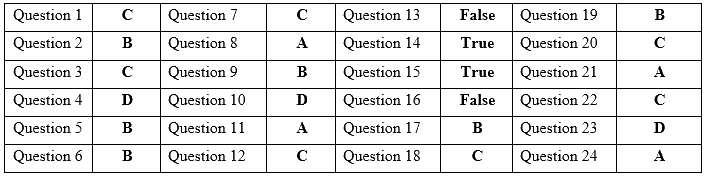
Question 25. temperature/ temperatures
Question 26. increasingly
Question 27. Unidentified
Question 28. limitations
Question 29. necessary
Question 30. responded
Question 31. A powerful cyclone has hit India, downing trees and power lines, causing widespread damage.
Question 32. If you had a 15-year-old boy staying up too late and playing games endlessly, what would you do?
Question 33. Some years back young people did not pay as much attention to traditional festivals as they do nowadays.
Question 34. They have never experienced the wonderful feeling in space before.
Question 35. I suggest young children should be taught to take care for the environment.
Question 36. It is compulsory for drivers and passengers to fasten the seat belt when travelling in cars.
HƯỚNG DẪN GIẢI CHI TIẾT
Question 1. C
Kiến thức: Đại từ quan hệ
Giải thích:
whom + S + V: thay thế cho danh từ chỉ người, làm tân ngữ
whose + N + V: chỉ sở hữu
who + V / S + V: thay thế cho danh từ chỉ người, làm chủ ngữ hoặc tân ngữ
which + V / S + V: thay thế cho danh từ chỉ vật, làm chủ ngữ hoặc tân ngữ
Chủ ngữ “My uncle” => chỉ người; sau chỗ trống có động từ “is” => dùng “who”
Tạm dịch: Chú tôi, một lập trình viên máy tính, làm việc tại Đại học Columbia của New York.
Chọn C
Question 2. B
Kiến thức: Giới từ
Giải thích: capture somebody/something on film/CCTV: quay phim/ghi/vẽ ai/cái gì đó
Tạm dịch: Toàn bộ vụ việc đã được ghi lại trên camera quan sát tại trung tâm mua sắm ngày hôm qua.
Chọn B
Question 3. C
Kiến thức: Từ vựng
Giải thích:
A. scientific (adj): thuộc về khoa học
B. electric (adj): thuộc về điện
C. electronic (adj): điện tử
D. traffic (n): giao thông
Tạm dịch: Người dùng Internet thường phải chịu nhiều rủi ro khác nhau, chẳng hạn như thư rác hoặc thư điện tử chứa nội dung xấu.
Chọn C
Question 4. D
Kiến thức: Từ vựng
Giải thích:
A. currency (n): tiền tệ
B. collection (n): bộ sưu tập
C. religion (n): tôn giáo
D. population (n): dân số
Tạm dịch: Vào năm 2019, Brunei có dân số chỉ hơn 439,300 người.
Chọn D
Question 5. B
Kiến thức: Tính từ ghép
Giải thích:
Cách thành lập tính từ ghép: số đếm - danh từ đếm được số ít
=> a two-day trip: một chuyên đi kéo dài hai ngày
Tạm dịch: Cuối tuần trước, Ba mời Liz cùng tham gia chuyến đi 2 ngày với gia đình về quê anh ấy.
Chọn B
Question 6. B
Kiến thức: Cụm danh từ
Giải thích: parking lot: bãi đỗ xe
Tạm dịch: Bãi đậu xe được trông coi bằng video giám sát, vì vậy bạn không cần phải lo lắng về chiếc xe của mình.
Chọn B
Question 7. C
Kiến thức: Liên từ
Giải thích:
Although + S + V: Mặc dù…
So that: để mà => không đứng đầu câu
However: Tuy nhiên
Therefore: Do đó
Tạm dịch: Internet có sẵn ở hầu hết mọi nơi. Tuy nhiên, một số người chưa bao giờ truy cập nó.
Chọn C
Question 8. A
Kiến thức: Từ vựng
Giải thích:
A. intelligence (n): trí thông minh, trí tuệ
B. internet (n): mạng internet
C. information (n): thông tin
D. interest (n): mối quan tâm
Tạm dịch: Hầu hết các robot được kiểm soát bởi trí tuệ nhân tạo, hoặc AI và công nghệ học máy móc.
Chọn A
Question 9. B
Kiến thức: Chức năng giao tiếp
Giải thích:
- Hải Đăng: “Cậu có nghĩ mặc đồng phục là một ý tưởng hay không? – Minh Đan: “_____”.
A. Làm tốt lắm. Cậu làm được rồi đấy => khen ai đó
B. Có. Cậu sẽ không phải nghĩ đến việc mặc gì mỗi ngày
C. Cậu thật tử tế khi nói vậy => đáp lại lời khen của ai đó
D. Có, mình có thể. Và tất cả bạn của mình cũng có thể => không phù hợp
Chọn B
Question 10. D
Kiến thức: Chức năng giao tiếp
Giải thích:
- Tim: “_____” – Paul: “Mình không đồng ý. Khóa học đó quá đắt với chúng ta”.
=> Tim sẽ đưa ra gợi ý về một khóa học nào đó
A. Học viện đó không tốt.
B. Khóa học mùa hè đó không thể chi trả được.
C. Cậu có thích khóa học đó không?
D. Tại sao không tham gia khóa học mùa hè đó nhỉ?
Tạm dịch: - Tim: “Tại sao không tham gia khóa học mùa hè đó nhỉ?” – Paul: “Mình không đồng ý. Khóa học đó quá đắt với chúng ta”.
Chọn D
Question 11. A
Kiến thức: Đọc hiểu
Giải thích:
A. Bạn không được lái xe sau khi uống rượu bia.
B. Bạn không nên lái xe khi bị ảnh hưởng của thuốc/ ma túy.
C. Bạn phải cẩn thận với những tài xế say rượu.
D. Bạn nên cẩn thận khi phía trước có quán rượu.
Chọn A
Question 12. C
Kiến thức: Đọc hiểu
Giải thích:
A. Người khuyết tật có thể đứng đây.
B. Đây là khu vực cấm đối với người khuyết tật.
C. Cơ sở vật chất, thiết bị cho người khuyết tật có sẵn ở đây.
D. Người tàn tật phải ở đây mọi lúc.
Chọn C
Question 13. False
Kiến thức: Đọc hiểu
Giải thích: Nhiều người hiện tại làm việc như những người rao tin chuyên nghiệp.
Thông tin: The occupation of the town crier was quickly replaced by radio, television, texting, internet, and all the marvels of modern technology.
(Công việc của những người rao tin đã nhanh chóng bị thay thế bằng đài phát thanh, truyền hình, nhắn tin, internet và tất cả những điều kỳ diệu của công nghệ hiện đại.)
Chọn False
Question 14. True
Kiến thức: Đọc hiểu
Giải thích: Ngày nay mọi người có thể biết về những người rao tin trong các bộ phim và ở một số địa điểm thu hút khách du lịch.
Thông tin: Today we can only see them in the movies or at some old tourist sites.
(Ngày nay chúng ta chỉ có thể nhìn thấy họ trong các bộ phim hoặc tại một số địa điểm du lịch cũ.)
Chọn True
Question 15. True
Kiến thức: Đọc hiểu
Giải thích: Những người rao tin đã làm việc chuyên nghiệp trước khi thông tin đại chúng được phát minh.
Thông tin: It’s been a long time since town criers worked professionally, […] before newspapers were invented […] The occupation of the town crier was quickly replaced by radio, television, texting, internet, and all the marvels of modern technology.
(Đã có một thời gian dài kể từ khi những người rao tin hoạt động chuyên nghiệp, […] Trước khi các tờ báo được phát minh […] Công việc của những người rao tin đã nhanh chóng bị thay thế bằng đài phát thanh, truyền hình, nhắn tin, internet và tất cả những điều kỳ diệu của công nghệ hiện đại.)
Chọn True
Question 16. False
Kiến thức: Đọc hiểu
Giải thích: Những người rao tin từng mặc thường phục khi làm việc.
Thông tin: Before newspapers were invented, a town crier, who was usually an older gentleman with a booming voice, always dressed officially and had a little bell which he carried with him always.
(Trước khi các tờ báo được phát minh, một người rao tin, thường là một quý ông lớn tuổi với giọng nói trầm, vang, luôn ăn mặc trang trọng và mang luôn theo một chiếc chuông nhỏ bên mình.)
Chọn False
Question 17. B
Kiến thức: Đọc hiểu
Giải thích:
Đoạn văn chủ yếu nói về cái gì?
A. Sự ra đời của việc rao tin => không nhắc đến
B. Rao tin, một công việc đã không còn nữa
C. Những người rao tin và công nghệ hiện đại => chi tiết nhỏ trong bài
D. Rao tin để giải trí => chi tiết cụ thể trong bài
Chọn B
Question 18. C
Kiến thức: Đọc hiểu
Giải thích:
Có thể suy ra từ đoạn văn rằng những người rao tin đã từng .
A. sống ở một quảng trường thị trấn
B. được chờ đợi và chào đón đến quảng trường thị trấn
C. tạo ra âm thanh trầm, lớn
D. tham gia các cuộc thi ở các nước phương tây
Thông tin: Before newspapers were invented, a town crier, who was usually an older gentleman with a booming voice, always dressed officially and had a little bell which he carried with him always.
(Trước khi các tờ báo được phát minh, một người rao tin, thường là một quý ông lớn tuổi với giọng nói trầm, vang, luôn ăn mặc trang trọng và mang luôn theo một chiếc chuông nhỏ bên mình.)
Chọn C
Dịch bài đọc:
Có một danh sách các công việc thú vị mà chúng ta sẽ không bao giờ có nữa, và tất nhiên, một người rao tin nằm trong danh sách này. Đó là một thời gian dài kể từ khi những người rao tin hoạt động chuyên nghiệp, vì vậy không có nhiều người biết những người rao tin này là ai. Ngày nay chúng ta chỉ có thể nhìn thấy họ trong các bộ phim hoặc tại một số địa điểm du lịch cũ. Trước khi các tờ báo được phát minh, một người rao tin, thường là một quý ông lớn tuổi với giọng nói trầm, vang, luôn ăn mặc trang trọng và mang luôn theo một chiếc chuông nhỏ bên mình. Công việc của anh ta là đi qua các đường phố trong thành phố rung chuông và hét lên những tin tức mới nhất trong lúc đi bộ.
Công việc của những người rao tin đã nhanh chóng bị thay thế bằng đài phát thanh, truyền hình, tin nhắn, internet và tất cả những điều kỳ diệu của công nghệ hiện đại. Ngày nay nghề này chỉ tồn tại cho mục đích giải trí và nó như một văn hóa dân gian địa phương. Các cuộc thi cho các người rao tin hay nhất vẫn đang được tổ chức ở một số nơi trên thế giới như Mỹ, Úc, Canada và Anh.
Question 19. B
Kiến thức: Từ vựng
Giải thích:
A. energy (n): năng lượng
B. costs (n): giá cả, chi phí (chi tiêu)
C. households (n): việc nhà
D. power (n): điện lực
There are many ways to cut the (19) costs of your power bill in your home.
(Có nhiều cách để cắt giảm chi phí hóa đơn điện trong nhà của bạn.)
Chọn B
Question 20. C
Kiến thức: Cấu trúc với “enough”
Giải thích:
Dạng chủ động: adj + enough + to V (nguyên thể)
Dạng bị động: adj + enough + to + be + V_ed/PP
A laptop is a computer that is small enough (20) to be carried around easily and is flat when closed.
(Máy tính xách tay là một máy tính đủ nhỏ để có thể mang theo dễ dàng và phẳng khi đóng lại.)
Chọn C
Question 21. A
Kiến thức: Từ vựng
Giải thích:
A. efficiency (n): năng suất, hiệu quả
B. affection (n): sự ảnh hưởng
C. production (n): sự sản xuất
D. effect (n): ảnh hưởng
Regardless of their convenience difference, choosing a laptop or a desktop computer may result in a significant difference in energy (21) efficiency.
(Bất kể sự khác biệt về sự tiện lợi của chúng, việc chọn máy tính xách tay hoặc máy tính để bàn có thể dẫn đến sự khác biệt đáng kể về hiệu quả năng lượng.)
Chọn A
Question 22. C
Kiến thức: Từ vựng
Giải thích:
A. consuming (adj): tiêu thụ mạnh mẽ
B. lighting (n): sự sử dụng ánh sáng
C. saving (n): sự tiết kiệm
D. sleeping (v): ngủ
I’m writing this by using a laptop with power (22) saving features switched on – using around 50 watts maximum.
(Tôi đang viết bài này bằng cách sử dụng máy tính xách tay có tính năng tiết kiệm năng lượng được bật - sử dụng tối đa khoảng 50 watt.)
Chọn C
Question 23. D
Kiến thức: Từ vựng
Giải thích:
A. innovations (n): sự đổi mới
B. productions (n): sự sản xuất; sản phẩm
C. settings (n): sự cài đặt; môi trường
D. calculations (n): sự tính toán
The following are some rough (23) calculations based on coal fired power generation for just the computer aspect:
(Sau đây là một số tính toán sơ bộ dựa trên việc phát điện bằng than cho khía cạnh máy tính)
Chọn D
Question 24. A
Kiến thức: Từ vựng
Giải thích:
A. cash (n): tiền mặt
B. debt (n): món nợ
C. product (n): sản phẩm
D. economy (n): nền kinh tế; sự tiết kiệm
In the case of coal fired electricity, each kilowatt you save not only puts (24) cash back into your pockets, but also avoids up to 1.5 pounds of carbon dioxide emission being generated.
(Trong trường hợp sử dụng điện đốt than, mỗi kilowatt bạn không chỉ tiết kiệm được tiền cho mình mà còn tránh được tới 1,5 pound khí thải carbon dioxide được tạo ra.)
Chọn A
Dịch bài đọc:
Có nhiều cách để cắt giảm chi phí hóa đơn điện trong nhà của bạn. Hãy xem cách chúng ta chọn máy tính (máy tính xách tay hoặc máy tính để bàn). Máy tính xách tay là một máy tính đủ nhỏ để có thể mang theo dễ dàng và phẳng khi đóng lại. Mặc dù máy tính để bàn là máy tính vừa với bàn làm việc nhưng không dễ dàng di chuyển từ nơi này sang nơi khác.
Bất kể sự khác biệt về sự tiện lợi của chúng, việc chọn máy tính xách tay hoặc máy tính để bàn có thể dẫn đến sự khác biệt đáng kể về hiệu quả năng lượng. Tôi đang viết bài này bằng cách sử dụng máy tính xách tay có tính năng tiết kiệm năng lượng được bật - sử dụng tối đa khoảng 50 watt. Quay trở lại vài năm trước, tôi sẽ làm việc với một máy tính để bàn có màn hình CRT 17 inch - khoảng 300 watt.
Sau đây là một số tính toán sơ bộ dựa trên việc phát điện bằng than cho khía cạnh máy tính:
- Máy tính xách tay = 50w x 10 tiếng một ngày x 365 ngày = 185,5 kilowatt giờ
- Máy tính để bàn = 300w x 10 tiếng một ngày x 365 = 1095 kilowatt giờ
Trong trường hợp sử dụng điện đốt than, mỗi kilowatt bạn không chỉ tiết kiệm được tiền cho mình mà còn tránh được tới 1,5 pound khí thải CO2 được tạo ra.
Question 25.
Kiến thức: Từ loại
Giải thích:
Sau “have” thường có một danh từ.
temperate (adj): có nhiệt độ ôn hòa
=> temperature (n): nhiệt độ
Tạm dịch: Hà Nội sẽ có nhiệt độ trong khoảng 23°C và 27°C.
Đáp án: temperature/ temperatures
Question 26.
Kiến thức: Từ loại
Giải thích:
Sau chỗ trống có tính từ “damaging”, trước chỗ trống là động từ “becoming” => chỗ trống là một trạng từ
increase (v): tăng lên
=> increasingly (adv): ngày càng
Tạm dịch: Thật đáng lo lắng rằng thiên tai đang ngày càng gây thiệt hại hơn.
Đáp án: increasingly
Question 27.
Kiến thức: Từ loại
Giải thích:
Trước danh từ “Object” cần một tính từ
identify (v): xác định
=> Unidentified (adj): không thể xác định
Tạm dịch: UFO là viết tắt của cụm từ “vật thể bay không xác định”, còn được gọi là đĩa bay.
Đáp án: Unidentified
Question 28.
Kiến thức: Từ loại
Giải thích:
Sau lượng từ “a few” cần một danh từ số nhiều
limit (v): giới hạn
limit (n): biên giới, giới hạn (địa lý)
=> limitations (n): những hạn chế
Tạm dịch: Mặc dù robot đã được chứng minh là đáng để chú ý, nhưng chúng vẫn có một vài hạn chế.
Đáp án: limitations
Question 29.
Kiến thức: Từ loại
Giải thích:
Sau liên từ “if” có thể là một tính từ là dạng rút gọn của “if + S + be + adj”
necessity (n): sự cần thiết
=> necessary (adj): cần thiết
Tạm dịch: Bạn có thể hoàn thành công việc tại nhà vào chủ nhật nếu cần thiết.
Đáp án: necessary
Question 30.
Kiến thức: Từ loại, thì quá khứ đơn
Giải thích:
Sau chủ ngữ “The police” cần một động từ
response (n): sự phản hồi
=> respond (v): đáp lại, trả lời
Vế sau: “were rescued” => thì quá khứ đơn => động từ vế trước cũng chia ở thì quá khứ đơn => responded
Tạm dịch: Cảnh sát đã phản ứng lại tình trạng khẩn cấp một cách nhanh chóng và các nạn nhân đã được cứu.
Đáp án: responded
Question 31.
Kiến thức: Từ vựng, cấu trúc câu
Giải thích:
India: nước Ấn Độ
downing trees: làm đổ cây
power lines: dây điện
causing + N: gây ra cái gì đó
widespread damage: thiệt hại trên diện rộng
A powerful cyclone: Một cơn bão lốc xoáy mạnh
Tạm dịch: Một cơn bão lốc xoáy mạnh đã tấn công Ấn Độ, làm đổ cây và dây điện, gây thiệt hại trên diện rộng.
Đáp án: A powerful cyclone has hit India, downing trees and power lines, causing widespread damage.
Question 32.
Kiến thức: Câu điều kiện loại 2, từ vựng
Giải thích:
Câu điều kiện loại 2 diễn tả một điều kiện trái với hiện tại dẫn đến một kết quả trái với hiện tại.
Cấu trúc: If + S + V_ed/V2, what + would + S + V (nguyên thể)?
what would you do?: bạn sẽ làm gì?
If you had: Nếu bạn có
and playing games endlessly: chơi điện tử không ngừng nghỉ
a 15-year-old boy: một cậu bé 15 tuổi
staying up too late: thức quá khuya
Tạm dịch: Nếu bạn có một cậu con trai 15 tuổi thức quá khuya và chơi điện tử không ngừng nghỉ, bạn sẽ làm gì?
Đáp án: If you had a 15-year-old boy staying up too late and playing games endlessly, what would you do?
Question 33.
Kiến thức: So sánh bằng “as … as”
Giải thích:
Công thức: S + V + more + O + than + S + V
= S + V + not + as + O + as + S + V
Tạm dịch: Ngày nay những người trẻ tuổi chú ý đến các lễ hội truyền thống hơn so với những năm trước đây.
= Vài năm trước những người trẻ tuổi không chú ý nhiều đến các lễ hội truyền thống như ngày nay.
Đáp án: Some years back young people did not pay as much attention to traditional festivals as they do nowadays.
Question 34.
Kiến thức: Thì hiện tại hoàn thành
Giải thích:
Công thức: This is the first time + S + have/has + V_ed/PP
= S + have/has+ never + V_ed/PP + before
Tạm dịch: Đây là lần đầu tiên họ trải nghiệm cảm giác tuyệt vời trong không gian.
= Họ chưa bao giờ trải nghiệm cảm giác tuyệt vời trong không gian trước đây.
Đáp án: They have never experienced the wonderful feeling in space before.
Question 35.
Kiến thức: Cấu trúc với “suggest”, câu bị động
Giải thích:
Công thức: S + suggest (that) + S + should + be + V_ed/PP
Tạm dịch: Chúng ta nên dạy trẻ nhỏ quan tâm đến môi trường.
= Tôi đề nghị trẻ nhỏ nên được dạy quan tâm đến môi trường.
Đáp án: I suggest young children should be taught to take care for the environment.
Question 36.
Kiến thức: Cấu trúc câu
Giải thích:
S + must V = It is compulsory for + O + to V: Ai đó bắt buộc phải làm gì đó
Tạm dịch: Tài xế và hành khách phải thắt dây an toàn khi đi trên ô tô.
= Tài xế và hành khách phải thắt dây an toàn khi đi trên ô tô là điều bắt buộc.
Đáp án: It is compulsory for drivers and passengers to fasten the seat belt when travelling in cars.
…… HẾT……
Luyện trắc nghiệm Toán lớp 1 Lớp LOP9
Học đi đôi với hành! Làm ngay các bộ đề trắc nghiệm chấm điểm tức thì, có đáp án chi tiết giúp ghi nhớ kiến thức sâu và chuẩn bị tốt cho các bài kiểm tra.
Học tập & ôn luyện trên ứng dụng Tri Thức Hub
Tải ứng dụng Tri Thức Hub trên điện thoại hoặc máy tính bảng (hỗ trợ Android & iOS) để làm bài kiểm tra, luyện tập và lưu tiến độ học tập!