
Vocabulary - Unit 2: Humans and the environment
Bài 1
1. Complete the crossword. What is the mystery word?
(Hoàn thành ô chữ. Từ bí mật là gì?)
1. Power used for driving machines, providing heat and light
(Nguồn điện dùng cho máy lái, cung cấp nhiệt và ánh sáng)
2. Causing no harm to the environment
(Không gây hại cho môi trường)
3. A way of living that is good for the environment
(Một cách sống tốt cho môi trường)
4. The way a person or a group of people live
(Cách một người hoặc một nhóm người sống)
5. Knowledge or understanding of something
(Kiến thức hoặc hiểu biết về một cái gì đó)
6. To keep something safe from injury or damage
(Để giữ một cái gì đó an toàn khỏi bị thương hoặc hư hỏng)
7. The amount of produced by human activities
(Lượng do các hoạt động của con người tạo ra)
8. Causing harm
(Gây hại)
9. To make something smaller in size or amount
(Để làm cho thứ gì đó có kích thước hoặc số lượng nhỏ hơn)
10. A device or machine, especially an electrical one that is used in the house
(Một thiết bị hoặc máy móc, đặc biệt là thiết bị điện được sử dụng trong nhà)
11. To accept or use something new
(Để chấp nhận hoặc sử dụng một cái gì đó mới)
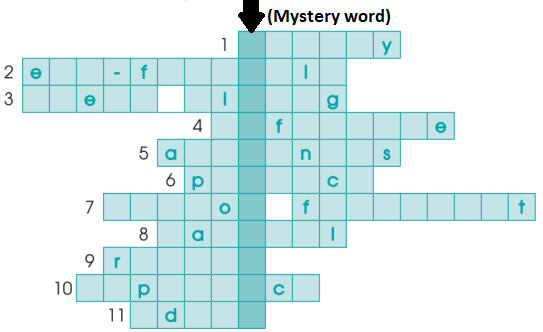

Lời giải chi tiết:
1. energy (n): năng lực
2. eco – friendly (a): thân thiện với môi trường
3. green living: lối sống xanh
4. lifestyle (n): lối sống
5. awareness (n): nhận thức
6. protect (v): bảo vệ
7. carbon footprint (n): lượng khí thải carbon
8. harmful (a): có hại
9. reduce (v): giảm
10. appliance (n): thiết bị
11. adopt (v): áp dụng
Mystery word: ENVIRONMENT
(Ô chữ bí mật: Môi trường)
Bài 2
2. Complete the following sentences with the words / phrases from the box.
(Hoàn thành các câu sau với các từ / cụm từ trong hộp.)
|
organic eco-friendly energy awareness adopt take part in litter appliances protect emissions set up |
1. More and more people _________ a green lifestyle, which is good for themselves and the environment.
2. _________ farming is better for the environment because it doesn't use harmful chemicals.
3. The club hopes to raise public _________ of the environmental issues.
4. Students are reminded not to drop _________in the street.
5. Bamboo is considered to be one of the most_________ building materials.
6. A way to save _________ is to reduce the amount of electricity used at home.
7. Recycling household waste can help to _________ the environment.
8. The club was _________to encourage people to recycle more.
9. Governments are trying to reduce carbon _________ by promoting cleaner transportation.
10. Energy-efficient household _________ can help families save electricity and lower their bills.
11. Students are encouraged to _________environmental activities such as clean-up campaigns and tree planting.
Lời giải chi tiết:
|
1. adopt |
2. Organic |
3. awareness |
4. litter |
5. eco-friendly |
6. energy |
|
7. protect |
8. set up |
9. emissons |
10. appliances |
11. take part in |
|
1. More and more people adopt a green lifestyle, which is good for themselves and the environment.
(Ngày càng có nhiều người áp dụng lối sống xanh, cái mà tốt cho bản thân và môi trường.)
2. Organic farming is better for the environment because it doesn't use harmful chemicals.
(Canh tác hữu cơ tốt hơn cho môi trường vì không sử dụng hóa chất độc hại.)
3. The club hopes to raise public awareness of the environmental issues.
(Câu lạc bộ hy vọng sẽ nâng cao nhận thức của cộng đồng về các vấn đề môi trường.)
4. Students are reminded not to drop litter in the street.
(Học sinh được nhắc nhở không vứt rác bừa bãi trên đường phố.)
5. Bamboo is considered to be one of the most eco-friendly building materials.
(Tre được coi là một trong những vật liệu xây dựng thân thiện nhất với môi trường.)
6. A way to save energy is to reduce the amount of electricity used at home.
(Một cách để tiết kiệm năng lượng là giảm lượng điện sử dụng ở nhà.)
7. Simple actions like putting rubbish in the bin can help to protect the environment.
(Những hành động đơn giản như bỏ rác vào thùng có thể giúp bảo vệ môi trường.)
8. The club was set up to encourage people to recycle more.
(Câu lạc bộ được thành lập để khuyến khích mọi người tái chế nhiều hơn.)
9. Governments are trying to reduce carbon emissons by promoting cleaner transportation.
(Chính phủ đang cố gắng để giảm thiếu khí hải các-bon bằng cách thúc đẩy những phương tiện di chuyển sạch hơn.)
10. Energy-efficient household appliances can help families save electricity and lower their bills.
(Những thiết bị gia đình tiết liệm điện có thể giúp nhữngg đình tiết kiệm điện, giảm chi phí hoá đơn.)
11. Students are encouraged to take part in environmental activities such as clean-up campaigns and tree planting.
(Các em học sinh được cổ vũ tham gia những hoạt động vì môi trường, như chiến dịch dọn dẹp và trồng cây.)
Bài 3
3. Choose the correct word to complete each sentence.
(Chọn từ đúng để hoàn thành mỗi câu.)
1. You can save a lot of energy by turning off unnecessary household appliances / chores.
2. Natural / Nature resources are materials from the Earth used to support life and meet people's needs.
3. More people turn to organic products because they do not contain harmful chemicals/ chemistry.
4. The club members hope to raise / rise people's awareness of environmental protection.
5. There are many simple ways to reduce the negative impact of using plastic on the environment / environmental.
6. The campaign aims to raise public knowledge / awareness of climate change.
7. Many people support environmental protection but are unwilling to adopt / adapt responsible habits.
8. Local residents are encouraged to sort out / throw away their rubbish properly before it is collected for recycling.
Lời giải chi tiết:
|
1. appliances |
2. Natural |
3. chemicals |
4. raise |
|
5. environment |
6. awareness |
7. adopt |
8. sort out |
1. You can save a lot of energy by turning off unnecessary household appliances.
(Bạn có thể tiết kiệm rất nhiều năng lượng bằng cách tắt các thiết bị gia dụng không cần thiết.)
Giải thích:
chore (n): việc vặt trong nhà => household chores: công việc nhà
appliance (n): thiết bị => household appliances: thiết bị gia dụng
2. Natural resources are materials from the Earth used to support life and meet people's needs.
(Tài nguyên thiên nhiên là những vật chất từ Trái đất được sử dụng để hỗ trợ cuộc sống và đáp ứng nhu cầu của con người.)
Giải thích: Trước danh từ "resources" cần tính từ.
natural (a): (thuộc) thiên nhiên
nature (n): thiên nhiên
3. More people turn to organic products because they do not contain harmful chemicals.
(Nhiều người chuyển sang sử dụng các sản phẩm hữu cơ vì chúng không chứa các hóa chất độc hại.)
Giải thích:
chemical (n): hóa chất, chất hóa học
chemistry (n): ngành/ môn hóa học
4. The club members hope to raise people's awareness of environmental protection.
(Các thành viên câu lạc bộ mong nâng cao ý thức bảo vệ môi trường của mọi người.)
Giải thích:
rise (v): tăng lên
raise (v): nâng lên/ nâng cao => raise awareness: nâng cao ý thức
5. There are many simple ways to reduce the negative impact of using plastic on the environment.
(Có nhiều cách đơn giản để giảm tác động tiêu cực của việc sử dụng nhựa đối với môi trường.)
Giải thích: Sau mạo từ "the" cần danh từ.
environment (n): môi trường
environmental (a): thuộc về môi trường
6. The campaign aims to raise public awareness of climate change.
(Chiến dịch nhằm mục đích nâng cao nhận thức của cộng đồng về biến đổi khí hậu.)
Giải thích:
knowledge (n): kiến thức
awareness (n): nhận thức => raise awareness: nâng cao nhận thức
7. Many people support environmental protection but are unwilling to adopt responsible habits.
(Nhiều người ủng hộ việc bảo vệ môi trường nhưng lại không sẵn sàng thực hiện những thói quen sống có trách nhiệm.)
adapt (v): thích ứng
adopt (v): nhận, thực hành, thực hiện => adopt habits: hình thành/thực hiện những thói quen
8. Local residents are encouraged to sort out their rubbish properly before it is collected for recycling.
(Những người dân địa phương đươc khuyết khích phân loại rác một cách chính xác trước khi chúng được thu gom cho việc tái chế.)
sort out (phr. v): phân loại => sort out rubbish: phân loại rác
throw away (phr. v): vứt đi